
In This Article
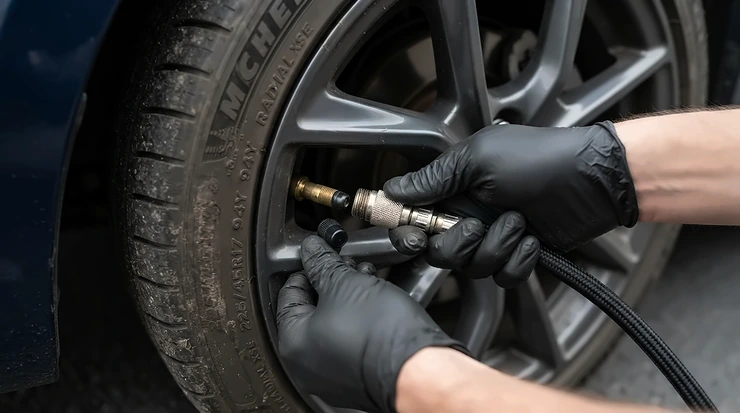
A tyre inflator for cars is a compact electric air compressor that tops up or re-inflates your tyres at home or at the roadside. It runs from the 12V power socket or a built-in battery, shows pressure in PSI, and on better models stops automatically at your target.

Here’s the awkward truth about modern motoring. Every new car has a tyre pressure monitor, and that little amber horseshoe loves to light up on dark, wet Tuesdays when you’re already late. A tyre inflator for cars turns that moment from roadside drama into a two-minute job. 🚗
The independent testers agree it’s worth owning one. Which? tested a batch of corded, cordless, digital and analogue models in January 2026, timing each from 12psi to 32psi. It even named one model a Don’t Buy. The detailed scores sit behind its paywall, so I’ve built this guide from openly published test data instead.
This tyre inflator buying guide cuts through the noise. You’ll get seven real models across budget, mid-range and premium price points. You’ll also get straight talk on PSI accuracy, the auto cut-off feature and 12V power socket use. Those three things separate a pump you’ll love from one that gathers dust in the garage. Along the way, we’ll settle whether a 12V tyre pump or a portable car tyre inflator suits you better.
A note on honesty: everything here comes from published specifications and independent testing. I haven’t handled these units myself and won’t pretend otherwise. All prices are ranges, so check current price and availability on Amazon.co.uk before you buy.
Quick Comparison: Tyre Inflator for Cars at a Glance
| Product | Power | Auto cut-off | Best For |
|---|---|---|---|
| Ring RTC1000 | 12V corded | Yes | Fast, no-fuss everyday top-ups |
| Ring RAC635 | 12V corded | Yes | Budget-conscious drivers |
| Michelin Programmable Rapid Tyre Inflator | 12V corded | Yes | Compact storage, phone charging |
| Ring RTC4000 | Cordless + 12V lead | Yes | Grab-and-go convenience |
| VonHaus Cordless Tyre Inflator | Cordless + 12V lead | Yes | Emergency glovebox kit |
| Draper Storm Force Mini | 12V corded | No | The tightest budgets |
| Sealey MAC05D | 12V corded | Yes | SUVs, vans and campervans |
Look at the pattern: six of the seven stop themselves at your chosen pressure. If your priority is simply getting it done without babysitting, the Ring RTC1000 and Ring RAC635 set the standard for corded convenience. Choose the Draper Storm Force Mini only if price trumps everything, because you become the cut-off switch. The Sealey MAC05D is for bigger tyres and bigger budgets.
💬 Just one click — help others make better buying decisions too!😊
Top 7 Tyre Inflator for Cars: Expert Analysis
Every price below is a range captured at the time of research, so check current price before buying.
1. Ring RTC1000 — the quickest corded all-rounder
Speed is the party trick. Expert Reviews timed a 20-to-30psi top-up at 1 minute 27 seconds, putting the Ring RTC1000 at the sharp end of the 12V tyre pump field. The unit is a chunky disc, about 22 x 20cm and 8.8cm deep. It swallows its 3.5m power lead into an internal spool. In practice, that means no tangled cable rattling around the boot and enough reach to circle most hatchbacks from one socket position.
The backlit LCD shows live and preset pressure, and a small wheel sets your target. Then one big button does the rest. The auto cut-off feature stops the pump when it hits your number, so you can walk away and get on with your evening. Noise peaks around 74dB, which is no whisper but over quickly. Ring bundles three adaptors, four spare valve caps, a fuse, a case and, rather endearingly, latex gloves.
I couldn’t verify a current Amazon.co.uk review count while researching. What is documented is that Expert Reviews named it its best-value pick and praised how little fuss it involves.
Pros:
- ✅ Very quick 20-30psi top-up time
- ✅ Backlit display shows live and preset pressure
- ✅ Spool-wound lead and generous accessory bundle
Cons:
- ❌ Bulkier than the most compact rivals
- ❌ Needs a 12V socket, with no cordless option
Expect around £45-£60. For speed and simplicity, the value verdict is strong.
2. Ring RAC635 — the budget preset-and-forget classic
This is the veteran of the group. Ring says the Ring RAC635 won Auto Express’s Best Buy for mini compressors in 2014, 2016 and 2017. The preset dial lets you choose a pressure, and the pump shuts off when it arrives. It switches between PSI, kPa and bar, tops out at 80psi, and comes with a white work light, a red warning light and a padded case.
Here’s what the specs mean on the driveway. CAR magazine reports it takes a flat 13-inch tyre to 35psi in roughly three minutes. Expert Reviews’ standard 20-30psi test took 2 minutes 12 seconds, about 45 seconds slower than the Ring RTC1000. At 1.17kg, with a 3.5m lead and 70cm hose, it’s easy to stow but fiddly to wind back up, according to Expert Reviews.
On PSI accuracy, testers have repeatedly praised it. Auto Express measured its readings against a reference gauge. Honest John’s Kit reviewers liked the low price and the automatic cut-off. Reviewers of Ring’s wider corded range often mention that screw-on valve connectors take patience, so budget a minute for that.
Pros:
- ✅ Preset dial with reliable automatic shut-off
- ✅ Bright white light plus red hazard light
- ✅ Padded case and three adaptors included
Cons:
- ❌ Slower than pricier corded rivals
- ❌ Cable and hose stowage is fiddly
Expect around £30-£40, which is superb value. Check current availability.
3. Michelin Programmable Rapid Tyre Inflator — compact, with a handy USB port
Compact is the selling point. The Michelin Programmable Rapid Tyre Inflator managed the 20-30psi test in 1 minute 54 seconds, with just over 75dB of noise. Expert Reviews found its digital gauge noticeably more accurate and easier to read than the analogue dials on cheaper pumps. Plus and minus buttons set your target, and the pump stops there.
The 3m lead and 60cm hose are shorter than the Rings’, so reaching all four wheels may mean shuffling the car slightly. Extras make up for it. There’s a bright LED light, ball and balloon adaptors, and a USB output that can charge a phone in an emergency. That last feature turns this 12V tyre pump into a breakdown helper, not just an air machine.
Customer-review volume wasn’t something I could verify. Expert Reviews picked it as the best compact 12V inflator, saying it’s worth the extra over analogue alternatives. Note that Which?’s January 2026 round-up lists a Michelin Digital Tyre Inflator, so confirm the exact model code before ordering.
Pros:
- ✅ Accurate, easy-to-read digital gauge
- ✅ USB output for emergency phone charging
- ✅ Neat stowage for cable and hose
Cons:
- ❌ Shorter lead and hose than rivals
- ❌ Not the fastest on test
Budget around £50-£65 (check current price). It’s good value if USB and compactness matter.
4. Ring RTC4000 — cordless convenience in a lunchbox
Think lunchbox-sized. At 15 x 10 x 6cm, the Ring RTC4000 is a true portable car tyre inflator. It has an internal lithium-ion battery, USB-C charging and a 60cm hose that tucks underneath. Crucially, Ring supplies a 3m 12V lead too, so a flat battery doesn’t strand you. What Car named it its best tyre inflator overall.
Expert Reviews clocked 2 minutes 5 seconds for the 20-30psi test, with noise peaking at 72.1dB, the quietest here. Its minus points are real, though. The screw-on hose fitting was slightly tricky, and the area around the connector became uncomfortably hot after use. The sensible reading: let it cool before packing it away, and expect to fuss for a few seconds when connecting.
I couldn’t verify Amazon review volumes. Amazon listings may use the TyreInflate Go 4 name, so match the RTC4000 model code. Professional reviewers rate it highly for sheer take-anywhere ease.
Pros:
- ✅ Truly cordless, with a 12V backup lead
- ✅ Programmable cut-off and USB-C charging
- ✅ Quietest of the seven at about 72dB
Cons:
- ❌ Awkward hose fitting needs patience
- ❌ Connector area gets hot
Expect roughly £45-£65. It’s a smart buy for anyone who values convenience.
5. VonHaus Cordless Tyre Inflator — emergency kit with a hazard light
This one earns its keep in a crisis. The VonHaus Cordless Tyre Inflator runs for up to ten minutes from its 1.5A lithium-ion battery. It also includes a 12V adaptor with an unusually generous 3.5m cable. That flexibility matters for 12V power socket use, because the battery handles quick top-ups and the cable handles marathon sessions.
Set your pressure, pull the trigger and it stops at the target. Expert Reviews recorded 2 minutes 2 seconds on the 20-30psi test, but also a boisterous 82.7dB. The digital display is small but readable. The air hose is a stubby 15cm, so you’ll be working close to the wheel. The built-in lamp is very bright and doubles as a flashing red hazard warning.
Verifiable customer ratings were thin during my research. Expert Reviews’ verdict was that it’s best for emergencies, and the spec sheet backs that up.
Pros:
- ✅ Cordless with a 12V backup cable
- ✅ Stops automatically at your target
- ✅ Bright lamp with flashing hazard mode
Cons:
- ❌ Loud at around 83dB
- ❌ Very short 15cm air hose
Budget around £40-£55. It’s a sound glovebox purchase, though availability can vary.
6. Draper Storm Force Mini — the cheapest way to avoid a flat
Let’s be honest: this is the “does what it says” option. The Draper Storm Force Mini has a 2.7m cable, an analogue gauge and no off switch. You plug it in and it runs, then unplug to stop. It lacks any auto cut-off feature, so you’re the safety system.
Expert Reviews recorded 2 minutes 24 seconds for the 20-30psi test and 77dB of noise. The 46cm hose is workable. The gauge is the real snag. Because it reads up to 250psi, the crucial 0-60psi zone is squashed into the first quarter of the dial. As this tyre inflator buying guide stresses, a cramped scale hurts PSI accuracy, so pair it with a separate pressure gauge.
Customer-review volumes weren’t verifiable here. Expert Reviews named it its best budget 12V inflator, and the accessories are basic: a ball inflator and two toy adaptors.
Pros:
- ✅ Remarkably low price
- ✅ Plug-in, no-menu operation
- ✅ Acceptable top-up speed for the money
Cons:
- ❌ Cramped, hard-to-read analogue gauge
- ❌ No auto cut-off, so you must watch it
Expect to pay under £25. It’s good value as an emergency backup, not a daily driver.
7. Sealey MAC05D — heavy-duty power for SUVs and campervans
Premium muscle is the point. CAR magazine says the Sealey MAC05D can take a flat 13-inch tyre to 30psi in under two minutes. It adds a 4.5m air hose, the longest of this group, and an auto shut-off. It weighs 2.97kg with a 3m power cable and three adaptors. CAR frames it as overkill for regular cars and aimed at campervans and 4x4s with big tyres.
Power brings a catch. A heavier-duty compressor draws more current, so check your handbook’s 12V power socket use limits before relying on it. Many owners run big compressors with the engine on. The long hose means you can park once and reach every wheel on a large vehicle without moving.
I found no verifiable review volumes. CAR’s verdict is that it pays dividends for owners who will use its power.
Pros:
- ✅ Very fast inflation of larger tyres
- ✅ Long 4.5m air hose
- ✅ Digital display with auto shut-off
Cons:
- ❌ Bulky and heavy at nearly 3kg
- ❌ Expensive for a small-car owner
Expect around £100-£135 (check current price). It’s premium value only for big-tyre owners.
Spec Showdown: How the Top 7 Compare
| Product | 20-30psi time | Lead / hose | Noise | Price range | Best For |
|---|---|---|---|---|---|
| Ring RTC1000 | 1m 27s | 3.5m / 70cm | 73.7dB | £45-£60 | Everyday speed |
| Ring RAC635 | 2m 12s | 3.5m / 70cm | Not published | £30-£40 | Budget accuracy |
| Michelin Programmable Rapid Tyre Inflator | 1m 54s | 3m / 60cm | ~75dB | £50-£65 | USB charging |
| Ring RTC4000 | 2m 5s | 3m / 60cm | 72.1dB | £45-£65 | Cordless portability |
| VonHaus Cordless Tyre Inflator | 2m 2s | 3.5m / 15cm | 82.7dB | £40-£55 | Emergencies |
| Draper Storm Force Mini | 2m 24s | 2.7m / 46cm | 77dB | Under £25 | Tight budgets |
| Sealey MAC05D | Under 2 min (flat 13-inch to 30psi, CAR’s test)* | 3m / 4.5m | Not published | £100-£135 | SUVs and vans |
*Times come from Expert Reviews except the Sealey MAC05D, which was timed by CAR under a different test. Treat that row as indicative only.
The standout is the Ring RTC1000: fastest corded time, tidy storage, and mid-range pricing. The Ring RAC635 loses under a minute per top-up yet costs noticeably less. Meanwhile, the VonHaus Cordless Tyre Inflator is quick enough but loud, so judge it as a glovebox rescuer, not a weekly workhorse.
✨ Don’t Miss These Exclusive Deals!
🔍 Take your tyre care to the next level with these carefully selected pumps. Click on any highlighted product name to check current pricing and availability. Whichever you pick, you’ll be ready for the next amber warning light!
Tyre Inflator Buying Guide: How to Choose a Tyre Inflator for Cars
How do you choose a tyre inflator for cars? Follow these six steps:
- Know your target pressure. The right figures are on a sticker by the fuel filler or inside the driver’s door frame. Most cars sit between 30 and 40psi (2 to 2.8 bar), according to Expert Reviews’ guidance. Make sure your inflator comfortably exceeds that.
- Decide corded or cordless. A 12V tyre pump is cheaper and never runs flat. A portable car tyre inflator is easier to carry but needs charging.
- Insist on the auto cut-off feature. It prevents over-inflation and frees you to do other jobs.
- Check the display. A backlit digital screen beats a cramped analogue dial after dark.
- Match the hose and lead to your car. At least 3m of cable and 60cm of hose should reach all four wheels.
- Scale power to tyre size. Small hatchbacks need modest pumps. Vans and 4x4s benefit from something like the Sealey MAC05D.
Don’t fixate on bundled extras. A torch and USB port are genuinely helpful, but a pump that stops accurately matters far more than a free football adaptor.

12V Power Socket Use: What Your Car Can Actually Handle
This is the most overlooked part of 12V power socket use. Pumps are thirsty. Owners on motorhome and motorcycle forums report inflators drawing roughly 10 to 15 amps. They also describe sockets protected by anything from 7.5 to 15 amp fuses, and plenty of blown fuses along the way. These are owner reports, not official ratings, so treat them as warnings, not rules.
Here’s how to stay safe:
- Check your handbook. Find the socket’s amp or watt rating and compare it with your inflator’s fuse. One forum handbook quote cited a 10-amp, 120-watt limit.
- Run the engine. One manufacturer’s manual says the pump works with the engine off, but slower on a weak battery, and it recommends running the engine for a steadier supply. Never do so in an enclosed space. Ventilate properly.
- Skip extension leads. Forum users report significant voltage loss over thin cables.
- Carry a spare fuse. The Ring RTC1000 includes one, which is thoughtful.
- Don’t hog the socket. Unplug dash cams and chargers while you pump.
If your socket seems underpowered, a cordless unit like the Ring RTC4000 sidesteps the issue.
PSI Accuracy: Can You Trust the Number on the Display?
Not blindly. PSI accuracy varies, even on well-reviewed models. What Car’s testing found the Noco Air AL5 the fastest to fill a Mini’s tyre by a clear margin, yet it consistently displayed pressure about 4.5% too low. On a 32psi tyre, that’s roughly 1.4psi of error. You’d hardly notice it driving, but over time it compounds.
Meanwhile, one reader told Honest John their AA inflator’s readout jumped two or three PSI at a time. Expert Reviews also warns that forecourt air machines aren’t always accurate, so your own equipment is better.
Practical fixes:
- Treat your inflator’s display as a guide, not gospel.
- Buy a decent separate gauge and verify the final pressure.
- Re-check tyres cold, not after a drive. Pressures rise as tyres warm.
- Remember that cramped analogue scales (like the Draper Storm Force Mini‘s) are the hardest to read precisely.
Digital gauges, as on the Michelin Programmable Rapid Tyre Inflator, tend to reduce reading errors, though no display is perfect.
Auto Cut-Off Feature: Why It’s Worth Paying For
The auto cut-off feature is the single best reason to spend a little more. You set a target, press start, and the pump halts when it arrives. That removes the temptation to hover over a dial, and it stops you accidentally over-inflating while distracted by a phone call.
CAR notes that digital models with backlit screens and auto shut-off typically cost a few pounds more than analogue equivalents, which is a cheap upgrade. The Ring RAC635 adds the convenience of reusing your last setting, which helps when all four tyres share a pressure. Some models, like the Halfords Advanced Tyre and Leisure Inflator, go further and store settings for different cars and even individual tyres, according to Expert Reviews.
One caveat: a cut-off is only as accurate as its sensor, so it ties straight back to PSI accuracy. Verify the final number with a separate gauge occasionally. Without any auto cut-off feature, as on the Draper Storm Force Mini, you must watch the dial every few seconds. Frankly, after one dark winter evening, you’ll understand why people upgrade.
12V Tyre Pump vs Portable Car Tyre Inflator: Which Style Wins?
| Option | Power | Convenience | Reliability | Best For |
|---|---|---|---|---|
| 12V tyre pump (e.g. Ring RTC1000) | Car socket | Good, needs a cable | Never runs flat | Regular home top-ups |
| Portable car tyre inflator (e.g. Ring RTC4000) | Battery + 12V lead | Excellent | Battery must be charged | Quick roadside fixes |
| Foot pump | Your legs | Poor | Always works | Absolute emergencies |
| Forecourt air machine | Paid machine | Needs a trip | Accuracy varies | Last resort |
CAR makes a similar point: cordless models are what everyone wants and are the most practical, but they usually cost more than a corded model with equivalent performance. A 12V tyre pump wins on price and dependability, and a portable car tyre inflator wins on convenience. The best hybrids, like the Ring RTC4000 and VonHaus Cordless Tyre Inflator, include a 12V lead as insurance against a flat battery.
Compared with traditional alternatives, a personal inflator beats a forecourt in convenience and a foot pump in effort. A small cordless unit might lack the muscle for large SUV tyres, so match the tool to the job.
Long-Term Cost & Maintenance for a Tyre Inflator for Cars
Run the numbers. The AA recommends checking pressures every fortnight, which is about 26 checks a year. Spread a £35 inflator across five years of that routine and you get roughly 130 uses, around 27p each. That’s cheaper than most paid forecourt air machines, and far more convenient.
The bigger payoff is in the tyres themselves. Michelin’s figures, quoted by Expert Reviews, say tyres 15psi under-inflated can raise fuel consumption by around 6% and stretch braking by roughly five metres from 56mph. Even smaller shortfalls cost you something.
Keep it healthy with a simple routine:
- Store dry. Coil the hose loosely and keep it in its case.
- Let it cool. Allow the compressor time to rest between tyres, as manufacturer manuals advise.
- Charge cordless units. Top up the battery every couple of months so it isn’t flat when needed.
- Replace valve caps. They keep dirt and moisture out. The Ring RTC1000 ships with spares.
- Carry a spare fuse.
Maintenance costs pennies, and a Ring RAC635-style pump can serve for years.
Tyre Pressure, Safety and UK Law: What You Need to Know
Tyre safety isn’t just about comfort. Lancashire County Council’s road safety guidance says more than two million vehicles fail their MOT each year because of tyre defects. It also reports 9,608 convictions for defective tyres in 2022.
The law is explicit on tread: a minimum of 1.6mm across the central three-quarters of the tread, all the way round. Penalties can reach £2,500 and three penalty points per illegal tyre. A 20p coin gives a quick check. If you can see the outer band of the coin, the tyre may be unsafe.
Pressure isn’t specified in a single legal number, but you’re expected to follow the manufacturer’s recommendation. Under-inflation can cause overheating and poor handling. Over-inflation reduces grip. Check for bulges, cuts and sidewall damage at the same time.
When buying an electrical product, look for UKCA or CE marking, and keep the instruction manual. A good inflator makes meeting your tyre responsibilities simple, quick and cheap.
How to Use a Tyre Inflator for Cars: A Step-by-Step Practical Guide
Amazon listings never explain the routine, so here it is:
- Park level, tyres cold. Cold readings are more reliable.
- Find your pressures. Use the door-frame sticker, and note the higher “loaded” figures if you’re carrying passengers or luggage.
- Set your target on the inflator.
- Remove the valve cap. Pocket it. Dropped caps vanish.
- Connect firmly. Screw-on connectors can feel fiddly, but a tight connection prevents hissing leaks.
- Start the pump with the engine running, if safe and ventilated.
- Wait for the cut-off, then disconnect quickly.
- Verify with a separate gauge, especially while PSI accuracy is in doubt.
- Refit the cap.
- Repeat for all four tyres, plus the spare if you carry one.
Common first-30-day mistakes: forgetting loaded pressures, inflating warm tyres, overworking a small pump without cooling breaks, and storing the unit loose in the boot where it gets knocked about. A little discipline here saves you the later headache.
Real-World Scenarios: Which Tyre Inflator for Cars Fits Your Life?
Scenario 1: the daily commuter. You drive a supermini 12 miles each way and check tyres weekly. Your budget is about £35. The Ring RAC635 fits: preset, accurate enough and cheap. You’ll use it every week, so the extra speed of pricier models matters less.
Scenario 2: the family with an SUV. You load up for holidays and caravan trips. Your budget is £100 or more. Higher loaded pressures and bigger tyres favour the Sealey MAC05D, with its long hose. If that’s too much, the Ring RTC1000 is a speedy, mid-priced alternative for lighter loads.
Scenario 3: the student on a shoestring. You’ve got an older Polo and £20 to spare. The Draper Storm Force Mini does the job, paired with a separate gauge to offset its cramped dial. Remember: no auto cut-off, so watch the needle.
Scenario 4: the city dweller with kerbside parking. You can’t plug in at home and often check pressures on the street. A cordless Ring RTC4000 keeps your boot light and your cable-free life simple, with a 12V lead as backup.
Common Tyre Inflator Problems and How to Fix Them
Problem 1: the 12V fuse blows. Cause: the pump is drawing more than your socket supports. Fix: check your handbook’s rating, run the engine, skip extension leads and carry spares. If it keeps happening, switch to a cordless unit like the VonHaus Cordless Tyre Inflator.
Problem 2: readings jump around. Cause: a cheap sensor or poor valve connection. Fix: reseat the connector, re-check cold, and compare against a separate gauge.
Problem 3: air hisses at the valve. Cause: the screw-on connector isn’t fully tight. Fix: thread it on slowly and firmly. Fitting takes patience on models like the Ring RTC4000.
Problem 4: a cordless unit dies mid-job. Fix: switch to its 12V lead. Both the Ring RTC4000 and VonHaus Cordless Tyre Inflator ship with one.
Problem 5: the pump gets hot. Cause: continuous use. Fix: let it rest, and avoid touching hot connectors straight after use.

FAQ
❓ How much does a decent tyre inflator for cars cost in the UK?
❓ Do I still need a tyre inflator if my car has a tyre pressure monitor?
❓ Will a tyre inflator for cars work on a van or 4x4?
❓ Can I leave my tyre inflator in the boot all year?
❓ Is it worth buying a tyre inflator on Amazon UK?
Conclusion
A good tyre inflator for cars is one of the cheapest bits of kit that actually protects your safety, your wallet and your sanity. The right choice depends on how you live.
If you want speed and simplicity, the Ring RTC1000 is the standout 12V tyre pump. If you want the best value, the Ring RAC635 is hard to beat, with its auto cut-off feature and a long track record. The Michelin Programmable Rapid Tyre Inflator suits drivers who want USB charging in a compact box. For a portable car tyre inflator, the Ring RTC4000 leads the pack. The VonHaus Cordless Tyre Inflator is a fine emergency kit, the Draper Storm Force Mini is a bargain for the tightest budgets, and the Sealey MAC05D is the pick for big tyres.
Before you buy, remember three things from this tyre inflator buying guide. First, verify PSI accuracy with a separate gauge. Second, respect your car’s 12V power socket use limits. Third, prefer an auto cut-off feature unless the budget absolutely forbids it.
✨ Ready to Never Fear an Amber Warning Light Again?
🔍 Pick the inflator that suits your car, check current pricing and availability on Amazon.co.uk, and put it in your boot today. Your tyres, your fuel bill and your future self will thank you!
Recommended for You
- Screenwash For Winter Under £10: 7 Best Buys For UK Drivers (2026)
- Screenwash Concentrate For Winter: 7 Best Picks For UK (2026)
- Transmission Fluid For Automatic Cars: 7 Proven Picks (2026)
Disclaimer: This article contains affiliate links. As an Amazon Associate, I earn from qualifying purchases. If you purchase products through these links, we may earn a small commission at no additional cost to you.
✨ Found this helpful? Share it with your friends! 💬🤗
