
In This Article
Every car park in Britain tells a story in its paintwork. A supermarket trolley here, a bristly automatic car wash there, and a decade of sun-baked fade from the M25. The good news is that a well-chosen cutting compound for car paint correction can erase a surprising amount of that history. The bad news is that choose badly and you can burn through a clear coat thinner than most people imagine.
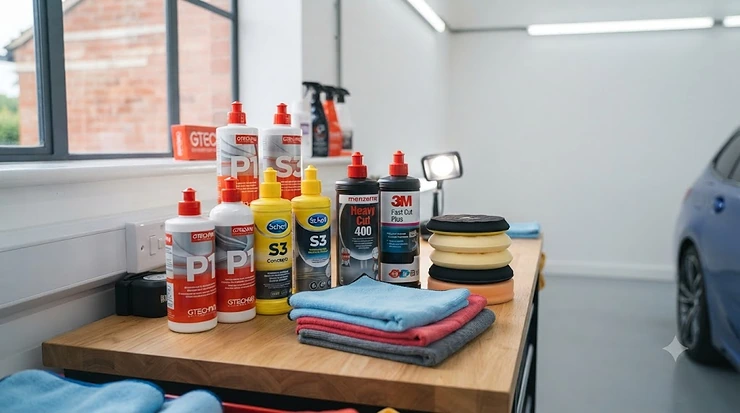
This guide compares seven real, widely stocked products, from a budget hand-rub to a bodyshop-grade heavy cut compound. It explains what their numbers mean in practice. To be upfront, I haven’t personally tested any of them. The analysis draws on published specifications, manufacturer guidance and aggregated review sentiment from UK and international retailers and enthusiast forums. Where evidence is thin, I say so. You’ll also find practical advice on the dual-action polisher, correction pads, choosing a compound for deep scratches, and clear coat safety.
What is cutting compound for car paint correction?
Cutting compound for car paint correction is an abrasive paste or liquid that removes a microscopically thin layer of clear coat to level out swirl marks, scratches, oxidation and sanding marks. Its abrasive particles range from coarse to fine, so a heavy cut compound removes defects faster but leaves a hazier finish that usually needs a finer polish afterwards.
The principle is an old one. As Wikipedia’s entry on cutting compound explains, it is an abrasive suspended in a paste and graded by grit, which exposes fresher paint beneath. It also carries a sensible warning that repeated cutting eventually strips paint away. That is why the clear coat safety section later in this guide matters so much.
Quick Comparison: 7 Cutting Compounds for Car Paint Correction at a Glance
Cut and gloss scores come from makers and retailers on slightly different scales, so read them as rough rankings rather than lab measurements. Prices are indicative ranges only and may vary by seller and pack size.
| Product | Cut level (maker/retailer claim) | Best For | Indicative price range | Application |
|---|---|---|---|---|
| Meguiar’s Ultimate Compound (G17216EU, 450ml) | Light-to-medium | Beginners, water spots, light scratches | around £12-£20 | Hand or DA |
| Farécla G3 Regular Grade Paste Compound | Medium-to-high; P1500 or finer | Sanding marks, caravans, vans | around £10-£18 (400g) | Hand or machine |
| Farécla G360 Super Fast Compound (500g) | High; liquid | Fast removal of P1500 marks | around £20-£35 | Machine |
| Sonax Profiline CutMax 06-04 | 6/6 cut, 3/6 finish (retailer scale) | Low-dust heavy correction | around £18-£28 (250ml) | DA or rotary |
| Menzerna Heavy Cut Compound 400 | 8/10 cut, 8/10 gloss (retailer scale) | One-step heavy correction | around £15-£25 (250ml) | DA, rotary or hand |
| Koch Chemie Heavy Cut H9.02 | 9.0 cut, 6.0 gloss (maker scale) | Hard paints, deepest defects | around £18-£30 (250ml) | Rotary or DA |
| Turtle Wax Rubbing Compound Heavy Duty Cleaner (298g) | Light-to-moderate | Scuffs and paint transfer on a budget | under £10 | Hand |
Looking at the table, Meguiar’s Ultimate Compound and Turtle Wax Rubbing Compound Heavy Duty Cleaner are the low-risk entry points, while Koch Chemie Heavy Cut H9.02 and Menzerna Heavy Cut Compound 400 sit at the assertive end. If you want serious cut without a dusty, sticky fight, Sonax Profiline CutMax 06-04 is the friendliest heavy hitter on paper. It has a low-dust, long-working-time formula. Meanwhile Farécla G3 Regular Grade Paste Compound remains the value pick if you’re happy with a traditional paste.
💬 Just one click — help others make better buying decisions too!😊
Top 7 Cutting Compounds for Car Paint Correction: Expert Analysis
Each entry follows the same pattern: what stands out, what the specs mean in real life, who it suits, and what genuine review data says. Check current price and availability on amazon.co.uk before you buy.
1. Meguiar’s Ultimate Compound (G17216EU, 450ml) — best forgiving starter for hand or DA
Forgiveness is the headline here. This is the compound you reach for when you want to improve your paint without staging a dramatic rescue mission.
The 450ml bottle uses Meguiar’s micro-abrasive technology, which breaks down as you work rather than staying sharp. It can be applied by hand or with a machine. In practice, that diminishing behaviour means you’re less likely to leave fresh marring behind, which is exactly what a first-timer wants. Meguiar’s positions it as the most aggressive product in its consumer polishing line, so treat it as a light-to-medium corrector rather than a true heavy cut compound. Based on the spec comparison, it suits water spots, bird-dropping etching, mild oxidation and scratches you can barely feel.
Aggregated review sentiment is strong. The Amazon UK listing showed roughly 4.5 stars from more than 13,000 ratings at the time of research, with buyers praising scuff and small-scratch removal by hand. The recurring criticism is that larger swirls and heavy oxidation don’t fully disappear.
Pros:
- ✅ Forgiving diminishing abrasives suit beginners
- ✅ Works by hand or with a DA
- ✅ Huge review base and easy availability
Cons:
- ❌ Not a genuine heavy cut compound
- ❌ Struggles with heavy oxidation and large swirls
Price range: around £12-£20, which is excellent value for a first correction.
2. Farécla G3 Regular Grade Paste Compound — bodyshop-proven paste for sanding marks
Farécla’s paste comes from the refinishing trade, and it shows. It is built to erase sanding scratches rather than merely tickle swirls.
Farécla rates it to cut P1500 or finer sanding marks. In plain English, it can level scratches about as coarse as fine wet-and-dry paper leaves behind. The formula is filler-free and silicone-free, so corrected areas stay corrected instead of “healing” after the next wash. It works by hand or machine, and Farécla’s machine directions call for a wetted foam and around 1,500-1,800rpm. That suggests it was designed with rotaries in mind. Older UK detailing-forum threads report dust and splatter, plus the need to mist the panel with water, so expect a more old-school experience than the modern water-based liquids.
On Amazon UK, the 400g tube showed roughly 4.6 stars from about 500 ratings at the time of research. Reviewers describe good results on vans and caravan paintwork, and note that deeper scratches may need repeat passes. Many also comment that the tub lasts ages.
Pros:
- ✅ Filler-free, so scratch removal is genuine
- ✅ Very economical per panel
- ✅ Effective by hand on small areas
Cons:
- ❌ Dustier and splatterier than modern liquids
- ❌ Milder than expected on a DA
Price range: around £10-£18 for 400g, so strong value for hand work and caravans.
3. Farécla G360 Super Fast Compound (500g) — liquid heavy cut built for speed
Speed is the sales pitch. This liquid is designed to shorten the sanding-to-shine journey in a workshop.
Farécla describes it as a heavy cut liquid that removes P1500 scratches and oxidation quickly, often without needing a P3000 sanding step. For a home user, that translates to fewer stages when you’re correcting sanded or badly weathered paint. A liquid is also easier to spread and meter than a paste. Given the fast-cut positioning, I’d suggest it for confident DIYers who own a dual-action polisher and understand that fast cutting also means fast paint removal.
A caveat on evidence: independent, verifiable review coverage of this specific product is thin. Most information comes from listings and retailer descriptions, so treat performance claims as manufacturer positioning until you find more user feedback.
Pros:
- ✅ Fast-cutting liquid suits sanded panels
- ✅ Easier to spread than a paste
- ✅ Larger 500g bottle lowers cost per use
Cons:
- ❌ Limited independent review data
- ❌ Overkill for light swirls
Price range: around £20-£35, worthwhile if you have genuinely sanded or heavily weathered paint.
4. Sonax Profiline CutMax 06-04 — low-dust cut with a friendly wipe-off
Dust is the thing nobody warns you about with old-school compounds. Sonax’s water-based, silicone-free formula is designed to sidestep it.
Retailers list it as removing sanding marks up to around P1000, with a cut of 6/6 and a finish of 3/6. That finish score is honest: expect to follow up with a finer polish such as Sonax’s own EX 04-06 on a DA. The long buffing cycle means you can keep working a section without it drying out, which matters when a heavy compound would otherwise start sticking. One UK forum user with hard BMW paint found CutMax was needed for real cut, while finer Sonax polishes alone didn’t deliver.
Aggregated sentiment is positive but small-sample. A US retailer showed all 15 raters would buy it again, and UK forum posts praise the swirl removal and lack of dust. One reviewer found it a little thin from the bottle.
Pros:
- ✅ Low dust and easy wipe-off
- ✅ Long working time on DA or rotary
- ✅ Strong cut on hard paints
Cons:
- ❌ Finish needs a follow-up polish
- ❌ Thin consistency needs careful dosing
Price range: around £18-£28 for 250ml, good value for a low-drama heavy cut.
5. Menzerna Heavy Cut Compound 400 — best balance of cut and gloss
Balance is what makes this one popular. It cuts assertively but finishes better than most compounds in its class.
Menzerna claims it removes sanding marks up to P1200. It is water-based, free of silicones and fillers, and uses diminishing abrasives, so it breaks down rather than staying harsh. One UK retailer rates cut and gloss at 8/10 each, which explains why many detailers use it as a one-step on modest defects. Polished Bliss suggests 3-4 pea-sized drops per 18 x 18 inch area on a DA at roughly speed 4-5. It also cautions that it removes paint quickly, so treat it with respect.
Reviewers on a UK retailer’s site rated it around 4.8 stars from 35 reviews, praising low dust and a glossy finish. One US reviewer felt the current HC400 has a shorter working time than the older FG400, so don’t assume the two behave identically.
Pros:
- ✅ Strong cut with unusually good gloss
- ✅ Low dust and no fillers
- ✅ Works with DA, rotary or by hand
Cons:
- ❌ Removes clear coat quickly if overworked
- ❌ Some reviewers report shorter working time
Price range: around £15-£25 for 250ml, so excellent value for a one-bottle correction kit.
6. Koch Chemie Heavy Cut H9.02 — most aggressive cut of the seven
If the others are strong coffee, this is the espresso shot. It has the highest published cut rating in this group.
Koch Chemie rates it 9.0 for cut and 6.0 for gloss, and describes it as removing sanding traces up to P1200. Some retailers say P1200-P2000 depending on pad and machine. It is silicone-free and oil-free, with an “extremely homogeneous” abrasive that keeps working without sticking. Koch recommends finishing with its Micro Cut M3.02, which is sensible advice. Given its aggressiveness, I’d reserve it for hard paints and genuinely deep defects rather than routine swirl removal.
Review pools are small but positive. One reviewer cleared heavy swirls on black paint with a long-throw DA and nearly skipped a second step, though it dusts if overworked. Another found it eliminated 1500-grit sanding marks easily on medium-to-hard paints.
Pros:
- ✅ Highest cut rating in this group
- ✅ Low dust when not overworked
- ✅ Suits soft and hard paints
Cons:
- ❌ Too aggressive for light swirls
- ❌ Small verified review pool
Price range: around £18-£30 for 250ml, best for experienced users tackling hard paint.
7. Turtle Wax Rubbing Compound Heavy Duty Cleaner (298g) — cheapest way to tackle scuffs
Sometimes the problem isn’t swirls at all. It’s a scuff, a smear of paint transfer, or a mark left by someone else’s door.
Turtle Wax markets this as a hand-applied rubbing compound for scratches, scuffs, oxidation and paint transfer, safe for clear coat. The instructions call for a 10p-sized amount on a microfibre cloth, not in direct sun or on hot panels. That is sensible guidance, and it tells you the intended scope: small, targeted jobs, not whole-car correction. As a rubbing compound for paint correction on a budget, it’s a reasonable first move before spending on a machine.
Sentiment is mixed in a sensible way. UK and US buyers praise it on minor scratches and paint transfer, while others report it didn’t shift deeper scratches. One detailing review found it hard to wipe off and dusty, so wipe carefully.
Pros:
- ✅ Very cheap and simple for spot repairs
- ✅ Good for paint transfer and scuffs
- ✅ No machine required
Cons:
- ❌ Not suited to deeper scratches or swirls
- ❌ Reported dusting and stubborn residue
Price range: under £10, so cheap enough to try before escalating.
How to Choose Cutting Compound for Car Paint Correction
Choosing well is mostly about matching abrasiveness to the job. Here’s the order I’d work through:
- Diagnose the defect depth. Light swirls and holograms need a gentle compound, while scratches you can feel need more cut. Over-buying abrasiveness is the classic error.
- Consider paint hardness. Harder paints, common on some German makes, resist gentle compounds, as the BMW anecdote above suggests. Soft paints can be leveled quickly, so start mild.
- Match the compound to your tool. Pastes suit hand work, while modern water-based liquids like Menzerna Heavy Cut Compound 400 shine with a dual-action polisher.
- Check working time and dust. Long working time means fewer wasted passes, and low dust means less cleanup and fewer marring risks.
- Plan the finishing step. A heavy cut compound usually leaves haze, so budget for a finer polish such as Koch’s M3.02 or Sonax’s EX 04-06.
- Calculate cost per panel. A cheap bottle that needs three passes may cost more than a dearer one that cuts in one.
UK motoring site Parkers makes a similar point in its round-up. Stronger compounds can correct deeper defects, but only if you know what you’re doing.
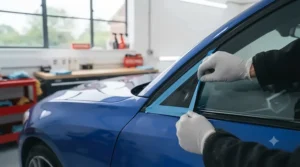
Heavy Cut Compound vs Rubbing Compound for Paint Correction
The two terms overlap, but they describe different generations of product. A rubbing compound for paint correction is typically the traditional paste, such as Farécla G3 Regular Grade Paste Compound or Turtle Wax Rubbing Compound Heavy Duty Cleaner. It is often used by hand and can be dusty. A modern heavy cut compound, such as Koch Chemie Heavy Cut H9.02, is usually a machine-oriented liquid with diminishing abrasives, lower dust and a better finish.
| Attribute | Heavy cut compound | Rubbing compound for paint correction |
|---|---|---|
| Typical form | Water-based liquid | Paste, often traditional |
| Application | DA or rotary | Hand or machine |
| Dust and working time | Low dust, longer working time | Dustier, may need misting |
| Finish after cutting | Good, often near one-step | Hazier, needs polishing |
| Best For | Machine correction, hard paint | Small repairs, hand work, budget |
Looking at the comparison, a heavy cut compound is usually the better long-term investment if you own a dual-action polisher. Menzerna Heavy Cut Compound 400 finishes noticeably better than a traditional paste. The rubbing compound for paint correction route still wins on price and simplicity for one-off jobs, particularly when using Turtle Wax Rubbing Compound Heavy Duty Cleaner on a single scuffed bumper corner.
Compound for Deep Scratches: What Works and What Doesn’t
A compound for deep scratches has a hard ceiling, and it’s worth knowing where it sits. Compounds are graded by the sanding marks they can erase. Sonax Profiline CutMax 06-04 is quoted at around P1000, Koch Chemie Heavy Cut H9.02 and Menzerna Heavy Cut Compound 400 at around P1200, and Farécla G3 Regular Grade Paste Compound at P1500 or finer. A scratch deeper than those marks isn’t a compounding job.
Try the fingernail test. If your nail barely catches, a heavy cut compound with a machine is a reasonable attempt. If it catches firmly, the scratch has often passed through the clear coat. Compounding will only soften its edges, and chasing it risks burning through. If you can see a different colour inside the scratch, touch-up paint or a professional repair is the honest answer.
For borderline scratches, follow this problem-to-solution ladder:
- Wash and decontaminate the panel.
- Try a light polish first, then step up.
- Move to a compound for deep scratches, such as Koch Chemie Heavy Cut H9.02, on a test area.
- Stop when improvement plateaus. Accepting an 80% improvement is smarter than chasing perfection.
Why a Dual-Action Polisher Is the Smart Partner for a Heavy Cut Compound
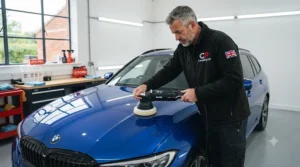
A dual-action polisher spins the pad while also oscillating it, which spreads heat and reduces the risk of burning paint. Farécla’s own guidance describes DA machines as the more forgiving option in machine polishing. For a heavy cut compound, that forgiveness is the whole point.
Two machines dominate beginner conversations. The Meguiar’s MT300 offers a 3,000-7,500 OPM range, digital torque management and a soft start, which reviewers say helps hold speed under pressure. One enthusiast noted its 8mm orbit won’t cover ground as fast as long-throw machines. The Rupes LHR15 Mark V, with a 15mm throw, is widely recommended as a balanced all-rounder for serious enthusiasts. Check current price and UK availability for both.
A few practical settings help. Menzerna suggests working Menzerna Heavy Cut Compound 400 at roughly 4,000-5,000 orbits per minute, which is around speed 4-5 on many machines. Keep the pad flat, work a small section, and let the machine do the labour. Pressing harder rarely helps, and a DA generally cuts less than a rotary, so choose your pad accordingly.
Correction Pads: Foam, Microfibre or Wool?
Correction pads matter as much as the bottle. Farécla’s pad guide notes that wool is the most aggressive option but usually needs refinement with a finer pad afterwards, that microfibre can outcut foam on harder paints, and that DA machines pair naturally with foam and microfibre.
- Foam is the safest all-rounder, with a slower cut and cleaner finish. A three-pad set (cutting, polishing, finishing) handles most home jobs.
- Microfibre suits heavy compounds on a DA. It cuts faster than foam but needs frequent cleaning because it mats down and holds heat.
- Wool is the heavy-hitter, best on rotaries. For a DA beginner it’s rarely necessary.
Pad colours are not standardised between brands, so read the maker’s grade rather than trusting the colour. If you pair Koch Chemie Heavy Cut H9.02 with a wool pad, follow with a finer foam pad and polish. Sonax Profiline CutMax 06-04 on a microfibre cutting pad, then a foam finishing pad, is a common DA workflow in the reports I read. Clean pads often, and replace any that are worn or misshapen.
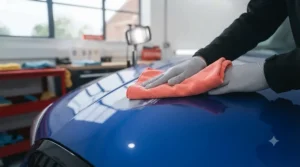
Clear Coat Safety: How Much Paint Can You Safely Remove?
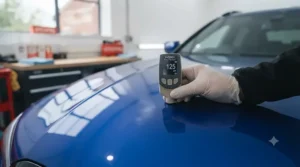
Clear coat safety comes down to a simple fact: the layer you’re cutting is tiny. According to DeFelsko’s paint thickness guide, most factory paint totals 4-7 mils (100-180 microns), with clear coat typically around 1.5-2.0 mils (35-50 microns). It also notes that many manufacturers recommend removing no more than about 0.3 mils (8 microns) to protect the UV blockers.
Retailer estimates, not laboratory data, suggest a foam cutting pad with a heavy compound removes around 2-3 microns per session. A microfibre cutting pad removes around 3-4 microns, and wool on a rotary 3-5 microns. Do the maths and it’s clear why repeated heavy cutting is a bad habit. Three enthusiastic sessions with Koch Chemie Heavy Cut H9.02 could consume most of that 8-micron guideline.
To protect clear coat safety:
- Measure with a paint thickness gauge if you can, remembering most read total thickness, not clear coat alone.
- Take extra care on edges, roof lines and panel creases, where paint is thinnest.
- Be wary of cars that have been machine-polished repeatedly or partially resprayed.
- Use the least aggressive compound that works, such as Meguiar’s Ultimate Compound, before escalating.
How to Use Cutting Compound with a Dual-Action Polisher: Step-by-Step
Here’s a practical routine for using cutting compound for car paint correction safely with a dual-action polisher.
- Wash and decontaminate. Remove dirt and bonded contaminants, or the pad will drag grit across the paint.
- Mask edges and trims. Tape rubber, plastic and sharp panel edges. Compound stains trims and edges are thin.
- Choose a test spot. Try roughly a 2 x 2 foot section with your least aggressive combination first.
- Prime the pad. For Menzerna Heavy Cut Compound 400, Polished Bliss suggests 3-4 pea-sized drops per 18 x 18 inch area on a DA.
- Spread, then work. Spread on a low speed, then work at around speed 4-5 with slow, overlapping passes until a thin, oily residue remains.
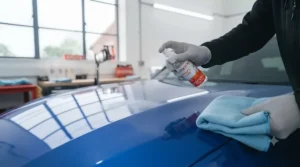
- Wipe and inspect. Use a clean microfibre and check under proper lighting. Repeat only if improvement continues.
- Refine. Follow with a finishing polish and pad to remove haze.
- Protect. Cut paint has no wax, so apply a sealant or wax afterwards.
Common first-30-day mistakes include overloading the pad, working too large an area, and skipping the finishing polish. Clean pads between sections and wear eye protection, since compound can sling.
Real-World Scenarios: Which Cutting Compound Suits You?
These illustrative profiles match buyer types to products, based on the specs and reviews above.
The budget-conscious commuter. Picture a ten-year-old hatchback with door-handle scratches and a scuffed bumper, and no machine. A hand-applied option such as Turtle Wax Rubbing Compound Heavy Duty Cleaner or Meguiar’s Ultimate Compound is realistic. Expect improvement, not perfection.
The weekend enthusiast with a black estate. Dark paint shows every flaw. With a dual-action polisher, Menzerna Heavy Cut Compound 400 or Sonax Profiline CutMax 06-04, plus a foam finishing step, offers strong correction with low dust. Work in short sessions, watch clear coat safety, and finish with sealant.
The restorer with sanded panels. After wet-sanding a respray or repaired panel, Farécla G360 Super Fast Compound or Koch Chemie Heavy Cut H9.02 is the logical tool. Follow with a finer polish because these compounds prioritise cut over finish.
The caravan or van owner. Large flat panels and oxidised gelcoat suit Farécla G3 Regular Grade Paste Compound, and reviewers report success there. It’s economical and works by hand or machine, though dustier than modern liquids.
Price Range & Value Analysis: Cost per Panel
Bottle price is a poor guide to value. Cost per panel depends on how quickly a compound cuts and how far it spreads. A cheaper compound that needs three passes may cost more in time and clear coat than a dearer one that cuts in one.
| Product | Pack analysed | Indicative price band | Value angle |
|---|---|---|---|
| Turtle Wax Rubbing Compound Heavy Duty Cleaner | 298g | under £10 | Cheapest for spot repairs |
| Meguiar’s Ultimate Compound | 450ml | around £12-£20 | Best beginner value |
| Farécla G3 Regular Grade Paste Compound | 400g | around £10-£18 | Economical, long-lasting |
| Menzerna Heavy Cut Compound 400 | 250ml | around £15-£25 | Best one-bottle correction |
| Sonax Profiline CutMax 06-04 | 250ml | around £18-£28 | Low-dust convenience |
| Koch Chemie Heavy Cut H9.02 | 250ml | around £18-£30 | Premium cut for hard paint |
| Farécla G360 Super Fast Compound | 500g | around £20-£35 | Speed for larger jobs |
Looking at the table, Meguiar’s Ultimate Compound and Farécla G3 Regular Grade Paste Compound offer the lowest entry cost. Menzerna Heavy Cut Compound 400 is the strongest all-round value if you own a machine. Remember total cost of ownership: pads, a finishing polish, sealant, microfibres and possibly a paint thickness gauge all add up.
✨ Ready to Cut Through the Swirls?
🔍 Take your paint correction to the next level with these carefully selected compounds. Click on any highlighted product name to check current pricing and availability on amazon.co.uk. Pair the right compound with the right pad, and you’ll create a finish you’ll be proud to park anywhere.
Common Mistakes When Buying and Using Cutting Compound
Most disasters come from enthusiasm rather than ignorance. Watch for these:
- Buying the most aggressive bottle first. Koch Chemie Heavy Cut H9.02 is brilliant for hard paint and excessive for light swirls. Start mild.
- Ignoring the finishing step. Heavy compounds leave haze, so budget for a finer polish.
- Overloading the pad. More product doesn’t mean more cut. It means more sling and more residue.
- Neglecting clear coat safety. Repeated heavy correction adds up. Measure where you can.
- Skipping a test spot. Paint hardness varies between makes and even panels, so test first.
- Expecting hand work to match a machine. A dual-action polisher does in minutes what elbow grease takes hours to attempt.
FAQ
❓ Can I use cutting compound by hand instead of a machine?
❓ How often can you use a heavy cut compound on the same car?
❓ Do I need a finishing polish after a heavy cut compound?
❓ Is Farécla G3 or Meguiar's Ultimate Compound better for beginners?
❓ Will cutting compound damage a ceramic coating?
Conclusion
The right cutting compound for car paint correction isn’t the most aggressive bottle on the shelf. It’s the gentlest one that still does the job. For most drivers, that means starting with Meguiar’s Ultimate Compound or Turtle Wax Rubbing Compound Heavy Duty Cleaner for hand work, then stepping up only if the defect demands it.
If you own a dual-action polisher, Menzerna Heavy Cut Compound 400 offers the best balance of cut and gloss, while Sonax Profiline CutMax 06-04 makes heavy correction less messy. For sanded panels and hard paint, Farécla G360 Super Fast Compound and Koch Chemie Heavy Cut H9.02 bring serious power, and Farécla G3 Regular Grade Paste Compound remains a dependable budget workhorse. Whatever you choose, pair it with sensible correction pads, follow with a finishing polish, and respect clear coat safety. Every micron you keep is a micron of protection.
✨ Your Paint Deserves a Better Finish!
🚗 Ready to restore your car? Click any highlighted product name above to check current pricing and availability on amazon.co.uk, choose the compound that matches your paint and your patience, and start turning swirls into shine. Your next car park story could be a much shinier one!
Recommended for You
- Car Polish For Swirl Marks: 7 Best UK Picks (2026)
- Liquid Wax vs Paste Wax For Cars: 7 Proven Picks (2026)
- Paste Wax For Black Cars: 7 Deep-Gloss Picks For 2026
Disclaimer: This article contains affiliate links. As an Amazon Associate, I earn from qualifying purchases. If you purchase products through these links, we may earn a small commission at no additional cost to you.
✨ Found this helpful? Share it with your friends! 💬🤗
