
In This Article
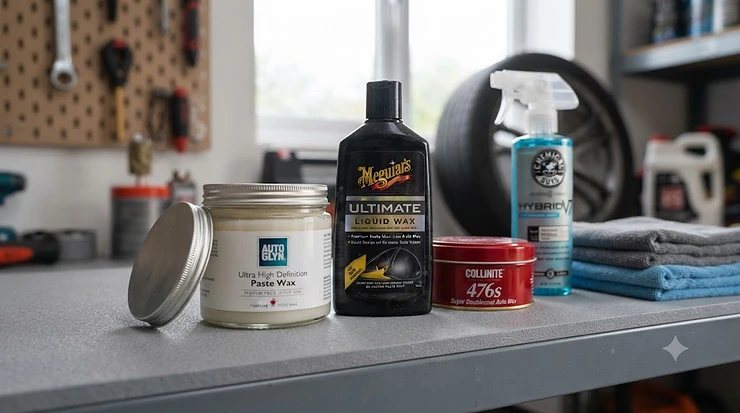
Here’s the dirty secret of the detailing aisle: the bottle and the tin are closer than the marketing suggests. When you weigh liquid wax vs paste wax for cars, you’re choosing a texture, a workflow and a re-wax rhythm. You’re not choosing a good side and a bad side. One format gives you speed and forgiveness. The other asks for a slower, more ritualistic job and often rewards you with a longer gap before the next one.
Why does it matter in Britain? Because our cars lead hard lives. Winter road salt and grit, soggy Novembers and driveways instead of garages all take their toll. A wax that gives up after eight weeks is a very different proposition from one still beading after a season. Carnauba is the hard palm wax from north-eastern Brazil, which melts at roughly 82–86°C. It sits behind many traditional pastes. Modern liquids lean on synthetic polymers and, increasingly, SiO2 ceramic additives. Different chemistry, different behaviour.
This guide compares seven real products sold in the UK: three liquids and four pastes. It draws on published specs and aggregated reviewer verdicts, not invented experience. We’ll cover liquid wax pros and cons, paste wax application difficulty, the easiest wax to apply, ease of application in general, durability differences and cost per application. Then we’ll match each wax to a type of driver. Prices are ranges only, so always check the current price before you buy.
Let’s get the numbers on the table.
Quick Comparison Table: Seven Waxes at a Glance
| Wax | Format | Reported durability | Price range* | Best For |
|---|---|---|---|---|
| Meguiar’s Ultimate Liquid Wax | Liquid, synthetic polymer | ~3–6 months (mixed reports) | £25–£35 | Busy commuters |
| Meguiar’s Hybrid Ceramic Liquid Wax | Liquid, SiO2 hybrid | Claimed 4–6 months; some tests far shorter | £20–£30 | Regular top-up fans |
| Autoglym Extra Gloss Protection | Liquid sealant | ~3–4 months (brand: up to 30 washes) | £12–£20 | Budget durability |
| Meguiar’s Ultimate Paste Wax | Paste, synthetic | ~4–5 months | £20–£30 | First-time paste users |
| Dodo Juice Supernatural Hybrid | Paste, wax/sealant hybrid | ~4–6 months | £10–£16 (30ml pot) | Winter protection |
| Dodo Juice Blue Velvet | Paste, high-carnauba | ~3-month recommended interval | £10–£15 (30ml pot) | Dark paint on a budget |
| Autoglym Ultra High Definition Wax | Paste, carnauba-based | ~4–7 months | £50–£65 | Show-car depth |
*Ranges at the time of research; prices may vary, so check current price.
Read across the Best For column and a pattern emerges. The liquids cluster around speed and forgiveness. The pastes split into a budget carnauba route (Dodo Juice Blue Velvet) and a premium showpiece route (Autoglym Ultra High Definition Wax). The durability figures overlap heavily too. Autoglym Extra Gloss Protection, a liquid, matches or beats some pastes. Durability differences, in other words, follow chemistry more than format, and brand “up to” claims run well ahead of what independent reviewers report.
💬 Just one click — help others make better buying decisions too!😊
Top 7 Liquid and Paste Waxes: Expert Analysis
Three liquids come first, then four pastes. Each entry pairs the spec sheet with what it means in practice, plus the themes reviewers keep returning to.
1. Meguiar’s Ultimate Liquid Wax — the easy-going all-rounder
This wax earns its reputation by being hard to get wrong. It’s a pure synthetic polymer formula in a 473ml bottle (code G210516EU), and the box includes a foam applicator and a microfibre towel. A “thin film” formulation is designed to wipe off with minimal effort. That’s a real advantage if you’re working alone in a British summer where the sun appears for roughly forty minutes.
Based on the spec comparison, this is the wax to hand a first-timer or a time-poor commuter. The trade-off, which reviewers raise repeatedly, is depth. The finish is clean and glassy rather than warm and wet-looking. Durability is the wildcard. Owner reports range from about three to six months. At least one enthusiast thread complains of beading fading within weeks, so prep and washing habits clearly matter.
Review sentiment is strongly positive on application and gloss, with a minority reporting short life. I couldn’t verify a current amazon.co.uk star average, so treat any rating you see as a starting point.
Pros:
- ✅ Spreads and buffs with very little effort
- ✅ Applicator and towel included in the box
- ✅ Large bottle stretches across many applications
Cons:
- ❌ Less warmth and depth than carnauba pastes
- ❌ Durability reports vary widely between owners
Around £25–£35 at the time of research (check current price), which is good value for the volume.
2. Meguiar’s Hybrid Ceramic Liquid Wax — SiO2 beading without coating fuss
The pitch is ceramic-style water behaviour without the exacting cure of a true coating. This 473ml bottle (G200416EU) applies like a normal liquid wax and cures for around three to five minutes before you wipe. It’s non-whitening on unpainted trim and rubber, which saves a lot of masking-tape misery. It can also sit over an existing wax or sealant as a topper.
This is where honest analysis matters, because the marketing and the independent reviewers disagree. Retailer copy talks about four to six months. Independent testers report beading fading in roughly five to eight weeks, with one noting decline from around day 35. On paper, that makes it a top-up product to refresh regularly, not a set-and-forget coat. One UK retailer also notes that, of the three Hybrid Ceramic formats, this liquid demands the most elbow grease.
Reviewers like the slickness and the trim-safe behaviour. The recurring complaint is longevity against the claims.
Pros:
- ✅ Trim-safe formula cuts masking time
- ✅ Very slick feel with strong initial beading
- ✅ Works as a topper over existing protection
Cons:
- ❌ Independent tests show shorter life than brand claims
- ❌ Takes more effort than the standard liquid
Roughly £20–£30, fair value if you’re happy to top up often.
3. Autoglym Extra Gloss Protection — durable British sealant in a bottle
This one predates the ceramic fashion and still holds its ground. The 500ml bottle is a sealant rather than a carnauba wax, and Autoglym rates it for up to 30 washes. Application is a soft cloth and a light wipe. The brand suggests waiting about two minutes before buffing, though several reviewers leave it to haze for much longer.
The spec sheet won’t tell you this, but reviewers do: it’s a clear liquid, so it’s hard to see where you’ve been. It’s also not a polish, so it won’t hide swirls and needs sound, polished paint underneath. Independent reviewers report roughly three to four months of protection. Some get just over four months over a resin polish, and nearer six with a second coat. A retailer notes it’s classed as flammable, so store it sensibly.
Sentiment is warm. One UK retailer’s small sample of 11 reviews averaged around 4.2 out of 5, with praise for easy application and lasting protection.
Pros:
- ✅ Light-wipe application with minimal buffing effort
- ✅ Strong durability for a liquid
- ✅ Inexpensive for the bottle size
Cons:
- ❌ Clear formula makes coverage hard to judge
- ❌ Won’t correct swirls or dull paint
Around £12–£20, arguably the best value in this group.
4. Meguiar’s Ultimate Paste Wax — paste that behaves like a liquid
If paste wax application difficulty is what’s stopping you, this is the gentlest way in. It’s a synthetic polymer paste, supplied with a foam applicator and a microfibre cloth. Meguiar’s claims it spreads and wipes off easily, even in full sun, though sun is never ideal for any wax. One reviewer’s safety-data-sheet reading suggests it contains no traditional carnauba.
The result is a uniform, clean shine rather than a warm carnauba glow. Community reports point to roughly four to five months of visible beading on a weekly-washed daily driver, stretching to five or six on a garaged car. Other owners report only two to three months, so results clearly vary. Think of it as the training-wheels paste. If you want more than five months, look towards the premium entries below.
Reviewers consistently describe the application as forgiving and thin-film, and the main criticism is a lack of carnauba depth.
Pros:
- ✅ Forgiving, thin-film application
- ✅ Kit includes applicator and microfibre cloth
- ✅ Clean, even synthetic gloss
Cons:
- ❌ Shorter life than premium carnauba or hybrid pastes
- ❌ Lacks warm carnauba depth
Roughly £20–£30 (indicative; check current price), a sensible mid-tier buy.
5. Dodo Juice Supernatural Hybrid — half wax, half sealant paste
This is the compromise candidate. The 30ml pot (SNHYP30) has a butter-like texture, and the brand says it fills minor defects for a glossy, reflective finish. Retailers and the brand both put daily-driver life at about four to six months. It also handles heat well, which helps on a warm bonnet.
Here’s what to weigh. A hybrid asks for a touch more effort than a liquid but far less than a stubborn hard carnauba. Apply it thinly, because reviewers who overdid it reported lumps that were hard to buff off. UK Amazon reviewers praise the beading and long life. They also note it can attract dust between washes and is tricky to judge on a white car, where coverage is hard to see. The small pot goes a long way, with one reviewer saying it should easily do three cars.
Pros:
- ✅ Reported four to six months on daily drivers
- ✅ Butter-soft texture spreads easily
- ✅ Strong beading and heat resistance
Cons:
- ❌ Can attract dust between washes, per UK reviewers
- ❌ Overapplication leads to lumps and hard buffing
Around £10–£16 for the 30ml pot, excellent value per coat.
6. Dodo Juice Blue Velvet — budget carnauba with a dark-paint tint
Blue Velvet is the friendliest doorway into real carnauba. The 30ml pot (DJBVP30) blends T1-grade carnauba with beeswax and a little synthetic fortifier, and the brand says one pot covers three to four coats on a Golf-sized car. The tint suits dark and black metallics. The mild solvent also makes it popular with classic-car owners.
Based on what the brand says and reviewers report, the recommended interval is about three months. That’s a shorter gap than the premium pastes, but the cost per coat stays low. A marketplace listing showed roughly 4.8 out of 5 across 47 ratings. Owners describe it as easy on and easy off. One notes the small jar makes the wax awkward to scoop out. A UK reviewer of the related Pro version reminds us the tint isn’t a scratch filler. Treat the colour effect as a subtle bonus.
Pros:
- ✅ Low entry cost with three to four coats per pot
- ✅ Easy on, easy off according to most reviewers
- ✅ Rich gloss on dark paint
Cons:
- ❌ Three-month interval means more frequent re-waxing
- ❌ Tint effect is subtle, not corrective
Roughly £10–£15, the cheapest way to try proper carnauba.
7. Autoglym Ultra High Definition Wax — flagship carnauba-based paste
This is the paste that undermines the “pastes are hard work” cliché. Autoglym UHD Wax comes in a 120ml tin with a foam applicator and a microfibre towel. It’s a soft paste with a stated cure time of about 10–15 minutes. Autoglym promises up to six months. CAR magazine’s review called durability outstanding for a non-ceramic wax but flagged the price and occasional greasy marks on trim.
One long-term reviewer reports about five months in summer from a single coat and around seven from a double coat, with four to five in winter. Parkers also names it best in its 2026 roundup. Forum owners advise using far less than you think, since heavy-handed users empty the tin quickly. Keep it off plastic trim, or clean up smears promptly.
Sentiment is overwhelmingly positive on gloss and ease. The recurring gripe is price.
Pros:
- ✅ Reported four to seven months of protection
- ✅ Soft paste that spreads easily
- ✅ Deep, immersive gloss
Cons:
- ❌ Premium price for a small tin
- ❌ Can mark plastic trim if not masked
Around £50–£65, pricey but defensible if you value depth and longevity.
✨ Don’t Miss These Carefully Selected Picks!
🔍 Take your paintwork to the next level with these seven waxes. Click on any highlighted product name to check current pricing and availability. The right tin or bottle will help you create a protected, glossy finish your neighbours will notice!
How to Apply Liquid and Paste Wax: A Practical UK Step-by-Step Guide
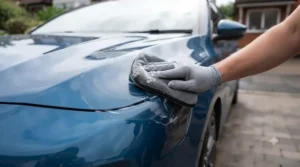
The waxes above won’t rescue a badly prepared panel, so here’s the sequence that matters most.
- Wash properly. Use pH-neutral shampoo, rinse thoroughly and dry with a clean microfibre towel.
- Feel the paint. Run your fingertips across it. If it feels rough, decontaminate first, because wax bonds better to smooth paint.
- Work in shade on cool panels. Heat makes waxes dry too fast and buff off badly.
- Go thin. Liquids need only a few drops on the pad. Pastes need one light swipe of the pad, and some owners warm a little between their fingers first. Working in small sections stops the wax drying before you reach it.
- Use the haze test. Swipe a finger through the film. If it wipes clean, it’s ready. Cure times vary, from about three to five minutes for Meguiar’s Hybrid Ceramic Liquid Wax to 10–15 minutes for Autoglym UHD Wax.
- Buff with a fresh towel. Turn it often, and don’t press hard.
- Clean up trim smears. A retailer guide suggests a glass cleaner for white residue on plastics.
A simple maintenance rhythm works for most UK cars. Apply a full coat in October before the salt arrives, then a top-up in spring. Between coats, keep washing with pH-neutral shampoo. The commonest first-month mistakes are over-applying, waxing over dirt and reusing a wax-clogged towel. Store bottles sensibly too, since one retailer classes Autoglym Extra Gloss Protection as flammable.
Which Wax Suits Which Driver? Three Real-World Scenarios
The driveway commuter
Picture a 12,000-mile-a-year hatchback parked outside, with a budget of about £30 and two hours free twice a year. Speed and forgiveness beat depth here. Meguiar’s Ultimate Liquid Wax or Autoglym Extra Gloss Protection fit, with a top-up every few months. Waxing before winter matters more than waxing perfectly.
The dark-paint enthusiast
Now picture a garaged black estate driven mostly at weekends, with a budget over £60 and a real appetite for a Saturday in the garage. Depth is the priority. Dodo Juice Blue Velvet suits the tinted-carnauba look, while Autoglym UHD Wax is the showpiece. Two thin coats of either will reward the patience.
The winter-proofer on a tight budget
Finally, a family SUV on the road daily and a budget of about £15, aiming to survive salt season. Dodo Juice Supernatural Hybrid offers reported four to six months from a small pot. Meguiar’s Ultimate Paste Wax is the gentler alternative if paste worries you.
If you’re a first-time waxer, start with the forgiving options. You can always graduate to harder carnauba later.
What Is the Difference Between Liquid Wax vs Paste Wax for Cars?
Liquid wax vs paste wax for cars comes down to formulation and workflow. Liquid waxes are pourable, solvent-rich and quick to spread and buff. Paste waxes are denser and solids-rich, applied by pad. They typically trade extra effort for a deeper finish and often longer protection. Neither format is automatically superior.
| Factor | Liquid wax | Paste wax |
|---|---|---|
| Texture | Pourable, thin | Dense, solid |
| Typical effort | Lower, quick spread | Moderate, thin-coat discipline |
| Reported durability | ~2–6 months | ~3–7 months |
| Gloss depth | Moderate to good | Often deeper (carnauba) |
| Trim and edges | Easier on contours | Higher build-up risk |
| Machine use | More suitable | Usually by hand |
| Best For | Meguiar’s Ultimate Liquid Wax | Autoglym UHD Wax |
The table reflects a broad consensus among detailing guides, and the exceptions matter. Dodo Juice Supernatural Hybrid blurs the line between wax and sealant, and Autoglym Extra Gloss Protection is a liquid with paste-like life. Use the format as a rough guide, then read the label for the chemistry.
How to Choose Between Liquid Wax vs Paste Wax for Cars
- Decide your re-wax rhythm. If you’ll re-wax every couple of months anyway, liquid’s speed wins. If you want two big jobs a year, paste’s longer protection appeals.
- Check where the car lives. A driveway car meets more salt and grit than a garaged one, so favour the more durable options.
- Consider paint colour. Dark cars show wax residue and reward tinted carnauba like Dodo Juice Blue Velvet. Pale paint hides coverage errors, so it suits thin, even coats.
- Count your free time. Under an hour? Pick a liquid. A leisurely afternoon? A paste becomes a pleasure.
- Look at your trim. Black plastic and rubber suffer from white residue. Trim-safe formulas like Meguiar’s Hybrid Ceramic Liquid Wax save masking.
- Compare cost per application, not shelf price. A £60 tin can be cheaper per coat than a £25 bottle if you use it sparingly.
Liquid Wax Pros and Cons: The Honest Ledger
Start with the upside. Detailing guides typically credit liquids with quick spreading, easy buffing and better behaviour on contoured panels, where paste can pile up around badges and trim. Machine application is also more realistic. Meguiar’s says its Hybrid Ceramic liquid is engineered for hand or dual-action polisher use.
Now the downside. Liquid formulas carry more solvent, and in many products that means shorter life than a dense paste. Some liquids also settle in the bottle, so shake before use. Depth is another sticking point. Synthetic polymer liquids can look glassy and clean but less warm than carnauba.
Two nuances complicate the tidy story. First, chemistry beats format, so a sealant-style liquid can rival a paste for life. Second, “easy” is relative. Autoglym Extra Gloss Protection is simple to spread but tricky to see and slow to cure.
In short, liquid wax pros and cons boil down to speed and versatility against depth and, in many cases, durability. If those trade-offs suit your Saturday, liquid is the sensible default.
Paste Wax Application Difficulty: How Hard Is It Really?
The conventional wisdom says paste is fiddly. It’s harder to spread evenly, slower to buff and more likely to gather around trim. Detailing guides often put paste application at 20–45 minutes for a whole car, against 5–15 for liquid.
But the evidence isn’t one-sided. Consumer Reports’ testers concluded paste waxes were easier to use than liquids. Liquids, they found, cleaned better but could be harder to apply and buff evenly, and pastes hazed quickly. The gap between those verdicts likely comes down to what “easy” means. Enthusiasts count total time and trim clean-up, while a panel scoring spreading and wiping may not.
In practice, paste wax application difficulty depends heavily on the product. Meguiar’s Ultimate Paste Wax and Autoglym UHD Wax are soft and forgiving. Harder carnauba pastes reward warming and thin coats but punish heavy hands. The rule is the same either way: less product, smaller sections, and a clean towel. Master those and the format loses most of its intimidation.
Easiest Wax to Apply: Ranking the Seven
Based on the spec comparison and aggregated reviewer comments, here’s the order I’d expect for effort, easiest first:
- Meguiar’s Ultimate Liquid Wax — thin film, kit included, forgiving.
- Meguiar’s Ultimate Paste Wax — reviewers call the thin-film application forgiving.
- Autoglym UHD Wax — a soft paste that many reviewers describe as very easy.
- Dodo Juice Blue Velvet — easy on and off, though the small jar frustrates some.
- Dodo Juice Supernatural Hybrid — butter-soft but easy to over-apply on pale paint.
- Autoglym Extra Gloss Protection — light wipe, but clear coverage and a longer cure window.
- Meguiar’s Hybrid Ceramic Liquid Wax — one UK retailer says it demands the most elbow grease in its range.
Remember that this is a reasoned ranking, not a lab measurement. The easiest wax to apply on your car depends on your paint, your shade and your patience. If the easiest wax to apply is your only criterion, start at the top of the list and enjoy your afternoon.
Ease of Application: What Actually Changes the Effort
Product format explains only part of the ease of application story. Temperature comes first. Hot panels flash-dry every wax, so shade and cool paint matter more than any brand claim. Paint colour comes second. Wax on white paint hides coverage errors, as UK reviewers of Dodo Juice Supernatural Hybrid noted, while black paint shows every smear.
Third is panel complexity. Badges, grilles and trim gather residue, so liquids or careful edge work help. Fourth is your tool set. A dual-action polisher on a low setting with a finishing pad speeds up big panels if the wax is designed for it. Fifth is prep. Wax on clean, smooth paint spreads and buffs with less drama.
The practical takeaway is that ease of application is something you engineer, not just something you buy. Thin coats, small sections, clean towels and a haze test will make a “difficult” wax behave and a “simple” one shine.
Durability Differences: What UK Weather Does to Wax
Here’s the honest picture of durability differences. Across the sources, liquids report roughly two to six months and pastes about three to seven. The overlap is huge because format isn’t what destroys protection. Chemistry, prep, washing habits and weather are.
Take Autoglym UHD Wax. One long-term reviewer reports about five months in summer from a single coat and seven from a double coat, dropping to four and five in winter. That double-coat effect matters: Autoglym Extra Gloss Protection reviewers report the same pattern, moving from around four months towards six. By contrast, Meguiar’s Hybrid Ceramic Liquid Wax promises the most and reportedly delivers less in independent tests.
British conditions amplify the gaps. Salt-laden winter roads, road film and harsh detergents strip wax quickly, so pH-neutral shampoo and gentler washes extend life. Weekly washing shortens it too, which is why claims made under ideal conditions rarely survive contact with a Lancashire February.
My reading is simple. Plan around the lower end of any claimed range, apply two thin coats before winter and treat top-ups as normal maintenance.
Cost per Application: Doing the Maths
Shelf price misleads. A small pot can be cheap per coat, while a big bottle can be pricey up front but frugal over a year. Here’s the arithmetic, with estimates flagged as mine.
| Wax | Price range | Coverage clue | Interval | Rough cost per application | Best For |
|---|---|---|---|---|---|
| Dodo Juice Blue Velvet | £10–£15 | Brand: 3–4 layers per pot | ~3 months | ~£2.50–£5 | Budget carnauba |
| Dodo Juice Supernatural Hybrid | £10–£16 | Reviewers: about three cars per small pot | 4–6 months | ~£3–£5 | Winter protection |
| Autoglym UHD Wax | £50–£65 | Heavy-handed users: ~6 coats; thin: far more | 4–7 months | ~£4–£11 | Show finish |
| Meguiar’s Ultimate Liquid Wax | £25–£35 | My estimate: 10–20 uses | 3–6 months | ~£1.25–£3.50 | Frequent waxers |
| Meguiar’s Hybrid Ceramic Liquid Wax | £20–£30 | My estimate: 10–20 uses | Top up often | ~£1–£3 | Regular top-ups |
| Autoglym Extra Gloss Protection | £12–£20 | My estimate: 10–20 uses | ~3–4 months | ~£0.80–£2 | Budget durability |
| Meguiar’s Ultimate Paste Wax | £20–£30 | My estimate: 10–15 uses | 4–5 months | ~£1.50–£3 | First-time paste users |
Estimates aren’t brand claims. Check current price before you buy.
The pattern is clear. Large bottles win on cost per application, and small pots win on cheap entry. The premium tin costs more per coat, but it needs fewer coats a year. Even the priciest option lands at only a few pounds a coat, so cost per application is rarely the decider. Parkers, which named Autoglym UHD Wax its best in a 2026 roundup, still calls it pricier than rivals while judging the finish worth it. Decide on durability and ease of application first, then let cost per application break the tie.
FAQ
❓ Can you put liquid wax over paste wax?
❓ Is paste wax worth the extra money for a daily driver?
❓ How often should you wax a car in the UK?
❓ Can you apply liquid wax with a machine polisher?
❓ Is liquid wax or paste wax better for a black car?
Conclusion
So, which wins the liquid wax vs paste wax for cars contest? On the evidence, neither. Liquids win on speed, forgiveness and cost per application, with Meguiar’s Ultimate Liquid Wax and Autoglym Extra Gloss Protection the standouts. Pastes win on depth and, often, on a longer gap between coats. Autoglym UHD Wax leads for gloss, Dodo Juice Supernatural Hybrid for winter cover, and Dodo Juice Blue Velvet for cheap carnauba. Meguiar’s Ultimate Paste Wax is the gentle entry, and Meguiar’s Hybrid Ceramic Liquid Wax suits people who don’t mind topping up.
The bigger lesson is that durability differences follow chemistry, prep and washing habits more than format. Plan around the lower end of brand claims, apply thin coats, and time your main wax for October. The easiest wax to apply is the one you’ll actually use, so pick honestly for your Saturday, not your fantasy detailing weekend.
Recommended for You
- Paste Wax For Black Cars: 7 Deep-Gloss Picks For 2026
- All-In-One Polish And Wax: 7 Best Picks for UK Cars (2026)
- Car Wax Under £20: 7 Best Cheap Picks for a Showroom Shine (2026)
Disclaimer: This article contains affiliate links. As an Amazon Associate, I earn from qualifying purchases. If you purchase products through these links, we may earn a small commission at no additional cost to you.
✨ Found this helpful? Share it with your friends! 💬🤗
