
In This Article
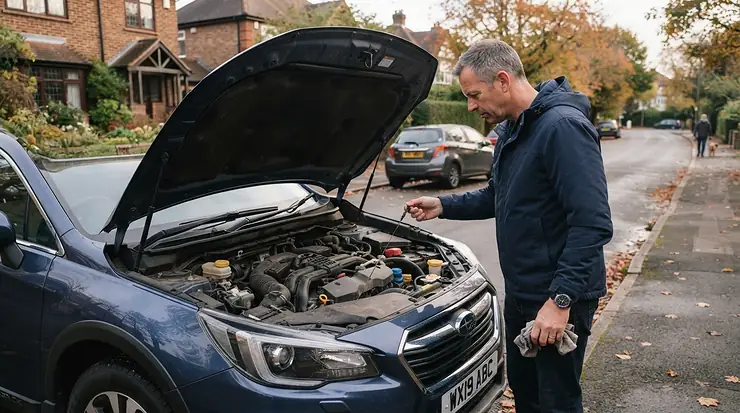
Your engine runs hot. Not warm. Hot enough to cook itself into an expensive paperweight within minutes if the cooling system lets go. Coolant and antifreeze for cars is what stops that from happening, and with the first proper frosts only weeks away across much of Britain, it’s the one under-bonnet job worth doing before you need it.
Here’s the snag. Walk into any motor factor and you face a wall of pink, blue, violet, yellow and red bottles, every one promising “long life” protection. Choose well and you save money and spare your radiator. Choose badly and you risk sludge, corrosion and a repair bill that makes a bottle of antifreeze look like loose change.
This coolant buying guide cuts through that noise. I’ve compared manufacturer data sheets, British Standard BS 6580:2010 claims, approvals lists and the genuine customer commentary I could verify to shortlist seven real products. They range from universal top-up fluids to specification-matched formulas for modern European engines. Along the way you’ll get plain-English answers on freezing point protection, coolant colours, mixing coolant types and which top-rated car coolant brands deserve a place in your boot.
One honest note first: the prices below are ranges, not quotes. They move constantly, so always check the current listing.
Quick Comparison: Coolant and Antifreeze for Cars at a Glance
Short on time? This table shows how the seven picks differ. Every figure comes from manufacturer or retailer listings at the time of research, so treat them as claims to confirm against your handbook.
| Product | Type | Technology | Stated protection | Best For |
|---|---|---|---|---|
| Prestone Ready to Use | Ready-to-use | OAT-based universal | -37°C to 129°C (tested) | Emergency top-ups, unknown-history cars |
| Comma Xstream G30 | Ready-mixed 5L | OAT, silicate-free | -36°C | Modern VW-group and Mercedes applications |
| Febi Bilstein G12++ | Violet, 5L | Si-OAT (G12++) | Around -35°C | VW TL 774-G and Mercedes 325.5/325.6 cars |
| Shell Longlife | 4L OAT | OAT | Up to -37°C (retailer claim) | Drivers wanting a big-name BS 6580 coolant |
| Bluecol Universal | Clear, 1L ready-mixed | Universal top-up | -36°C | Mixed-colour top-ups |
| Hexeal Red | Red, 5L | Long-life OAT-based | -37°C | Budget red-coolant systems |
| Hexeal Blue | Blue, 5L ready-mix | NAP-free, silicate-free | -23°C (stated) | Older, low-value cars on a tight budget |
Look at the pattern. The universal options (Prestone Ready to Use, Bluecol Universal) trade specification precision for flexibility, while Comma Xstream G30 and Febi Bilstein G12++ aim at specific manufacturer approvals. The two Hexeal Red and Hexeal Blue bottles win on price, but Hexeal Blue‘s -23°C rating makes it the weakest cold-weather performer here. If your car lives outdoors in the Scottish Highlands, that number matters.
💬 Just one click — help others make better buying decisions too!😊
What Is Coolant and Antifreeze for Cars?
Coolant and antifreeze for cars is a glycol-and-water mixture, plus corrosion inhibitors, that circulates through your engine. It lowers the mixture’s freezing point, raises its boiling point and protects metal parts from rust and scale. “Antifreeze” usually means the concentrate; “coolant” is the diluted fluid actually in your system.
The base is almost always ethylene glycol, and Wikipedia’s overview of antifreeze notes that most products are made by combining distilled water with additives and a base of mono ethylene glycol or mono propylene glycol. Ethylene glycol has the better thermal properties: a high boiling point, a low freezing point and stable behaviour across wide temperature swings. Propylene glycol is considerably less toxic, which is why it turns up in “non-toxic” formulations, but it’s less common in car engines.
The additive package is where products really differ. Inhibitors decide which metals are protected, how long the fluid lasts and which engines it suits. That’s why the cheapest bottle isn’t always the bargain it looks, and why the colour of the liquid tells you far less than the specification printed on the label.
Top 7 Coolant and Antifreeze for Cars: Expert Analysis
1. Prestone Ready to Use — one bottle that mixes with anything
Prestone Ready to Use (the 1-litre PAFR0035B is a common size) is built around a simple promise: pour it into any car, mix it with any colour already in there, and stop worrying.
The brand says its formula is OAT-based with extra anti-corrosion ingredients, tested from -37°C to 129°C. It also claims protection for up to 10 years or 300,000 miles. In practice, that top end gives you boil-over headroom well beyond what a British summer traffic jam can throw at a pressurised system. The 10-year figure is a manufacturer claim, so follow your car maker’s change interval alongside it.
My take: this is the bottle for an unknown service history or a glovebox emergency. It deliberately skips individual manufacturer approvals, so if your handbook or warranty insists on a named specification, a matched product is the safer route for a full refill.
The verifiable feedback I found concerned the US pouch version and centred on convenience and reliability. I haven’t treated that as UK review evidence.
Pros:
- ✅ Mixes safely with any coolant colour
- ✅ Ready to use, so no dilution errors
- ✅ Wide temperature range, stated -37°C to 129°C
Cons:
- ❌ No named manufacturer approvals
- ❌ 10-year life is a brand claim, not a service interval
Expect to pay under £10 for 1 litre, with larger packs in roughly the £10-£20 range; check current price. Good value as an all-rounder, less so as a full-system fill for a specification-sensitive car.
2. Comma Xstream G30 — OAT protection for modern European cars
Comma is a UK-based independent oil blender (founded 1965), and Comma Xstream G30 is its ready-mixed take on the G30 specification.
It’s an ethylene glycol coolant with OAT inhibitors, silicate-free, sold in 5 litres and ready to pour. Comma’s data sheet lists protection to around -36°C and a typical life of up to five years. The concentrate it’s based on conforms to BS 6580:2010, and the Glysantin G30 base carries approvals including VW-group TL 774-D/F and Mercedes-Benz MB-Approval 326.3 for the ready-mixed version. In plain English, that matches many older Audi, Skoda, Seat, VW and Mercedes cooling systems.
Because it’s pre-diluted with treated water, you don’t dilute it, which removes the classic limescale and mixing mistakes. The flip side is that the data sheet is blunt about mixing different antifreeze types: don’t. If your handbook asks for a different specification, this isn’t the one.
One retailer-side write-up called it reliable but noted that the listing said little about compatibility. That’s fair, so match your handbook spec before buying.
Pros:
- ✅ Approvals relevant to many VW-group and Mercedes cars
- ✅ Silicate-free OAT formula with bittering agent
- ✅ Ready-mixed, so no water-quality guesswork
Cons:
- ❌ Wrong spec for newer G12evo/G13 systems
- ❌ Data sheet warns against mixing types
Typically roughly £15-£25 for 5 litres. Strong value when it matches your handbook.
3. Febi Bilstein G12++ — the violet Si-OAT specialist
The Febi Bilstein G12++ 172019 earns its place for being a recognised OE-supplier brand’s take on a specific, widely demanded specification.
It’s a violet, silicated-OAT coolant listed for VW TL 774-G, Mercedes MB 325.5/325.6, MAN 324 Si-OAT and Scania TB 1451, with protection around -35°C. Febi’s own technical data for the G12++ family says it’s backwards-compatible with older VW G12+, G12 and G11 applications and free from nitrites, amines and phosphates. That matters for owners of ageing aluminium-heavy engines, where inhibitors do the heavy lifting.
Who is it for? Anyone whose handbook says “G12++” or a matching Mercedes or MAN code. Reading the code on the label beats trusting a dye every time, because violet from one maker isn’t guaranteed to match another’s.
Reseller reviews I found were short: a good make, and a cheap G12-type option. That’s encouraging but thin, so treat approvals as the main evidence rather than star ratings.
Pros:
- ✅ Named VW, Mercedes and MAN approvals
- ✅ Backwards-compatible with earlier G11 to G12+ specs
- ✅ Nitrite-, amine- and phosphate-free formulation
Cons:
- ❌ Wrong for cars specifying OAT-only or HOAT fluids
- ❌ Little verifiable customer feedback
Roughly £15-£25 for 5 litres; check current price. Very good value for the right car.
4. Shell Longlife — the big-brand OAT with a BS 6580 pedigree
When a motorist wants a name they’ve heard of, Shell Longlife is the obvious shelf-filler.
Shell’s data describes an OAT glycol coolant that avoids amines, borates, nitrates, nitrites, phosphates and silicates, and meets BS 6580 and ASTM D3306 requirements. It’s compatible with other similarly formulated OAT coolants. Shell’s own literature points to up to five years of protection, and one retailer listing cites freeze protection down to -37°C. In practice, “no silicates” means it avoids the gel-forming risks of mixing silicate-based fluids with OAT ones.
Now the caveat. I found several Shell Longlife variants (ready-to-use, concentrate, “Plus” versions), so confirm on the listing whether your 4-litre bottle is concentrate or ready-mixed. That changes how you use it, and getting it wrong dilutes your freezing point protection or leaves you with a bottle that’s too strong.
I couldn’t verify a meaningful pool of UK customer reviews for this exact listing, so I won’t characterise them.
Pros:
- ✅ Recognised brand with BS 6580 compliance
- ✅ Compatible with other OAT coolants
- ✅ Free of amines, nitrites and phosphates
Cons:
- ❌ Multiple variants make listings confusing
- ❌ Not a fit for silicated Si-OAT specifications
Roughly £15-£30 depending on pack and concentrate; check current price. Fair value, provided you buy the right variant.
5. Bluecol Universal — the clear top-up that mixes with everything
Bluecol Universal is the “just top it up” option from a long-standing UK brand name. It’s clear rather than coloured, which tells you something about its philosophy.
It’s sold as a ready-mixed 1-litre top-up for petrol and diesel cars, with freeze protection stated to -36°C. The brand says it mixes with all colours of antifreeze that conform to British Standard 6580, and can stay in the system as a coolant and inhibitor for up to five years. Translation: if your reservoir is slightly low and you don’t know what’s in there, this is designed to avoid a chemistry argument.
My honest take: it’s brilliant for the small top-up, but the label’s emphasis on convenience means it isn’t a precision-matched full refill for a car with a tight manufacturer specification. Treat it as the glovebox hero, not the main-event fluid.
Retailer pages list its features but I couldn’t find a large verified review set, so judge it on the claims above.
Pros:
- ✅ Mixes with all BS 6580-conforming colours
- ✅ Pre-mixed, so just pour to the level
- ✅ Small 1L pack suits top-ups
Cons:
- ❌ Not specification-matched for full refills
- ❌ Small pack costs more per litre
Typically under £10 for 1 litre; check current price. Good value for what it is.

6. Hexeal Red — budget-friendly red long-life coolant
Hexeal Red is the “keep it simple and cheap” option, a 5-litre red coolant sold for cars and vans.
It’s described as a long-life, OAT-based antifreeze for year-round use, with freeze protection stated to -37°C. The listing says it can be diluted or used neat, so check the bottle’s dilution instructions before pouring. At this size and price, it makes sense for a full drain-and-refill on a car that calls for a red-type coolant.
Who’s it for? Cost-conscious owners of older vehicles who have confirmed the handbook calls for a red, OAT-style fluid. The listing’s own advice is to check vehicle compatibility, and it’s right to say so, because “red” tells you very little about chemistry.
I couldn’t verify a meaningful review pool for this specific listing, so I’m not reporting sentiment. The pros and cons below follow the listing’s stated specifications.
Pros:
- ✅ Large 5L pack suits full refills
- ✅ Stated -37°C freeze protection
- ✅ Suitable for cars and vans
Cons:
- ❌ Compatibility must be confirmed by you
- ❌ Dilute-or-neat wording needs careful reading
Around £10-£20 for 5 litres; check current price. Strong value when the spec matches.
7. Hexeal Blue — the ready-mix for older, lower-value cars
The final pick, Hexeal Blue, is a ready-mixed 5-litre blue coolant pitched at older vehicles.
The listing says it’s nitrite-, amine- and phosphate-free and silicate-free, with two years’ protection and freeze protection to -23°C. Two years means you’ll be changing it more often than the five-year options above, and -23°C is respectable for most of Britain but thinner than the -35°C-plus rivals. The UK record low is -27.2°C, though you’re far more likely to see single digits or the low teens below zero on a hard night.
Feedback I could verify came from a marketplace listing for Hexeal’s high-concentrate blue: about 4.7 average from over 230 ratings, with buyers praising value and one choosing it for a classic car. That’s a different pack from the ready-mix, so treat it as brand-level sentiment only.
Pros:
- ✅ Ready-mixed and instantly usable
- ✅ Very low cost per litre
- ✅ Silicate-free formulation
Cons:
- ❌ Only -23°C freeze protection stated
- ❌ Short two-year protection period
Under £15 for 5 litres; check current price. Decent value for an older runabout, but weaker on cold-weather headroom.
Top 7 Side by Side
| Product | Pack | Price range | Stated life | Best For |
|---|---|---|---|---|
| Prestone Ready to Use | 1L / 4L | Under £10 (1L); £10-£20 (4L) | Up to 10 years (claim) | Unknown-history cars, emergencies |
| Comma Xstream G30 | 5L | £15-£25 | Up to 5 years | VW-group and Mercedes owners |
| Febi Bilstein G12++ | 5L | £15-£25 | Per handbook | G12++-specified cars |
| Shell Longlife | 4L | £15-£30 | Up to 5 years (Shell) | Brand-loyal buyers |
| Bluecol Universal | 1L | Under £10 | Up to 5 years | Quick mixed-colour top-ups |
| Hexeal Red | 5L | £10-£20 | Long life (stated) | Budget refills |
| Hexeal Blue | 5L | Under £15 | 2 years | Older, low-value cars |
The table tells a clear story. If you want specification precision, Comma Xstream G30 and Febi Bilstein G12++ deliver it at similar money. If you want flexibility, Prestone Ready to Use and Bluecol Universal lead. And if the budget is tight, the two Hexeal bottles undercut the field, with the caveat that Hexeal Blue needs changing roughly twice as often as the five-year options.
✨ Ready to Protect Your Engine This Winter?
🔍 Take your cooling system to the next level with these carefully selected products. Click any highlighted item to check current pricing and availability, then match the specification to your handbook before you buy. A few minutes of checking now beats a
roadside breakdown in January!
Practical Guide: How to Check and Top Up Your Coolant
Most drivers never look at their coolant until something goes wrong. Five minutes twice a year is all it takes, and it’s easier than you think.
The breakdown specialists at Green Flag recommend checking coolant at least twice a year, in summer and winter, and before long journeys. Here’s how to do it safely:
- Wait until the engine is cold. Never open a hot expansion tank cap; pressurised coolant can scald.
- Find the reservoir. It’s the translucent plastic tank with MIN and MAX lines. Your handbook shows the location.
- Check the level. It should sit between the lines. If it’s below MIN, top up.
- Use the right fluid. Pre-mixed products go straight in. Concentrates need diluting, usually 50/50, with distilled or de-ionised water.
- Pour slowly with a funnel, up to the MAX line, then refit the cap firmly.
- Re-check the next day. A level that keeps dropping suggests a leak, which a top-up won’t fix.
Your First-30-Days Checklist
- Note the date and the product used in your service book. Future-you will be grateful.
- Watch the temperature gauge for the first few drives after a change.
- Look for puddles under the car and a sweet smell, both classic leak signs.
- Re-check the level after a week.
Common first-month mistake: topping up a falling level week after week and calling it maintenance. If coolant keeps disappearing, book a garage. Topping up is first aid, not a cure.

Real-World Scenarios: Which Product Fits Which Driver?
Specs are lovely, but real garages have real budgets. Here are three typical drivers matched to the best option, with the reasoning.
Scenario 1: The commuter with a German-built car. Think a 40-mile daily round trip, with the car parked outside all winter. The handbook says G12++. Here Febi Bilstein G12++ is the logical match, thanks to its named VW TL 774-G and Mercedes approvals. If the handbook instead lists TL 774-D or F, Comma Xstream G30 takes the crown. Budget: roughly £15-£25 for a 5-litre refill, repeated every few years.
Scenario 2: The owner of an older, low-value runabout. Perhaps 11 years old, used for short local trips, with a small top-up needed twice a winter. A 1-litre bottle of Bluecol Universal covers the odd top-up without a chemistry lecture, while Hexeal Blue suits a full refill when money’s tight. The trade-off is more frequent changes, which only makes sense if the car’s value doesn’t justify premium fluid.
Scenario 3: The second-hand buyer with an unknown service history. You’ve just bought a used hatchback and have no idea what’s in the system. Keep Prestone Ready to Use in the boot for emergencies, then book a proper drain-and-flush so you start from a known fluid. That’s the cleanest way to avoid mixing surprises.
The common thread: match the product to the car’s specification first, then to your budget. Price comes third.
How to Choose Coolant and Antifreeze for Cars: A Coolant Buying Guide
Choosing well comes down to a handful of decisions. Follow these steps in order.
- Read your handbook first. It names the required specification, often a code like G12++ or a manufacturer standard. That’s your anchor.
- Match the technology. The big families are IAT (traditional), OAT, HOAT and Si-OAT. They aren’t interchangeable, because the inhibitors work differently.
- Look for the code, not the colour. Approvals such as TL 774-G or MB 325.5 on the label are the real evidence.
- Decide concentrate or ready-mixed. Ready-mixed removes dilution errors; concentrate costs less per litre but demands distilled water.
- Check the freeze rating. Around -35°C or lower is plenty for UK conditions; a -23°C rating suits milder, lower-risk setups.
- Check for BS 6580:2010 compliance where the listing claims it, as a baseline quality marker.
- Weigh pack size against price per litre. Most family cars hold roughly 5-8 litres, so a 5-litre bottle often covers a full refill plus a top-up.
Notice what isn’t on the list: brand loyalty and bottle colour. A cheap bottle that matches your specification beats a famous one that doesn’t.
Coolant Colours Explained: What the Dye Really Tells You
Here’s the uncomfortable truth about coolant colours: there’s no universal standard. Manufacturers add dye to differentiate and brand their products, which means two bottles of the same colour can contain quite different chemistry.
Look at the seven products in this guide. Prestone Ready to Use is yellow, Comma Xstream G30 is pink, Febi Bilstein G12++ is violet, Hexeal Red is red, Hexeal Blue is blue and Bluecol Universal is clear. Each makes sense for its own brand, but you couldn’t infer chemistry from any of them.
Traditional green often indicates an older conventional type, but even that isn’t guaranteed. Dye also fades and darkens as fluid ages, so the colour in your reservoir may not match the colour on the bottle that went in.
The practical rule: use colour as a rough clue, never a decision-maker. Check the specification on the label against your handbook. If the colour in the tank looks odd (brown, rusty or cloudy), that’s a sign the inhibitors are spent and a flush is overdue.
Mixing Coolant Types: What’s Safe and What Isn’t
Few topics divide opinion like mixing coolant types. The advice you’ll hear depends on who you ask.
The universal brands say mixing is fine. Prestone Ready to Use is marketed as safe with any colour or specification, and Bluecol Universal says it mixes with all BS 6580-conforming colours. Meanwhile Comma Xstream G30‘s data sheet says not to mix different types, and Shell says its coolant is compatible with similarly formulated OAT fluids only. One UK trade guide recommends never mixing coolant technologies without flushing first, and using the same brand consistently.
So who’s right? Everyone, within limits. Mixing identical or explicitly compatible specifications is generally fine. Mixing incompatible chemistries, say a silicated fluid with an OAT one, risks reduced protection and deposits.
My rule of thumb:
- Small top-up, unknown fluid: a universal product is a sensible compromise.
- Full refill: drain, flush and fill with one specification.
- Water top-ups: fine in an emergency, but restore the correct mix afterwards. If water exceeds roughly 60% of the total, the system needs a full change.
Mixing coolant types is a gamble you only take when stranded.
Freezing Point Protection: What the Numbers Mean
Freezing point protection sounds simple: lower number, safer engine. The reality is more interesting, and it’s non-linear.
Comma’s data sheet gives approximate protection levels for its concentrate: around -18°C at 33% concentration, -36°C at 50% and -52°C at 60%. More isn’t always better, though. Technical references note that glycol-water protection stops improving at roughly two-thirds concentration and can actually worsen beyond that, while heat transfer suffers because glycol conducts heat less effectively than water.
| Concentration | Approx. freeze protection | Best For |
|---|---|---|
| 33% | About -18°C | Mild, southern English winters (minimum margin) |
| 50% | About -36°C | Almost all UK drivers, the standard mix |
| 60% | About -52°C | Extreme-cold regions, rarely needed in Britain |
The UK’s record low is -27.2°C, so a properly mixed 50% solution already exceeds any recorded British temperature with margin to spare. That makes 50% the sensible target for virtually everyone, and it’s what ready-mixed products like Comma Xstream G30 and Prestone Ready to Use deliver out of the bottle.
Where Hexeal Blue fits: its stated -23°C is enough for most real-world British nights but offers less margin than the -35°C-plus competitors. If you park outside in an exposed rural spot, step up to a Hexeal Red or another -36°C-plus option.

Top-Rated Car Coolant Brands: What Sets Them Apart
Roundups of top-rated car coolant brands don’t agree with each other, which is a useful reminder that “best” depends on the car. One UK parts retailer’s guide named Prestone as best overall for universal compatibility, Comma’s Xstream G30 as best for modern European cars, a Halfords option as best budget and Bluecol Universal as best for classic cars. A separate UK comparison site ranked a Prestone 4-litre yellow first in its test.
Reading across sources, brands cluster into three camps:
- Universal specialists: Prestone Ready to Use and Bluecol Universal prioritise compatibility and convenience.
- Specification-led makers: Comma Xstream G30, Febi Bilstein G12++ and Shell Longlife lead with approvals and data sheets.
- Budget value: Hexeal Red and Hexeal Blue compete on cost per litre.
The lesson: no single winner exists. The right brand is the one whose specification matches your handbook, and ranking lists are one input among several.
Common Mistakes When Buying Coolant and Antifreeze for Cars
These pitfalls catch even careful owners:
- Trusting colour over specification. Covered above, and still the number-one error.
- Diluting a ready-mixed product. Adding water to Comma Xstream G30 or Hexeal Blue weakens freeze and corrosion protection.
- Using tap water with concentrate. Hard water leaves scale. Comma’s directions specify de-ironised water; distilled or de-ionised is the safe choice.
- Buying the wrong Shell or Febi variant. Concentrate and ready-mixed look similar online. Read the title carefully.
- Ignoring the change interval. A two-year fluid like Hexeal Blue left for six is no longer protecting anything.
- Treating top-ups as repairs. A steadily falling level needs diagnosing, not topping up.
- Opening a hot cap. Scalding hazard, full stop.
Avoid these and you’re already ahead of most drivers.
Long-Term Cost and Value: What Coolant Really Costs per Year
Price per bottle misleads; cost per year of protection is the fairer yardstick. Divide the bottle price by its protection period and the picture changes.
| Product | Price range | Life | Rough cost per year of life | Best For |
|---|---|---|---|---|
| Hexeal Red | £10-£20 | Long life | Low, if matched to spec | Budget refills |
| Hexeal Blue | Under £15 | 2 years | Moderate | Short-term ownership |
| Comma Xstream G30 | £15-£25 | Up to 5 years | Low | Long-term VW-group ownership |
| Febi Bilstein G12++ | £15-£25 | Per handbook | Low | G12++ cars |
| Prestone Ready to Use | Under £10 / £10-£20 | Up to 10 years (claim) | Very low, if claim holds | Convenience |
A £20 five-year fluid works out around £4 a year; a £12 two-year fluid costs about £6. Suddenly the “cheap” bottle isn’t the bargain. Add the labour of a drain-and-flush every two years versus every five and long-life options pull further ahead.
Your car’s age shifts the maths, though. For a car you’ll scrap in two years, Hexeal Blue is perfectly rational. For one you plan to keep, the five-year specification-matched products repay the extra spend.
Safety, Standards and Disposal
Antifreeze is useful and nasty in equal measure, so respect it. UKHSA’s toxicological overview says ethylene glycol may be acutely toxic if swallowed and that poisoning can be fatal. It also says the general public are most likely to be exposed through skin contact with antifreeze products. Its sweet taste is the problem, which is why products like Comma Xstream G30 add a bittering agent to discourage accidental ingestion.
Practical rules:
- Store bottles sealed, upright and out of reach of children and pets.
- Wear gloves and wash skin promptly after contact.
- Wipe spills off paintwork immediately; Comma’s guidance says to wash spills off paint straight away.
- Avoid galvanised containers for storage, which Comma warns will corrode and contaminate the product.
- Dispose of used coolant at an authorised collection point, such as your local household waste recycling centre, never down a drain.
On standards, BS 6580:2010 is the British Standard referenced by many UK products, including Bluecol Universal, Comma Xstream G30 and Shell Longlife. It’s a baseline for quality, not a substitute for your manufacturer’s own approval codes.
FAQ
❓ What coolant is best for aluminium engines?
❓ How often should I replace the fluid in my car's cooling system?
❓ Is ready-mixed or concentrated antifreeze better value?
❓ Can I top up with plain water in an emergency?
❓ How many litres do I need for a full refill?
Conclusion
Choosing coolant and antifreeze for cars doesn’t need a chemistry degree, just a sensible order of operations. Read your handbook, match the specification, then weigh price and convenience.
For specification precision, Comma Xstream G30 and Febi Bilstein G12++ are the standouts, each aimed at well-defined approval families. For universal flexibility, Prestone Ready to Use and Bluecol Universal make smart boot-and-glovebox insurance. Shell Longlife suits buyers who want a household name with a BS 6580 pedigree, provided they confirm the variant. And if cost is king, Hexeal Red and Hexeal Blue keep the bill small, with the trade-off of a shorter life on the blue and less cold-weather headroom.
Remember the big lessons: colour tells you little, freezing point protection peaks around 50% dilution for UK conditions, and mixing coolant types is a last resort rather than a habit. A check twice a year, summer and winter, costs nothing and could spare you a breakdown.
Frosts won’t wait, and neither should your cooling system. Check your level this weekend while the engine’s cold.
✨ Don’t Miss These Exclusive Deals!
🔍 Winter-proof your engine with the right fluid. Click any highlighted product to check current pricing and availability. A bottle in the boot today means a confident start on the coldest morning of the year!
Recommended for You
- Brake Fluid DOT 4: 7 Best Picks For UK Drivers (2026)
- Synthetic Vs Semi-Synthetic Engine Oil Comparison: 7 Best Picks 2026
- Engine Oil For High Mileage Cars: 7 Best Proven Picks (2026)
Disclaimer: This article contains affiliate links. As an Amazon Associate, I earn from qualifying purchases. If you purchase products through these links, we may earn a small commission at no additional cost to you.
✨ Found this helpful? Share it with your friends! 💬🤗
