
In This Article
Brake fluid DOT 4 is a glycol-ether based hydraulic fluid that carries pedal force to the calipers and wheel cylinders in your car. The US FMVSS 116 standard sets its minimum dry boiling point at 230°C and its minimum wet boiling point at 155°C, with “wet” meaning 3.7% water by volume. It also soaks up moisture from the air over its life.
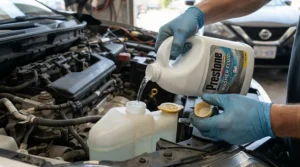
That last detail is the whole plot. Your brakes don’t squeeze a cable or push a lever. They shove a column of liquid, and liquids are only useful until they boil. When fluid boils, it becomes compressible vapour and your pedal goes soft right when you need it firm.
Choosing brake fluid DOT 4 sounds like a five-minute job. It isn’t, quite. The shelf at the motor factors is a thicket of numbers: dry, wet, ERBP, ISO classes, racing grades and “long-life” claims. Brake fluid is a hydraulic fluid used in brake and clutch systems, yet the bottles look almost identical while the chemistry varies a lot.
This guide cuts through it. You’ll get seven real products compared on published specs and genuine review themes, a plain-English tour of boiling point ratings, and a proper DOT 4 brake fluid buying guide. You’ll also find practical advice on brake fluid changes and hygroscopic fluid handling that product listings never mention. It’s written for UK drivers, so expect garage prices in pounds and winter damp as a recurring villain.
Quick Comparison: 7 Brake Fluid DOT 4 Options at a Glance
Here’s the lay of the land before we dig in. Price bands are indicative ranges from UK retailer listings seen during research, so check current prices before you buy.
| Product | Character | Indicative price range | Best For |
|---|---|---|---|
| Castrol React Performance DOT 4 | High-temperature road fluid | £10–£18 (1L) | Everyday drivers wanting extra margin |
| Motul RBF 600 Factory Line | Racing grade, 500 ml | £15–£25 | Track days and hard use |
| ATE TYP 200 | Long-interval performance fluid | £15–£25 (1L) | Spirited road driving |
| Ferodo DOT 4 FBX100A | General-purpose workhorse | Under £15 (1L) | Budget servicing |
| Comma DOT 4 | Everyday OE-style fluid | Under £12 (1L) | Routine changes and top-ups |
| Liqui Moly SL6 DOT 4 | Low-viscosity ISO Class 6 | £10–£20 (1L) | Modern ABS/ESP cars |
| Castrol React SRF | Premium racing fluid | £35–£50 (1L) | Serious track use |
Looking at the table, the Castrol React Performance DOT 4 and Ferodo DOT 4 FBX100A cover most road cars at the lowest cost. The Motul RBF 600 Factory Line and Castrol React SRF are the specialists, and they cost more in money and, in the Motul’s case, in change frequency. The ATE TYP 200 sits in the middle: performance-grade numbers, but with a reputation for long service intervals.
💬 Just one click — help others make better buying decisions too!😊
Top 7 Brake Fluid DOT 4 Picks: Expert Analysis
Every pick below is judged on published specs and aggregated review sentiment, not on hands-on testing. Where I couldn’t verify real owner reviews for a product, I say so.
1. Castrol React Performance DOT 4 — road fluid with racing-grade headroom
This is the sensible upgrade for drivers who want more margin than a bargain-bin fluid without paying track-day money. Retail listings quote a dry boiling point of at least 260°C and a wet boiling point of at least 180°C, and describe it as a high-temperature alternative to DOT 5.1 fluids.
In practice, that wet figure is 25°C above the DOT 4 minimum of 155°C. That is your real-world buffer when the fluid is two years old and carrying water. Castrol recommends changing it in line with your manufacturer’s guidance, or every two years where none is given, and advises against mixing it with other brake fluids.
Based on the spec comparison, it suits commuters, families and anyone towing a caravan down long hills. It also suits owners of heavier SUVs whose brakes run hotter than a small hatchback’s. Reviewers’ feedback on this specific bottle is thin in what I could verify. One stockist comment simply praises Castrol’s reputation, so the case here is spec-led rather than review-led.
Pros:
- ✅ Wet boiling point comfortably above DOT 4 minimum
- ✅ Compatible with DOT 3, 4 and 5.1 systems
- ✅ Clear two-year change guidance from the maker
Cons:
- ❌ Little verifiable owner-review depth for this exact bottle
- ❌ Mixing with other fluids dilutes its advantage
Expect a price in the £10–£18 range for a litre. That is strong value for the extra thermal margin.
2. Motul RBF 600 Factory Line — 312°C dry, built for abuse
This one is a motorsport fluid that road enthusiasts have adopted. Motul quotes a dry boiling point of 312°C and a wet boiling point of 205°C, with the wet figure measured after adding 3% water to represent roughly a year of use. Other retailers publish slightly different wet numbers (about 204–216°C), so treat 205°C as the maker’s figure.
That “one year” framing is the key to reading this product honestly. It is designed for brakes that get properly hot, and the maker’s own wet test assumes a short life. Motul advises against mixing it with lower-performance polyglycol fluids and says never to combine it with silicone or mineral-based fluids. A UK enthusiast thread also suggests replacing it annually, which is a cost to factor in.
Aggregated review sentiment is positive. Verified customers on a UK motorcycle retailer’s page describe a dependable fluid at a fair price, often bought after fitting new hoses or cylinders, though one notes the clear fluid makes the level hard to see through the reservoir window. An eBay UK listing shows 45 product ratings, 44 of them five-star.
Pros:
- ✅ Very high dry boiling point for repeated hard stops
- ✅ Strong wet figure for a racing-grade fluid
- ✅ Positive owner feedback across cars and motorbikes
Cons:
- ❌ Best changed roughly annually, raising running costs
- ❌ Colourless fluid makes level checks harder
Look for roughly £15–£25 for 500 ml. It is excellent value if you drive hard and poor value if you commute gently.
3. ATE TYP 200 — amber long-life performance fluid
If you want performance numbers but dislike annual flushes, this is the interesting one. Stockist information lists a minimum dry boiling point of 280°C and a minimum wet boiling point of 198°C, and says the formula can last up to three years in normal road use. It replaced the dyed blue “Super Blue Racing” version, with the same performance but no dye.
That wet figure is the headline. It sits about 43°C above the DOT 4 minimum, which is why the fluid suits long intervals. Another retailer states it is suitable for ABS systems, mixes with fluids of the same specification, and should be changed every two to three years depending on the vehicle and how it is driven.
My read of the spec sheet is that it is ideal for a fast road car that sees the odd track day, or an owner who wants a longer-lasting fluid in a hot-running system. I couldn’t verify independent owner reviews for it. The stockist pages I found carried none, so the argument rests on the manufacturer’s data.
Pros:
- ✅ Strong wet boiling point protects ageing fluid
- ✅ Works with ABS systems
- ✅ Long service interval for a performance fluid
Cons:
- ❌ Costs more than general-purpose DOT 4
- ❌ Few independent reviews could be verified
Expect a £15–£25 range for a litre. It is a smart buy when longevity matters more than the lowest bottle price.
4. Ferodo DOT 4 FBX100A — the honest budget workhorse
Not every car needs exotic fluid, and this is the one that admits it. One retailer lists a dry boiling point of 249°C and a wet boiling point of 158°C, miscibility with DOT 3, DOT 4 and silicone-free DOT 5.1 fluids, and a two-year replacement recommendation.
Ferodo’s own racing division gives typical test results of 243°C dry and 159°C wet against specification minimums of 230°C and 155°C, and calls it well suited to motorcycle road use where peak temperatures don’t demand pricier products. Translation: it meets the standard with a modest cushion, and that’s fine for a gentle daily driver changed on schedule.
On review sentiment, the same continental retailer shows a 4.6 average from 42 reviews. That is a real figure, though not an Amazon one. Pair it with disciplined two-year changes and it’s hard to fault for an economy hatchback or a runaround.
Pros:
- ✅ Meets DOT 4 with a small safety cushion
- ✅ Mixes with DOT 3, 4 and 5.1 fluids
- ✅ Low cost makes regular changes painless
Cons:
- ❌ Thin wet-boiling margin for hard driving
- ❌ Reviews I verified come from a non-UK retailer
Expect to pay under £15 for a litre. It is the value pick for routine servicing.
5. Comma DOT 4 — the readable-date-code everyday option
Comma is a well-known UK lubricants brand, and this is its straightforward everyday DOT 4. The technical data sheet lists FMVSS 116 DOT 3 and DOT 4, ISO 4925 classes 3 and 4 and SAE J1703/J1704, describes it as ideal for ABS cars, and says it mixes safely with DOT 3 and DOT 4 fluids.
Here’s the useful detail. Shelf life is three years from manufacture, and the date is printed on the bottle as an eight-digit code. That is genuinely helpful when you’re deciding whether the half-bottle at the back of the garage is still trustworthy. I couldn’t confirm typical boiling-point figures from the extract I found, so judge it on DOT 4 minimums of 230°C dry and 155°C wet.
Review evidence is slight. A stockist comment says only that Comma products are top quality, which isn’t much to go on. For a family hatchback serviced on schedule, that’s acceptable. For a track car, step up.
Pros:
- ✅ Meets both DOT 3 and DOT 4 standards
- ✅ Printed manufacture date helps check freshness
- ✅ Safe for ABS-equipped cars
Cons:
- ❌ No verified performance headroom beyond minimums
- ❌ Little verifiable owner review depth
You’re looking at under £12 for a litre. It is a dependable, low-cost choice for routine changes.
6. Liqui Moly SL6 DOT 4 — low-viscosity fluid for modern ABS cars
Modern stability-control hydraulics can be fussy about viscosity, and this fluid targets exactly that. It is a glycol-ether and boric-acid-ester synthetic that meets FMVSS 116 DOT 3 and DOT 4, ISO 4925 Class 6, SAE J1703 and J1704, and is miscible with high-quality synthetics, though best performance comes from using it alone.
ISO Class 6 is the low-viscosity class that many newer ABS/ESP-equipped cars specify. If your handbook asks for Class 6, a standard DOT 4 may not be the right match. Check before you buy, because the wrong viscosity can make ESP hydraulics sluggish in the cold.
The listing also carries a health warning. It is classed as suspected of damaging fertility and the unborn child. Gloves aren’t optional with this one. I couldn’t verify its boiling-point figures from the source I found, nor independent UK reviews, so rely on your handbook’s spec.
Pros:
- ✅ Meets ISO 4925 Class 6 requirements
- ✅ Suits modern ABS and ESP hydraulics
- ✅ Miscible with other quality synthetic fluids
Cons:
- ❌ Boiling-point figures not verified in my research
- ❌ Few verifiable independent reviews
Expect roughly £10–£20 for a litre. It is good value when your car specifies a low-viscosity fluid.
7. Castrol React SRF — premium racing fluid that fights water
This is the heavyweight, and the price tag shows it. Stockist information quotes a boiling point of 518°F wet and 590°F dry, and says it reacts chemically with absorbed water instead of simply tolerating it. That equates to roughly 270°C wet and 310°C dry. Some retailers list lower numbers, so check the bottle you receive.
Why does that chemistry matter? Because the usual failure mode of racing fluid is ageing, not heat. A fluid that handles water better stays usable for longer. The maker advises draining conventional fluid before filling, since mixing reduces its benefits.
Review sentiment comes mainly from enthusiast forums. One UK Porsche forum poster argues SRF’s wet boiling point lets it last up to two years, whereas Motul RBF 600 is said to need annual replacement, making SRF cheaper over time despite the higher bottle price. Another thread counters that some rival racing fluids post higher dry figures.
Pros:
- ✅ Exceptional wet boiling point for ageing fluid
- ✅ Long usable life reported by enthusiasts
- ✅ Favoured by many track drivers
Cons:
- ❌ Expensive for a road-only car
- ❌ Retailer-listed specs vary, so check labels
Expect a high-£30s to £50 range per litre. It is worth it only if you genuinely heat your brakes.
Boiling Point Ratings Explained: Dry, Wet and Why Wet Wins
Boiling point ratings are where most buyers get misled. The dry figure describes fresh fluid straight from a sealed bottle. The wet figure describes the same fluid after absorbing a standard dose of water, and that’s closer to what’s in your car by year two. Glycol-ether fluids are hygroscopic, so they draw moisture from normal humid air.
The practical consequence is simple. A research paper testing DOT 4 and DOT 5.1 fluids found that rising moisture content significantly cut boiling points. For more detail, see the academic study on moisture and boiling point in DOT 4 and 5.1 fluids. Wet boiling point is therefore the number that tells you how safe your pedal stays between services.
| Product | Dry boiling point | Wet boiling point | Change guidance (maker or stockist) | Best For |
|---|---|---|---|---|
| Castrol React Performance DOT 4 | ≥260°C | ≥180°C | Every 2 years | Daily driving and towing |
| Motul RBF 600 Factory Line | 312°C | ~205°C | Wet figure based on ~1 year | Track days |
| ATE TYP 200 | ≥280°C | ≥198°C | 2–3 years | Fast road cars |
| Ferodo DOT 4 FBX100A | ~249°C | ~158°C | Every 2 years | Budget servicing |
| Comma DOT 4 | Meets DOT 4 minimum (230°C) | Meets DOT 4 minimum (155°C) | Follow vehicle maker | Routine changes |
| Liqui Moly SL6 DOT 4 | Not verified | Not verified | Follow vehicle maker | ISO Class 6 cars |
| Castrol React SRF | ~310°C | ~270°C (varies by retailer) | Up to ~2 years (forum reports) | Serious track use |
Read across the rows and a pattern emerges. The big dry numbers belong to racing fluids, but the wet column shows who really protects you once the bottle has been open to humid British air. For a road car, the ATE TYP 200 and Castrol React Performance DOT 4 offer the best wet-margin-per-pound, while the Ferodo DOT 4 FBX100A meets the standard with the thinnest cushion.
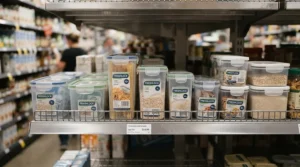
DOT 4 Brake Fluid Buying Guide: How to Choose
Short answer: match the fluid to your handbook first, your driving second, and your budget third. Here is the process, step by step.
- Check the handbook specification. It may say DOT 4, DOT 5.1 or an ISO Class 6 requirement. Don’t downgrade from what the maker asks for.
- Read the wet boiling point first. It tells you how the fluid behaves in year two, which is when brake fade tends to bite.
- Match fluid to use. Gentle commuting rarely needs racing fluid; repeated hard braking, towing or track days do.
- Check viscosity class for ABS and ESP. Newer systems may require low-viscosity Class 6, which is why the Liqui Moly SL6 DOT 4 exists.
- Buy sealed bottles with a visible date code. Smaller sizes reduce waste, since leftover fluid keeps absorbing moisture.
- Plan the change interval before buying. A cheap fluid changed on time beats an expensive one left to age.
The reasoning behind step 6 is that wet boiling point only protects you if the fluid is actually replaced. A premium bottle ignored for five years is worse than a budget one changed every two. If you’re comparing prices, divide by the interval, not just the bottle size.
✨ Don’t Miss These Great Fluid Options!
🔍 Take your braking safety to the next level with these carefully selected fluids. Click on any highlighted product to check current pricing and availability on Amazon. These will help you create a confident, firm pedal feel you’ll trust on every journey!
Brake Fluid for Cars: Matching Fluid to Your Driving
The best brake fluid for cars isn’t a single product. It depends on how your brakes live. Here are four scenarios, framed as reasoning rather than anecdote.
If you’re a commuter covering a few thousand miles a year, the fluid mostly ages by time, not heat. A Ferodo DOT 4 FBX100A or Comma DOT 4 changed every two years is sensible. Mileage isn’t the villain; moisture is.
If you tow a caravan or drive a heavy SUV, your brakes work harder on descents. The extra wet margin in Castrol React Performance DOT 4 earns its keep.
If you do occasional track days, step up to the ATE TYP 200 for long-life performance, or the Motul RBF 600 Factory Line if you’ll change it annually. Serious regular trackers should consider the Castrol React SRF.
If you drive a hybrid or EV, regenerative braking means the friction brakes work less. Even so, glycol fluid still absorbs moisture over time, so the change schedule still matters. This is analysis, not a manufacturer claim, so follow your handbook.
One caution for classic car owners. Silicone-based DOT 5 is a different chemistry from DOT 4. DOT 5 can aerate when the anti-lock brake system activates, and it isn’t compatible with ABS. Never swap between families without the maker’s guidance.
Top-Rated Brake Fluid Brands: What Actually Separates Them
“Top-rated” is a slippery phrase, so let’s define it: strong published specs, consistent review themes and clear maker guidance. By that yardstick, six names keep surfacing for brake fluid DOT 4 in the UK.
- Castrol covers both ends: Castrol React Performance DOT 4 for roads and Castrol React SRF for tracks. One independent review site names a Motul racing fluid as its best overall and Castrol SRF as its best high-end pick.
- Motul dominates enthusiast conversation. The Motul RBF 600 Factory Line has a loyal following, especially on motorcycles.
- ATE is the quiet performer. The ATE TYP 200 wins on wet boiling point and longevity.
- Ferodo and Comma are the dependable mainstream choices, with the Ferodo DOT 4 FBX100A and Comma DOT 4 both aimed at routine servicing.
- Liqui Moly is the viscosity specialist. The Liqui Moly SL6 DOT 4 targets cars that specify Class 6.
Other brands deserve a mention. Brembo’s DOT 4 fluid is listed with about 260°C dry and 170°C wet at UK parts sellers, and Bosch’s 0.5-litre DOT 4 is listed at 230°C dry and 155°C wet. The real differentiator between brands isn’t the logo. It’s the wet figure, the ISO class and how clearly the maker tells you to change it.
Brake Fluid DOT 4 vs DOT 3, DOT 5 and DOT 5.1
Here’s how the main fluid types stack up on published minimums.
| Fluid type | Dry boiling point (min) | Wet boiling point (min) | Best For |
|---|---|---|---|
| DOT 3 | 205°C | 140°C | Older cars that specify it |
| DOT 4 | 230°C | 155°C | Most modern road cars, e.g. Ferodo DOT 4 FBX100A |
| DOT 5.1 | 270°C | 191°C | Higher-demand road use |
| DOT 5 (silicone) | 260°C | 180°C | Specific classic or military applications only |
Those minimums come from the standard that sets DOT 3, DOT 4, DOT 5 and DOT 5.1 boiling points. The jump from DOT 3 to DOT 4 is meaningful, giving a 15°C higher wet minimum. The Castrol React Performance DOT 4 and ATE TYP 200 sit well above the DOT 4 floor and even beyond the DOT 5.1 wet minimum.
Two practical rules follow. First, a car that needs DOT 4 might boil DOT 3 fluid, while DOT 3 systems can often accept DOT 4 or 5.1 if the seals tolerate the borate compounds. Treat that as general guidance and confirm with your handbook. Second, never put silicone DOT 5 into a system designed for glycol, because the two chemistries behave differently.
Hygroscopic Fluid Handling: Storage, Pouring and Contamination
Hygroscopic fluid handling is the hidden skill behind good braking. Brake fluid doesn’t need to “go off” to fail. It simply sits near humid air and quietly drinks it.
Here is the practical routine:
- Keep it in the original container. Comma’s data sheet says to store brake fluid only in its original container, tightly closed to prevent water absorption.
- Buy the right size. A half-used litre bottle keeps absorbing moisture, so a 500 ml bottle for a small job wastes less.
- Check the date. Where a bottle prints a manufacture code, as the Comma DOT 4 does, use it.
- Don’t reuse drained fluid. Retailers selling brake fluid warn against using fluid from a previously opened bottle for the same reason.
- Mind your paintwork. Spills can damage paint, so rinse immediately with plenty of water.
- Wear gloves and eye protection. This matters especially with products carrying health warnings, like the Liqui Moly SL6 DOT 4.
Why does this matter beyond tidy habits? Water that pools in one spot instead of spreading evenly can drag the local boiling point down towards roughly 100°C. The same source lists open, unsealed storage and missed service intervals among the causes. Treat the cap like an airlock: open, pour, seal, done.
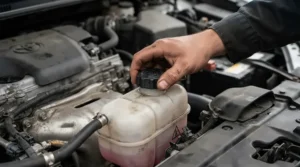
Brake Fluid Changes: A Practical Step-by-Step Guide
Brake fluid changes are the cheapest brake upgrade you can buy. RAC guidance reported by carwow suggests changing fluid every 24,000 miles or two years, whichever comes first. RAC garage pages go slightly wider, saying every two to three years or 30,000 miles. The carwow piece is worth reading: how often should you change brake fluid?
On cost, the same guide puts a UK garage brake fluid change at around £50–£100, with most charging roughly £60–£80. A bottle of fluid is a small fraction of that, which is why DIY tempts people. If you do it yourself, here is the general flow.
- Check the specification and buy enough fluid. Sealed new bottles only.
- Clean around the reservoir cap so dirt doesn’t fall in.
- Work wheel by wheel following your handbook’s bleed order, keeping the reservoir topped up so it never runs dry.
- Bleed until fresh fluid emerges, then close each bleed nipple securely.
- Check the pedal feels firm before moving the car, and recheck the level afterwards.
Be honest about your confidence. Brakes are safety-critical, and some modern cars need diagnostic equipment to cycle the ABS pump. If you’re unsure, pay a garage. Whoever does the job, keep your Motul RBF 600 Factory Line or Castrol React SRF on their own tighter schedules.
Problem and Solution Guide: Spongy Pedals, Fade and Dark Fluid
Pedal trouble is usually a symptom, not a mystery. Here are five common problems and what to do.
Problem: the pedal feels soft or spongy. Moisture in old fluid is a frequent cause, along with a pedal that sinks further than normal. Solution: have the fluid tested and replaced, and bleed air from the system.
Problem: the pedal fades after long descents. That points to overheating fluid. Solution: step up to a higher wet-boiling-point fluid like the ATE TYP 200 or Castrol React Performance DOT 4, and check pad condition.
Problem: fluid has turned dark. Dark colour often signals age or contamination. Solution: flush the system rather than topping up.
Problem: the reservoir level keeps dropping. Falling pad thickness lowers the level slowly, but a sudden drop suggests a leak. Solution: stop driving and get it inspected.
Problem: you’re unsure what’s in the system. Mixed or unknown fluid is a gamble. Solution: a full flush with one product, such as the Ferodo DOT 4 FBX100A, resets everything.
None of these fixes involves exotic gear. They involve doing the boring maintenance on time.
Common Mistakes When Buying Brake Fluid DOT 4
Most buying errors come from misreading marketing rather than chemistry. Here are the pitfalls worth dodging.
Chasing the dry boiling point. A giant dry number looks impressive on the bottle, but wet performance decides your safety in year two. Compare the Motul RBF 600 Factory Line and Castrol React SRF on how fast they age, not just how hot they start.
Assuming racing fluid lasts longer. Some racing fluids need more frequent changes, not fewer. The Motul wet figure is based on about a year of use, and forum users recommend annual replacement.
Ignoring ISO class. A car that wants Class 6 isn’t always happy with a general DOT 4. Check the handbook before choosing between the Liqui Moly SL6 DOT 4 and a standard fluid.
Mixing brands casually. Many DOT 4 fluids mix, but maker advice differs. Castrol and Motul both warn that mixing dilutes performance.
Buying silicone DOT 5 by accident. It looks similar on a shelf but behaves differently, and it isn’t suited to ABS.
Overbuying for the car. A £40 litre of racing fluid in a car that does 4,000 gentle miles a year is money you could spend on an extra change.
Long-Term Cost and Maintenance: What Each Fluid Really Costs You
Bottle price is a trick of the light. What matters is cost per year of safe braking, so divide the price by the sensible change interval.
| Product | Indicative price band | Typical change window | Value verdict and Best For |
|---|---|---|---|
| Ferodo DOT 4 FBX100A | Under £15 | ~2 years | Strong value for gentle driving |
| Comma DOT 4 | Under £12 | Follow handbook | Cheapest routine option |
| Castrol React Performance DOT 4 | £10–£18 | ~2 years | Best all-round road value |
| ATE TYP 200 | £15–£25 | 2–3 years | Value for performance road use |
| Motul RBF 600 Factory Line | £15–£25 (500 ml) | ~1 year | Good for hard use, costlier per year |
| Liqui Moly SL6 DOT 4 | £10–£20 | Follow handbook | Right-spec value for Class 6 cars |
| Castrol React SRF | £35–£50 | Up to ~2 years (forum) | Pricey but spreads over longer life |
The annualised view tells the story. A Comma DOT 4 or Ferodo DOT 4 FBX100A costs only a few pounds a year if changed every two years. The Motul RBF 600 Factory Line costs about the same per year as the Castrol React SRF once you factor in annual versus roughly two-yearly replacement, as UK forum posters suggest. Budget buyers shouldn’t pay for racing margin they’ll never use.
Add garage labour if you don’t DIY, with typical UK charges of around £50–£100. Fluid is the cheap bit, which is a good reason never to skimp on the service itself.
Safety, Regulations and Disposal in the UK
Brake fluid is a safety consumable and a chemical hazard, so treat it with respect.
On the regulatory side, MOT testers look at brake condition closely. The government’s MOT manual changes guidance lists contaminated brake fluid among its brake-related defects. That guidance is now historic, so check the current MOT inspection manual for exact rules, but the principle is clear. See the gov.uk MOT inspection manual changes for the background.
On the handling side, fluids can carry real warnings. The Liqui Moly SL6 DOT 4 listing flags a suspected reproductive hazard, and Ferodo labels its fluid as corrosive and hazardous. Wear gloves and eye protection, keep bottles out of children’s reach, and avoid spilling onto a hot engine.
On the disposal side, used fluid shouldn’t go down a drain. Take it to your local household waste recycling centre or a garage that accepts it, and check your council’s guidance first. Likewise, keep spillage away from paintwork and rinse immediately.
Finally, standards labels matter. FMVSS 116 is a US standard, but UK sellers quote it alongside ISO 4925 and SAE J1703/J1704. Check that your chosen brake fluid DOT 4 carries these markings and matches your handbook.

FAQ
❓ Can I use brake fluid DOT 4 instead of DOT 3 in my car?
❓ How much brake fluid DOT 4 do I need for a full flush?
❓ Is racing brake fluid DOT 4 worth it for road cars?
❓ How long does an opened bottle of brake fluid last?
❓ Can I mix different brands of brake fluid DOT 4?
Conclusion
Choosing brake fluid DOT 4 comes down to three questions. What does your handbook specify, how hard do you drive, and will you actually change it on time? For most road cars, the Castrol React Performance DOT 4 offers the best blend of margin and value, while the Ferodo DOT 4 FBX100A and Comma DOT 4 do honest, affordable work for gentle driving. If you’re a keen driver, the ATE TYP 200 gives performance numbers with long-life ambitions.
Track-focused drivers have two clear options. The Motul RBF 600 Factory Line rewards frequent changes with a very high dry boiling point, while the Castrol React SRF costs more but is reported to last longer. If your car specifies low-viscosity fluid, the Liqui Moly SL6 DOT 4 is the one to check.
Whatever you pick, remember that wet boiling point ratings, careful hygroscopic fluid handling and regular brake fluid changes matter more than any logo. Seal the bottle, watch the date code and book that two-year service.
Recommended for You
- Synthetic Vs Semi-Synthetic Engine Oil Comparison: 7 Best Picks 2026
- Engine Oil For High Mileage Cars: 7 Best Proven Picks (2026)
- Value Engine Oil Under £20: 7 Smart Budget Picks (2026)
Disclaimer: This article contains affiliate links. As an Amazon Associate, I earn from qualifying purchases. If you purchase products through these links, we may earn a small commission at no additional cost to you.
✨ Found this helpful? Share it with your friends! 💬🤗
