
In This Article
Open the boot of almost any British car in October and you’ll find the same quiet drama: a half-empty bottle of something brightly coloured, wedged beside a scraper that has seen better winters. Coolant is the least glamorous fluid under the bonnet. It also decides whether your engine sees spring.

The antifreeze concentrate vs premixed question looks trivial. It isn’t. One bottle needs a measuring jug, the right water and a little arithmetic. The other pours straight into the reservoir. Choose well and you get predictable frost protection and a lower cost per litre. Choose badly and you can end up with weak protection, limescale in the radiator, or a shelf of half-used bottles.
This guide pulls the antifreeze concentrate vs premixed debate apart using real manufacturer data sheets, UK retailer listings and published motoring advice. There are no invented road tests and no fairy-tale reviews. You’ll meet seven genuine products, honest cost-per-litre reasoning, and clear rules on mixing ratios, storage and safety.
Along the way we’ll tackle concentrate vs ready-mixed antifreeze in practical terms. We’ll cover why diluting antifreeze correctly matters, where premixed coolant convenience earns its premium, and when cost savings are real rather than imaginary. Prices are ranges gathered in October 2026, so check the current price before you buy.
Quick Comparison: Concentrate vs Ready-Mixed Antifreeze at a Glance
Before the deep dive, here’s the whole argument on one screen.
| Factor | Concentrate | Premixed |
|---|---|---|
| Cost per finished litre | Usually lower | Usually higher |
| Mixing required | Yes, with deionised or distilled water | None |
| Freeze protection | You choose it (roughly 33-60% glycol) | Fixed, around -36°C to -37°C on the products below |
| Margin for error | Higher: measuring and water quality matter | Very low |
| Storage footprint | Compact, one bottle makes about double the volume | Bulkier per finished litre |
| Best For | Comma Xstream G30 Concentrate and Comma Super Longlife Red Concentrate: DIY refills and cost-conscious owners | Prestone Ready to Use 4L and Comma Xstream G30 Ready Mixed: beginners and quick, tidy top-ups |
Looking at the comparison above, concentrate wins on cost and flexibility, while premixed wins on speed and certainty. The gap narrows if you only top up a few hundred millilitres a year, because then the leftover concentrate may simply sit in the garage. If you change coolant yourself every few years, the arithmetic tilts firmly towards the concentrate bottle.
💬 Just one click — help others make better buying decisions too!😊
What Is Antifreeze Concentrate vs Premixed? (The 50-Word Answer)
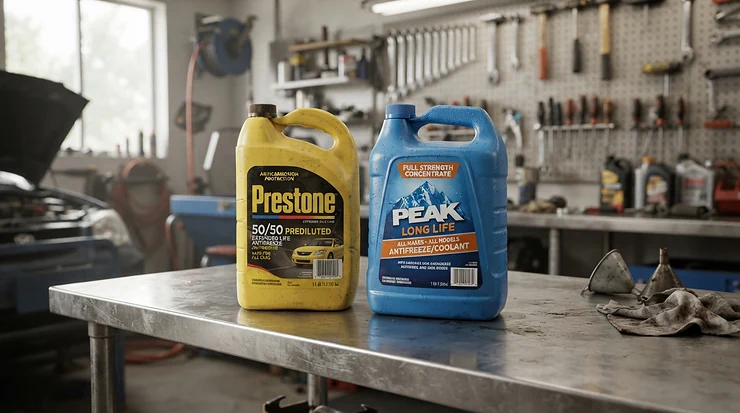
Antifreeze concentrate vs premixed is a choice between two formats of the same ethylene glycol coolant. Concentrate is undiluted glycol with corrosion inhibitors that you mix with water, usually 50/50. Premixed is already blended with treated water, so you pour it straight into the reservoir without measuring.
Why do we bother with glycol at all? It works through freezing-point depression. Dissolving it in water lowers the temperature at which the liquid freezes and raises the temperature at which it boils. The corrosion inhibitors, which are the real difference between a cheap bottle and a good one, protect the aluminium, iron and copper alloys inside a modern engine.
Here’s the bit that surprises people. The chemistry in a concentrate and its ready-mixed sibling is often identical. The ready-mixed version is simply the same concentrate diluted at the factory. So the antifreeze concentrate vs premixed decision isn’t about which fluid is “better”. It is about who does the diluting, how much that service costs, and how confident you are in doing it yourself.
Top 7 Antifreeze Picks: Concentrate vs Ready-Mixed Antifreeze, Analysed
These seven were chosen to cover both formats, several price points and a spread of vehicle needs. Every figure comes from manufacturer data sheets or UK retailer listings gathered in October 2026.
1. Comma Xstream G30 Concentrate — best-value refill for home mechanics
Value is the headline here: a 5 litre bottle stretches to roughly ten litres of finished coolant at 50/50. That is the whole point of going the concentrate route.
Comma’s data sheet lists an ethylene glycol base with OAT inhibitors, typical service life of up to five years, and conformity to BS 6580:2010. At 33% strength it protects to around -18°C, at 50% to -36°C and at 60% to -52°C. In practice, a 50/50 mix covers a British winter with a margin you will probably never touch.
The approvals list is where it gets interesting. It names VW Group TL 774-D/F, Mercedes-Benz 325.3, Jaguar vehicles from 1999 and Porsche models built between 1996 and 2009. That makes it a sensible match for plenty of European cars of that era, though your handbook still has the final word. Based on the spec comparison, it suits owners who change coolant at home and like to buy once.
I couldn’t verify a meaningful pool of independent Amazon UK reviews for this exact listing, so there’s no review sentiment to report. The clearest third-party signal is that Parkers’ coolant guide uses it as its concentrate example and calls the 5 litre pack excellent value.
Pros:
- ✅ Stretches to about ten litres of finished coolant
- ✅ Broad European approval list
- ✅ Up to five years’ typical service life
Cons:
- ❌ Needs deionised water and a measuring jug
- ❌ Easy to dilute wrongly if you rush
Price: around £22-£30 for 5 litres at the time of research. Check current price. Value verdict: strong, provided you will actually use the second half of the bottle.
2. Comma Xstream G30 Ready Mixed — same chemistry, zero arithmetic
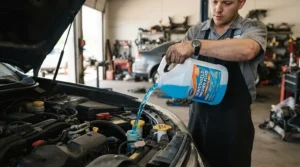
If the first pick is the DIY route, this is the same fluid with the maths done for you. It’s pre-blended with treated water to reduce scale build-up.
Retailer listings describe it as suitable for petrol and diesel engines, silicate-free, with up to five years’ protection and freeze protection down to about -36°C. It’s based on a concentrate that conforms to BS 6580:2010 and carries a bittering agent to discourage accidental swallowing. The spec sheet won’t tell you this, but the practical benefit is consistency. Every litre you pour is already at the right strength.
That makes it a natural fit for first-timers, or anyone who has ever stared at a measuring jug and doubted themselves. You are paying for the factory to blend, and at the lower end of the price range that premium is modest.
Reviews: one stockist shows only a handful of ratings, which is too thin to generalise from. I’d rather say that than invent a trend.
Pros:
- ✅ No dilution, no measuring, no mistakes
- ✅ Silicate-free OAT chemistry
- ✅ Treated water reduces scale risk
Cons:
- ❌ Costs more per finished litre than concentrate
- ❌ Fixed strength, no tailoring for climate
Price: around £14-£23 for 5 litres, with a wide spread between retailers. Check current price. Value verdict: good when it lands in the lower half of that range.
3. Prestone Ready to Use 4L — the universal pour-and-go
Prestone’s pitch is simplicity: one bottle, any car, any existing coolant colour. That’s a bold claim in a world of model-specific coolants.
The manufacturer lists protection from -37°C to 129°C, a 10-year or 300,000-mile guarantee and compatibility with any colour or specification of coolant. Prestone also says it supplies factory-fill coolant to carmakers including Ford, Toyota and General Motors. Parkers describes it as a rare universal exception, yet still notes that model-specific coolants are likely to be more effective. Both points are worth holding in your head at once.
Here’s what to weigh. The guarantee is a manufacturer promise, so read its terms before treating it as a safety net. Labels also vary: Prestone’s FAQ calls the formula OAT with extra anti-corrosion ingredients, while one UK retailer lists it as HOAT. For a household with several cars of different ages, though, the mix-with-anything promise is genuinely useful.
Reviews: Parkers says customers rate it highly. I couldn’t verify a rating breakdown on Amazon UK, so treat that as one editorial signal rather than a verdict.
Pros:
- ✅ Mixes with any colour or specification
- ✅ Protection quoted from -37°C to 129°C
- ✅ Long guarantee claim from the manufacturer
Cons:
- ❌ Pricier per litre than any concentrate
- ❌ Not tailored to a specific manufacturer’s spec
Price: around £16-£20 for 4 litres. Check current price. Value verdict: fair for the flexibility, poor if you’re buying for a full flush every time.
4. Prestone Ready to Use 1L — boot-sized insurance
Think of this as the fire extinguisher of coolant: small, ready, and cheap relative to a cooked engine.
It carries the same headline figures as its bigger sibling: freeze protection to -37°C, boil-over protection to 129°C, and mix-with-anything compatibility. Parkers lists overheating and the dashboard coolant warning light as the classic symptoms of low coolant. A litre in the boot turns that from a recovery-truck situation into a five-minute top-up once the engine has cooled.
Be honest about the economics, though. Per finished litre, this is the most expensive pick on the list, and it is not designed for flushing a whole system. It earns its place as emergency cover, not as your main supply.
Reviews: a UK tool retailer shows roughly a hundred reviews for the family of products, but I couldn’t verify a sentiment breakdown, so I won’t characterise one.
Pros:
- ✅ Fits in a boot or glovebox easily
- ✅ No mixing, no jug, no fuss
- ✅ Compatible with other coolant colours
Cons:
- ❌ Highest cost per finished litre here
- ❌ Too small for full system refills
Price: around £6-£8 per litre. Check current price. Value verdict: worth it as a safety net, wasteful as a habit.
5. Comma Super Longlife Red Concentrate — five-year OAT concentrate
This is the concentrate for owners whose handbook points to a longlife organic-acid coolant. It’s silicate-free, borax-free and free of nitrites, phosphates and amines.
Comma lists up to five years of protection, conformity to BS 6580:2010 and 50% dilution protecting to -36°C. The approvals read like a European and American roll-call: VW TL 774 D and F, Ford WSS-M97B44-D, Mercedes-Benz 325.3, Renault 41-01-001 and Volvo VCS, among others. For a family with a Ford and a Renault on the drive, that breadth cuts the number of different bottles you need to stock.
One practical note from the data sheet: it’s miscible with other fluids, but for maximum protection Comma recommends draining, flushing and refilling. Treat that as a polite instruction. Also, don’t choose by colour alone. Red here is a dye, not a specification, and your handbook decides compatibility.
Reviews: I couldn’t verify enough independent review data to report a sentiment trend for this listing.
Pros:
- ✅ Broad approval list across several marques
- ✅ Silicate-free, NAP-free formulation
- ✅ Five-year shelf life from manufacture
Cons:
- ❌ Needs proper dilution with deionised water
- ❌ Retailer prices vary widely
Price: roughly £18-£31 for 5 litres across stockists. Check current price. Value verdict: very good at the lower end.
6. Comma Super Longlife Red Ready to Use — longlife chemistry, no dilution
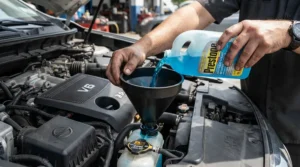
Same chemistry, same five-year claim, already mixed. The data sheet states plainly: do not dilute, pour directly into the cooling system.
Its density is listed at about 1.074 g/cm³, against 1.122 for the concentrate. That gap is the water. It’s also a handy sanity check if you ever test a mixture with a hydrometer. Protection is listed to -36°C, and the base concentrate conforms to BS 6580:2010.
Here’s the trap, and it’s a genuine one. One UK retailer listing describes the product as “ready to use” and also calls it an ethylene glycol based concentrate. If you buy any Comma Super Longlife bottle, read the front label for the words “Ready to Use” before pouring. Diluting a premix again quietly weakens your frost protection.
Reviews: I couldn’t verify a reliable review pool, so there’s nothing honest to summarise.
Pros:
- ✅ Longlife OAT chemistry without the mixing
- ✅ Documented -36°C protection
- ✅ Same approvals family as its concentrate sibling
Cons:
- ❌ Listing wording can confuse concentrate with premix
- ❌ Current price was not reliably verifiable
Price: expect it in the same broad bracket as other 5 litre ready-mixed coolants. Check current price. Value verdict: sensible if you want longlife chemistry and zero maths.
7. Comma Super Coldmaster Concentrate — traditional MEG for older engines
Not every engine wants a longlife organic coolant. Comma positions this as a traditional monoethylene glycol antifreeze, free of methanol and alcohol, suitable for ferrous and aluminium engines.
Listings describe NAP-free chemistry, freeze protection around -36°C and two years of protection. That shorter life is the catch. You’ll be flushing and refilling more often than with the five-year options, which raises total cost of ownership even if the bottle looks cheap. Parkers notes that older vehicles often use inorganic additive coolants while later cars moved to OAT and hybrid types, so a handbook check is non-negotiable here.
At several UK stockists the 5 litre pack was priced above the longer-life concentrates. That is an oddity worth checking before you click.
Reviews: I couldn’t verify a meaningful review pool, so I’m not reporting one.
Pros:
- ✅ Traditional chemistry for older MEG-spec engines
- ✅ Suitable for ferrous and aluminium engines
- ✅ Compatible with silicone hoses per retailer notes
Cons:
- ❌ Only two years’ protection per fill
- ❌ Sometimes priced above longer-life rivals
Price: around £28-£40 for 5 litres at the time of research. Check current price. Value verdict: only if your engine genuinely needs it.
Top 7 Compared Side by Side
| Product | Format | Freeze protection | Service life | Price range | Best For |
|---|---|---|---|---|---|
| Comma Xstream G30 Concentrate | 5L concentrate | -36°C at 50% | Up to 5 years | Around £22-£30 | Home refills, European cars |
| Comma Xstream G30 Ready Mixed | 5L premix | About -36°C | Up to 5 years | Around £14-£23 | Pour-and-go full fills |
| Prestone Ready to Use 4L | 4L premix | -37°C | 10-year guarantee claim | Around £16-£20 | Mixed households, unknown top-ups |
| Prestone Ready to Use 1L | 1L premix | -37°C | 10-year guarantee claim | Around £6-£8 | Boot emergency kit |
| Comma Super Longlife Red Concentrate | 5L concentrate | -36°C at 50% | 5 years | Roughly £18-£31 | Ford, VW, Renault longlife specs |
| Comma Super Longlife Red Ready to Use | 5L premix | -36°C | 5 years | Check current price | Longlife chemistry, no mixing |
| Comma Super Coldmaster Concentrate | 5L concentrate | About -36°C | 2 years | Around £28-£40 | Older MEG-spec engines |
The table shows that the longlife options (Comma Xstream G30 Concentrate and Comma Super Longlife Red Concentrate) deliver the best value for anyone doing their own fills. If hands-off simplicity is your priority, Comma Xstream G30 Ready Mixed gives you the same five-year chemistry without the jug. Buyers should note that Comma Super Coldmaster Concentrate trades service life for traditional chemistry, which only pays off if your handbook demands it.
How to Choose Between Antifreeze Concentrate vs Premixed
Work through these six steps in order and the decision usually makes itself.
- Check your handbook first. The required specification beats every other consideration, including price and colour. If the manual names a standard, match it.
- Count how often you’ll buy. If you change coolant yourself every few years, concentrate pays back. If you only top up, premix wastes less.
- Judge your comfort with measuring. A mistake in dilution quietly weakens protection. If the thought of ratios makes you uneasy, premix removes the risk.
- Think about storage. Concentrate is compact but leaves partial bottles. Premix is bulkier per finished litre but ready instantly.
- Compare cost per finished litre, not cost per bottle. A 5 litre concentrate makes about ten litres, so the sticker price flatters premix.
- Plan for emergencies. Even committed concentrate fans should keep a small premixed bottle in the boot.
Parkers makes the same basic point: ready-mix pours straight in, whereas concentrate needs diluting first but is much better value. In other words, the antifreeze concentrate vs premixed question is really a question about your habits, not about fluid quality.

Diluting Antifreeze Correctly: A Step-by-Step Guide
Diluting antifreeze correctly is a five-minute job that protects a four-figure engine. Here’s a safe workflow, assuming your handbook agrees.
- Start cold. Never work on a hot system. Parkers is explicit that you should never flush with a warm engine.
- Choose clean water. Comma’s technical data sheet says to dilute with de-ironised water. In hard-water areas, tap water can leave scale, so deionised or distilled water is the safer choice.
- Mix before you pour. Use a clean, marked jug. For a six litre system at 50/50, that’s three litres of concentrate and three of water.
- Drain and flush if changing coolant. Don’t mix different coolant types without checking compatibility.
- Fill to the cold line. Pour into the labelled coolant reservoir, not straight into the radiator.
- Run and recheck. Bring the engine to operating temperature, switch off, let it cool completely, then top up to the cold line if needed.
- Label and store leftovers. Write the date and ratio on any spare mixture.
A common first-30-days mistake is topping up the reservoir with plain water “just to get home”. That dilutes protection every time. If you must, use the correct premix or a pre-diluted mixture next time.
Mixing Ratios Explained: How Much Antifreeze, How Much Water?
Mixing ratios are the heart of the concentrate route, so here are the numbers straight from the data sheets.
Comma lists approximate protection levels of -18°C at 33%, -36°C at 50% and -52°C at 60% for Comma Xstream G30 Concentrate. Castrol advises dilutions between 33% and 50% for optimum corrosion protection. Halfords, for its own OAT concentrate, quotes about -34°C at 50% and -17°C at 33%. The numbers differ slightly between manufacturers, which is why you should follow your bottle’s label rather than a forum rule of thumb.
Why not go stronger “just to be safe”? Because more glycol isn’t always better. Corrosion protection is designed around the recommended band, and above roughly two-thirds glycol the freezing point stops improving and starts to rise again. For most British winters, 50/50 gives generous headroom, and a leaner mix near 40% is a defensible choice if your handbook allows it.
Worked example for a six litre system:
- 50% → 3 litres concentrate + 3 litres water
- 40% → 2.4 litres concentrate + 3.6 litres water
- 33% → 2 litres concentrate + 4 litres water (the minimum band in the data sheets above)
Premixed products fix this decision for you at roughly -36°C to -37°C, which is the heart of premixed coolant convenience. The flip side is that you can’t tune it, and topping up with plain water slowly dilutes it.
Antifreeze Concentrate vs Premixed: Cost Savings Under the Microscope
Cost savings are the main reason people choose concentrate, so let’s test the claim properly. The table below converts the retailer price ranges gathered in October 2026 into an approximate cost per finished litre, before the modest cost of deionised water.
| Product | Pack | Finished volume | Price range | Approx. cost per finished litre | Best For |
|---|---|---|---|---|---|
| Comma Xstream G30 Concentrate | 5L | About 10L at 50/50 | Around £22-£30 | Around £2.20-£3.00 | Home refills |
| Comma Super Longlife Red Concentrate | 5L | About 10L | Roughly £18-£31 | Around £1.80-£3.10 | Longlife-spec cars |
| Comma Super Coldmaster Concentrate | 5L | About 10L | Around £28-£40 | Around £2.80-£4.00 | Older MEG-spec engines |
| Comma Xstream G30 Ready Mixed | 5L | 5L | Around £14-£23 | Around £2.80-£4.60 | Pour-and-go fills |
| Prestone Ready to Use 4L | 4L | 4L | Around £16-£20 | Around £4.00-£5.00 | Universal top-ups |
| Prestone Ready to Use 1L | 1L | 1L | Around £6-£8 | Around £6.00-£8.00 | Boot emergency kit |
The pattern is clear but not absolute. For a full six litre fill, concentrate typically works out roughly £4-£10 cheaper than ready-mixed, and leaves about two litres of concentrate (four finished litres) for future top-ups. However, a bargain-priced Comma Xstream G30 Ready Mixed can beat a pricey Comma Super Coldmaster Concentrate, so the format alone doesn’t guarantee savings. Tiny top-up bottles like Prestone Ready to Use 1L are the least economical per litre, but economics isn’t why you carry one.
Premixed Coolant Convenience: When Paying More Makes Sense
Premixed coolant convenience is easy to underrate until you’re standing on a cold forecourt at dusk with a warning light on. Three situations justify the premium.
Emergency top-ups. You can’t realistically carry a jug, a bottle of deionised water and a bottle of concentrate. A bottle like Prestone Ready to Use 1L goes in, and once the engine has cooled, goes straight in the reservoir.
Low-confidence DIY. If you’ve never diluted coolant, premix removes the single biggest error source. Comma Xstream G30 Ready Mixed is the same five-year chemistry as the concentrate, only without the arithmetic.
Water quality. Ready-mixed products are blended with treated water, which reduces scale risk. If you live in a hard-water area and don’t want to buy deionised water, that’s worth real money.
The honest counterpoint is cost. If you change coolant regularly, you’ll pay the premium repeatedly. But for the occasional DIYer, the money spent on premixed coolant convenience is often cheaper than one mistake with the wrong ratio.

What to Expect: Real-World Performance in a British Winter
In terms of protection, a correctly mixed concentrate and a ready-mixed product of the same chemistry should behave identically. The differences appear in the margins.
First, accuracy. A concentrate is only as good as your dilution. Pour 40% instead of 50% and your protection shifts from about -36°C towards the mid -20s on the data sheets above. That’s still fine for most of Britain, but you’ve just made a decision by accident.
Second, water. Using tap water in a hard-water postcode can leave scale over the years, whereas ready-mixed products are blended with treated water. This is the genuine, if unglamorous, advantage of the premix.
Third, consistency over time. A premix poured from a sealed bottle stays at its labelled strength. A homemade mixture can drift if the container isn’t sealed or if the system gets topped up with plain water. For most drivers, the practical difference between a well-mixed concentrate and a premix is zero. It comes down to whether you actually do the mixing carefully.
Storage Considerations: Shelf Life, Bottles and Pets
Storage considerations are the quiet tiebreaker in the antifreeze concentrate vs premixed debate. Shelf life varies by product. Comma lists five years from date of manufacture for its Super Longlife products, Prestone says its coolant lasts ten years unopened, and one Castrol premix data sheet quotes three years in airtight containers. Check the bottle you actually buy.
Comma’s guidance for cartons is to keep them under cover and away from damp, and to avoid temperature extremes. A shed that swings from frost to summer heat isn’t ideal. A cupboard in a garage is better. Keep the cap tight, store the bottle upright, and never decant into a drinks bottle.
The pet angle is not optional reading. Most antifreeze contains ethylene glycol, which is toxic to animals. Cats Protection’s guidance on antifreeze advises storing it securely in clearly labelled containers and mopping up spills straight away. Bittering agents help, and all the Comma products here contain one, but they are not a substitute for care. Dispose of old coolant as hazardous waste via your local council or garage rather than down a drain.
On storage alone, concentrate is the neater option: one compact bottle replaces two. But partial bottles are riskier than sealed premix if you’re careless, so label everything.
Common Mistakes When Buying and Mixing Antifreeze
These are the pitfalls worth avoiding, along with what to do instead.
- Choosing by colour. Colour is a dye, not a specification. Match the standard in your handbook.
- Mixing incompatible chemistries. Parkers is clear that different coolant types shouldn’t be mixed. If in doubt, drain, flush and refill.
- Using tap water in hard-water areas. Scale builds up quietly. Use deionised or distilled water.
- Going stronger “to be safe”. Beyond the recommended band you gain nothing and may lose heat transfer.
- Topping up with water. Every splash dilutes protection. Keep a small premix bottle instead.
- Diluting a premix. Always confirm the front label says “Ready to Use” before pouring.
- Ignoring service life. A two-year product like Comma Super Coldmaster Concentrate needs more frequent changes than the five-year options.
- Forgetting disposal. Used coolant is hazardous waste.
Real-World Scenarios: Which Format Fits Your Garage?
Here are three buyer profiles matched to products, with budget, environment and frequency of use in mind.
The home mechanic with an older German saloon. Two services a year, tools in the garage, and a handbook calling for a TL 774-type coolant. Comma Xstream G30 Concentrate fits the approval list, makes about ten litres per bottle, and the leftover covers future top-ups. Budget: around £22-£30 per fill. Frequency: every few years.
The commuter with a newer hatchback. Rarely opens the bonnet, wants zero fuss, and has a garage do full changes. A boot bottle of Prestone Ready to Use 1L covers emergencies, and the garage handles flushes. Budget: around £6-£8, bought once.
The mixed household with three cars of different ages. Different handbooks, different colours, and one tired runabout. Prestone Ready to Use 4L simplifies top-ups across all three, since it mixes with any colour. For the car that needs a full longlife fill, Comma Super Longlife Red Concentrate keeps costs down.
The lesson: the antifreeze concentrate vs premixed decision isn’t one-size-fits-all. Match the format to how often you’ll touch the cooling system, not to what looks cheapest on the shelf.

FAQ
❓ Can I mix antifreeze concentrate with premixed coolant?
❓ Is premixed antifreeze worth the extra money?
❓ How much concentrate do I need for a six litre cooling system?
❓ Can I dilute antifreeze concentrate with tap water?
❓ How long does unopened antifreeze last?
Conclusion
There’s no universal winner, only a better fit. Concentrate wins on cost per finished litre and flexibility, and Comma Xstream G30 Concentrate and Comma Super Longlife Red Concentrate are the standout value picks for anyone who services their own car. Premixed wins on certainty and speed, and Comma Xstream G30 Ready Mixed and Prestone Ready to Use 4L make full fills and universal top-ups painless.
The sensible compromise for many drivers is both: a concentrate for planned changes and a small premixed bottle such as Prestone Ready to Use 1L for emergencies. Whatever you choose, follow your handbook’s specification, use clean water when diluting antifreeze correctly, respect the mixing ratios on your bottle, and store everything sealed and out of reach of pets. Do that, and the antifreeze concentrate vs premixed debate stops being a worry and becomes a routine.
Recommended for You
- Coolant And Antifreeze For Cars: 7 Best Picks For UK Drivers (2026)
- Brake Fluid DOT 4: 7 Best Picks For UK Drivers (2026)
- Synthetic Vs Semi-Synthetic Engine Oil Comparison: 7 Best Picks 2026
Disclaimer: This article contains affiliate links. As an Amazon Associate, I earn from qualifying purchases. If you purchase products through these links, we may earn a small commission at no additional cost to you.
✨ Found this helpful? Share it with your friends! 💬🤗
