
In This Article
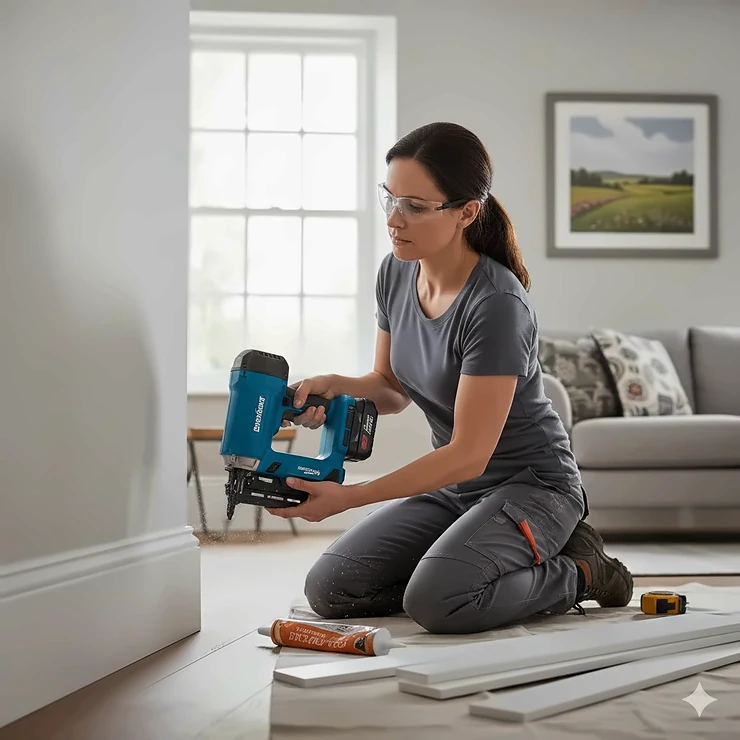
I’ll never forget the first time I attempted to install crown moulding with just a hammer and finishing nails. What should have been a three-hour job turned into a weekend nightmare of split wood, bent nails, and a throbbing thumb. That experience taught me a valuable lesson: investing in proper finish carpentry tools isn’t just about convenience—it’s about achieving professional results that’ll stand the test of time.
Finding the right brad nailer for trim work can feel overwhelming, especially with the market flooded with options ranging from budget-friendly pneumatic models to premium cordless systems. Whether you’re a seasoned joiner tackling architraves and skirting boards daily or a weekend DIY enthusiast looking to upgrade your toolkit, the brad nailer you choose will significantly impact both the quality of your work and how much you actually enjoy the process. Throughout this comprehensive guide, I’ll walk you through seven exceptional 18 gauge brad nailer UK options that I’ve either used personally or researched extensively, helping you make an informed decision that matches your specific needs and budget. From lightweight nailers perfect for delicate trim work to robust models that power through hardwood without breaking a sweat, there’s a solution here for every type of project.
Quick Comparison Table
| Brad Nailer Model | Type | Price Range | Nail Length | Weight | Best For |
|---|---|---|---|---|---|
| NEU MASTER NTC0023-18 | Cordless | £129.99-£149.99 | 15-32mm | 2.1kg | DIY enthusiasts, home improvement |
| RYOBI R18GN18-0 | Cordless | £160-£220 | 15-50mm | 2.8kg | Professional trim work, battery platform users |
| WORKPRO 50mm 2-in-1 | Pneumatic | £35-£45 | 15-50mm | 1.4kg | Budget-conscious buyers, workshop use |
| Tacwise DGN50V | Pneumatic | £65-£85 | 20-50mm | 1.2kg | Semi-professional, second fix work |
| meite F50C | Pneumatic | £45-£65 | 15-50mm | 1.35kg | Furniture building, precision work |
| Einhell TE-CN 18 Li | Cordless | £80-£100 | 15-32mm | 2.3kg | Power X-Change system owners |
| ORAZIO 50mm 18 Gauge | Pneumatic | £30-£40 | 15-50mm | 1.3kg | Entry-level, light trim work |
💬 Just one click – help others make better buying decisions too! 😊
Top 7 Brad Nailers for Trim Work: Expert Analysis
1. NEU MASTER NTC0023-18 Cordless Brad Nailer
The NEU MASTER NTC0023-18 Cordless Brad Nailer stands out as an exceptional choice for those seeking cordless freedom without compromising on performance. Priced between £129.99-£149.99, this 2-in-1 tool drives both 18-gauge brad nails (15-32mm) and narrow crown staples (15-25mm), making it incredibly versatile for various trim installation equipment needs.
Key Specifications:
- 18V lithium-ion battery with 1,100 shots per charge
- Spiral-drive technology for consistent power
- Depth adjustment for precise countersinking
UK buyers particularly appreciate the safety features, including a contact safety mechanism that prevents accidental firing and dual LED lighting for darker work areas. The NEU MASTER nailer fires up to 1,100 shots on a single charge, which is impressive for all-day skirting board installations or architrave work. Customer feedback from Amazon.co.uk reveals mixed experiences—whilst many praise the excellent value and robust build quality, some users noted it’s best suited for lightweight decoration trim rather than heavy-duty construction.
✅ Pros:
- Excellent battery life (1,100+ shots per charge)
- Affordable price point for cordless technology
- Non-marring rubber nose protects delicate surfaces
❌ Cons:
- Not recommended for quarter round installation
- Slightly heavier than pneumatic alternatives
Price: £129.99-£149.99 | Rating: 4.3/5 stars
2. RYOBI R18GN18-0 18V ONE+ Cordless 18 Gauge Nailer
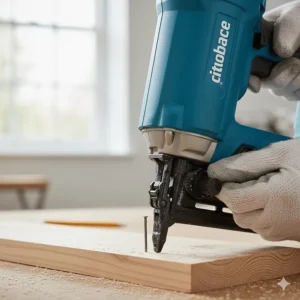
For those already invested in the RYOBI ONE+ ecosystem, the RYOBI R18GN18-0 18V ONE+ Cordless 18 Gauge Nailer represents the gold standard in cordless precision nailing tools. Available as a bare tool (£160-£185) or complete kit with 2.5Ah battery (£199-£220), this tool leverages RYOBI’s proven AirStrike technology to eliminate the need for compressors, hoses, or gas cartridges.
Key Specifications:
- Fires 18-gauge nails from 15-50mm
- Dry-fire lockout protection
- Up to 760 50mm nails per 2.5Ah battery charge
The RYOBI R18GN18 shines in professional settings where reliability matters most. One female decorator reviewed on Amazon.co.uk detailed how she installed nearly 300 solid timber pieces for a wall panelling project without a single misfire—quite a testament to its consistency. The built-in LED work light proves invaluable when working in awkward angles or low-light conditions. At 2.8kg with a battery, it’s on the heavier side, but UK customers consistently note the excellent balance makes prolonged use comfortable even for smaller hands. The tool-less jam release and depth of drive adjustment streamline workflow when switching between different trim materials.
✅ Pros:
- Zero misfires reported by professional users
- Compatible with extensive RYOBI ONE+ range (200+ tools)
- Superior build quality with extended warranty option
❌ Cons:
- Premium pricing compared to competitors
- Heavier with larger batteries (4.0Ah+)
Price: £160-£220 | Rating: 4.7/5 stars
3. WORKPRO Air Brad Nailer Gun 50mm 2-in-1
Budget-conscious buyers searching for finish carpentry tools will find exceptional value in the WORKPRO Air Brad Nailer Gun 50mm. Retailing between £35-£45 on Amazon.co.uk, this pneumatic 2-in-1 tool accepts both 18-gauge nails (15-50mm) and Type 90 staples (16-40mm), offering remarkable versatility at an entry-level price point.
Key Specifications:
- Lightweight aluminium body (1.4kg)
- Operating pressure: 60-100 PSI
- Includes 400 nails and 300 staples
The WORKPRO model features a 360° adjustable exhaust port and unique depth control adjuster for precise countersinking across different materials. UK customers rave about its performance—one professional floor fitter reported firing thousands of staples for plywood preparation without a single jam. The lightweight construction (only 1.4kg) reduces fatigue during extended use, whilst the rubber safety grip and non-marking nose ensure both operator comfort and surface protection. A couple in their 70s shared on Amazon.co.uk how they successfully used it to install a tongue and groove ceiling, highlighting its user-friendly design. However, you’ll need an air compressor, which adds to the overall investment if you don’t already own one.
✅ Pros:
- Outstanding value for money
- Proven durability (20,000+ nails without issues reported)
- Versatile 2-in-1 functionality
❌ Cons:
- Requires air compressor (additional expense)
- Nails and staples sold separately after initial supply
Price: £35-£45 | Rating: 4.6/5 stars
4. Tacwise DGN50V Air Brad Nail Gun
The Tacwise DGN50V Air Brad Nail Gun occupies a sweet spot in the semi-professional segment, offering robust performance at £65-£85. This pneumatic brad nailer fires Type 180 (18-gauge) nails from 20-50mm, making it ideal for second-fix applications including furniture assembly, skirting boards, and door frames.
Key Specifications:
- Ultra-lightweight design at just 1.2kg
- Low vibration emission (2.0m/s²)
- Contact trip (bump firing) mode
Tacwise’s reputation for quality shines through in the DGN50V model. UK customers particularly appreciate the anti-jam quick-release nose gate and high-durability driver blade that enhance productivity. One Amazon.co.uk reviewer detailed firing over 1,100 stainless steel brads without a single misfire or jam—impressive consistency for trim work where precision matters. The unique depth control adjuster allows precise countersinking into different materials, whilst the 360° adjustable exhaust port directs air away from your face and work surface. At only 1.2kg, it’s one of the lightest options available, reducing user fatigue significantly during all-day skirting board installations. The rubber non-marking nose protects delicate surfaces, and the safety contact tip provides additional security.
✅ Pros:
- Exceptionally lightweight (1.2kg)
- Zero jams reported with recommended Tacwise nails
- Professional-grade features at mid-range pricing
❌ Cons:
- No belt hook for convenient carrying
- Best performance requires Tacwise-branded nails
Price: £65-£85 | Rating: 4.8/5 stars
5. meite F50C Pneumatic Brad Nailer
Professional tradespeople seeking precision and reliability gravitate towards the meite F50C Pneumatic Brad Nailer, available from £45-£65 depending on bundle options. This Chinese-manufactured tool punches well above its weight class, delivering professional-grade performance that rivals models costing twice the price.
Key Specifications:
- Accepts 18-gauge nails from 15-50mm
- 100-nail magazine capacity
- Tool-free depth adjustment
The meite F50C excels in applications requiring finesse—furniture assembly, window installations, trim work, and detailed carpentry. Its lightweight design (1.35kg) and excellent balance reduce fatigue, whilst the dual trigger with safety lock prevents accidental firing. The 360° exhaust cover redirects air away from you and debris, maintaining a clean work environment. UK customers on Amazon.ie praise the visual window that allows easy nail level monitoring, reducing downtime for reloading. The quick-release nose clears jams without tools, keeping workflow smooth. Operating at 70-100 PSI with a standard 1/4″ NPT air inlet, it works seamlessly with most air compressors. One user particularly appreciated how it handled 50mm stainless steel brads for outdoor projects without any corrosion concerns.
✅ Pros:
- Professional-grade performance at budget pricing
- 100-nail magazine reduces reloading frequency
- Excellent for both indoor and outdoor applications
❌ Cons:
- Requires air compressor
- Limited UK-based customer service
Price: £45-£65 | Rating: 4.5/5 stars
6. Einhell TE-CN 18 Li Power X-Change Cordless Nailer
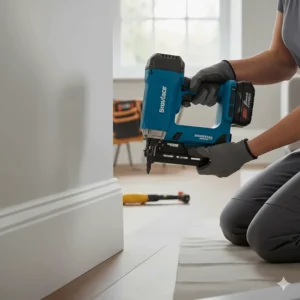
The Einhell TE-CN 18 Li Power X-Change Cordless Nailer appeals to DIY enthusiasts already invested in Einhell’s extensive battery platform. Priced at £80-£100 (bare tool), this 2-in-1 brad nailer and stapler fires 18-gauge nails (15-32mm) and staples at 20 shots per minute, offering cordless convenience without breaking the bank.
Key Specifications:
- Compatible with all Power X-Change 18V batteries
- Depth setting for variable penetration
- Magazine fill level indicator
The Einhell TE-CN 18 Li shines in scenarios requiring portability and ease of use. UK customers appreciate the straightforward design—simply pop in a battery and start working without fussing with cords, compressors, or gas cartridges. The magazine holds sufficient fasteners for extended use, whilst the fill level indicator prevents you from running dry mid-project. One Amazon.co.uk reviewer detailed using it for wall panelling, noting that whilst occasionally nails needed a final tap with a hammer in harder woods, the overall performance impressed for the price point. The depth adjustment allows customisation based on nail size and material, though some users reported limited effectiveness. At 2.3kg with battery, it’s manageable for most users, and the soft grip reduces hand fatigue.
✅ Pros:
- Lowest-priced cordless option
- Battery interchangeable with 200+ Einhell tools
- Includes 300 nails and 300 staples
❌ Cons:
- Power adjustment effectiveness varies
- Struggles with angled nailing in mouldings
Price: £80-£100 | Rating: 4.2/5 stars
7. ORAZIO Brad Nailer 50mm 18 Gauge Professional Pneumatic
Rounding out our list is the ORAZIO Brad Nailer 50mm 18 Gauge Professional Pneumatic nail gun, representing exceptional entry-level value at £30-£40. This lightweight pneumatic tool (1.3kg) fires 18-gauge brads from 15-50mm, making it suitable for home upholstery, carpentry, and woodworking projects.
Key Specifications:
- Professional pneumatic design
- Safety switch prevents accidental firing
- Compatible with standard air compressors
The ORAZIO brad nailer delivers solid performance for occasional use and light trim work. UK customers on Amazon.co.uk describe it as excellent value for money, with one reviewer detailing how they’ve fired approximately 500 brads throughout a week without any issues. The quality air nailer construction feels robust despite the budget pricing, and the satisfying “psst” sound confirms each successful nail drive. The easy-to-load magazine streamlines operation, whilst the safety switch provides peace of mind when working around family members. However, this is very much an entry-level tool—professional users might find it lacking for heavy-duty daily applications. For homeowners tackling occasional trim projects or DIY enthusiasts building their first toolkit, it represents a sensible starting point.
✅ Pros:
- Most affordable option in our roundup
- Good build quality for the price
- Fires 50mm brads with ease
❌ Cons:
- Best suited for occasional use
- Mixed reviews on long-term durability
Price: £30-£40 | Rating: 4.1/5 stars
Understanding Brad Nailers: What Makes Them Essential for Trim Work
Brad nailers have revolutionised finish carpentry by eliminating the tedious process of hand-nailing delicate trim whilst simultaneously reducing the risk of wood splitting—a common frustration when installing crown moulding or architraves. According to Wikipedia’s article on nail guns, these pneumatic or battery-powered tools were developed to increase productivity in construction, and they’ve become indispensable for precision work where appearance matters as much as structural integrity.
The term “brad” refers to the thin-gauge nails these tools fire—typically 18-gauge—which leave minimal holes that are easily filled with wood putty or left as-is for a near-invisible finish. Unlike framing nailers that use thick, robust fasteners, brad nailers for trim work prioritise subtlety and precision. The 18 gauge brad nailer UK market has exploded in recent years, with manufacturers offering everything from budget-friendly pneumatic models requiring air compressors to sophisticated cordless units powered by lithium-ion batteries.
What distinguishes exceptional brad nailers from mediocre ones? Consistency stands paramount—every nail must fire at the correct depth without splitting delicate timber or leaving unsightly dimples. The best precision nailing tools incorporate depth adjustment mechanisms, allowing you to customise penetration based on material density and nail length. Anti-jam features prove equally crucial, as nothing disrupts workflow quite like clearing stuck fasteners mid-project. For professional joiners installing metres of skirting boards or fitting out entire properties with architraves, reliability isn’t just convenient—it’s essential for maintaining tight schedules and meeting client expectations.
Pneumatic vs Cordless vs Electric: Choosing Your Power Source
Selecting the right power source for your trim work significantly impacts both performance and convenience. Pneumatic brad nailers, which dominated the market for decades, require an air compressor but deliver consistent power shot after shot without battery degradation concerns. They’re generally lighter than cordless alternatives and tend to cost less upfront, making them popular amongst professionals with established workshop setups.
Cordless models have gained tremendous ground thanks to advances in lithium-ion battery technology. The freedom to work anywhere without dragging hoses or searching for power outlets appeals enormously to site-based contractors and DIY enthusiasts alike. Modern battery-powered units like the RYOBI R18GN18 and NEU MASTER NTC0023 deliver impressive shot counts per charge—often 700-1,100 nails—sufficient for a full day’s trim work in most scenarios. However, they’re typically heavier and represent a larger initial investment, particularly if you’re starting from scratch without compatible batteries.
Electric corded nailers occupy a middle ground, offering consistent power without batteries whilst maintaining portability compared to pneumatic setups. They’re less common in the UK market but can suit workshop-based applications where mobility isn’t paramount. According to research from the Health and Safety Executive, all nail gun types require proper training and safety protocols, regardless of power source—an important consideration whether you’re a professional or enthusiastic DIYer.
Your choice ultimately depends on your specific circumstances. Already own an air compressor for other tools? A pneumatic brad nailer makes economic sense. Working across multiple sites without reliable power? Cordless delivers unmatched flexibility. Primarily operating from a workshop with accessible electricity? Electric might suit perfectly. Consider not just the tool’s purchase price but the entire system cost, including compressors, batteries, chargers, and ongoing maintenance.
Key Features Every Brad Nailer Should Have
Depth Adjustment Mechanism
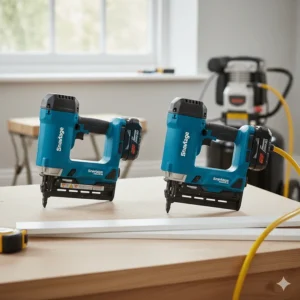
Precise depth control separates professional results from amateur attempts. The ability to customise how far nails penetrate allows you to work with varying wood densities—from soft pine skirting to dense oak architraves—without constantly adjusting driving force manually. Look for tool-free adjustment systems that let you fine-tune settings between materials without breaking workflow. The best models offer multiple preset positions plus infinite adjustment within their range, ensuring you can countersink perfectly regardless of the application.
Anti-Jam Technology
Few things frustrate more than clearing jammed nails mid-project, particularly when you’re perched on a ladder installing crown moulding. Premium brad nailers incorporate quick-release nose mechanisms that allow tool-free jam clearance, getting you back to work within seconds rather than minutes. Some models like the Tacwise DGN50V feature anti-jam nose gates specifically engineered to prevent fastener misfeeds before they occur. Whilst no system guarantees zero jams—bent nails or debris can cause issues regardless—well-designed mechanisms minimise downtime significantly.
Magazine Capacity and Loading System
Larger magazines reduce reloading frequency, particularly valuable when installing long runs of skirting boards or multiple rooms worth of architraves. Most brad nailers hold 100 nails, though some compact models sacrifice capacity for reduced weight. Side-loading or rear-loading designs each offer advantages—side-loading typically allows easier nail monitoring through transparent windows, whilst rear-loading can facilitate tighter corner access. Consider your typical projects when evaluating capacity needs; residential trim work rarely demands massive magazines, but commercial installations benefit from extended capacity.
Safety Features and Ergonomics
Modern brad nailers must incorporate robust safety mechanisms to prevent accidental discharge. Contact safety triggers require full depression against the work surface before firing, whilst trigger locks prevent unauthorised or accidental operation during transport. Ergonomic grip design matters enormously during extended use—rubber overmoulding reduces vibration transmission and improves comfort, whilst balanced weight distribution minimises hand and wrist fatigue. According to HSE guidelines, proper tool selection and use significantly reduces injury risk in construction environments.
Nail Gauge and Length: Getting the Specifications Right
Understanding nail specifications ensures you purchase compatible fasteners and achieve optimal results. Brad nailers universally fire 18-gauge nails—substantially thinner than 15- or 16-gauge finish nails but thicker than 23-gauge pin nails. This middle ground provides adequate holding power for trim work whilst leaving minimal holes that blend seamlessly into painted or stained surfaces.
Length specifications typically range from 15mm to 50mm (5/8″ to 2″) across different models. Shorter 15-20mm nails suit delicate applications like picture frame assembly or thin beading, whilst 40-50mm options handle substantial crown moulding or thick skirting board installations. The general rule suggests nail length should be approximately three times your trim thickness—fitting 20mm architrave calls for 60mm nails, though actual requirements vary based on substrate condition and adhesive use.
Most UK models list specifications in metric measurements (millimetres), though some imported tools retain imperial sizing (inches). Verify your chosen nailer’s capacity matches your typical projects. Installing exclusively lightweight beading? Models capping at 32mm suffice. Tackling diverse trim including substantial crown moulding? Opt for 50mm capability to maintain flexibility across applications.
Compatibility extends beyond length—some brad nailers specify particular nail head styles or shank configurations. Whilst 18-gauge represents a standard, subtle variations exist between manufacturers. Stick with recommended fasteners whenever possible, particularly for precision work where consistent performance matters most. Tacwise explicitly recommends their own nails for optimal DGN50V performance, whilst other brands like meite and WORKPRO prove more forgiving with third-party fasteners.
Top Brands in the UK Market: Who Makes the Best Brad Nailers?
The UK brad nailer market features diverse manufacturers ranging from budget-oriented brands to premium professional toolmakers. RYOBI has established formidable reputation for reliable cordless tools, with their ONE+ platform offering exceptional value through battery interchangeability across 200+ products. Their AirStrike technology delivers consistent performance without gas cartridges or compressors, appealing to both professionals and serious DIY enthusiasts.
Tacwise dominates the pneumatic segment, particularly amongst UK tradespeople who appreciate British-designed tools built specifically for European market demands. Their brad nailers consistently receive praise for lightweight construction, minimal vibration, and anti-jam reliability—crucial factors during full-day installations. The company’s extensive fastener range ensures perfect compatibility, reducing issues caused by substandard third-party nails.
German manufacturer Einhell offers compelling value through their Power X-Change ecosystem, providing budget-conscious buyers access to cordless technology without premium pricing. Whilst their brad nailers might lack the refinement of top-tier alternatives, they deliver solid performance for occasional use and light professional applications. The ability to share batteries across garden tools, power tools, and accessories makes the platform particularly attractive for homeowners maintaining diverse equipment.
Asian brands like meite, NEU MASTER, and WORKPRO have gained significant UK market share by offering professional-grade features at accessible price points. Whilst some buyers initially approach these brands sceptically, customer reviews consistently highlight impressive build quality and reliable performance that challenges established Western manufacturers. For budget-conscious professionals or DIY enthusiasts seeking maximum value, these brands deserve serious consideration.
Premium manufacturers like DeWalt, Makita, and Milwaukee dominate the professional cordless segment with tools engineered for daily abuse on commercial sites. Though typically priced higher, their brad nailers deliver unmatched durability, consistent performance, and comprehensive warranty support that justifies the investment for full-time tradespeople.
Brad Nailer Buying Guide: What to Consider Before Purchasing
Project Requirements and Usage Frequency
Honest assessment of your actual needs prevents both overspending on unnecessary features and underbuying tools that won’t meet demands. Occasional DIY work installing the odd skirting board or architrave? Budget-friendly options like the ORAZIO or WORKPRO pneumatic models deliver perfectly adequate performance without premium pricing. Regular weekend projects or semi-professional use? Mid-range tools like the Tacwise DGN50V or meite F50C balance capability with value. Full-time professional installations? Invest in premium cordless units like the RYOBI R18GN18 that deliver consistent performance shot after shot, project after project.
Consider the breadth of applications you’ll tackle. Pure trim work with similar materials? Specialised brad nailers suffice. Diverse projects spanning upholstery, furniture assembly, and trim installation? 2-in-1 nailer/stapler combinations like the WORKPRO or NEU MASTER models multiply versatility without expanding your tool collection.
Existing Tool Ecosystem
Already invested in a particular battery platform? Prioritise compatible tools to maximise battery utility and reduce overall system costs. RYOBI ONE+ users should seriously consider the R18GN18, whilst Einhell Power X-Change owners benefit from the TE-CN 18 Li’s seamless integration. Starting fresh without existing cordless tools? Consider which platform offers the broadest product range for your anticipated future needs—RYOBI’s 200+ compatible tools provide exceptional flexibility.
Pneumatic tool users with established air compressor setups enjoy straightforward integration with models like the Tacwise DGN50V or meite F50C. However, verify your compressor delivers adequate pressure (typically 70-100 PSI) and sufficient airflow for sustained operation. Underpowered compressors cause frustrating performance inconsistencies.
Budget Considerations and Long-Term Value
Initial purchase price represents only part of total ownership cost. Pneumatic nailers require air compressors (£100-£500+ depending on capacity), whilst cordless models demand batteries and chargers (£40-£100 for quality units). Factor these ancillary expenses when comparing options—that £35 WORKPRO nailer becomes less compelling once you add a £200 compressor, potentially making a £130 cordless unit more economical overall.
Consider consumable costs too. Premium nailers often require manufacturer-specific fasteners that command higher prices than generic alternatives. Whilst cheap nails initially appear attractive, they frequently cause jams and inconsistent performance that waste time and materials. Calculate both upfront investment and ongoing operational expenses for realistic cost comparisons.
Warranty and After-Sales Support
Comprehensive warranties demonstrate manufacturer confidence in product quality whilst protecting your investment. Most reputable brands offer minimum one-year coverage, with premium manufacturers like RYOBI providing extended protection when registered. Verify warranty terms carefully—some exclude wear parts like driver blades and o-rings, whilst others provide complete coverage.
After-sales support availability matters enormously when problems arise. Established brands with UK-based customer service facilitate quicker resolution than importing directly from overseas suppliers. Check parts availability too—replacing wear components keeps tools operational indefinitely, but obscure brands sometimes discontinue support after just a few years.
Comparison: Cordless vs Pneumatic Brad Nailers
| Feature | Cordless Brad Nailers | Pneumatic Brad Nailers |
|---|---|---|
| Portability | Excellent – no hoses or cords | Moderate – requires air hose connection |
| Power Consistency | Good – slight drop as battery depletes | Excellent – consistent throughout use |
| Weight | Heavier (2.1-2.8kg) | Lighter (1.2-1.4kg) |
| Initial Cost | Higher (£80-£220) | Lower (£30-£85) |
| Running Costs | Battery replacement (£40-£100) | Air compressor maintenance |
| Maintenance | Minimal | Regular oiling required |
| Best For | Site work, mobile applications | Workshop-based projects |
Professional Tips for Perfect Trim Installation
Achieving flawless trim work extends beyond owning quality tools—technique matters equally. Always test your brad nailer on scrap material matching your project before committing to visible surfaces. This practice reveals whether depth settings require adjustment and confirms nail length suits your application. Nothing’s more frustrating than discovering improper settings after installing an entire room’s worth of architraves.
Maintain consistent nail spacing appropriate to your trim type—skirting boards typically need fasteners every 300-400mm along top and bottom edges, whilst delicate beading might require 150-200mm intervals. Closer spacing prevents warping and ensures secure attachment, particularly with engineered trim prone to movement. However, excessive nailing wastes time and materials whilst potentially splitting delicate moulding.
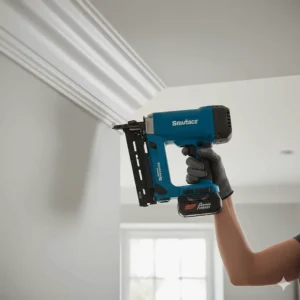
Support your trim firmly against both wall and floor (for skirting) or ceiling (for crown moulding) when firing. Insufficient backing causes the workpiece to flex away from the nail, resulting in proud fasteners that require unsightly hammering to finish properly. For particularly challenging angles or hard-to-reach spots, consider pre-drilling pilot holes to guide nails accurately whilst reducing splitting risk in brittle timbers.
Clean your brad nailer regularly according to manufacturer specifications. Pneumatic models require frequent oiling—typically several drops before each use—to maintain seal integrity and prevent premature wear. Cordless units need less maintenance but benefit from periodic cleaning to remove sawdust and debris that accumulate around firing mechanisms. Proper maintenance dramatically extends tool lifespan whilst ensuring consistent performance across thousands of shots.
Maintaining Your Brad Nailer for Longevity
Pneumatic brad nailers demand vigilant lubrication to function optimally. Apply 4-5 drops of pneumatic tool oil into the air inlet before each use, running several test shots to distribute lubricant throughout internal components. This simple practice prevents seal degradation and maintains smooth operation. Some users install inline oilers on their air hoses, providing automatic lubrication with every trigger pull—a worthwhile upgrade for frequent users.
Store pneumatic tools with the magazine empty to reduce spring tension, extending magazine life significantly. Disconnect from air supply when not in use to prevent accidental discharge and reduce component stress. Periodically inspect o-rings and seals for wear, replacing them before they fail and cause performance issues. Most manufacturers sell maintenance kits containing common wear parts for economical preventive maintenance.
Cordless brad nailers require minimal routine maintenance beyond keeping them clean and dry. Store batteries at 40-60% charge for long-term health, fully charging immediately before use. Extreme temperatures damage lithium-ion cells—avoid leaving batteries in freezing vans overnight or scorching conservatories during summer. Many manufacturers recommend removing batteries during extended storage periods.
Inspect driver blades periodically for burrs or damage that could cause jams. Gently clean the nose assembly using compressed air to remove accumulated sawdust and debris. Some models feature tool-free driver access for straightforward cleaning, whilst others require partial disassembly—consult your manual for specific procedures. Replace worn driver blades promptly to maintain consistent nail setting and prevent jamming incidents.
Common Problems and Troubleshooting Solutions
Nails Not Firing Properly
Inconsistent firing typically stems from insufficient air pressure (pneumatic models) or depleted batteries (cordless units). Verify your compressor delivers adequate PSI—most brad nailers require 70-100 PSI for reliable operation. Check for air leaks along hoses and fittings that reduce available pressure. Cordless tools should receive fully charged batteries; many models feature low-battery lockouts preventing firing when charge drops too low.
Jammed nails represent another common culprit. Clear jams promptly using your nailer’s quick-release mechanism rather than forcing operation, which risks damaging internal components. Bent or damaged nails cause frequent jams—inspect your fastener supply and discard any defective pieces. Using incorrect nail lengths or gauges also causes feeding problems; verify compatibility with manufacturer specifications.
Depth Inconsistencies
Nails driving too deep or sitting proud indicate improper depth adjustment. Experiment with scrap material matching your project to establish correct settings. Remember that harder woods require different adjustments than softer alternatives—recalibrate when switching materials. Worn driver blades can also cause depth inconsistencies; inspect and replace as needed.
Inconsistent work surface support creates depth variations too. Ensure your trim contacts both wall studs and backing firmly when firing. Gaps behind trim allow workpieces to flex away from nails, resulting in proud fasteners even with correct depth settings.
Split Wood or Surface Damage
Splitting typically occurs when nails penetrate too close to board edges or when using excessive nail length for material thickness. Maintain minimum 15-20mm edge distance, pre-drilling particularly brittle timbers if necessary. Select appropriate nail lengths—the three-times-thickness rule provides a good starting point.
Surface denting often results from nose assembly contact rather than nail heads themselves. Most modern brad nailers feature non-marring nose tips specifically designed to prevent surface damage, but worn or damaged tips can mark delicate finishes. Replace damaged nose assemblies promptly and verify proper depth settings that drive nail heads slightly below surface level without excessive countersinking.
✨ Don’t Miss These Exclusive Deals!
🔍 Take your trim work to the next level with these carefully selected products. Click on any highlighted item to check current pricing and availability on Amazon.co.uk. These tools will help you create authentic professional finishes your clients will love!
Safety Precautions When Using Brad Nailers
Brad nailers demand respect—their ability to drive fasteners through substantial timber translates to serious injury potential if mishandled. According to the Health and Safety Executive, nail gun injuries account for thousands of UK accidents annually, many preventable through proper safety practices.
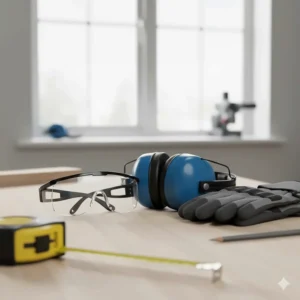
Always wear appropriate eye protection when operating brad nailers. Ricocheting nails, wood splinters, and occasional fastener misfires pose genuine eye injury risks. Safety glasses meeting BS EN 166 standards provide adequate protection for most applications, though full face shields add extra security in dusty environments.
Never defeat or bypass safety mechanisms. Contact safety triggers exist specifically to prevent accidental discharge—circumventing them dramatically increases injury risk. Similarly, trigger locks serve important purposes during transport and storage; use them consistently rather than relying on memory to keep fingers off triggers.
Disconnect power sources before performing maintenance or clearing jams. Pneumatic tools should be disconnected from air supply, whilst cordless units require battery removal. Attempting to clear jams with live tools causes numerous preventable injuries annually. The few seconds saved by skipping this step aren’t worth potential emergency room visits.
Keep hands clear of the firing point at all times. It sounds obvious, yet “second-hand” injuries—nails penetrating through workpieces into supporting hands—represent disturbingly common accidents. Always support trim from sides rather than directly behind nail path. When working in confined spaces, maintain constant awareness of hand positions relative to firing direction.
Store brad nailers securely when not in use, particularly in households with children. Pneumatic models should be disconnected from air supply, whilst cordless units benefit from battery removal. Locked storage prevents unauthorised access whilst protecting expensive tools from damage or theft.
Environmental Considerations and Sustainability
Choosing sustainable finishing carpentry tools contributes to broader environmental responsibility, particularly given the construction industry’s significant ecological footprint. Cordless brad nailers powered by lithium-ion batteries offer environmental advantages over pneumatic alternatives when electricity comes from renewable sources. However, battery production and disposal carry environmental costs that shouldn’t be ignored.
Proper battery recycling through authorised collection points prevents heavy metals from entering landfills whilst recovering valuable materials for reuse. Most major tool retailers and local authority recycling centres accept lithium-ion batteries free of charge. Never dispose of batteries in household waste—regulations prohibit this practice, and penalties can be substantial.
Pneumatic tools typically enjoy longer operational lifespans than cordless alternatives, reducing electronic waste generation. Their simpler mechanical construction facilitates repair rather than replacement when problems arise. However, air compressor operation consumes significant electricity, potentially offsetting longevity advantages depending on power source sustainability.
Fastener selection impacts environmental footprint too. Galvanised nails resist corrosion but introduce zinc compounds into the environment. Stainless steel alternatives eliminate this concern whilst offering superior durability for outdoor applications. Consider project requirements carefully—indoor trim work rarely justifies stainless steel’s environmental and financial premiums, but exterior applications benefit from corrosion resistance.
Proper tool maintenance extends lifespan dramatically, reducing waste and resource consumption. A well-maintained brad nailer can function reliably for decades, whilst neglected tools fail prematurely and join the waste stream unnecessarily. The relatively minor investment in maintenance supplies and effort yields substantial environmental benefits through extended equipment life.
FAQ: Your Brad Nailer Questions Answered
❓ Can I use a brad nailer for skirting boards in the UK?
❓ Do I need an air compressor for all brad nailers?
❓ What's the difference between 16-gauge and 18-gauge brad nails?
❓ How many nails can I fire on a single battery charge?
❓ Are brad nailers suitable for hardwood trim?
Conclusion: Choosing Your Perfect Brad Nailer for Trim Work
Selecting the ideal brad nailer ultimately depends on your unique circumstances, budget, and project requirements. Budget-conscious DIY enthusiasts installing occasional trim will find exceptional value in pneumatic options like the WORKPRO 50mm 2-in-1 (£35-£45) or ORAZIO 18 Gauge (£30-£40), particularly if you already own an air compressor. These tools deliver reliable performance for residential applications without demanding premium investment.
Semi-professional users and serious DIY enthusiasts benefit from mid-range options offering enhanced features and durability. The Tacwise DGN50V (£65-£85) provides lightweight professional-grade performance with exceptional anti-jam reliability, whilst the meite F50C (£45-£65) punches well above its weight class with robust construction and precision controls. Both represent intelligent investments that’ll serve reliably through countless trim installations.
Professional contractors and tradespeople working daily with trim should seriously consider premium cordless models despite higher initial costs. The RYOBI R18GN18 (£160-£220) delivers unmatched reliability with zero misfires reported and seamless integration into the extensive ONE+ platform. Its cordless freedom eliminates productivity-draining hose management whilst providing sufficient power for demanding applications from delicate beading to substantial crown moulding.
For those seeking cordless convenience at accessible pricing, the NEU MASTER NTC0023 (£129.99-£149.99) offers remarkable value with impressive 1,100-shot battery life and versatile 2-in-1 functionality. Einhell Power X-Change owners enjoy platform integration through the TE-CN 18 Li (£80-£100), multiplying battery utility across extensive tool collections.
Whichever brad nailer you ultimately choose, prioritise quality fasteners, proper maintenance, and safe operating practices. The right tool transforms tedious trim installations into satisfying projects that deliver professional results you’ll proudly showcase for years to come. Your trim work deserves nothing less than precision equipment that makes every shot count.
Recommended for You
- 7 Best Nail Guns UK 2026: Expert Reviews & Buying Guide
- 7 Best Cordless Angle Grinder UK 2026
- 7 Best Angle Grinders UK 2026
Disclaimer: This article contains affiliate links. If you purchase products through these links, we may earn a small commission at no additional cost to you. Prices shown are approximate and may vary. Please verify current pricing and specifications on Amazon.co.uk before purchasing.
Found this helpful? Share it with your mates! 💬🤗
