
In This Article
Picture this: you’re halfway through framing a garden room, your arm’s aching from driving nails manually, and you’ve barely made a dent in the day’s work. Sound familiar? That’s precisely where a quality framing nailer transforms frustration into flowing productivity.
A framing nailer isn’t just another power tool gathering dust in your shed—it’s the difference between spending weekends on a single project and watching structures take shape in hours. Whether you’re a professional builder tackling timber frame erection, a keen DIYer constructing decking, or a contractor managing multiple job sites, selecting the right framing nailer can revolutionise your workflow whilst saving both time and your aching joints.
The UK market in 2026 offers remarkable choice, from budget-friendly pneumatic models starting around £69 to premium cordless powerhouses exceeding £600. With innovations like brushless motors, air-spring drive systems, and battery technology advancing rapidly, today’s framing nailer delivers pneumatic-like performance without the compressor hassle. This comprehensive guide examines seven exceptional models available on Amazon.co.uk, analysing real-world performance, UK buyer feedback, and value across various price points. We’ll cover everything from clipped-head nailers for tight spaces to full-round options meeting strict building codes, ensuring you choose confidently for your specific requirements.
Quick Comparison Table: Top Framing Nailers at a Glance
| Model | Type | Nail Size | Price (£) | Rating | Best For |
|---|---|---|---|---|---|
| HiKOKI NR1890DCAJPZ | Cordless 18V | 50-90mm | 500-600 | 4.5/5 | Professional builders |
| Makita DBN900ZK | Cordless 18V | 50-90mm | 370-480 | 4.7/5 | Heavy-duty framing |
| DEWALT DCN692N | Cordless 18V | 50-90mm | 350-530 | 4.3/5 | Versatile projects |
| Paslode 906300 XP | Cordless Gas/Battery | 50-90mm | 400-550 | 4.6/5 | Remote locations |
| VEVOR 21° Pneumatic | Pneumatic | 50-90mm | 80-130 | 4.4/5 | Budget-conscious pros |
| VEVOR Full-Head | Pneumatic | 50-90mm | 70-110 | 4.3/5 | High-volume work |
| Einhell TE-CN 18 Li | Cordless 18V | 20-50mm | 69-110 | 4.5/5 | Light framing/DIY |
💬 Just one click – help others make better buying decisions too!😊
Top 7 Framing Nailers: Expert Analysis & Real User Experiences
1. HiKOKI NR1890DCAJPZ – Premium Cordless Excellence
The HiKOKI NR1890DCAJPZ represents the cutting edge of cordless framing technology, featuring the innovative air-spring drive system that delivers pneumatic-like performance without compressor dependency. This second-generation marvel from the Japanese precision manufacturer (formerly Hitachi) combines brushless motor efficiency with sealed compressed air technology.
Key Specifications:
- Nail capacity: 50-90mm clipped-head, 30-34° angle
- Drive speed: Up to 2.7 nails per second
- Weight: 4.1kg (excluding battery)
UK Buyer Feedback: British tradespeople consistently praise its balanced weight distribution and impressive power delivery into hardwoods. One London carpenter noted it “drives 90mm ring shank nails into LVL beams like butter” whilst maintaining exceptional runtime on 5.0Ah batteries.
✅ Pros:
- Air-spring system eliminates refilling hassles
- Dual firing modes (sequential/contact)
- Tool-free depth adjustment
- Dry-fire lockout prevents blank firing
- Integrated LED work light
❌ Cons:
- Premium price point
- Heavier than some competitors
Price Range: £500-£600 (kit with 2×5.0Ah batteries, charger, case)
Perfect for professional builders who demand pneumatic performance with cordless freedom, especially on multi-level projects where hauling compressors proves impractical.
2. Makita DBN900ZK – Legendary Reliability Meets Innovation
The Makita DBN900ZK brings over a century of Japanese engineering excellence to UK construction sites. This 18V LXT powerhouse utilises an air-spring mechanism that accelerates compressed air to drive nails with remarkable consistency, earning devoted followers amongst British tradespeople.
Key Specifications:
- Compatible with 50-90mm clipped-head nails (2.9-3.3mm gauge)
- Magazine capacity: 51-58 nails
- Fires up to 2 nails per second
- Anti-dry fire activates before last nails
UK Buyer Feedback: Multiple reviewers highlight its “agricultural” robustness and accurate positioning. A Welsh roofing contractor mentioned completing an entire house frame on a single 6.0Ah battery charge, whilst the anti-slip nose design prevents frustrating slippage during angled nailing.
✅ Pros:
- Exceptional build quality
- Aggressive nose tip resists slipping
- LED job light with pre/afterglow
- Compatible with extensive LXT battery range
- Adjustable rafter hook (2½” width)
❌ Cons:
- Notably heavy compared to rivals
- Warning: 2.8mm nails void warranty
Price Range: £370-£480 (body only), £500-£650 (with batteries)
Ideal for contractors prioritising durability and those already invested in Makita’s expansive 18V LXT ecosystem, particularly for fencing, decking, and floor framing applications.
3. DEWALT DCN692N – Dual-Speed Versatility Champion
The DEWALT DCN692N XR delivers exceptional adaptability through its dual-speed motor, optimising power across different nail lengths and timber densities. This latest Type 3 iteration incorporates design improvements addressing earlier jamming concerns reported by UK users.
Key Specifications:
- Nail range: 50-90mm, 30-34° angle
- Two power settings for material adaptation
- Brushless motor for extended runtime
- Ergonomic design fits 400mm centre studs
UK Buyer Feedback: Scottish builders particularly appreciate the tool-free stall clearance minimising downtime. However, some note its 4.1kg weight feels substantial during overhead work, and the 7-9 nail dry-fire lockout triggers frequent reloading on bump-fire mode.
✅ Pros:
- Dual-speed optimisation
- Sequential and bump-fire modes
- Tool-free depth adjustment
- Reversible belt/rafter hook
- Compatible with XR battery platform
❌ Cons:
- Heavier than pneumatic alternatives
- Sequential mode requires trigger release
- Some Type 1/2 jamming legacy concerns
Price Range: £350-£400 (body only), £480-£530 (with batteries/charger)
Best suited for versatile tradespeople tackling varied timber densities, from softwood stud work to hardwood structural framing, who value DEWALT’s extensive 18V ecosystem.
4. Paslode 906300 – Gas-Powered Independence
The Paslode 906300 Cordless XP represents the gold standard in truly cordless framing, combining lithium battery ignition with fuel cell power to eliminate compressor and cord dependency entirely. This American innovation has gained substantial UK following for remote location work.
Key Specifications:
- Drives 50-90mm nails (2″ to 3½”)
- 9,000 nails per battery charge
- 1,200 nails per fuel cell
- Weight: 3.3kg (7.2 lbs)
- Operates down to -10°C (14°F)
UK Buyer Feedback: British users praise its lightweight ergonomics and genuine portability. A Devon renovation specialist noted “no more dragging hoses up scaffolding” whilst appreciating the 15% power increase over previous models that reliably sinks nails flush in LVL timber.
✅ Pros:
- Genuine cordless freedom
- Lightweight and well-balanced
- All-season fuel formula for UK weather
- Compact design fits 400mm (16″) centres
- Consistent firing regardless of angle
❌ Cons:
- Ongoing fuel cell costs
- Regular maintenance required
- Higher initial investment
Price Range: £400-£550 (complete kit)
Ideal for roofing contractors, renovation specialists, and rural builders working beyond mains power reach, particularly those valuing manoeuvrability over overhead work.
5. VEVOR 21° Pneumatic – Outstanding Budget Performance
The VEVOR 21° Pneumatic Framing Nailer delivers remarkable value, offering professional-grade features at a fraction of premium brand pricing. This Chinese manufacturer has earned respect amongst cost-conscious UK tradespeople through surprising build quality and reliability.
Key Specifications:
- Compatible with 50-90mm nails (smooth, ring, threaded shank)
- Operating pressure: 80-120 PSI
- 60-nail magazine capacity
- Dual trigger modes (sequential/contact)
- Tool-free depth adjustment
UK Buyer Feedback: Multiple British buyers report performance rivalling their expensive Paslode pneumatics. A Midlands joiner praised it as “softer on the hand and lighter” whilst noting occasional jamming no worse than premium alternatives, easily cleared within a minute.
✅ Pros:
- Exceptional price-to-performance ratio
- Compatible with three nail types
- Rubberised comfort grip
- Open nose for quick jam clearance
- Lightweight aluminium construction
❌ Cons:
- Requires air compressor investment
- Less established brand reputation
- Infrequent jamming reported
Price Range: £80-£130
Perfect for budget-conscious professionals, expanding tradespeople building their tool collection, or those already owning suitable compressors seeking cost-effective backup nailers.
6. VEVOR Full-Head Pneumatic – High-Capacity Workhorse
The VEVOR 50-90mm Full Round Head pneumatic model excels in high-volume applications where magazine capacity and building code compliance matter most. Its full-head nail compatibility ensures adherence to strict structural fastening regulations.
Key Specifications:
- Full round head nail compatibility
- 21° collation angle
- Magazine holds 60 nails
- Operates 80-120 PSI
- Ergonomic anti-slip grip
UK Buyer Feedback: British construction crews appreciate its consistent depth control and reliable firing. Several UK reviews highlight excellent value compared to established brands, with one noting “great price, awesome quality” for framing work.
✅ Pros:
- Full-head nails offer superior pull-out resistance
- Tool-free depth adjustment wheel
- 360° adjustable exhaust
- Compatible with UK building codes
- Durable construction
❌ Cons:
- Compressor dependency limits portability
- Heavier than cordless options
- Hose management on multi-level sites
Price Range: £70-£110
Best for stationary workshops, production framing operations, and projects where building inspectors require full-head fastening, particularly pallet construction or structural renovations.
7. Einhell TE-CN 18 Li – Entry-Level Cordless Value
The Einhell TE-CN 18 Li Power X-Change nailer offers cordless convenience for lighter framing applications and DIY enthusiasts. This German brand’s budget-friendly approach makes battery-powered nailing accessible to homeowners tackling garden projects.
Key Specifications:
- Nail range: 20-50mm
- Firing rate: 60 shots per minute
- Depth adjustment dial
- Compatible with Power X-Change batteries
- Includes 500 nails
UK Buyer Feedback: British DIYers praise its value and ease of use for shed construction, garden fencing, and light carpentry. Professional carpenters note limitations for heavy structural work but appreciate it as a supplementary tool for second-fix applications.
✅ Pros:
- Budget-friendly cordless entry
- Single and serial shot modes
- Lightweight and manoeuvrable
- Power X-Change battery compatibility
- Suitable for DIY projects
❌ Cons:
- Limited to 50mm maximum nails
- Not suitable for heavy framing
- Requires compatible batteries (sold separately)
Price Range: £69-£110 (body only)
Ideal for DIY enthusiasts, homeowners building sheds or garden structures, and as supplementary finish nailers for professional carpenters tackling lighter applications.
✨ Don’t Miss These Exclusive Deals!
🔍 Take your construction projects to the next level with these carefully selected framing nailers. Click on any highlighted product to check current pricing and availability on Amazon.co.uk. These tools will help you create authentic structural work your clients will love!
Understanding Framing Nailer Types: Choosing Your Perfect Match
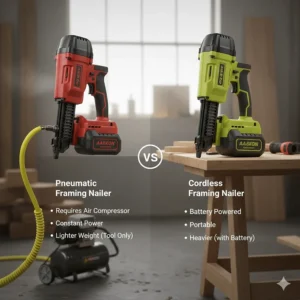
Selecting the right framing nailer begins with understanding the three primary power sources available to UK tradespeople. Each offers distinct advantages depending on your working environment, budget constraints, and project requirements.
Pneumatic Framing Nailers: Traditional Power
Pneumatic nailers harness compressed air from external compressors, representing the most common choice amongst established professionals. According to Wikipedia, the original nail gun introduced in 1950 used air pressure specifically to accelerate housing construction—a principle that remains largely unchanged seventy-five years later.
Advantages: Consistent firing power regardless of temperature, lower tool cost, unlimited runtime with adequate compressor capacity, minimal maintenance requirements, and exceptional durability through simple mechanical operation. Professional crews appreciate their reliability on high-volume sites.
Considerations: Compressor dependency restricts mobility, hose management proves cumbersome on scaffolding or multi-level sites, noise levels often exceed 85dB requiring hearing protection, and initial compressor investment adds expense for new businesses.
Best Applications: Production framing, workshop environments, large-scale new builds, and situations where stationary power sources present no limitation.
Cordless Battery-Powered: Modern Flexibility
Battery-powered nailers eliminate compressor dependency through lithium-ion technology, with recent UK models achieving performance rivalling pneumatics. The brushless motor revolution has dramatically improved efficiency, with manufacturers like HiKOKI and Makita incorporating innovative air-spring systems.
Advantages: Complete portability transforms multi-level work, quiet operation suits residential areas, instant readiness eliminates warm-up time, balanced weight distribution reduces fatigue, and compatibility with existing battery platforms maximises tool investments.
Considerations: Higher initial purchase cost, limited runtime necessitates multiple batteries for full-day work, heavier than pneumatic equivalents (typically 4-4.5kg), and battery degradation over time affects long-term value.
Best Applications: Renovation projects, remote locations, overhead installations, residential areas with noise restrictions, and contractors already invested in compatible battery systems.
Gas-Powered Cordless: Ultimate Independence
Gas-powered models like the Paslode system combine butane fuel cells with battery ignition, delivering genuine cordless freedom without the weight penalties of large battery packs. This hybrid approach has earned devotion amongst British roofing contractors.
Advantages: Lightest cordless option (around 3.3kg), consistent power regardless of battery charge state, exceptional manoeuvrability, rapid firing cycles, and operation in extreme temperatures down to -10°C.
Considerations: Ongoing fuel cell expenses, regular maintenance requirements, cold weather starting occasionally troublesome, and fuel cell availability varies regionally.
Best Applications: Roofing installations, rural construction beyond mains power, scaffolding work requiring maximum manoeuvrability, and cold-weather projects where battery performance degrades.
Nail Angles Explained: The Geometry of Fastening
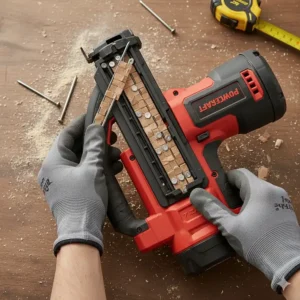
The collation angle—how nails are arranged in the magazine—fundamentally affects tool capability, manoeuvrability, and building code compliance. Understanding these differences proves crucial for British tradespeople navigating varied construction standards.
21-Degree Framing Nailers
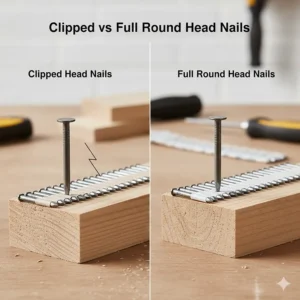
The most common configuration in the UK, 21-degree nailers accept both full-round and clipped-head nails in plastic-collated strips. Their moderate angle provides excellent balance between magazine capacity and tool manoeuvrability.
Full-round head nails measuring 8-9mm diameter offer maximum pull-out resistance, essential for structural applications and earthquake/hurricane zones (though less critical in most UK regions). According to construction standards, full-head fasteners provide approximately 15% greater shear strength than clipped alternatives.
Applications: Wall framing, floor joist installation, roof truss assembly, deck substructure, and any application where building inspectors require full-head fastening.
Advantages: Widest nail availability across UK suppliers, meets strictest building codes, versatile application range, and balanced magazine capacity (typically 60 nails).
30-34 Degree Framing Nailers
Clipped-head nailers dominate this angle range, sacrificing minimal head size for dramatically increased magazine capacity and improved manoeuvrability in confined spaces. The angled magazine better navigates between 400mm centre studs common in UK timber frame construction.
Clipped-head nails feature D-shaped heads approximately 5-6mm diameter, offering sufficient holding power for most residential applications whilst allowing tighter nail spacing in strips (up to 70+ nails per magazine).
Applications: Stud wall framing, roof sheathing, subfloor installation, partition walls, and general construction where building codes permit clipped heads.
Advantages: Longer strips reduce reloading frequency, slimmer magazine profile fits tighter spaces, lighter weight improves overhead comfort, and faster production on high-volume sites.
Building Code Considerations: Some UK local authorities and specific applications (coastal installations, high-wind areas) mandate full-round heads. Always verify local requirements before purchasing.
Coil Nailers (15-17 Degrees)
Though less common for traditional framing, coil nailers excel in specific applications like pallet construction, roof sheathing, and production environments where magazine capacity outweighs manoeuvrability concerns. Wire-collated coils hold 200-300 nails, dramatically reducing reload frequency.
Critical Features Every Professional Framing Nailer Should Possess
Modern framing nailers pack sophisticated features that separate professional-grade tools from consumer models. Understanding these capabilities ensures your investment delivers maximum productivity and longevity.
Sequential vs Contact (Bump) Firing
Dual-mode triggers offer flexibility between precision placement and production speed. Sequential mode requires full trigger depression followed by nose contact for each nail—the safest option for detailed work and confined spaces. UK Health and Safety Executive (HSE) guidelines recommend sequential firing in busy areas to prevent accidental discharge.
Contact (bump) firing allows rapid nailing by holding the trigger whilst repeatedly pressing the nose against work surfaces—ideal for production framing where speed dominates. British contractors report productivity increases of 40-60% using bump mode on open wall framing, though control requires practice to avoid overdriving.
Most quality nailers feature tool-free mode switching, essential for adapting to varying work conditions throughout the day.
Depth Adjustment: Achieving Perfect Flush Finishing
Tool-free depth adjustment wheels allow precise nail countersinking without dismantling the nailer—a transformative feature when switching between timber densities. British softwood typically requires different settings than imported hardwoods or engineered materials like LVL beams.
Premium models offer dial adjustments with clear depth indicators, whilst budget options may require Allen keys. The difference seems minor until you’re adjusting settings multiple times daily on varied materials.
Pro Tip: Always test depth settings on scrap material before commencing finished work. UK building inspectors particularly scrutinise nail flush-finishing on structural connections.
Anti-Jam Technology: Minimising Downtime
Jam clearance mechanisms separate frustrating tools from professional workhorses. Look for designs featuring:
- Tool-free nose access: Quick-release mechanisms allowing jam clearance without hunting for Allen keys
- Anti-dry fire lockouts: Systems preventing firing when nail counts drop critically low (typically 7-9 remaining)
- Stall release levers: Dedicated controls resetting driver blades after jams
UK buyers consistently cite jamming as their primary frustration. Reading authentic reviews reveals which models genuinely deliver reliable feeding versus marketing promises.
LED Work Lights: Illuminating Precision
Integrated LED lights dramatically improve accuracy in confined spaces, loft installations, and UK’s notoriously dim winter months. Premium models offer pre-glow (activating before firing) and afterglow (remaining lit momentarily) functionality.
This seemingly minor feature proves invaluable when nailing joist hangers in cramped subfloor areas or working inside unlit timber frame structures—situations British builders encounter regularly.
Ergonomic Design: Reducing Fatigue
Tool balance, grip comfort, and weight distribution directly impact productivity during all-day use. Key considerations include:
- Centre of gravity: Properly balanced nailers reduce wrist strain during overhead work
- Rubberised grips: Anti-slip surfaces improve control and comfort
- Exhaust direction: 360-degree adjustable exhausts direct air away from users and sawdust
- Weight distribution: Battery placement (handle vs magazine area) affects perceived heaviness
British tradespeople working overhead on ceiling installations particularly appreciate well-balanced designs that don’t fatigue arms during extended periods.
Nail Types & Compatibility: Matching Fasteners to Applications
Selecting appropriate nails proves as crucial as choosing the nailer itself. UK construction applications demand specific nail types based on structural requirements, material properties, and environmental exposure.
Nail Head Configurations
Full Round Head (8-9mm): Maximum holding power for structural applications, required by some UK building codes, essential for hurricane ties and joist hangers, and preferred for high-stress connections. Approximately 15% greater pull-out resistance than clipped alternatives.
Clipped Head (D-head, 5-6mm): Allows closer nail spacing in strips, increases magazine capacity to 70+ nails, lighter weight improves handling, and suitable for most UK residential framing where codes permit.
Offset Round Head: Compromise design offering near full-head performance with slightly increased magazine capacity—popular amongst British contractors seeking code compliance without sacrificing productivity.
Shank Variations
According to the Data Power Tools nail types guide, shank design dramatically affects holding power:
Smooth Shank: Basic design for temporary applications, lowest cost option, adequate for protected interior framing, and suitable for treated timber where corrosion resistance matters most.
Ring Shank: Circular rings provide mechanical locking, increases pull-out resistance by 40-50%, essential for decking and outdoor structures, and preferred for joists and structural connections.
Screw/Spiral Shank: Helical threads offer maximum holding power, best for vibration-prone applications, ideal for subfloors preventing squeaking, and excellent for hardwoods and engineered materials.
Length Selection
UK framing typically employs 50-90mm nails, with specific applications demanding:
- 50-65mm: Partition walls, light framing, cladding attachment
- 75mm: Standard stud-to-plate connections, general framing
- 90mm: Heavy structural work, laminated beams, hardwood framing
British building regulations often specify nail penetration requirements—typically 35-40mm into receiving timber for structural connections.
Coating & Corrosion Protection
UK’s damp climate demands appropriate corrosion protection:
Bright (Plain Steel): Interior applications only, lowest cost, unsuitable for exterior or treated timber.
Galvanised: Hot-dipped or electro-galvanised for moderate protection, suitable for most UK exterior applications, and adequate for treated timber when specified.
Stainless Steel: Maximum corrosion resistance for coastal installations, compatible with all treated timbers, essential for marine environments, though premium pricing.
Sherardised: Zinc diffusion coating offering excellent protection, popular amongst British builders for treated timber framing, and moderate cost increase over galvanised.
✨ Found Your Perfect Match?
🛠️ These carefully researched framing nailers represent the best options available to UK builders in 2026. Click any highlighted product name above to view current Amazon.co.uk pricing, read additional verified reviews, and secure your productivity upgrade today. Professional construction deserves professional tools!
Safety Guidelines: Protecting Yourself and Your Crew
Framing nailers rank amongst the most powerful tools on construction sites, demanding respect and proper safety protocols. The UK’s Health and Safety Executive provides comprehensive guidelines for compressed air equipment and power tools.
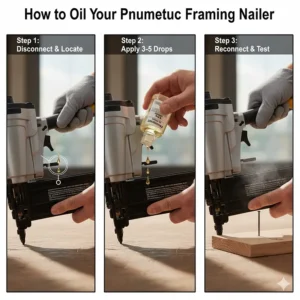
Essential Personal Protective Equipment
Eye Protection: Safety glasses or goggles rated to BSEN166 standards protect against ejected debris, nail fragments, and wood chips. British building sites legally require appropriate eye protection when operating power tools.
Hearing Protection: Pneumatic nailers frequently exceed 85dB, requiring hearing protection under UK workplace noise regulations. Earplugs or earmuffs rated to appropriate noise reduction levels prove essential for all-day use.
Work Gloves: Provides grip and protection, though some professionals prefer bare hands for improved tactile feedback and trigger control—personal preference varies significantly.
Dust Masks: Particularly important when nailing treated timber or working in confined spaces where sawdust accumulates.
Operating Best Practices
Never Bypass Safety Features: Nose contact triggers and sequential firing modes exist for crucial reasons. Disabling these mechanisms violates manufacturer warranties and UK health and safety regulations whilst dramatically increasing injury risk.
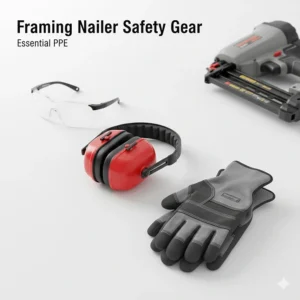
Disconnect Before Maintenance: Always disconnect air supply (pneumatic) or remove batteries (cordless) before clearing jams, adjusting settings, or performing maintenance. This simple step prevents tragic accidents.
Check Behind Surfaces: Use stud finders and cable detectors to locate hidden electrical cables, water pipes, and gas lines before nailing. Striking concealed services causes dangerous situations and expensive repairs.
Maintain Proper Footing: Secure, stable positioning prevents accidents during recoil. Never operate nailers whilst balancing precariously or overreaching—reposition instead.
Keep Free Hand Clear: Maintain awareness of your supporting hand’s position. Accidental firing into hands represents the most common nail gun injury treated in UK A&E departments.
Use Sequential Mode in Crowds: When working near colleagues or in busy areas, switch to sequential firing to prevent accidental discharge if inadvertently bumping the nose against surfaces.
Tool Maintenance & Inspection
Regular maintenance extends tool life whilst ensuring safe operation:
- Daily: Inspect hoses and connections (pneumatic), check for damage or cracks, verify safety features function properly, and clean debris from magazines and noses.
- Weekly: Lubricate pneumatic models according to manufacturer specifications, check battery charge levels and connections (cordless), and inspect depth adjustment mechanisms.
- Monthly: Detailed cleaning of internal mechanisms, replace worn O-rings and seals (pneumatic), and inspect driver blades for damage or wear.
- Annually: Professional servicing for gas-powered models, comprehensive inspection of all components, and replacement of any questionable parts before failures occur.
Common Hazards & Prevention
Double Firing: Contact triggers can fire twice in rapid succession—once intentionally, once from recoil. Sequential mode eliminates this risk entirely.
Ricochet Nails: Striking knots, existing fasteners, or excessively hard timber can deflect nails. Always position yourself away from potential ricochet paths.
Compressor Issues: Pneumatic nailers require properly maintained compressors delivering consistent pressure. Inadequate pressure causes misfires whilst excessive pressure risks damage and injury.
Cold Weather: Battery performance degrades significantly below 5°C, whilst gas-powered models may struggle starting. Store batteries and tools in heated areas overnight during winter projects.
Choosing Between Cordless & Pneumatic: The Ultimate Comparison
This decision fundamentally shapes your working style, budget requirements, and project suitability. British contractors often invest in both types for maximum flexibility, but understanding your primary needs guides initial purchases.
Performance Comparison Table
| Aspect | Pneumatic | Cordless Battery | Gas-Powered |
|---|---|---|---|
| Power Consistency | Excellent | Good-Excellent | Excellent |
| Portability | Poor | Excellent | Excellent |
| Runtime | Unlimited | 600-1,000 nails | 1,200 nails/cell |
| Weight | 2.5-3.5kg | 4.0-4.5kg | 3.0-3.5kg |
| Noise Level | 85-95dB | 70-80dB | 75-85dB |
| Initial Cost | £70-200 + compressor | £350-600 | £400-550 |
| Operating Costs | Low (electricity) | Medium (batteries) | High (fuel cells) |
| Maintenance | Low | Very Low | Medium-High |
| Cold Performance | Excellent | Poor | Good |
| Best Applications | Production sites | Renovation work | Roofing/remote |
Total Cost of Ownership Analysis
Year 1 (Pneumatic):
- Nailer: £100-150
- Compressor: £200-400
- Hoses/fittings: £50-80
- Total: £350-630
Year 1 (Cordless):
- Nailer kit: £500-600
- Extra battery: £60-100
- Total: £560-700
Year 1 (Gas):
- Nailer: £400-550
- Fuel cells (50): £150-200
- Total: £550-750
5-Year Costs:
- Pneumatic: £450-750 (compressor maintenance, replacement hoses)
- Cordless: £800-1,100 (battery replacements)
- Gas: £1,300-1,800 (ongoing fuel costs)
British contractors working primarily on larger new-build sites often favour pneumatic for lower operating costs, whilst renovation specialists appreciate cordless flexibility despite higher expenses. Gas-powered remains niche but irreplaceable for specific applications like roofing.
Environmental Considerations
Pneumatic: Electric compressors produce zero on-site emissions, though electricity generation carries environmental impact. Noise pollution affects neighbours in residential areas.
Cordless: Lithium battery production involves significant environmental impact, though UK recycling programmes mitigate concerns. Quiet operation suits urban areas.
Gas: Butane combustion produces emissions, fuel cells require proper disposal, though overall impact remains relatively modest for occasional use.
UK Building Regulations & Compliance Considerations
British building standards place specific requirements on structural fastening, affecting nailer and nail selection. While timber frame construction gains popularity across the UK, understanding these regulations ensures work passes inspection first time.
Structural Fastening Requirements
UK Building Regulations Approved Document A (Structure) specifies connection requirements for load-bearing timber frames. Local building control officers verify appropriate fastening during inspections, with particular scrutiny on:
Stud-to-Plate Connections: Typically require two 75-90mm nails per stud end, driven at opposing angles (called “toenailing”) or face-nailed with appropriate length fasteners.
Joist Hangers: Often mandate full-round head nails or specialised joist hanger fasteners, with specific minimum quantities per hanger size. Clipped-head nails frequently prohibited for these critical connections.
Shear Walls: Wind bracing and structural sheathing connections demand specific nail schedules—typically 50mm centres around perimeters, 150mm centres in fields.
Roof Connections: Truss-to-wall plate fixings must withstand uplift forces, particularly in exposed locations. Engineers specify appropriate fastener types and patterns.
Treated Timber Considerations
Pressure-treated timber (CCA or similar treatments) requires corrosion-resistant fasteners to prevent accelerated degradation. UK timber treatment standards demand:
- Minimum: Hot-dipped galvanised nails for ground contact timber
- Preferred: Stainless steel for coastal or highly exposed locations
- Prohibited: Bright (plain) steel nails with treated timber
Chemical reactions between treatment compounds and plain steel cause rapid corrosion, compromising structural integrity within months in damp British climates.
Fire-Rated Construction
Fire barriers and compartment walls may specify particular fastening patterns and types. Consult structural engineers and building control before deviating from approved specifications.
Professional Indemnity Insurance
Many British tradespeople carry professional indemnity insurance requiring compliance with manufacturer specifications and building regulations. Using inappropriate fasteners or techniques potentially voids coverage—a costly mistake if structural issues arise.
Maintenance & Troubleshooting: Keeping Your Nailer Firing
Proper maintenance dramatically extends tool life whilst maintaining reliable performance. British tradespeople report decades of service from well-maintained pneumatic nailers, whilst cordless models benefit from basic care protocols.
Pneumatic Nailer Maintenance
Daily Lubrication: Apply 4-5 drops of pneumatic tool oil into the air inlet before each use. This essential step lubricates internal mechanisms, prevents rust, and maintains O-ring flexibility. UK’s damp climate makes lubrication particularly crucial.
Moisture Management: Install in-line air dryers or moisture traps preventing water accumulation in tools. British weather produces significant compressor condensation, shortening tool life if unchecked.
O-Ring Inspection: Regularly examine seals around triggers, exhaust ports, and nose pieces. Replace worn O-rings before failures occur—preventative maintenance saves money long-term.
Internal Cleaning: Quarterly dismantling (following manufacturer procedures) removes sawdust, resin buildup, and debris. Compressed air blows out inaccessible areas effectively.
Cordless Nailer Care
Battery Management: Store lithium batteries partially charged (40-60%) during extended idle periods. Extreme temperatures degrade capacity—avoid leaving batteries in cold vans overnight or hot sunshine.
Driver Blade Inspection: Examine for cracks, chips, or deformation monthly. Damaged driver blades cause jams and potentially dangerous misfires.
Magazine Cleaning: Sawdust accumulation impedes nail feeding. Weekly cleaning with compressed air prevents frustrating jams.
Firmware Updates: Some premium models (HiKOKI, Makita) offer firmware updates addressing performance issues. Check manufacturer websites periodically.
Common Problems & Solutions
Nailer Won’t Fire:
- Pneumatic: Check air pressure (should be 80-120 PSI), inspect hose connections for leaks, verify trigger safety engaged properly, and examine driver blade movement.
- Cordless: Confirm battery fully charged, check power button activation (some require 1+ second hold), verify dry-fire lockout hasn’t engaged, and test with fresh battery.
Nails Not Driving Flush:
- Adjust depth setting incrementally
- Verify adequate air pressure (pneumatic) or battery charge (cordless)
- Check for worn driver blade tip
- Ensure appropriate nail length for material thickness
Frequent Jamming:
- Clean magazine and feeding mechanism thoroughly
- Verify correct nail specifications (angle, gauge, length)
- Inspect for damaged or bent nails in strips
- Check nose piece for damage or debris
Air Leaks (Pneumatic):
- Tighten hose connections
- Replace worn O-rings around trigger or exhaust
- Check quick-disconnect fittings for damage
- Apply thread sealant to air inlet threads
Battery Draining Quickly (Cordless):
- Calibrate battery by full discharge/charge cycle
- Replace aging batteries (typically 2-3 year lifespan)
- Verify nailer not left in powered-on state
- Check for short circuits or internal damage
When to Seek Professional Repair
DIY maintenance saves money, but certain issues demand professional attention:
- Internal air leaks not resolved by O-ring replacement
- Driver blade damage requiring specialised tools
- Firing mechanism failures
- Circuit board issues (cordless models)
- Structural cracks in body or magazine
UK tool repair specialists typically charge £40-80 hourly, making cost-benefit analysis important for older or budget models. Sometimes replacement proves more economical than repair.
Accessories & Complementary Equipment
Maximising your framing nailer investment requires thoughtful accessory selection. British builders consistently recommend these essentials:
For Pneumatic Systems
Air Compressor: Minimum 50-litre tank with 8-10 CFM at 90 PSI supports continuous framing nailer operation. British contractors favour oil-lubricated models for reliability and quieter operation, though oil-free proves adequate for occasional use.
Air Hose: 10-15 metre hybrid polymer hoses resist kinking whilst remaining flexible in British cold weather. Quick-disconnect fittings allow rapid tool changes. Budget £40-80 for quality hoses.
In-Line Oiler: Automatic oilers eliminate manual lubrication, ensuring consistent maintenance. Particularly valuable for crews running multiple nailers. Cost: £25-45.
Pressure Regulator: Built-in or separate regulators allow precise pressure adjustment for different materials and nail sizes. Essential for optimal performance. Cost: £15-35.
For All Nailer Types
Safety Equipment: Quality safety glasses (£10-25), hearing protection (£15-40), and work gloves (£8-20) prove indispensable. Don’t skimp on protective gear.
Nail Apron/Belt: Worn around the waist, these organise nail strips and tools for quick access. Canvas models (£15-30) suit most British tradespeople, whilst leather versions (£40-80) offer premium durability.
Carrying Cases: Protects tools during transport and storage. Many nailers include cases, but aftermarket Systainer-compatible options (£40-90) integrate beautifully with broader tool collections.
Spare Nose Tips: Replaceable anti-mar tips prevent work surface damage during finish work. Budget £8-15 per tip, keeping several spares handy.
Battery Platform Expansion
Cordless nailer buyers gain maximum value by expanding within the same battery platform:
HiKOKI 18V System: Over 100 tools share batteries—drills, saws, grinders, vacuum cleaners. British builders particularly rate their multi-volt technology.
Makita LXT 18V: The world’s largest 18V platform boasts 300+ tools. Exceptional availability across UK tool merchants.
DEWALT XR 18V: Comprehensive range with excellent backwards compatibility. FlexVolt technology allows 54V tool operation using 18V batteries in pairs.
Investing in quality 5.0-6.0Ah batteries (£60-100 each) dramatically extends runtime. Professional British builders typically own 4-6 batteries rotating through chargers.
FAQ: Your Burning Framing Nailer Questions Answered
❓ What size air compressor do I need for a framing nailer in the UK?
❓ Can I use any brand batteries with cordless framing nailers?
❓ Are clipped-head nails legal for structural framing in the UK?
❓ How many nails can I expect per battery charge on cordless models?
❓ What's the difference between 21-degree and 34-degree framing nailers?
Conclusion: Building Your Perfect Framing Arsenal
Selecting the ideal framing nailer transforms construction work from laborious hammering into flowing productivity. Whether you’re a professional builder framing housing estates, a renovation specialist tackling period properties, or a dedicated DIYer creating garden structures, the right tool dramatically affects both efficiency and enjoyment.
Our analysis of seven exceptional models reveals clear leaders across different use cases: The HiKOKI NR1890DCAJPZ (£500-600) delivers cutting-edge air-spring technology for professionals demanding pneumatic performance without compressor hassles. The Makita DBN900ZK (£370-480) brings legendary Japanese reliability ideal for builders already invested in the expansive LXT ecosystem. The DEWALT DCN692N (£350-530) offers dual-speed versatility perfect for varied timber applications.
Budget-conscious professionals shouldn’t overlook the remarkable VEVOR pneumatic models (£70-130), which deliver surprisingly robust performance at fraction of premium pricing—particularly sensible for expanding businesses building tool collections. Meanwhile, the Paslode 906300 (£400-550) remains irreplaceable for roofing contractors and remote location work where genuine cordless freedom matters most.
British building sites in 2026 offer unprecedented choice, with cordless technology finally matching pneumatic power whilst eliminating compressor dependency. The investment proves substantial—quality nailers cost £350-600—but productivity gains justify expenses within weeks for professional use. DIY enthusiasts benefit equally, transforming weekend projects from dreaded chores into satisfying accomplishments.
Remember: purchase decisions extend beyond initial pricing. Consider battery platform investments, ongoing fuel cell costs, compressor requirements, and long-term durability. Read authentic UK buyer feedback on Amazon.co.uk, recognising that mixed reviews often reveal more truth than perfect ratings. Test tools whenever possible before committing, and don’t hesitate to invest in quality—professional construction deserves professional equipment.
Your perfect framing nailer awaits amongst these carefully researched options. Whether tackling timber frame houses, garden decking, or structural renovations, the right tool awaits on Amazon.co.uk with free UK delivery and customer protection. Click any highlighted product above to explore current pricing, verified reviews, and secure delivery. Transform your construction workflow today whilst these competitive 2026 prices remain available. British craftsmanship deserves British-selected tools—happy building!
Recommended for You: Expert Construction Guides
- 7 Best Finish Nailers UK 2026
- 7 Best Brad Nailer for Trim Work UK 2026
- 7 Best Nail Guns UK 2026: Expert Reviews & Buying Guide
Disclaimer: This article contains affiliate links. If you purchase products through these links, we may earn a small commission at no additional cost to you. Prices shown are approximate and may vary.
✨ Found this helpful? Share it with your mates! 💬🤗
