

In This Article
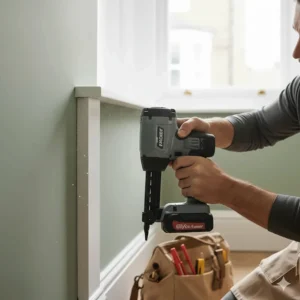
If you’ve ever spent hours hand-nailing baseboard trim only to end up with sore thumbs and wonky results, you’ll understand why a finish nailer is an absolute game-changer. These remarkable tools transform tedious trim work into a satisfying, professional-grade operation that’ll have you wondering how you ever managed without one.

A finish nailer is designed to drive finish nails—typically 15 or 16 gauge—into wood and other materials with precision and power. Unlike their smaller cousin the brad nailer, finish nailers pack enough punch to handle heavier trim, hardwood flooring, cabinet installation, and door casings without breaking a sweat. They’re the workhorse of any serious woodworking arsenal.
The UK market in 2026 offers an impressive selection of finish nailers, from budget-friendly pneumatic models to cutting-edge cordless options that rival their air-powered counterparts. Whether you’re a professional joiner tackling daily installations or a keen DIY enthusiast upgrading your toolkit, choosing the right finish nailer can dramatically impact your project outcomes—and your enjoyment whilst working.
In this comprehensive guide, I’ll walk you through the top 7 finish nailers available on Amazon.co.uk, comparing features, performance, and value to help you make the smartest purchase decision for your specific needs.
Quick Comparison Table
| Product | Type | Gauge | Price Range (£) | Battery/Power | Weight |
|---|---|---|---|---|---|
| Makita DBN600RTJ | Cordless | 16GA | £455-£600 | 18V Li-Ion | 3.5kg |
| DEWALT DCN660B | Cordless | 16GA | £270-£320 | 20V Li-Ion | 2.7kg |
| HiKOKI NT1865DSAW9Z | Cordless | 16GA | £380-£465 | 18V Li-Ion | 2.6kg |
| Metabo HPT NT65MA4 | Pneumatic | 15GA | £145-£180 | Air-Powered | 1.9kg |
| WORX WX841.9 | Cordless | 16GA | £115-£165 | 20V Li-Ion | 2.3kg |
| Makita AF506 | Pneumatic | 18GA | £90-£120 | Air-Powered | 1.5kg |
| DEWALT DPN1664PP | Pneumatic | 16GA | £110-£155 | Air-Powered | 1.7kg |
💬 Just one click – help others make better buying decisions too!😊
Top 7 Finish Nailers: Expert Analysis
1. Makita DBN600RTJ 18V Cordless Finish Nailer – Premium Professional Choice
The Makita DBN600RTJ represents the pinnacle of cordless finish nailer technology available in the UK. This 16 gauge powerhouse comes complete with two 5.0Ah batteries and a rapid charger, all housed in a rugged Makpac case that’ll survive the rigours of any job site.
Key Specifications:
- Accepts 16GA straight finish nails: 25-64mm
- Magazine capacity: 110 nails
- Drives up to 1,000 nails per 5.0Ah battery charge
- Tool-less depth adjustment
This Japanese-engineered marvel delivers pneumatic-like performance without the hassle of compressors and hoses. UK tradespeople particularly appreciate its anti-dry fire mechanism, which protects work surfaces from damage and extends tool life. The 2-mode selector switch offers both sequential and contact nailing operations—perfect for switching between precision work and rapid installation.
Customer Feedback Summary: British buyers consistently praise the Makita’s reliability and battery longevity. Several joiners noted it handled oak skirting boards and hardwood architraves without hesitation, even in awkward corners where trailing an air hose would be nightmare material.
✅ Pros:
- Exceptional battery life with dual 5.0Ah cells
- Professional-grade build quality
- Anti-dry fire protection
❌ Cons:
- Higher initial investment (£455-£600)
- Slightly heavier than some competitors
Price Range: £455.99-£599.00
 2. DEWALT DCN660B 20V Finish Nailer – Best Cordless Value
The DEWALT DCN660B offers an outstanding balance of performance and affordability, making it the go-to choice for serious DIYers and budget-conscious professionals across Britain. This 20-degree angled finish nailer brings American engineering prowess to your UK workshop.
Key Specifications:
- 16 gauge angled finish nails: 32-64mm
- Brushless motor technology
- Tool-free jam release system
- Inline magazine design
What sets the DEWALT DCN660B apart is its brushless motor, which maximises runtime and durability whilst reducing maintenance requirements. The 20-degree magazine angle provides excellent visibility and access in tight spaces—crucial when you’re fitting architrave around that awkward bay window. UK users particularly value the multi-functional LED lights that provide workspace illumination whilst also serving as diagnostic indicators.
Customer Feedback Summary: British customers consistently highlight the tool’s reliability and ease of depth adjustment. One London-based carpenter mentioned completing an entire Victorian terrace renovation using just two 2.0Ah batteries, praising its consistent power delivery throughout the project.
✅ Pros:
- Excellent price-to-performance ratio
- Lightweight and manoeuvrable (2.7kg)
- Tool-free jam release speeds up workflow
❌ Cons:
- Battery sold separately (bare unit)
- Slightly louder than premium models
Price Range: £270.00-£320.00
3. HiKOKI NT1865DSAW9Z 18V Brushless Finish Nailer – Innovation Leader
The HiKOKI NT1865DSAW9Z brings revolutionary Air-Spring Drive technology to the UK cordless tool market. This 16 gauge straight finish nailer delivers pneumatic performance without gas cartridges or compressors—a genuine technological breakthrough for British tradespeople.
Key Specifications:
- 16GA straight finish nails: 25-64mm
- Air-spring drive system
- 3 nails per second driving speed
- Dry-fire lockout protection
HiKOKI’s unique air-spring mechanism uses compressed air sealed within the unit to drive nails, resulting in zero ramp-up time and consistent power delivery even in cold British winters. The slim nose design provides superior visibility compared to traditional cordless nailers, whilst the LED work light proves invaluable when working in poorly lit Victorian lofts or basement conversions.
Customer Feedback Summary: UK professionals particularly appreciate the low recoil and smooth operation. A Scottish joiner noted the tool maintained consistent performance during outdoor deck installations, even when temperatures dropped below freezing—something gas-powered alternatives struggled with.
✅ Pros:
- Revolutionary air-spring technology
- Rapid 3 nails/second firing rate
- Excellent cold-weather performance
❌ Cons:
- Premium pricing (£380-£465)
- Bare unit requires separate battery purchase
Price Range: £380.00-£464.46
4. Metabo HPT NT65MA4 Pneumatic Finish Nailer – Professional’s Pneumatic Pick
The Metabo HPT NT65MA4 represents exceptional value in the pneumatic finish nailer category, earning “Pro Preferred” status from Builder and Developer Magazine for seven consecutive years. This 15 gauge angled nailer brings Japanese reliability to British job sites at a fraction of cordless tool costs.
Key Specifications:
- 15GA angled finish nails: 32-64mm (1-1/4″ to 2-1/2″)
- 34-degree magazine angle
- Weighs just 1.9kg
- Integrated air duster button
What makes the Metabo HPT NT65MA4 brilliant is its featherweight design combined with professional features. The 360-degree adjustable exhaust port directs air away from both operator and workpiece, whilst the selective actuation switch allows quick transitions between sequential and contact firing modes. UK joiners particularly value the integrated air duster for clearing sawdust without switching tools.
Customer Feedback Summary: British tradespeople consistently praise its lightweight feel during extended use. A Kent-based kitchen fitter mentioned installing an entire residential development’s skirting boards and architraves with minimal fatigue, highlighting the tool’s ergonomic excellence.
✅ Pros:
- Exceptional value (£145-£180)
- Ultra-lightweight at 1.9kg
- 5-year warranty coverage
❌ Cons:
- Requires air compressor and hose
- Less portable than cordless alternatives
Price Range: £145.00-£180.00
5. WORX WX841.9 20V Cordless Finish Nailer – Budget Cordless Champion
The WORX WX841.9 delivers impressive cordless convenience at a price point that won’t terrify your accountant. This 16 gauge nailer represents outstanding value for weekend warriors and emerging professionals building their toolkit on a sensible budget.
Key Specifications:
- 16GA finish nails: up to 64mm
- Brushless motor for efficiency
- Air impact technology
- PowerShare battery compatibility
WORX’s clever PowerShare system means batteries interchange across their entire 20V, 40V, and 80V tool range—brilliant for those gradually building a cordless ecosystem. The brushless motor delivers 50% longer runtime, 25% more power, and 10X longer motor life compared to brushed alternatives. British users particularly appreciate the tool-free jam release and non-marring contact pad that protects delicate finishes.
Customer Feedback Summary: UK DIYers consistently mention the tool’s surprising power for its price category. A Birmingham-based renovator successfully used it for installing hardwood flooring and oak skirting throughout a three-bedroom semi, praising its reliability and battery efficiency.
✅ Pros:
- Outstanding affordability (£115-£165)
- PowerShare battery compatibility
- Lightweight 2.3kg design
❌ Cons:
- Slightly less powerful than premium cordless options
- Basic features compared to professional models
Price Range: £115.00-£165.00

6. Makita AF506 18GA Brad/Finish Nailer – Precision Pneumatic Specialist
The Makita AF506 occupies the sweet spot between brad nailer delicacy and finish nailer power. This 18 gauge pneumatic tool excels at precision trim work where you need more holding power than brads provide but don’t want the heft of full 16 gauge nails.
Key Specifications:
- 18GA brad nails: 15-50mm
- Rear-loading magazine design
- Tool-less depth adjustment
- Aluminium construction
What makes the Makita AF506 particularly brilliant for British craftspeople is its versatility. The 18 gauge capacity handles everything from delicate architrave to robust skirting boards, making it the ideal single-nailer solution for smaller workshops. The rear-loading magazine accepts standard brad nails, whilst the tool-less depth adjuster provides precise countersinking control.
Customer Feedback Summary: UK buyers consistently mention the tool’s exceptional build quality, with many noting it’s lasted years of professional use without issues. One Cornish furniture maker praised its accuracy when assembling custom cabinetry, highlighting the minimal hole filling required afterwards.
✅ Pros:
- Excellent middle-ground capability
- Affordable running costs (£90-£120)
- Makita legendary reliability
❌ Cons:
- Requires compressor setup
- 18GA less suitable for heavy hardwood
Price Range: £90.00-£120.00
7. DEWALT DPN1664PP Pneumatic Finish Nailer – Precision Point Innovation
The DEWALT DPN1664PP brings advanced Precision Point technology to the UK pneumatic nailer market. This 16 gauge straight finish nailer features an innovative nose design that reduces surface marking whilst improving accuracy—perfect for high-end trim work where appearance matters.
Key Specifications:
- 16GA finish nails: 25-64mm
- 80% nose tip reduction
- Unique contact detect system
- TSTAK compatible case
DEWALT’s Precision Point nose represents a genuine innovation in nailer design, with an 80% smaller tip that dramatically improves visibility whilst reducing workpiece damage. The selectable trigger system switches between sequential and contact operation, whilst tool-free depth adjustment ensures professional results across varying materials. UK joiners particularly value the TSTAK compatibility for integrating with existing DEWALT storage systems.
Customer Feedback Summary: British tradespeople consistently highlight the reduced marking compared to traditional nailers. A London conservation specialist mentioned using it on listed building renovations where surface protection was paramount, praising its gentle touch on period architraves.
✅ Pros:
- Innovative Precision Point technology
- Reduced surface marking
- Professional features at mid-range pricing
❌ Cons:
- Pneumatic requires compressor (£110-£155)
- Slightly heavier than some alternatives
Price Range: £110.00-£155.00
✨ Don’t Miss These Exclusive Deals!
🔍 Take your finishing work to the next level with these carefully selected products. Click on any highlighted item to check current pricing and availability on Amazon.co.uk. These tools will help you create authentic professional results your clients will love!
Understanding Finish Nailers: A Comprehensive Guide
What is a Finish Nailer?
A finish nailer is a specialised power tool designed to drive finish nails—typically 15 or 16 gauge—into wood, MDF, and other construction materials with precision and power. Unlike framing nailers that use heavy-duty nails for structural work, finish nailers drive smaller-diameter nails that leave relatively discreet holes, making them ideal for visible trim work where aesthetics matter.
The fundamental advantage of finish nailers over traditional hammering is speed, consistency, and reduced risk of surface damage. A skilled operator can drive dozens of nails per minute with perfect depth control, whilst the tool’s design minimises the risk of splitting delicate trim or denting surrounding surfaces—concerns that plague manual nailing, particularly in hardwoods.
British tradespeople typically encounter three main finish nailer types: pneumatic models powered by compressed air, cordless battery-powered tools, and gas-powered variants. According to the UK Health and Safety Executive, proper training and safety equipment remain essential regardless of power source, as all nail guns present potential hazards if misused.
How Finish Nailers Differ from Brad Nailers
Whilst both finish nailers and brad nailers serve the trim carpentry market, they target distinctly different applications. Brad nailers fire 18 gauge nails—thinner fasteners that leave nearly invisible holes, perfect for delicate mouldings and light trim where holding power isn’t critical. Finish nailers, by contrast, use 15 or 16 gauge nails that provide substantially more holding strength for heavier trim, door casings, and hardwood installations.
Think of it this way: brad nailers excel at attaching decorative beading to furniture or securing lightweight picture rail, whilst finish nailers tackle the heavy lifting of baseboard installation, window architraves, and cabinet face frames. The larger-diameter finish nails penetrate dense materials like oak and ash without bending, something brads simply cannot achieve.
Gauge Explained: 15GA vs 16GA Finish Nailers
In the somewhat counterintuitive world of nail gauges, larger numbers indicate thinner nails. A 15 gauge finish nailer drives thicker nails than a 16 gauge model, providing greater holding power but leaving slightly larger holes that require more careful filling.
15 Gauge Finish Nailers excel at heavy-duty applications like installing thick hardwood skirting, substantial door casings, and structural trim work. The angled magazine design (typically 34 degrees) provides excellent access into corners, making them particularly popular amongst British joiners working on period property renovations where robust trim is standard.
16 Gauge Finish Nailers offer the Goldilocks solution—powerful enough for most residential trim work yet refined enough to leave manageable holes. Straight-magazine 16 gauge nailers provide the smallest profile, whilst angled variants (usually 20 degrees) improve manoeuvrability in tight spaces. UK professionals often consider 16 gauge the most versatile option for general finishing work.
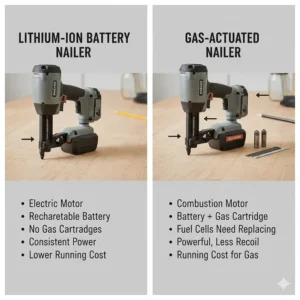
Pneumatic vs Cordless Finish Nailers
Pneumatic Finish Nailers
Advantages:
- Consistently powerful performance regardless of usage duration
- Lighter tool weight (compressor separate)
- Lower initial tool cost
- Unlimited runtime with proper compressor
- Minimal maintenance requirements
Disadvantages:
- Requires air compressor and hose setup
- Reduced mobility and portability
- Hose management challenges on busy sites
- Noise from compressor operation
- Initial compressor investment if not owned
Pneumatic finish nailers remain the professional standard in many UK workshops and large job sites where compressor infrastructure already exists. They’re particularly favoured for high-volume production work like housing development trim installations, where consistent power and unlimited runtime justify the mobility trade-offs.
Cordless Finish Nailers
Advantages:
- Ultimate portability and convenience
- No compressor or hose requirements
- Quieter operation
- Better for residential renovation work
- Increasingly powerful with modern battery technology
Disadvantages:
- Higher initial investment
- Battery runtime limitations
- Tool weight includes battery
- Multiple batteries needed for extended use
- Battery degradation over time
Cordless finish nailers have revolutionised the UK trim carpentry market over recent years. Modern lithium-ion technology delivers performance rivalling pneumatic tools, whilst the absence of trailing hoses dramatically improves efficiency when working across multiple rooms or on scaffolding. British renovators particularly value cordless tools when working in occupied properties where noise and air compressor placement prove problematic.
Essential Features to Consider When Buying
Depth Adjustment
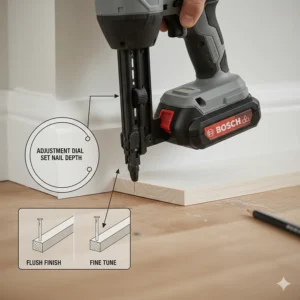
Proper depth adjustment represents perhaps the most critical feature separating professional-grade finish nailers from basic models. The ability to precisely control nail depth ensures fasteners sit flush with the work surface or slightly countersunk—essential for achieving clean results that require minimal filling.
Modern finish nailers offer tool-free depth adjustment via rotating dials or thumb wheels, allowing quick changes when moving between materials. This proves invaluable when installing trim across varying densities—oak architrave requires different settings than softwood skirting. Look for models offering clear depth indicators and smooth, precise adjustment mechanisms.
Magazine Capacity and Design
Magazine capacity directly impacts workflow efficiency. Larger capacities (100+ nails) reduce reloading frequency during extended installations, whilst smaller magazines (50-60 nails) contribute to lighter tool weight and improved manoeuvrability.
Straight magazines provide the lowest profile, allowing access into very tight spaces. Angled magazines (20-34 degrees) sacrifice some compactness but improve visibility and corner access—particularly valuable when installing skirting boards along walls or fitting architrave into awkward reveals.
Safety Features
UK regulations, specifically the Provision and Use of Work Equipment Regulations 1998 (PUWER), mandate that workplace power tools incorporate appropriate safety features. Quality finish nailers include:
Anti-Dry Fire Mechanisms: Prevent firing when magazine is empty, protecting work surfaces and extending tool life.
Sequential Triggers: Require deliberate two-step activation (contact tip then trigger), reducing accidental discharge risk compared to bump-fire modes.
Jam Release Systems: Tool-free mechanisms allow quick clearing of nail jams without requiring Allen keys or screwdrivers.
Lockout Features: Physical or electronic triggers prevent unauthorised or accidental tool activation during transport or storage.
Build Quality and Durability
Professional-grade finish nailers typically feature:
- Aluminium or magnesium housings (lightweight yet durable)
- Hardened steel driver blades (resist wear and maintain precision)
- Quality seals and O-rings (pneumatic models—prevent air leaks)
- Robust battery connections (cordless models—ensure reliable power)
British weather conditions demand particular attention to sealing and moisture resistance, especially for tools working on exposed job sites. Look for manufacturers offering strong warranty coverage (3-5 years typical for professional models), indicating confidence in long-term durability.
Best Applications for Finish Nailers in the UK
Baseboard and Skirting Board Installation
Installing skirting boards represents perhaps the most common finish nailer application in British homes. The typical UK property contains metres of skirting requiring secure fastening to walls, often through varying substrates including plaster, plasterboard, and timber battens.
A 16 gauge finish nailer with 50-64mm nails provides ideal holding power for most residential skirting installations. The longer nail length ensures proper penetration through skirting and plaster into underlying wall studs or battens, whilst the gauge offers sufficient strength without risk of splitting even narrow mouldings.
Pro Tip: When installing skirting on external walls with dot-and-dab plasterboard, locate timber battens carefully using a stud finder. Nailing into plasterboard alone provides insufficient long-term holding power, particularly for taller skirtings subjected to repeated impacts from vacuum cleaners and furniture movement.
Door and Window Architrave
Architrave installation demands precision and clean results, as these highly visible trim pieces frame every doorway and window in the property. Finish nailers excel here, providing secure fixing without the surface damage risk associated with hand nailing.
For standard UK architrave (typically 60-75mm wide by 18-25mm thick), a 16 gauge finish nailer with 40-50mm nails proves ideal. The nail length ensures adequate penetration into door linings or window frames, whilst the gauge provides sufficient holding power without leaving oversized holes requiring extensive filling.
UK-Specific Consideration: Period properties often feature substantial architrave mouldings in hardwoods like oak or mahogany. These applications benefit from 15 gauge finish nailers or even sequential firing to prevent the rapid-fire recoil affecting accuracy on dense materials.
Cabinet Installation and Face Frames
Kitchen and bathroom cabinet installation represents another prime finish nailer application. Securing face frames, crown mouldings, and decorative panels requires tools delivering consistent, professional results across extended installations.
Cabinet work typically demands 16 gauge finish nailers with 40-50mm nails for face frame assembly and 25-38mm nails for attaching decorative mouldings and trim. The lighter gauge suits the thinner stock common in cabinet components, whilst the shorter length prevents nail tips punching through visible surfaces.
British Building Standards: UK kitchen installations must comply with relevant building regulations, particularly regarding secure fixing of wall-mounted cabinets. Whilst finish nailers provide excellent cosmetic results, structural cabinet fixing to walls typically requires additional screws into studs or appropriate wall fixings rated for the cabinet weight.
Hardwood Flooring
Tongue-and-groove hardwood flooring installation represents a specialist finish nailer application requiring dedicated flooring nailers or robust finish nailers capable of driving angled nails through hardwood tongues. British oak, ash, and walnut flooring demand substantial driving force, pushing many standard finish nailers beyond their capabilities.
If using a finish nailer for flooring applications (rather than a dedicated flooring nailer), select 15 gauge models capable of driving 50mm nails at appropriate angles. The thicker gauge and longer length provide necessary holding power through hardwood and into subfloors, whilst the angled magazine allows proper placement against installed boards.
Crown Moulding and Coving
Crown moulding and decorative coving installation ranks amongst the most challenging trim carpentry applications, requiring secure fixing to both walls and ceilings whilst maintaining precise mitre joint alignment. Finish nailers prove invaluable here, allowing rapid, secure fastening without the juggling act of simultaneously holding mouldings whilst hammer-driving nails.
For typical UK crown moulding (60-100mm projection), a 15 or 16 gauge finish nailer with 50-64mm nails provides ideal performance. The longer length ensures adequate penetration into ceiling joists or wall studs, critical for supporting the moulding weight over time.
Installation Insight: British period properties often feature ornate plaster coving rather than timber crown moulding. When working with traditional coving, ensure you’re using appropriate plaster fixings and adhesives rather than relying solely on finish nails, which provide inadequate holding in plaster substrates.
Maintenance and Care Guide
Regular Cleaning Procedures
Proper maintenance significantly extends finish nailer lifespan whilst maintaining optimal performance. Dust and debris accumulation represents the primary enemy of nail gun reliability, particularly when working with MDF or treated timber that generates fine, sticky particles.
Daily Maintenance (After Each Use):
- Disconnect air supply (pneumatic) or remove battery (cordless)
- Clear magazine of all remaining nails
- Use compressed air to blow dust from magazine, nose, and air vents
- Wipe exterior surfaces with clean cloth
- Inspect nose contact and depth adjustment for debris
Weekly Maintenance (Active Use):
- Disassemble magazine according to manufacturer instructions
- Clean magazine track and feed mechanism thoroughly
- Inspect driver blade for wear or damage
- Check all visible O-rings and seals (pneumatic models)
- Apply light machine oil to moving parts (following manual specifications)
Pneumatic Nailer Specific Care
Pneumatic finish nailers require particular attention to air supply quality and lubrication. Moisture and contaminants in compressed air can rapidly damage internal components, whilst insufficient lubrication causes premature wear.
Air Supply Management:
- Install in-line water separator/filter between compressor and tool
- Drain compressor tank regularly to remove condensation
- Use clean, dry compressed air at manufacturer-specified pressure (typically 70-120 PSI)
Lubrication: Most pneumatic nailers require several drops of pneumatic tool oil in the air inlet before each use. This lubricates internal components whilst preventing moisture damage and corrosion. Specialised nail gun oil proves superior to generic machine oils, as it’s formulated to withstand high-pressure air environments without gumming.
Cordless Nailer Battery Care
Battery management directly impacts cordless finish nailer performance and longevity. Modern lithium-ion batteries, whilst robust, benefit from proper charging habits and storage conditions.
Battery Best Practices:
- Avoid complete discharge—recharge when capacity drops to 20-30%
- Store batteries in moderate temperatures (10-25°C ideal)
- Use manufacturer-specified chargers only
- Remove batteries during extended storage periods
- Keep battery contacts clean and free from debris
UK Winter Considerations: British winters can drop below freezing, affecting battery performance. Lithium-ion batteries lose capacity in cold conditions and shouldn’t be charged below 0°C. When working outdoors in winter, keep spare batteries in inside pockets to maintain operating temperature, swapping with depleted units as needed.
Troubleshooting Common Issues
Jam Clearing: Most jams result from damaged or incorrect nails. Always use manufacturer-specified nails and inspect strips for bent fasteners before loading. When jams occur:
- Disconnect power source completely
- Open jam-release mechanism (tool-free on modern nailers)
- Remove damaged nail(s)
- Inspect magazine track for obstructions
- Reassemble and test with single nail before resuming work
Inconsistent Depth: If nails aren’t setting consistently:
- Check depth adjustment setting and mechanism
- Inspect nose contact for wear or damage
- Verify correct operating pressure (pneumatic)
- Test battery charge level (cordless)
- Ensure you’re using correct nail length and gauge
Misfiring or Weak Driving: Insufficient power indicates:
- Low battery charge (cordless models)
- Inadequate air pressure or volume (pneumatic)
- Worn driver blade requiring replacement
- Internal seal damage (pneumatic models)
- Incorrect nail type or damaged nails
UK-Specific Buying Considerations
Health and Safety Regulations
The UK’s Health and Safety Executive (HSE) provides specific guidance on nail gun safety, mandating proper training, supervision, and protective equipment usage. Key requirements include:
Personal Protective Equipment (PPE):
- Safety glasses or goggles (mandatory—most nail gun eye injuries preventable with proper eye protection)
- Hearing protection (particularly with pneumatic models)
- Dust masks when working with treated timber or MDF
- Steel-toe boots on construction sites
Operator Training: Workers must receive training covering:
- Correct operating procedures
- Understanding safety features
- Common accident scenarios
- Emergency procedures
- Maintenance requirements
Workplace Requirements: Employers must ensure:
- Sequential trigger mechanisms used where practical (safer than bump-fire)
- Tools maintained according to manufacturer specifications
- Safety features never defeated or disabled
- Proper supervision provided, particularly for inexperienced workers
Power Tool Regulations and Standards
Finish nailers sold in the UK must comply with relevant safety standards, including CE marking (or UKCA marking post-Brexit) indicating conformity with essential health and safety requirements. The Provision and Use of Work Equipment Regulations 1998 mandates that employers:
- Select equipment suitable for the intended use
- Maintain tools in efficient working order
- Provide adequate information, instruction, and training
- Ensure tools remain safe throughout their working life
VAT and Pricing Considerations
All prices listed for finish nailers on Amazon.co.uk include VAT at the standard 20% rate. Trade professionals registered for VAT can typically reclaim this, effectively reducing tool costs. Some suppliers offer trade accounts with preferential pricing, though online retailers like Amazon often match or beat traditional trade counter pricing.
Budget Planning: When budgeting for a finish nailer purchase, consider total system costs:
- Pneumatic: Tool + compressor (if not owned) + air hose + fittings (£200-£600 total)
- Cordless: Tool + batteries (typically 2-3) + charger (£250-£650 total)
- Consumables: Nails (£15-30 per 2,000), oil (pneumatic—£10-15 annually)
- Maintenance: Replacement parts, servicing (budget £20-50 annually)
Metric vs Imperial Measurements
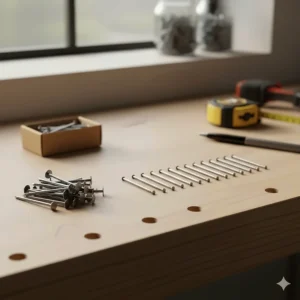
The UK’s unique position straddling metric and imperial measurement systems affects nail gun specifications. Whilst most manufacturers now specify nail lengths in millimetres, you’ll still encounter imperial measurements (inches) particularly on imported tools or specifications.
Common Conversions:
- 1″ = 25.4mm
- 1-1/4″ = 32mm
- 1-1/2″ = 38mm
- 2″ = 51mm
- 2-1/2″ = 64mm
British building standards and regulations use metric measurements exclusively, so when working to building control requirements or architectural specifications, ensure you’re working in the correct measurement system.
Comparison: Benefits vs Traditional Hammering
| Feature | Finish Nailer | Traditional Hammering |
|---|---|---|
| Speed | 40-60 nails/minute | 10-15 nails/minute |
| Consistency | Perfect depth every time | Variable, skill-dependent |
| Fatigue | Minimal arm strain | Significant repetitive stress |
| Accuracy | High (with practice) | Moderate (depends on skill) |
| Surface Damage Risk | Low (no hammer marks) | Higher (slip potential) |
| Noise Level | Moderate | Lower |
| Initial Cost | £90-£600 | £15-40 |
| Running Costs | Electricity/air + nails | Nails only |
| Portability | Cordless: Excellent / Pneumatic: Limited | Excellent |
| Learning Curve | Moderate (safety critical) | Lower |
Price Range & Value Analysis
Budget Category (£90-£165)
Budget finish nailers, primarily pneumatic models or entry-level cordless options, provide excellent starting points for DIY enthusiasts or professionals building their initial toolkit. The Makita AF506 (£90-£120) and WORX WX841.9 (£115-£165) exemplify this category, offering reliable performance for weekend projects or occasional professional use.
Best Value Pick: The Makita AF506 delivers exceptional reliability and build quality at the budget price point, backed by Makita’s renowned customer service and parts availability across the UK.
Mid-Range Category (£165-£350)
Mid-range finish nailers represent the sweet spot for many British tradespeople, offering professional features and durability without premium pricing. The DEWALT DCN660B (£270-£320) typifies this category—cordless convenience, brushless motor technology, and strong performance at accessible pricing.
Best Value Pick: The DEWALT DCN660B combines brand recognition, robust warranty coverage, and genuine professional capability, making it the standout choice for working tradespeople.
Premium Category (£350-£600+)
Premium finish nailers target professional users demanding maximum performance, durability, and features. The Makita DBN600RTJ (£455-£600) and HiKOKI NT1865DSAW9Z (£380-£465) showcase cutting-edge technology and build quality justifying higher investments for daily professional use.
Best Value Pick: The HiKOKI NT1865DSAW9Z delivers innovative air-spring technology and exceptional performance at a price point slightly below the Makita, representing outstanding value in the premium category.
✨ Don’t Miss These Exclusive Deals!
🔍 Take your finishing work to the next level with these carefully selected products. Click on any highlighted item to check current pricing and availability on Amazon.co.uk. These tools will help you create authentic professional results your clients will love!
Frequently Asked Questions (FAQ)
❓ What size finish nailer do I need for UK skirting boards?
❓ Can I use a finish nailer for fitting architrave around doors?
❓ Do I need a compressor with a cordless finish nailer?
❓ What's the difference between 15 gauge and 16 gauge finish nails?
❓ Are finish nailers safe for DIY use at home?
Conclusion: Making Your Final Decision
Selecting the perfect finish nailer ultimately depends on your specific circumstances, working environment, and budget. After extensive research and analysis of the UK market in 2026, I can confidently recommend the following based on different user profiles:
For Professional Tradespeople: The Makita DBN600RTJ (£455-£600) represents the premium choice, offering exceptional battery life, professional-grade durability, and features justifying the investment for daily use. Alternatively, the HiKOKI NT1865DSAW9Z (£380-£465) delivers cutting-edge technology at a slightly lower price point.
For Serious DIY Enthusiasts: The DEWALT DCN660B (£270-£320) strikes the ideal balance between performance, features, and affordability. Its cordless convenience combined with brushless motor technology provides years of reliable service for home renovation projects.
For Budget-Conscious Buyers: The WORX WX841.9 (£115-£165) offers remarkable value in the cordless category, whilst the Makita AF506 (£90-£120) represents the best pneumatic option for those with existing compressors or lighter finishing requirements.
For Workshop-Based Professionals: If you primarily work from a fixed location with existing compressor infrastructure, the Metabo HPT NT65MA4 (£145-£180) delivers professional pneumatic performance at exceptional value, backed by a comprehensive 5-year warranty.
Remember that whichever finish nailer you choose, proper maintenance, correct nail selection, and adherence to UK safety guidelines will significantly extend tool life whilst ensuring consistently professional results. The investment in a quality finish nailer transforms trim installation from tedious manual labour into an efficient, satisfying process that elevates your work quality whilst saving hours of frustration.
British woodworking demands tools capable of handling everything from delicate Georgian mouldings to robust Victorian architraves, often within the same project. A quality finish nailer delivers this versatility whilst meeting the exacting standards British craftspeople expect from their toolkit.
Recommended for You
- 7 Best Brad Nailer for Trim Work UK 2026
- 7 Best Nail Guns UK 2026: Expert Reviews & Buying Guide
- 7 Best Cordless Angle Grinder UK 2026
Disclaimer: This article contains affiliate links. If you purchase products through these links, we may earn a small commission at no additional cost to you. Prices shown are approximate and may vary.
✨ Found this helpful? Share it with your mates! 💬🤗
