
In This Article
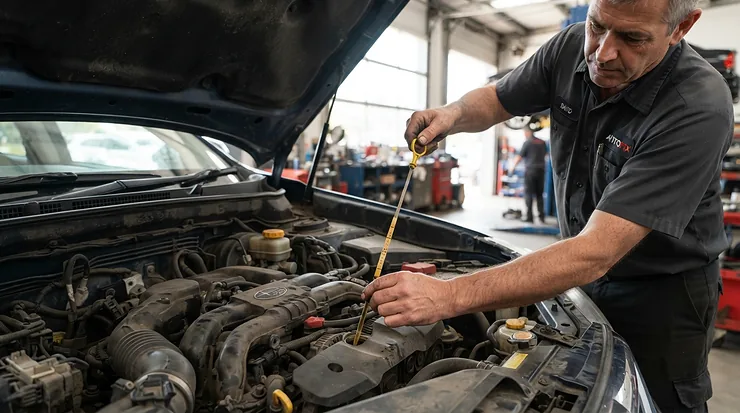
Your automatic gearbox is one of the priciest components in the car. It spends its whole life swimming in a fluid most owners haven’t thought about since the day they bought the thing. Choosing the right transmission fluid for automatic cars isn’t glamorous. It can still be the difference between a gearbox that shifts like silk at 120,000 miles and one that shudders, slips and sends you a bill with four figures on it.

The trouble is the shelf itself. Dexron VI, Mercon LV, ATF+4, Toyota WS, ZF LifeguardFluid: it reads like alphabet soup, and bottles that look near-identical are not interchangeable. This ATF buying guide starts with what actually matters, which is matching the fluid to the specification your gearbox demands. Quality, value and availability come after that.
Over the next few thousand words I’ll walk through seven real products I researched. They range from a budget Dexron VI to a ZF-grade fluid for eight-speed boxes and a dedicated CVT fluid. Each spec comes with plain-English commentary, so you’ll know what it means in practice. You’ll also get a fluid compatibility by manufacturer cheat-sheet and a practical walkthrough of transmission fluid changes and gearbox servicing, including what to hand to a garage and what you can sensibly do yourself.
One honest note up front: I haven’t road-tested any of these fluids, and I won’t pretend otherwise. What follows is spec-sheet analysis, manufacturer data and published listings. Read it with your owner’s handbook open on the passenger seat. Prices are ranges only, so check current prices before you buy.
Quick Comparison: Transmission Fluid for Automatic Cars at a Glance
| Product | Fluid type | Headline approvals | Price band | Best For |
|---|---|---|---|---|
| Castrol Transmax Dexron VI Mercon LV | Synthetic, low viscosity | GM Dexron VI, Ford Mercon LV | Mid (around £15–£20 per litre) | GM/Vauxhall-type and newer Ford boxes |
| Liqui Moly Top Tec ATF 1200 | Synthetic-technology ATF | Dexron III H, Mercon V, MB 236.x, ZF TE-ML, VW G 052 162 | Premium (check current price) | Older European and Asian autos |
| Motul ATF VI | 100% synthetic, low viscosity | Dexron VI, Mercon LV, ATF+4, Toyota WS | Mid–premium (around £15–£20 per litre) | Mixed-brand households |
| Motul Multi ATF | 100% synthetic | Dexron III, Mercon, Toyota T-IV, Nissan Matic | Mid–premium (check current price) | Older Japanese-era autos |
| ZF LifeguardFluid 8 | OEM-grade synthetic | ZF 8HP, VW G 060 162, BMW L12108 | Premium (£20+ per litre) | BMW, Audi, Jaguar and Land Rover 8-speeds |
| Castrol Transmax CVT | Full synthetic CVT fluid | Toyota TC, Nissan NS-3, Honda HCF-2 | Mid–premium (around £15–£20 per litre) | Belt and chain CVTs |
| Mannol Dexron VI | Dexron VI-class | Dexron VI (per listing) | Budget (around £7–£12 per litre) | Cost-conscious top-ups |
Looking at the table, the two Motul fluids and Liqui Moly Top Tec ATF 1200 are the “approvals-first” choices for mixed or older fleets. Castrol Transmax Dexron VI Mercon LV is the cleanest fit when your handbook says Dexron VI or Mercon LV. ZF LifeguardFluid 8 and Castrol Transmax CVT are specialists, and putting either in the wrong gearbox is a mistake. Review ratings aren’t shown because I couldn’t verify consistent UK review data across all seven products.
💬 Just one click — help others make better buying decisions too!😊
What Is Transmission Fluid for Automatic Cars?
Transmission fluid for automatic cars, usually called automatic transmission fluid (ATF), is a specialised hydraulic fluid. It lubricates the gears, carries heat away from the gearbox, transmits the hydraulic pressure that selects each gear and gives the clutches the right amount of grip. Each gearbox is engineered around a specific specification, so the wrong fluid can mean rough shifting or damage.
That’s the snippet version. The longer story is that ATF does several jobs at once, which is why it isn’t “just oil”. Wikipedia’s overview of automatic transmission fluid describes it as a hydraulic fluid essential to automatic gearboxes, loaded with performance additives tailored to each design. Those additives control friction so clutch packs engage smoothly without slipping or shuddering. They also resist foaming and oxidation, and they keep seals supple.
Fresh automatic transmission fluid is typically red or pink, which is a handy visual benchmark when you inspect a dipstick. Some modern fluids are dyed differently, though. ZF LifeguardFluid 8, for instance, is listed as green, so colour alone proves nothing about specification.
Not every automatic uses the same type of fluid either. Conventional torque-converter automatics, continuously variable transmissions (CVTs) and dual-clutch gearboxes (DCTs) each demand their own formulations. As ACDelco’s Dexron VI product notes make clear, that family of fluids is not for CVTs or DCTs, which “require specialized fluids”. Keep that in mind and half the buying mistakes in this guide disappear.
Top 7 Transmission Fluid for Automatic Cars: Expert Analysis
I’ve ordered these from specialist to generalist and across budget, mid-range and premium. For every one, I flag exactly which gearboxes it suits and which it doesn’t. That matters more than any glossy claim on the bottle.
1. Castrol Transmax Dexron VI Mercon LV — dual-licensed all-rounder for GM and Ford
The standout here is the paperwork. Castrol positions this as the first fluid licensed for both GM Dexron VI (J-60172) and Ford Mercon LV (MLV141002) that also exceeds the JASO 1A standard. If you look after more than one make, that’s genuinely useful.
It’s a fully synthetic, low-viscosity formula, and the low viscosity is the point. Thinner fluid means less internal drag, which helps fuel economy and cold-weather shift response. Retail listings also cite Mazda ATF M-III, M-V and FZ and Daihatsu references. Treat any cross-brand claim as a prompt to check your handbook against the label, not as permission.
Based on the spec sheet, this suits Vauxhall/GM-derived six-speeds and newer Fords that call for Dexron VI or Mercon LV. Castrol’s own claim, repeated by retailers, is that it covers more than 70% of passenger-car ATF applications worldwide. That’s a marketing figure, but it hints at how broad the fit is.
On reviews, I couldn’t verify a large body of UK customer feedback that I could honestly summarise, so I’ll leave that gap open rather than fill it with invention.
Pros:
- ✅ Licensed for both Dexron VI and Mercon LV
- ✅ Low viscosity supports economy and cold shifting
- ✅ Wide range of pack sizes, from 1 L to bulk
Cons:
- ❌ Not suitable for CVT gearboxes
- ❌ Costs more than generic Dexron VI bottles
Price and value: around £15–£20 per litre in single bottles at the time of research, less in larger packs. It’s solid value for a licensed fluid, so check current price.
2. Liqui Moly Top Tec ATF 1200 — widest approvals list for European gearboxes
Open the approvals list and it reads like a parts-counter phone book: Allison C4, BMW LT 71141, Mercedes MB 236.x, VW G 052 162, and a long run of ZF TE-ML numbers. It’s built on synthetic hydrocarbon base oils with modern additives, and the maker says it can top up systems filled with conventional ATF.
Here’s what the headline list doesn’t say. It names Dexron III H and Mercon V, but not Dexron VI or Mercon LV. If your handbook demands the newer low-viscosity specifications, this isn’t your bottle. Liqui Moly also states that full effectiveness comes only when the fluid is used unmixed, and that Honda ATF Z1 coverage excludes CVTs.
On paper this is a strong pick for older European autos, such as ZF five- and six-speeds and earlier BMW, VW and Mercedes boxes. It also suits Asian gearboxes calling for Toyota T-IV or Hyundai/Kia SP-III. The practical benefit is simplicity: one fluid covers several approvals, so fewer wrong-bottle mistakes.
On reviews, the product page I found showed just a single review. That’s far too thin to summarise responsibly.
Pros:
- ✅ Very long approvals list across European makes
- ✅ Also covers Toyota, Hyundai, Kia and Chrysler specs
- ✅ Can top up systems with conventional ATF
Cons:
- ❌ Dexron VI and Mercon LV not listed
- ❌ Not for CVTs, including Honda CVTs
Price and value: I couldn’t confirm a stable UK price, but expect the premium tier. It’s good value if the approvals match your gearbox, so check current price.
3. Motul ATF VI — low-viscosity premium with broad Asian-brand coverage
This is Motul’s answer for modern low-viscosity gearboxes. It’s a 100% synthetic fluid made for transmissions needing Dexron VI, and the technical data lists Ford Mercon LV and ULV as well. It reads like a UK driveway cheat-sheet: Chrysler ATF+3/+4, Honda ATF Z1 and DW-1 (non-CVT), Toyota ATF WS and T-IV, Mazda ATF FZ, and Mitsubishi and Kia SP-IV.
What does that mean in practice? Motul claims smoother shift feel, reduced shift-time lag and anti-shudder behaviour, plus better cold-temperature response. The German data sheet also says the fluid can be mixed with other Dexron-specification fluids. That’s reassuring if you’re topping up a gearbox with unknown history, though a full change beats mixing.
Based on the spec comparison, it suits households with, say, a GM-derived hatchback and a Japanese saloon. One bottle ticks several handbook boxes. The hard limit: Motul says explicitly not to use it in CVTs.
I couldn’t find a sizeable verified review sample, so I’m not summarising sentiment here.
Pros:
- ✅ Dexron VI plus Mercon LV and ULV
- ✅ Covers Toyota WS, Honda Z1 and ATF+4
- ✅ Mixable with other Dexron fluids
Cons:
- ❌ Explicitly not for CVT gearboxes
- ❌ Priced above budget Dexron VI alternatives
Price and value: roughly £15–£20 per litre based on comparable listings I found. It’s fair value when you need the cross-brand coverage, so check current price.
4. Motul Multi ATF — the older-gearbox specialist from the Dexron III and Mercon era
Don’t confuse this with the ATF VI above. Motul Multi ATF targets Dexron III and Mercon-level requirements, and Motul states it is not for fluids specified as Dexron VI. It’s a 100% synthetic fluid aimed at the large installed base of older automatics.
The approvals list is where it earns its keep: Toyota T-IV and WS, Nissan Matic D/J/K, Mazda M-III and M-V, Kia SP-III, Mitsubishi, Subaru, Chrysler ATF+4, Mobil ATF 3309 and even Rover ATF 206. Listings also show older VW G 052 xxx and BMW LT 71141-style references. For UK drivers running a decade-old Japanese import or an ageing European saloon, that’s an unusually helpful spread.
What the spec sheet won’t tell you, but common sense will: older gearboxes with worn clutch packs can be fussy, and a fluid matching the original friction characteristics matters more than a premium badge. That’s the argument for this one over a modern low-viscosity fluid.
I couldn’t verify enough review data to summarise honestly.
Pros:
- ✅ Strong coverage of older Japanese gearbox specs
- ✅ Includes Rover ATF 206 and Mobil 3309
- ✅ Synthetic base suits tired, hot gearboxes
Cons:
- ❌ Not for Dexron VI applications
- ❌ Not for CVTs or DCTs
Price and value: I couldn’t verify a stable UK price, so expect mid-to-premium and check current price. The value is excellent if your handbook names an older spec.
5. ZF LifeguardFluid 8 — OEM-grade fluid for 8HP gearboxes
This one is the closest thing to “buy the factory fluid”. ZF’s data sheet says it was developed for 8HP passenger-car transmissions and some 6HP units, with friction behaviour tuned to those boxes. It carries part number S671 090 312 in the 1 L bottle, with a 20 L canister, a 209 L drum and a 1,000 L IBC for workshops.
Here’s the line that matters. ZF states that only LifeguardFluid 8 or LifeguardFluid 9 may be used in these transmissions. The ZF product data sheet also notes these boxes are generally lifetime-filled, but ZF still advises a change where individual operation shortens fluid life. Third-party “8HP” fluids from Ravenol, Vaico and Mannol exist, but ZF’s own position is the firm one.
Listed references include VW/Audi G 060 162 A1, A2 and A6, BMW L12108, Jaguar 02JDE26444, Land Rover LR023288, Chrysler 68157995AA and Fiat 9.55550-AV5. If your BMW, Audi, Jaguar or Land Rover has an eight-speed ZF box, those are the fingerprints to match.
For reviews, the only sample I found was a small German marketplace listing showing five ratings, all five-star. That’s too small to mean much.
Pros:
- ✅ Matches ZF’s own friction specification
- ✅ Covers many VW, BMW, Jaguar and Land Rover references
- ✅ Available from 1 L to workshop sizes
Cons:
- ❌ Premium price per litre
- ❌ Only suitable for specific ZF gearboxes
Price and value: European listings suggested a figure of £20+ per litre, so check current price. It’s expensive, but cheap insurance on a costly gearbox.
6. Castrol Transmax CVT — dedicated fluid for belt and chain CVTs
CVTs don’t use gears in the usual sense. A steel belt or chain runs between variable pulleys, so the fluid needs a particular friction character to stop slip while protecting the metal-to-metal contact. Castrol Transmax CVT is a full synthetic built for exactly that, recommended for push-belt and chain designs.
The listed approvals are broad: Toyota TC and FE, Nissan NS-1, NS-2 and NS-3, Mitsubishi J1/J4/J4+, Subaru i-CVT, Mazda CVTF 3320, Suzuki, Hyundai/Kia SP-CVT 1, Chrysler CVTF+4, plus VW G 052 180 and G 052 516, Mini EZL 799, Ford CVT23 and MB 236.20. The Honda caveat deserves a flag. Castrol says it suits Honda HCF-2 CVTs except 2001–2007 Fit/Jazz models with a starting clutch. UK Jazz owners, read that twice.
On paper, Castrol claims higher torque capacity and enhanced belt-pulley wear protection. Realistically, what you get is the right spec in a bottle, which matters more than any marketing adjective.
I couldn’t verify a robust UK review base, so I’m not summarising sentiment.
Pros:
- ✅ Covers Toyota, Nissan, Subaru and Mitsubishi CVT specs
- ✅ Also lists VW, Mini, Ford and Mercedes codes
- ✅ Targets belt and chain CVT wear protection
Cons:
- ❌ Excludes some early Honda Fit/Jazz CVTs
- ❌ Priced above standard stepped-ATF fluids
Price and value: about £15–£20 per litre (high-teens at one UK retailer listing). It’s reasonable for a specialist fluid, so check current price.
7. Mannol Dexron VI — budget Dexron VI top-up option
This is the budget slot, and I’ll be upfront about how much I could verify. Parts-retailer listings show it as an ATF VI, red, 1 L product in the Dexron VI line, flagged as not for CVT gearboxes. Beyond that, the independent detail was thin.
That thinness is itself useful analysis. With budget fluids, check whether the bottle says “licensed” or “meets”. Castrol states its fluid is licensed by GM and Ford. A “meets Dexron VI” claim describes performance targets rather than an official licence. For a gearbox still under warranty, I’d want the licence.
Where does a budget Dexron VI make sense? Think of an older GM or Vauxhall-derived automatic out of warranty, where the handbook asks for Dexron and cost matters. Cheap Dexron VI bottles on parts sites ranged widely, from roughly £7 to £18 per litre across brands, so this sits at the lower end.
On reviews, I couldn’t verify enough UK feedback to summarise.
Pros:
- ✅ Dexron VI-class fluid at a lower price
- ✅ Suits older, out-of-warranty GM-type boxes
- ✅ Easy 1 L top-up bottle
Cons:
- ❌ Detailed approvals harder to verify
- ❌ Not for CVTs
Price and value: budget bracket, around £7–£12 per litre in larger packs at the time of research. It’s good value only if the label’s specification matches your handbook, so check current price.
How to Choose Transmission Fluid for Automatic Cars
- Read the handbook first. Your owner’s manual names the exact specification, such as Dexron VI, Mercon LV, ATF+4, Toyota WS or a ZF part number. That wording beats any brand recommendation.
- Identify the gearbox type. A torque-converter automatic, a CVT and a dual-clutch box need different fluids, and none is a substitute for another.
- Check the label for licences, not just “suitable for”. An officially licensed approval means the fluid passed the manufacturer’s testing. “Suitable for” or “meets” is a performance claim.
- Match the viscosity generation. Low-viscosity fluids such as Dexron VI exist for fuel economy and cold shifting, and older gearboxes may not behave the same way on them.
- Decide whether premium is justified. For a high-mileage car you plan to scrap, budget is fine. For a gearbox worth thousands, spend more on a trusted spec.
- Check pack size. A drain-and-fill often uses several litres, and full exchanges use more. Buy enough in one batch to avoid mixing.
- Verify the vehicle by registration or VIN. A parts-catalogue lookup catches the model-year changes that handbooks gloss over.
✨ Don’t Miss These Exclusive Deals!
🔍 Take your gearbox servicing to the next level with these carefully selected fluids. Click on any highlighted item to check current pricing and availability. These picks will help you create authentic, smooth, shudder-free shifts your family will love!

Fluid Compatibility by Manufacturer: Which Fluid Fits Which Gearbox?
Fluid compatibility by manufacturer is where most expensive mistakes begin. The table below maps common gearbox families to the specification you’d typically look for. It shows which fluids in this guide list that specification, according to published data. Always cross-check your own handbook.
| Gearbox family | Spec to look for | Fluids that list it | Best For |
|---|---|---|---|
| GM / Vauxhall-derived stepped autos | Dexron VI | Castrol Transmax Dexron VI Mercon LV, Motul ATF VI, Mannol Dexron VI | Castrol Transmax Dexron VI Mercon LV for licensed fit |
| Newer Ford autos | Mercon LV | Castrol Transmax Dexron VI Mercon LV, Motul ATF VI | Castrol Transmax Dexron VI Mercon LV |
| Chrysler / Jeep | ATF+3 / ATF+4 | Motul ATF VI, Motul Multi ATF, Liqui Moly Top Tec ATF 1200 | Motul ATF VI |
| Toyota / Lexus (non-CVT) | ATF WS / T-IV | Motul ATF VI, Motul Multi ATF, Liqui Moly Top Tec ATF 1200 | Motul ATF VI for newer WS boxes |
| Honda (non-CVT) | ATF Z1 / DW-1 | Motul ATF VI, Motul Multi ATF, Liqui Moly Top Tec ATF 1200 | Motul ATF VI |
| Toyota / Nissan / Honda CVTs | CVT TC / NS-3 / HCF-2 | Castrol Transmax CVT | Castrol Transmax CVT |
| BMW / Audi / Jaguar / Land Rover 8-speed ZF | ZF LifeguardFluid 8 / G 060 162 | ZF LifeguardFluid 8 | ZF LifeguardFluid 8 |
| Older Mercedes / European ZF boxes | MB 236.x, ZF TE-ML | Liqui Moly Top Tec ATF 1200 | Liqui Moly Top Tec ATF 1200 |
Reading across, the clearest pattern is that the “multi-brand” fluids shine on Japanese and American specifications. The European premium eight-speeds are the opposite, with a narrow, strict fit. If you drive an Audi A6 or a Land Rover, the table is telling you not to improvise.
It also helps to know where the Dexron VI label came from. According to the SAE technical paper on the GM Dexron-VI global service-fill specification, the fluid was developed with improved friction durability, viscosity stability and oxidation resistance. It also offered the potential for longer drain intervals, which is why it exists as a distinct spec rather than a relabelled Dexron III.
Gearbox Oil for Automatics vs Manual Gear Oil
People say “gearbox oil” for everything, and that’s how the wrong bottle ends up in the wrong box. Gearbox oil for automatics is a hydraulic fluid with carefully tuned friction behaviour. Manual gear oil is a heavier lubricant graded like 75W-90, built to protect meshing gear teeth and synchromesh. Castrol’s own range reflects the split, with separate Transmax Manual 75W-90 products alongside its ATF lines.
| Feature | Modern synthetic ATF | Older conventional (mineral) ATF | Manual gear oil (e.g. 75W-90) |
|---|---|---|---|
| Main job | Hydraulics, cooling, clutch friction | Same, with simpler additive packs | Gear-tooth and synchro protection |
| Cold-weather shifting | Typically better with low-viscosity types | Thicker when cold | Not applicable to an automatic |
| Typical change timing | Longer, per handbook | Shorter | Per manual-gearbox schedule |
| Use in an automatic | Yes, if specification matches | Yes, if specification matches | No |
| Best For | Castrol Transmax Dexron VI Mercon LV in newer autos | Older boxes that still specify it | Manual gearboxes only |
Taken together, the table points at one rule: never put manual gear oil in an automatic because it’s “thicker, so tougher”. The clutch packs would likely slip or glaze. Meanwhile modern synthetic ATF isn’t automatically better in an old gearbox, since an older friction specification can be the right match. Fluid Motul Multi ATF is aimed squarely at that case. For newer low-viscosity designs, Motul ATF VI is the sort of fluid the paperwork points to.
Common Mistakes When Buying Transmission Fluid for Automatic Cars
Buying by colour. Red doesn’t mean Dexron, and green doesn’t mean ZF. Colour is a dye, not a specification.
Treating “universal” as “approved for my car”. Multi-vehicle fluids are convenient, but a universal claim is not an official approval for your specific gearbox. Check the exact listing against your handbook.
Putting ATF where a CVT or DCT fluid belongs. Several fluids in this guide, including Motul ATF VI and Mannol Dexron VI, are flagged as not for CVTs. Dual-clutch boxes need their own formulations too.
Mixing blindly. Liqui Moly says full effectiveness of Liqui Moly Top Tec ATF 1200 comes only unmixed, and Motul notes Motul ATF VI can be mixed with Dexron-specification fluids but not generally with everything. A complete change beats a cocktail.
Trusting “lifetime fill” literally. ZF’s own data sheet describes its gearboxes as generally lifetime-filled, then advises a change where operating conditions demand it. Stop-start commuting and towing are exactly those conditions.
Ignoring the vehicle’s history. If the service record can’t confirm when the fluid was last changed, treat it as overdue. A garage can check condition before you commit to a full gearbox servicing job.
Transmission Fluid Changes: A Practical Step-by-Step Guide
Transmission fluid changes aren’t one-size-fits-all, and many modern boxes are awkward on purpose, with sealed pans and temperature-sensitive fill checks. Use this as a plan, not a replacement for your workshop manual.
- Confirm the specification from the handbook and a registration lookup.
- Decide DIY or garage. Sealed or lifetime-fill gearboxes, such as ZF eight-speeds, usually need correct fill procedures and diagnostic-level temperature control. That’s a job for a specialist.
- Check the existing fluid. Fresh fluid is typically red or pink, while dark fluid with a burnt smell suggests it’s overdue.
- Choose drain-and-fill or full exchange. A pan drain typically replaces only part of the total fluid, because much stays in the torque converter and cooler lines.
- Replace the filter and pan gasket where fitted, and clean the pan magnet if there is one.
- Fill to the correct level at the correct temperature, following the handbook, since some gearboxes must be checked at a specific fluid temperature.
- Log the date and mileage so your next service doesn’t rely on guesswork.
Common first-30-day mistakes include overfilling, which can cause foaming, and underfilling, which starves the hydraulics. If a new fluid is a mild fit rather than a perfect one, expect the gearbox to feel slightly different for a few drives.

Real-World Scenarios: Matching Fluid to Three UK Drivers
The stop-start commuter. Imagine a 2013-ish hatchback with a GM-type six-speed, crawling daily around a city ring road, on a tight budget. The handbook says Dexron VI. A licensed fluid like Castrol Transmax Dexron VI Mercon LV is the safer choice while the warranty or resale value matters. If the car is older and cheap to run, Mannol Dexron VI can fit, provided the label matches the handbook.
The caravan-towing family. Picture a premium SUV with a ZF eight-speed, 75,000 miles, towing most summer weekends. Towing means heat, and heat means fluid ageing sooner. Here ZF LifeguardFluid 8 is the matching choice, and a specialist gearbox servicing visit is worth the money.
The Jazz-and-school-run parent. Consider a small Japanese CVT, short journeys, school-run frequency. Castrol Transmax CVT suits many such gearboxes. Check Castrol’s Honda caveat if it’s an early Fit or Jazz with a starting clutch. For a decade-old Japanese stepped automatic, Motul Multi ATF is the sort of fluid worth comparing against the handbook.
Problem and Solution Guide: Gearbox Symptoms
Harsh or shuddering shifts. This can signal degraded or wrong-specification fluid. Check the service history, then consider a full change with the right spec, such as Motul ATF VI for modern Dexron or ATF+4 applications.
Slipping or delayed engagement. Low level or worn fluid is common, but so are mechanical faults. Have a garage check level and condition before pouring anything in.
Whining or overheating when towing. Heat accelerates fluid breakdown. A fresh change with a high-quality spec, such as ZF LifeguardFluid 8 for matching ZF boxes, helps. A cooler upgrade is a separate conversation.
Unknown service history. Treat the fluid as overdue and plan transmission fluid changes with the right fluid. Liqui Moly Top Tec ATF 1200 suits many older European specs.
Leaks or low level. Top-ups should match the existing fluid. Don’t mix specifications. If the problem keeps returning, it’s a seal or pan issue, not a fluid choice.
Long-Term Cost and Gearbox Servicing Maintenance
The fluid is cheap compared with the box. A gearbox repair can run into four figures, so even premium transmission fluid for automatic cars is modest insurance. Still, value isn’t just price per litre.
| Product | Price band | Value verdict | Best For |
|---|---|---|---|
| Mannol Dexron VI | Budget (around £7–£12 per litre) | Good only if the label matches your spec | Older, out-of-warranty GM-type autos |
| Castrol Transmax Dexron VI Mercon LV | Mid (around £15–£20 per litre) | Strong value for licensed coverage | Newer GM and Ford boxes |
| Motul ATF VI | Mid–premium (around £15–£20 per litre) | Good for cross-brand households | Mixed fleets |
| Castrol Transmax CVT | Mid–premium (around £15–£20 per litre) | Fair for a specialist fluid | Belt and chain CVTs |
| ZF LifeguardFluid 8 | Premium (£20+ per litre) | Expensive, but spec-correct | ZF eight-speeds |
Looking at the table, the real saving isn’t buying the cheapest bottle. It’s avoiding a wrong-spec fill that costs you a gearbox. Budget fluid works when it genuinely matches the handbook, and premium fluid is justified when the specification is strict or the car is valuable.
Think of gearbox servicing like dental check-ups: skip them and the final bill is bigger. Sources vary on timing, from lubricant-maker advice of roughly every 25,000 miles to figures of 60,000–100,000 miles from other sources, and some manufacturers claim lifetime fills. That spread is why your handbook and driving style should lead. Severe use, such as stop-start traffic, towing or hills, argues for earlier changes. Prices may vary, so check current prices before you buy.
Safety, Disposal and Regulations
Used fluid is a waste product, not a drain cleaner. Councils treat used engine oil as hazardous waste, and Warwickshire County Council’s guidance on used engine oil notes that pouring it down a drain harms wildlife by stripping oxygen from watercourses. It also sets a limit of 10 litres per month per householder at its recycling centres, delivered in a sealed container.
Policies differ by council, and I couldn’t confirm that every site accepts used gearbox fluid alongside engine oil. Phone ahead, or ask the garage to take it if they do the work.
On safety, hot fluid scalds. Wear gloves and eye protection, use axle stands rather than a jack alone, and keep used fluid away from children and pets. For warranty, independent servicing with correct-specification fluid shouldn’t by itself void a manufacturer warranty, but terms vary, so check your paperwork. Keep receipts and fluid labels as proof.
FAQ
❓ How much transmission fluid for automatic cars do I need for a change?
❓ Can I mix different automatic transmission fluid brands?
❓ Is Dexron VI the same as Mercon LV?
❓ Can I use a universal ATF in a CVT gearbox?
❓ Does changing the fluid myself void my warranty?
Conclusion
Choosing transmission fluid for automatic cars comes down to one discipline: match the specification first, then shop on quality and price. If your handbook says Dexron VI or Mercon LV, Castrol Transmax Dexron VI Mercon LV is the cleanest licensed fit, and Mannol Dexron VI is the budget route if the label checks out. For mixed Japanese and American specifications, Motul ATF VI is the flexible modern pick, while Motul Multi ATF serves older gearboxes. Liqui Moly Top Tec ATF 1200 covers a wide spread of older European approvals. If you drive a ZF eight-speed, ZF LifeguardFluid 8 is the fluid ZF itself points to, and Castrol Transmax CVT is the specialist for belt and chain CVTs.
Whatever you choose, treat this ATF buying guide as a starting point and your owner’s handbook as the final word. Good gearbox servicing, with the right fluid and sensible transmission fluid changes, protects one of the most expensive parts of your car. Prices may vary, so check current prices before you buy.
✨ Don’t Miss These Exclusive Deals!
🔍 Take your gearbox servicing to the next level with these carefully selected fluids. Click on any highlighted item to check current pricing and availability. These picks will help you create authentic, smooth, confident shifts your whole family will love!
Recommended for You
- Antifreeze Concentrate Vs Premixed: 7 Smart Picks For UK Cars (2026)
- Coolant And Antifreeze For Cars: 7 Best Picks For UK Drivers (2026)
- Brake Fluid DOT 4: 7 Best Picks For UK Drivers (2026)
Disclaimer: This article contains affiliate links. As an Amazon Associate, I earn from qualifying purchases. If you purchase products through these links, we may earn a small commission at no additional cost to you.
✨ Found this helpful? Share it with your friends! 💬🤗
