
In This Article
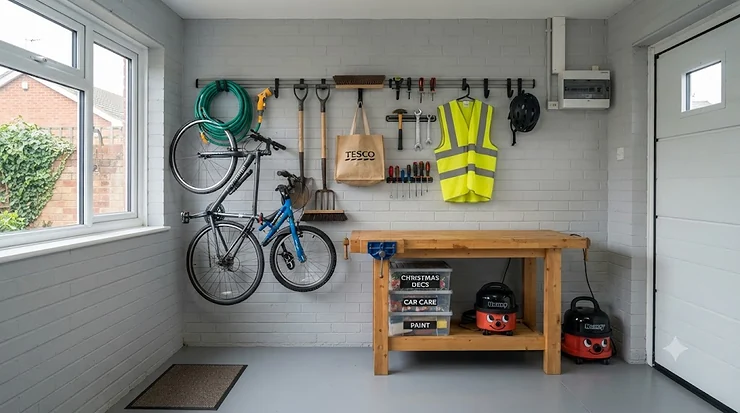
There’s a particular kind of chaos that only a British garage can produce. A bike leaning on a lawnmower. A hose coiled around a stepladder like they’re arguing about something. Somewhere under all of it, a set of jump leads you haven’t seen since March. If any of that sounds familiar, utility hooks for garage walls are probably the cheapest, fastest fix you’ll find this year — and they’re nowhere near as dull as they sound.
The idea is simple: get things off the floor and onto the wall, where they’re visible, accessible, and not something you trip over at 7am with a coffee in hand. But “simple” doesn’t mean “all the same.” Some hooks are engineered to hold a laden ladder without bending; others are barely up to a coat and a bag of birdseed. Cheap steel rusts within a season in a damp UK garage; anti-slip coatings stop tools sliding off in the first place; adjustable and swivel designs earn their keep when you’re trying to fit an odd-shaped item into a tight run of wall.
This guide walks through seven genuinely available products — from budget multipacks to a proper rail-based system — with honest analysis of who each one suits, what the aggregated reviews actually say, and where the compromises are. We’ll cover multipurpose garage hooks for general-purpose tidying, a full garage storage hooks set for a total wall overhaul, heavy duty S hooks for smaller items, a multi-use garage hook that pulls double duty in the shed, an adjustable wall hook for oddly-shaped kit like bikes, and a vinyl coated hook option for anything you don’t want scratched. Prices aren’t quoted exactly here — they shift constantly — so expect ranges instead, and always check the current price before buying. Manual handling and safe fixing matter too, and the Health and Safety Executive’s guidance on back pain points to poor lifting and handling technique as a major contributor to workplace and home injuries alike, which is as relevant to hauling a loaded ladder off a garage hook as it is to a warehouse floor.
Quick Comparison Table
| Product | Type | Load Capacity | Best For |
|---|---|---|---|
| BONTEC 16 Pack Orange Garage Hooks | Steel multipack | Up to 44kg per hook | Whole-wall budget overhaul |
| Rubbermaid FastTrack Multi-Purpose Hook | Rail-mounted system | ~22.7kg (50 lbs) | Modular, reconfigurable storage |
| HORUSDY 6-Pack Heavy Duty Metal Wall Hooks | Tubular steel J-hooks | ~18kg (40 lbs) | Mid-size multi-use hooks |
| KOFANI Steel Garage Storage Hooks (16 Pack) | PVC-coated steel set | ~40kg (88 lbs) | Multipurpose garage hooks, mixed sizes |
| DINGEE Vinyl Coated Heavy Duty Rafter Hooks | Vinyl-coated S hooks | Large-item rated | Vinyl coated hook for scratch-prone items |
| Swatowot Heavy Duty S Hooks (10 Pack) | Vinyl-coated S hooks | 10kg per hook | S hooks heavy duty, small-item hanging |
| PRO BIKE TOOL Swivel Bike Wall Hanger | Adjustable swivel hook | Up to 30kg | Adjustable wall hook for bikes |
Looking at the spread here, there’s a clear split between bulk multipacks aimed at covering an entire wall cheaply, and specialist single-purpose hooks built to do one job very well. The BONTEC and KOFANI sets win on sheer coverage and value per hook, while the Rubbermaid FastTrack system trades raw pack size for the ability to move, add, or remove hooks without fresh screw holes every time your storage needs change. If you’ve only got one awkward item — a bike, a hose reel — the specialist options like the PRO BIKE TOOL hanger or DINGEE rafter hooks earn their higher per-unit cost.
💬 Just one click — help others make better buying decisions too!😊
Top 7 Utility Hooks for Garage: Expert Analysis
1. BONTEC 16 Pack Orange Garage Hooks — best value for a full wall makeover
The standout here is coverage: sixteen hooks in one box is enough to reorganise an entire garage wall in an afternoon, not a weekend. Made from solid steel with what the manufacturer describes as a triple-layer plating, the set includes U, J, and wave-style hooks in mixed sizes, so you’re not stuck using one shape for everything from a hose to a hedge trimmer.
On the numbers, BONTEC rates the combined set at up to 439kg on wood or brick walls and 188kg on drywall, with the single strongest hook rated to 44kg. In practice that headline figure is a combined total across all sixteen hooks properly spread and fixed into solid material — not something any single hook will ever see alone — but it does tell you the steel itself isn’t the weak link; your wall and your fixings are. Based on the spec comparison with other multipacks in this list, the wave-hook design is the more interesting detail: it lets you rest two or three items against each other rather than needing a separate hook per object, which matters if you’re working with a short run of wall and a long list of things to hang.
Reviewers on the listing consistently note the anti-corrosion coating holds up well in unheated garages and sheds, and the set has a lower-than-average return rate compared with similar multipacks — a reasonable proxy for “does roughly what it says.” What the spec sheet doesn’t mention: with sixteen hooks and a mix of anchor types included, expect to spend real time planning your layout before you start drilling, since wave hooks and standard J hooks want different spacing.
Pros:
- ✅ Sixteen hooks cover an entire wall in one purchase
- ✅ Mixed U, J and wave shapes suit varied item types
- ✅ Anti-corrosion coating rated for damp, unheated spaces
Cons:
- ❌ Combined weight rating can mislead if read as per-hook capacity
- ❌ Orange finish is visually loud if you want a tidy, uniform wall
Typically priced in the £15-£25 range for the full pack, this works out as one of the cheapest ways to hang sixteen items, and the value case is hard to beat if your garage needs a full reset rather than a single fix.
2. Rubbermaid FastTrack Multi-Purpose Hook — best for a system that grows with you
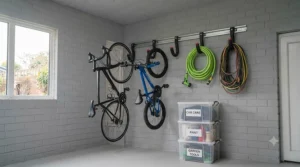
What sets this apart from every other hook on this list is that it isn’t really a hook, on its own — it’s a component of a rail-based system. You buy the FastTrack rail separately, screw that to the wall once, and then hooks like this one simply clip on and reposition without a single extra screw hole. The standout feature is that flexibility: rearranging your garage next spring costs you nothing but five minutes, not a fresh trip to the DIY aisle.
The hook itself is built from solid steel and rated to hold up to 50 pounds (roughly 22.7kg), finished with a soft-grip coating designed to prevent dings and scratches on stored items. That soft-grip detail is the part worth dwelling on: unlike a bare steel J-hook, this won’t chew into a painted ladder rung or a scooter frame over time, which honestly matters more than raw capacity for most household items. The two-bar design is another quietly clever touch — long-handled tools like spades and brooms can rest with their heads held securely between the bars rather than sliding off, a small design choice with real day-to-day payoff if you’re forever finding a broom on the floor.
Aggregated customer feedback for the FastTrack range is strongly positive on durability and ease of relocating hooks, with several reviewers specifically mentioning years of continued use after buying into the system. The obvious catch: you’re paying for the rail as well as the hooks, so the entry cost is higher than a simple multipack, and it only makes financial sense if you plan to keep adding to the system.
Pros:
- ✅ Clips onto rail without new screw holes when rearranging
- ✅ Soft-grip coating protects stored items from scratches
- ✅ Two-bar design keeps long-handled tools from sliding off
Cons:
- ❌ Requires the separate FastTrack rail to work at all
- ❌ Higher total cost than a simple multipack for equivalent hook count
Individual hooks tend to sit in the £5-£10 range, with the rail itself typically adding another £15-£30 depending on length — a fair trade if you value a tidy, reconfigurable wall over the cheapest possible starting price.
3. HORUSDY 6-Pack Heavy Duty Metal Wall Hooks — best mid-size all-rounder
This set occupies the sensible middle ground between the sixteen-hook multipacks and the single-item specialists: six hooks, enough for a modest wall section, without the planning overhead of a bigger set. The standout advantage is the reinforced tubular construction, which gives noticeably more rigidity under load than thinner wire-style hooks at a similar price point.
HORUSDY specifies these as thickened carbon steel with a reinforced tubular design, holding up to 40lbs (about 18kg) without bending or deforming, finished with a rust-resistant powder coating plus non-slip rubber tips. In practical terms, that rubber tip detail is what stops a coiled hose or cable reel from creeping off the end of the hook over weeks of vibration from a nearby freezer or workbench — a problem cheaper bare-metal hooks are more prone to. What most buyers overlook about this style of hook is that the “J” shape, rather than a straight peg, is specifically what keeps heavier or looped items secure without needing a locking mechanism.
Review sentiment for this style of HORUSDY hook consistently praises the anti-rust coating holding up outdoors and the inclusion of matched screws and wall anchors, which removes a common source of first-time-install frustration. On the downside, six hooks won’t stretch far if you’re tackling a full garage, and some buyers report the rubber tips wearing thin faster than the steel itself under heavy daily use.
Pros:
- ✅ Reinforced tubular steel resists bending under load
- ✅ Rubber tips stop looped items sliding off the hook
- ✅ Matched screws and anchors included for quick fitting
Cons:
- ❌ Six-hook count limits full-wall coverage
- ❌ Rubber tips can wear before the steel body does
Usually found in the £10-£18 range for the six-pack, this sits at a fair mid-tier price for buyers who want more rigidity than a basic wire hook without paying rail-system money.
4. KOFANI Steel Garage Storage Hooks (16 Pack) — best multipurpose garage hooks for mixed storage
If “multipurpose” is the exact brief, this is the set built around it: sixteen hooks in varied sizes intended to cover everything from garden tools to bathroom towel storage, not just heavy garage kit. The standout feature is the PVC coating applied specifically to protect stored tools from scratching — a small but genuinely useful detail when you’re hanging anything with a painted or plastic handle.
KOFANI rates the set to hold up to 88 lbs (about 40kg) and finishes the hooks with a glossy, corrosion-resistant spray coating suitable for indoor and outdoor use, alongside a separate PVC coating specifically aimed at avoiding scratches on stored tools. That combination — corrosion resistance plus scratch protection — is what separates this from a bargain-bin bare-steel set, and it’s the reason this style of hook turns up recommended for kitchens and bathrooms as often as garages. Based on the spec sheet, the varied sizing also means you’re not forced to use an oversized hook for a small item, which keeps your wall layout tidier than a one-size set would allow.
Reviewers commonly mention the glossy coating resisting rust well over the first year of outdoor use, though as with any budget multipack, a handful of buyers report occasional stiff or slightly bent hooks straight out of the box — worth a quick check before you commit to drilling. The rust-resistant grommet detail is also compatible with standard pegboard setups, so the same pack stretches to workshop pegboards as well as bare walls.
Pros:
- ✅ Sixteen mixed sizes suit varied item types in one pack
- ✅ PVC coating protects handles and painted surfaces from scratches
- ✅ Compatible with pegboard as well as direct wall mounting
Cons:
- ❌ Occasional quality-control issues with slightly bent hooks reported
- ❌ Glossy finish shows scuffs more visibly than a matte coating
Typically sitting around £12-£20 for the full set, this is a strong value pick specifically for buyers who want one multipack that works equally well in the garage, shed, and utility room.
5. DINGEE Vinyl Coated Heavy Duty Rafter Hooks (4 Pack) — best vinyl coated hook for large, awkward items
This is a smaller pack with a narrower, more specific job: hanging genuinely large or heavy items — hosepipes, pool equipment, full-length ladders — from rafters or joists rather than a standard wall. The standout feature is right there in the name: a full vinyl coating over the entire hook, not just a painted finish, which is a meaningfully different level of protection against both rust and scratching.
DINGEE’s rafter hooks are made from thick metal wire fully covered in vinyl, marketed as non-slip and strong enough to hold heavy items while resisting deformation and rust. The “S hook” shape is deliberately chosen here over a J or U hook because it lets you hang from an overhead rafter or joist rather than needing a flat vertical wall — useful in garages where wall space is already committed to shelving or a workbench. What the spec sheet won’t tell you, but reviewers note, is that these are a favourite for hanging ladders off the side of vehicles and trailers as well as fixed rafters, thanks to the deep, secure hook opening.
Aggregated feedback is positive on the non-slip grip specifically, with multiple reviewers mentioning items staying put through vibration and wind that would have walked a bare-metal S hook off its perch. On the downside, four hooks is a small pack size for the price per unit, and the coating — while excellent for grip and scratch protection — isn’t rated for the very heaviest structural loads a bare steel U-hook might handle.
Pros:
- ✅ Full vinyl coating resists both rust and scratching
- ✅ Non-slip design keeps items secure under vibration
- ✅ S-hook shape works from rafters, joists, or bars
Cons:
- ❌ Small four-pack size gives a higher cost per hook
- ❌ Not intended for the very heaviest structural loads
Expect to pay somewhere in the £8-£14 range for the pack, which is reasonable for a specialist rafter hook rather than a general wall multipack.

6. Swatowot Heavy Duty S Hooks (10 Pack) — best S hooks heavy duty for smaller, everyday items
Where the DINGEE hooks are built for rafters and bulk items, this set is the everyday workhorse version: ten vinyl-coated S hooks sized for smaller, more frequent hanging jobs — jeans, towels, garden tools, pots and pans if the garage doubles as overflow kitchen storage. The standout feature is the dual-size opening, which lets the same hook fit different rod or rail widths without buying multiple hook types.
Swatowot specifies each hook at 15cm in length with a maximum bearing weight of 10kg, 7mm in thickness, with openings measuring 6.4cm and 3cm at each end. That precision matters more than it sounds: a 10kg-per-hook rating is honest about what this size of S hook is realistically for — everyday tools and household items, not a full ladder or a bike frame — and buying within that limit is what keeps a hook from slowly bending out of shape over months of use. The black rubber coating is built specifically to resist falling and slipping compared with an uncoated S hook, which is the main practical upgrade over the classic bare-wire version most people already have a few of in a shed somewhere.
Review sentiment consistently praises the non-slip coating for keeping items from sliding off, particularly on rounded rails where a bare S hook would happily swing loose. The obvious limitation is capacity — at 10kg per hook, this isn’t the set for anything genuinely heavy, and buyers hoping to hang a loaded toolbox will want a J or U hook instead.
Pros:
- ✅ Dual-size openings fit multiple rod and rail widths
- ✅ Vinyl coating resists slipping and protects surfaces
- ✅ Precise 10kg rating helps avoid overloading each hook
Cons:
- ❌ 10kg limit rules out heavier garage items
- ❌ No wall-mounting hardware — needs an existing rail or rod
Usually priced around £6-£10 for ten hooks, this is a low-cost way to add flexible, everyday hanging points to an existing rail, pegboard, or shelving unit.
7. PRO BIKE TOOL Swivel Bike Wall Hanger — best adjustable wall hook for bikes and odd-shaped kit
Bikes are the item that most exposes the limits of a fixed hook — get the angle wrong and either the bike won’t clear a nearby shelf, or the front wheel scuffs the wall every time someone squeezes past. This hook’s standout feature is solving exactly that with a swivel mechanism that lets the whole bike pivot flat against the wall once it’s hung.
The hook is dip-coated to protect the wheel rim, with an angled design rated to support up to 30kg, and the swivel action allows the bike to be stored left, right, or centred depending on available space. That left-right-centre flexibility is the entire point: it turns a fixed storage spot into one that adapts to whatever else is going on in the garage that week, which matters in a space that’s rarely used for one thing only. Here’s what to weigh: because the hook grips the wheel rather than the frame, it suits most standard road, hybrid, and mountain bike wheel widths, but very wide off-road tyres or fat bikes may not sit as securely — worth checking your tyre width against the listing before buying.
Aggregated reviews are positive on the swivel mechanism specifically holding its angle over time rather than drooping, and on the dip-coated hook protecting rims from the scuff marks a bare metal hook tends to leave. A recurring theme in feedback is that installation onto solid masonry or a stud is essential — this is not a hook to trust to plasterboard alone given the leverage a hung bike puts on the fixing point.
Pros:
- ✅ Swivel action adapts storage angle to available space
- ✅ Dip-coated hook protects wheel rims from scuffing
- ✅ Rated to 30kg, comfortably covering most bike weights
Cons:
- ❌ Very wide or fat-bike tyres may not fit as securely
- ❌ Must be fixed into solid masonry or a stud, not plasterboard alone
Typically available in the £15-£25 range for a pack, which is a reasonable cost against the price of even minor damage to a bike wheel or wall from a poorly designed fixed hook.
Practical Usage Guide: Installing Utility Hooks Properly
Buying the right hook is only half the job — badly fitted hardware is the single biggest reason a good hook fails. It’s also worth stepping back and planning the whole wall rather than hook-by-hook; Homes & Gardens’ guide to organising a garage makes the point that sorting items into keep, throw, and donate categories before you start drilling saves you from mounting hooks for things you don’t actually need to store. Start by identifying what’s actually behind your garage wall: solid masonry, a timber stud, or hollow plasterboard, since each needs a different fixing. For brick or block walls, use the wall plugs supplied (or a slightly heavier-duty plug for anything over about 15kg) and drill to the exact depth the plug requires — too shallow and the plug won’t grip, too deep and it can spin freely in the hole. On timber stud walls, locate the stud with a detector or by tapping for a solid sound before drilling, since a screw straight into plasterboard alone will pull out under real weight.
In the first thirty days, the most common mistake is overloading a single hook because it’s conveniently placed, rather than distributing weight across the wall as designed. Give each new hook a firm downward tug test before trusting it with anything valuable, and recheck screws after the first few weeks — timber and plasterboard can settle slightly as fixings bed in. For anything genuinely heavy — a loaded ladder, a full toolbox, a bike — favour hooks fixed into masonry or a stud over drywall anchors alone, and keep a simple maintenance habit of a twice-yearly check for coating wear, rust spots, or loosening fixings, particularly in an unheated or damp garage where corrosion moves faster than indoors.
Real-World Scenario: Matching Hooks to How You Actually Use Your Garage
Picture three fairly typical households. First, a young family in a terraced house with a single-car garage doubling as bike storage, overflow pantry, and dumping ground for sports kit — budget is tight, the wall space is limited, and everything needs to come down easily for the car to fit in. For this household, a mixed multipack like the BONTEC or KOFANI set covers the widest range of item types cheaply, with a swivel hook like the PRO BIKE TOOL hanger reserved specifically for the bikes.
Second, a keen DIYer with a detached garage used as a proper workshop, where tools get used and re-hung daily and the layout changes as projects come and go. Here the Rubbermaid FastTrack system earns its higher entry cost — the ability to reposition hooks without new screw holes matters far more when you’re actively working the space every weekend rather than just storing things out of sight.
Third, a retired couple with a garden-heavy lifestyle, hosepipes, spades, and folding chairs taking up most of the space, and no interest in a big DIY project. The DINGEE vinyl-coated rafter hooks and Swatowot S hooks suit this best — smaller, targeted purchases that solve specific hanging problems without committing to a full wall reorganisation.
Problem → Solution Guide
Problem: Hooks keep pulling out of the wall. This is almost always a fixing mismatch rather than a faulty hook — check whether you’re drilling into plasterboard where masonry or a stud was needed, and step up to a heavier-rated wall plug or toggle fixing if the item is genuinely heavy.
Problem: Items keep sliding or swinging off the hook. Bare metal hooks are the usual culprit; a coated option like the Swatowot S hooks or DINGEE rafter hooks, both finished with a non-slip vinyl layer, solve this directly rather than needing extra strapping.
Problem: Rust appearing within a year in an unheated garage. Look for a genuine anti-corrosion or powder-coated finish rather than plain zinc plating. As Wikipedia’s overview of galvanization explains, the process applies a protective zinc coating to steel specifically to prevent rusting, and it’s widely used precisely because it’s a cheaper, reliable alternative to stainless steel — which is exactly why most quality garage hooks lean on a zinc or powder-coated finish rather than raw, untreated steel.
Problem: Running out of usable wall space. This is where a rail-based system like the Rubbermaid FastTrack genuinely outperforms fixed hooks, since hooks can be repositioned vertically and horizontally along the rail as your storage needs shift, rather than committing to permanent screw positions.
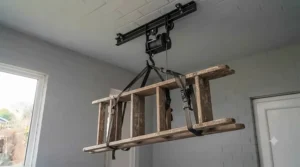
Problem: A hung bike or ladder scuffing the wall or nearby items. Swap a fixed hook for a swivel design like the PRO BIKE TOOL hanger, which lets the stored item pivot flat against the wall rather than jutting out at a fixed angle.
How to Choose Utility Hooks for Your Garage
- Match the weight rating to your heaviest planned item, not your lightest. A hook rated for 10kg is fine for garden twine and towels but will bend under a loaded toolbox — check the per-hook rating specifically, not just a combined pack total.
- Identify your wall material before buying fixings. Masonry, timber stud, and plasterboard all need different fixing types, and the included screws in a multipack won’t always suit every wall.
- Choose coated hooks for anything you don’t want scratched. Bikes, painted tool handles, and plastic-cased equipment all benefit from a vinyl or soft-grip coating over bare steel.
- Decide between a fixed hook and a modular rail system early. Rail systems like FastTrack cost more upfront but pay off if you rearrange your garage regularly.
- Buy slightly more capacity than you think you need. Loads shift, get bumped, and accumulate over time, so a hook rated with headroom above your item’s actual weight lasts longer under real conditions.
- Check hook shape against your actual item. S hooks suit rails and rods, J and U hooks suit direct wall mounting, and swivel hooks suit anything you need to angle around obstacles.
- Factor in outdoor exposure even for an “indoor” garage. Many UK garages are unheated and damp enough to behave like outdoor storage, so treat coating quality as a genuine spec, not a cosmetic extra.
Common Mistakes When Buying Garage Hooks
The most frequent mistake is buying purely on pack size — sixteen hooks looks like better value than six until you realise half of them are the wrong shape for what you actually own. A close second is ignoring wall material entirely and assuming the supplied screws will work everywhere; they’re usually a general-purpose compromise, not optimised for solid masonry or hollow plasterboard specifically. Buyers also commonly underestimate how much heavier a “small” item feels once it’s hung and swinging slightly with use — a loaded rucksack or a coiled hose is heavier in practice than it looks sitting on a shelf. Finally, plenty of people skip the tug-test after installation, only discovering a loose fixing when something falls, rather than catching it in the first week.
Utility Hooks vs Pegboard Systems
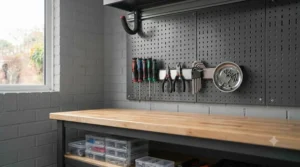
Pegboard offers a different kind of flexibility to individual wall hooks: a single sheet of pegboard lets you reposition small hook attachments across dozens of pre-drilled holes without touching a drill again, which suits a workshop wall that’s constantly evolving. Individual wall hooks, by contrast, are generally rated for heavier single loads — a good J or U hook comfortably outperforms a pegboard peg when it comes to hanging something like a full ladder or a loaded tool bag, since the fixing goes straight into the wall rather than relying on a thinner board and its own mounting strength.
In practice, many well-organised garages use both: pegboard for hand tools and smaller items that get rearranged often, and direct wall-mounted hooks like the BONTEC or HORUSDY sets for the heavier, more static items — bikes, ladders, hose reels — that don’t move around week to week. If you’re choosing one system to start with and your garage leans more towards heavy, occasional-use storage than a constantly shuffled tool collection, direct wall hooks are the better first purchase; pegboard earns its keep once you’re organising a genuine workbench area.
What to Expect: Real-World Performance
On paper, a 40kg weight rating sounds like generous headroom for almost anything you’d hang in a garage. In everyday use, that number gets eaten into faster than expected once you account for how items actually hang — a coiled hosepipe pulls at an angle rather than straight down, a laden rucksack shifts as things settle inside it, and a bike on a swivel hook puts leverage on the fixing point rather than a clean vertical load. None of this means the ratings are wrong; it means the stated capacity is a ceiling for ideal conditions, and sensible buyers leave real headroom below it.
Coating performance is where the biggest gap between spec sheet and lived experience shows up. A powder-coated or vinyl-coated hook that looks identical to a cheaper painted alternative in a product photo can behave very differently after a damp UK winter — the difference between a hook that still grips cleanly in March and one that’s started weeping rust onto the wall behind it. Reviewers across nearly every product in this guide flag coating quality, not raw steel strength, as the thing that separates a hook that lasts years from one that needs replacing within twelve months.
Garage Hooks for Different Users
For beginners tackling their first garage reorganisation, a straightforward multipack like the BONTEC or KOFANI set is the least risky starting point — mixed hook sizes forgive some planning mistakes, and the lower per-hook cost makes it less painful if you end up repositioning a few. For DIY enthusiasts who treat the garage as an active workshop, the Rubbermaid FastTrack system’s ability to reconfigure without repeated drilling is worth the higher initial outlay, since the real cost of fixed hooks in a working space isn’t the hooks themselves but the accumulated screw holes over years of rearranging.
For cyclists specifically, the swivel design of the PRO BIKE TOOL hanger solves a problem generic hooks don’t: bikes are heavy, awkward, and easily scuffed, and a hook designed around wheel geometry rather than generic hanging will simply serve better long-term. For anyone storing kit outdoors or in a genuinely unheated, damp structure — a freestanding garage some distance from the house, for instance — prioritise the vinyl-coated options like DINGEE or Swatowot over bare steel, since coating quality matters more in exposed conditions than raw weight rating.
Long-Term Cost & Maintenance
A budget multipack of sixteen hooks in the £15-£25 range works out at well under £2 per hook — genuinely hard to beat on pure unit cost, and more than adequate if your garage sees light, mixed use. But cost-per-use only tells half the story: a cheap hook that rusts through in eighteen months and needs replacing isn’t actually cheaper than a coated hook costing twice as much that lasts five years or more. Factor in that replacing a failed hook usually means fresh screw holes too, which adds wall damage and repair to the real cost of a false economy.
The Rubbermaid FastTrack system is the clearest example of thinking beyond the initial receipt: the rail is a one-off cost, but every hook added afterwards slots in without further drilling, and Rubbermaid backs the system with what it describes as a limited lifetime warranty on the steel construction. Over five or more years of a garage’s life, a modular system that avoids repeated wall damage and lets you adapt storage as your needs change can work out cheaper in total than several rounds of cheap multipacks bought, outgrown, and replaced.
Features That Actually Matter (And Those That Don’t)
Weight rating and coating quality genuinely matter — they’re the two specs most directly tied to whether a hook survives real use in a British garage. Fixing hardware included in the box matters too, but mainly as a convenience rather than a safety feature, since the correct fixing depends on your specific wall, not a generic multipack assumption. Hook shape (J, U, S, or swivel) matters in the sense that it needs to suit your actual items, but no single shape is objectively “better” — it’s entirely about fit for purpose.
What matters far less than marketing suggests: exact hook colour, which is purely cosmetic and irrelevant to performance, and pack size on its own, since sixteen hooks of the wrong shape for your needs are worse value than six of the right one. Branding around “professional grade” or “industrial strength” is also worth reading past — these are marketing terms without a standardised meaning, and the actual kilogram rating printed in the specifications is the number worth trusting.
Safety, Fixings & Manual Handling
Getting the fixing right isn’t just about the hook staying on the wall — it’s also about what happens when you lift the item back down. The HSE’s own guidance on manual handling identifies poor lifting technique as a major contributor to back pain and musculoskeletal injury, and a loaded hook mounted too high, or an item that’s heavier than expected once it’s off the wall, is a genuinely common source of minor strains around the home. As a rule of thumb, mount your heaviest hung items — ladders, loaded toolboxes — at a height where you can lift with your knees rather than your back, close to waist height rather than above shoulder height.
The HSE’s wider manual handling guidance recommends planning a lift before you start, keeping the load close to your body, and getting help rather than straining — all sound habits when you’re unhooking something that’s been sitting overhead for months. On fixings specifically: always drill into the wall material the hook and its hardware are actually rated for, and if in doubt about what’s behind a garage wall, a stud detector is a small cost against the risk of a heavy item pulling free. For anything approaching a hook’s stated maximum rating, it’s worth erring toward masonry or timber-stud fixing over hollow plasterboard alone, since the failure mode for an overloaded plasterboard fixing tends to be sudden rather than gradual.
✨ Don’t Miss These Exclusive Deals!
🔍 Ready to sort your garage wall for good? Take a look at the current listings for these picks while the details are fresh, and check today’s price and availability before you commit. These hooks will help you build a genuinely organised garage your whole household will actually use!
Frequently Asked Questions
❓ What is the best way to hang heavy items in a garage?
❓ Do garage hooks need to be screwed into brick specifically?
❓ How much weight can a typical utility hook hold?
❓ Are vinyl coated hooks better than plain steel for garages?
❓ Can I use the same hooks outdoors and in the garage?
Conclusion
There’s no single “best” utility hook for every garage — the right choice depends on what you’re actually hanging, how often you rearrange, and how exposed your garage is to damp and temperature swings. For a full wall overhaul on a budget, the mixed multipacks from BONTEC and KOFANI are hard to beat on value. For a garage that’s genuinely worked rather than just used for storage, the Rubbermaid FastTrack system’s flexibility earns its higher price over time. And for specific problem items — bikes, hoses, anything you don’t want scratched — the specialist picks like the PRO BIKE TOOL swivel hanger, DINGEE rafter hooks, and Swatowot S hooks solve exactly the job they’re built for rather than being a compromise.
Whichever set you land on, the fundamentals matter more than the brand name: match the weight rating honestly to what you’re hanging, fix into the right wall material, and don’t skip the coating quality if your garage runs damp. Get those three things right and even a budget multipack will outlast its price tag many times over.
Recommended for You
- Magnetic Tool Holder vs Pegboard: 7 Options Tested for 2026
- Magnetic Tool Holder: 7 Best Picks for UK Garages in 2026
- Load Bearing Wall Hooks: 7 Best Picks Tested for 2026 (UK Guide)
Disclaimer: This article contains affiliate links. As an Amazon Associate, I earn from qualifying purchases. If you purchase products through these links, we may earn a small commission at no additional cost to you.
✨ Found this helpful? Share it with your friends! 💬🤗
