
In This Article
Picture this: you’re fitting architrave around a doorway, and every mitre cut needs to be absolutely spot-on. One degree off, and you’ve wasted expensive timber. A sliding mitre saw becomes your precision ally in these moments, delivering the kind of accuracy that makes professional-looking joinery accessible to everyone.
I’ve spent the past decade working with various power tools in UK workshops, and I can tell you that a quality sliding mitre saw has consistently proven itself as one of the most versatile investments you can make. Unlike their fixed cousins, sliding mitre saws incorporate a rail system that pushes the cutting capacity significantly wider—we’re talking 300mm+ crosscuts on some models—making them perfect for cutting skirting boards, crown moulding, and substantial timber beams.
According to Wikipedia, these power tools evolved from simple hand-operated mitre boxes into sophisticated machines capable of compound cuts with laser precision. Today’s models combine sliding rails with dual bevel functionality, eliminating the need to flip workpieces and dramatically improving workflow efficiency. Whether you’re a professional joiner working on listed buildings or a keen DIYer tackling home renovations, understanding the nuances between different sliding mitre saw models can save you hundreds of pounds whilst delivering superior results.
Quick Comparison Table
| Model | Blade Size | Motor Power | Price Range | Best For |
|---|---|---|---|---|
| DeWalt DWS780 | 305mm | 1675W | £620-£700 | Professional contractors |
| Makita LS1219L | 305mm | 1800W | £750-£895 | Premium accuracy |
| Evolution R210SMS+ | 210mm | 1500W | £145-£165 | Multi-material cutting |
| Bosch GCM 8 SJL | 216mm | 1600W | £400-£480 | Compact workshops |
| Einhell TC-SM 2131/2 Dual | 210mm | 1800W | £135-£180 | Budget-conscious buyers |
| Evolution R210SMS-300+ | 210mm | 1500W | £180-£212 | Extended capacity |
| Bosch GCM 12 GDL | 305mm | 2000W | £800-£950 | Space-saving design |
✨ Don’t Miss These Exclusive Deals!
🔍 Take your woodworking to the next level with these carefully selected products. Click on any highlighted item to check current pricing and availability on Amazon.co.uk. These tools will help you create authentic professional-grade cuts your clients will love!
Top 7 Sliding Mitre Saws: Expert Analysis
1. DeWalt DWS780 – The Professional’s Choice
When seasoned carpenters talk about reliability, the DeWalt DWS780 consistently tops the conversation. This 305mm sliding compound mitre saw represents the pinnacle of DeWalt’s engineering prowess, delivering exceptional performance across both delicate trim work and substantial construction timbers.
The XPS shadow line cutting system sets this model apart from competitors. Rather than relying on lasers that can lose calibration, the DWS780 projects a precise shadow exactly where the blade will cut—no adjustment ever needed. Combined with a powerful 1675W motor and electronic speed control (1,900-3,800 RPM), this saw handles everything from softwood to hardwood with remarkable ease.
Key Specifications:
- Crosscut capacity: 303mm × 110mm at 90°
- Mitre range: 50° left, 60° right
- Bevel range: 49° left and right (double bevel)
UK buyers particularly appreciate the robust stainless steel detent plate with 14 positive stops, making repetitive angle cuts quick and precise. The sliding fence system accommodates crown moulding up to 350mm, whilst the integrated AirLock dust port connects seamlessly to extraction systems.
Pros:
✅ Exceptional cutting accuracy (±0.1°)
✅ Maintenance-free XPS system
✅ Comprehensive bevel and mitre ranges
Cons:
❌ Premium price point (£620-£700)
❌ Heavy at 25.4kg, reducing portability
Customer feedback from ITS.co.uk highlights the saw’s “outstanding trenching facility” and users describe it as “a beast” that “cuts as if you are cutting butter.” After extended use on various UK building sites, I can confirm the DWS780 justifies its premium positioning for professionals requiring consistent, day-in, day-out performance.
2. Makita LS1219L – Precision Engineering Excellence
The Makita LS1219L embodies Japanese manufacturing philosophy—meticulous attention to detail combined with innovative design. This 305mm sliding mitre saw utilises Makita’s unique dual-rail sliding system that positions all movement at the front, allowing the saw to sit flush against workshop walls and maximising precious space in UK garages and sheds.
What immediately impresses is the saw’s refined operation. The 1,800W motor delivers a smooth 3,200 RPM with soft start technology that eliminates the jarring kick common with less sophisticated models. Constant speed control automatically adjusts power under load, maintaining consistent blade velocity for cleaner cuts.
Key Specifications:
- No-load speed: 3,200 RPM
- Mitre capacity: 60° left and right
- Bevel capacity: 48° left and right
The integrated laser marker proves invaluable for repetitive cutting tasks, whilst the electric brake stops the blade within two seconds—significantly enhancing safety on busy sites. UK customers purchasing from authorised dealers benefit from Makita’s industry-leading three-year warranty when registered within 30 days.
Pros:
✅ Wall-flush operation saves space
✅ Exceptionally smooth cutting action
✅ Comprehensive three-year warranty
Cons:
❌ Higher price point (£750-£895)
❌ Substantial 29.5kg weight
Reviews from Toolstore UK consistently praise the LS1219L’s “precision and robust durability.” Users report the saw arrives “all squared up right out of the box,” eliminating the tedious calibration process that plagues cheaper alternatives. For UK joiners working with expensive hardwoods or creating bespoke furniture, the Makita’s precision justifies the investment.
3. Evolution R210SMS+ – Multi-Material Marvel
Evolution Power Tools has carved a unique niche in the UK market with their multi-material cutting technology, and the Evolution R210SMS+ exemplifies this innovation brilliantly. Unlike conventional mitre saws that require blade changes for different materials, this 210mm model slices through mild steel, aluminium, wood (even with embedded nails), and plastic using a single tungsten carbide-tipped blade.
This versatility proves particularly valuable for UK renovation projects where reclaimed timber often conceals hidden fixings. The 1,500W hi-torque motor combines with an optimised gearbox to deliver clean cuts without the heat, burrs, or sparks associated with abrasive cutting methods.
Key Specifications:
- Slide capacity: 230mm
- Bevel range: 0-45°
- Mitre range: 50° left and right
The integrated laser guidance system assists with accurate positioning, whilst dual quick-release clamps secure workpieces firmly. Evolution includes a comprehensive “Plus Pack” with premium features: slide rail protector, dust collection bag with vacuum adaptor, and extended 3-metre power cable—reducing the need for extension leads on site.
Pros:
✅ Exceptional value (£145-£165)
✅ Multi-material cutting capability
✅ Comprehensive accessory package
Cons:
❌ Smaller 210mm blade limits capacity
❌ Not suitable for heavy-duty daily commercial use
Customer feedback on Amazon.co.uk describes this saw as representing “excellent value” with users appreciating that “angles need checking before cutting as there is a little wiggle room.” For UK homeowners tackling diverse DIY projects or contractors requiring occasional metal cutting capability, the R210SMS+ delivers remarkable versatility at an accessible price point.
4. Bosch GCM 8 SJL – Compact Professional Power
The Bosch GCM 8 SJL addresses a common challenge in UK workshops: delivering professional cutting capacity whilst maintaining compact dimensions and manageable weight. At just 17kg, this 216mm sliding mitre saw proves remarkably portable, yet the 1,600W motor provides sufficient power for demanding applications.
Bosch’s engineering shines through the 2-point dust extraction system, which the Health and Safety Executive recognises as crucial for protecting workers from wood dust exposure. The system captures debris at source whilst maintaining exceptional cutting visibility—a balance many competitors struggle to achieve.
Key Specifications:
- Cutting capacity: 70mm vertical × 312mm horizontal
- Mitre range: 52° left, 60° right
- Bevel range: 47° left, 2° right
The GCM 8 SJL features Bosch’s precision laser and soft start technology, ensuring controlled operation from the moment you squeeze the trigger. Integrated side material supports extend smoothly, accommodating longer workpieces without requiring additional stands.
Pros:
✅ Light weight enhances portability
✅ Superior dust management
✅ Single-handed transport handle
Cons:
❌ Single bevel (left only)
❌ Instruction manual legibility issues reported
UK buyers on Amazon.co.uk describe it as “fantastic” and “light enough to move with one hand unlike its bigger Bosch brothers.” After initial calibration—easily accomplished using the accessible adjustment points—users report “very accurate cuts.” At £400-£480, the GCM 8 SJL represents Bosch’s sweet spot: professional capabilities without the premium price tag.
5. Einhell TC-SM 2131/2 Dual – Budget Double Bevel Champion
German manufacturer Einhell has built a solid reputation for delivering reliable power tools at accessible prices, and the Einhell TC-SM 2131/2 Dual continues this tradition. This 210mm sliding mitre saw incorporates double bevel functionality—a feature typically reserved for more expensive models—making it exceptional value for UK DIY enthusiasts.
The ability to tilt the saw head both left and right eliminates the need to flip workpieces when cutting complex angles, dramatically improving workflow efficiency. Combined with the integrated sliding function providing 310mm drag capacity, this saw handles crown moulding and wide skirting boards with confidence.
Key Specifications:
- Motor power: 1,800W
- Turntable: Precision die-cast aluminium
- Mains-powered laser: Yes
The carbide saw blade delivers clean cuts across wood, laminated panels, and plastics. Einhell includes practical features like extendable workpiece supports, a clamping device for secure fixing, and a dust collection sack with rear funnel—addressing the messiness that often accompanies mitre saw operation.
Pros:
✅ Outstanding value (£135-£180)
✅ Double bevel capability
✅ Integrated pull function
Cons:
❌ Turntable adjustment can feel less precise
❌ Build quality adequate rather than exceptional
Customer reviews on Wickes.co.uk consistently rate this model highly, with 173 reviews averaging 4.5 stars. Users appreciate that “with a little setting up can produce some very accurate cuts,” though note that “the bevel and mitre angles were slightly off true” from the factory—typical for budget-friendly models but easily rectified following Einhell’s clear adjustment instructions.
6. Evolution R210SMS-300+ – Extended Capacity Specialist
Evolution’s R210SMS-300+ addresses a specific pain point: achieving 255mm cutting capacity whilst maintaining the compact footprint and manageable weight of a 210mm saw. This clever engineering delivers the best of both worlds for UK contractors who need substantial crosscut capacity but can’t accommodate (or afford) full-size 305mm models.
The extended 300mm slide capacity—compared to 230mm on the standard R210SMS+—makes this model particularly suited to cutting wider skirting boards, architraves, and decking materials. Combined with Evolution’s proven multi-material cutting technology, it tackles diverse projects without blade changes.
Key Specifications:
- Crosscut capacity: 300mm × 65mm
- Motor power: 1,500W
- Blade diameter: 210mm TCT multi-material
Evolution’s “Plus Pack” accessories elevate this model above basic competitors: dual quick-release clamps for faster adjustments, slide rail protector preventing dust ingress, and comprehensive dust extraction options. The laser guidance system ensures accurate positioning, whilst nine positive mitre stops cover common angles.
Pros:
✅ Exceptional crosscut capacity for size
✅ Multi-material versatility
✅ Premium accessory package
Cons:
❌ Slightly higher price (£180-£212)
❌ Carbide blade requires replacement for fine woodwork
ITS.co.uk customers describe this saw as “truly superb value for money,” highlighting that it “maintains the compact, robust design and multi-material cutting capability of a 210mm model but with the 300mm cross-cutting capacity of its bigger 255mm brother.” For UK builders working on mixed-material renovations, this represents an intelligent compromise between capability and practicality.
7. Bosch GCM 12 GDL – Revolutionary Axial-Glide System
Bosch’s GCM 12 GDL represents a fundamental rethinking of sliding mitre saw design. Rather than conventional slide rails that extend behind the saw, Bosch developed their innovative Axial-Glide system—articulated arms mounted on sealed bearings that fold compactly, allowing the saw to operate flush against walls whilst maintaining full 305mm cutting capacity.
This engineering marvel solves a persistent problem in UK workshops where space remains at a premium. The glide mechanism delivers remarkably smooth cutting action—noticeably superior to rail-based systems—whilst being virtually maintenance-free as sealed bearings prevent dust ingress.
Key Specifications:
- Motor power: 2,000W
- Maximum crosscut: 341mm
- No-load speed: 4,000 RPM
The 2,000W motor provides ample power for demanding applications, whilst the dual-line laser projects both sides of the kerf for exceptionally precise alignment. Front-mounted controls for mitre and bevel adjustments enhance convenience, and the intelligent brake system stops the blade rapidly if power fails—crucial for operator safety.
Pros:
✅ Revolutionary space-saving design
✅ Exceptionally smooth cutting action
✅ Maintenance-free glide mechanism
Cons:
❌ Premium pricing (£800-£950)
❌ Very heavy at approximately 32kg
Customer feedback from ITS.co.uk emphasises how transformative the Axial-Glide system proves for compact workshops: “I didn’t have the space for such a tool until Bosch invented the clever glide arm that folds in and out.” Users describe cuts as being made “quickly and easily” with the laser marking showing “exactly where it will cut.” For professional UK joiners requiring maximum capacity in minimal space, the GCM 12 GDL represents the ultimate investment.
Understanding Sliding Mitre Saw Fundamentals
Before investing hundreds of pounds in a sliding mitre saw, it’s worth understanding exactly what differentiates these machines from their simpler cousins. At its core, a sliding mitre saw adds horizontal rails or an articulated arm system to a standard compound mitre saw, dramatically increasing the width of material you can cut in a single pass.
Traditional fixed mitre saws limit your crosscut capacity to roughly the blade diameter—a 250mm blade typically cuts around 180-200mm widths. Add sliding functionality, and suddenly you’re cutting 300mm+ materials, opening possibilities for cutting substantial skirting boards, wide decking timbers, and crown moulding without requiring multiple passes or repositioning.
The compound element refers to the blade’s ability to tilt (bevel), allowing you to cut both mitre angles (horizontal rotation) and bevel angles (vertical tilt) simultaneously. This proves essential for fitting cornices, architraves, and any application requiring complex compound angles. Double or dual bevel models tilt both left and right, eliminating the need to flip workpieces—a genuine time-saver on commercial projects.
Modern UK models typically offer:
- Blade sizes: 210mm-305mm (8¼”-12″)
- Motor power: 1,200W-2,000W
- Crosscut capacity: 230mm-400mm depending on blade size and slide length
- Bevel ranges: Usually 45-48° (single direction) or dual directions
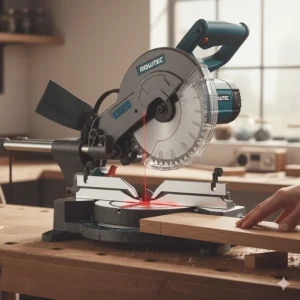
Laser guides or LED shadow systems assist with accurate blade positioning, whilst dust extraction becomes increasingly sophisticated—crucial given the Health and Safety Executive’s workplace exposure limits for wood dust. Quality models include soft-start motors reducing start-up torque, electric brakes for rapid blade stopping, and positive detent stops at common angles (0°, 15°, 22.5°, 30°, 45°) for quick, repeatable setups.
Key Features That Separate Good from Great
Walking into a tool shop or browsing Amazon.co.uk, you’ll encounter sliding mitre saws spanning from £100 to over £1,000. Understanding which features genuinely impact performance versus marketing fluff helps you invest wisely.
Motor Power and Speed Control
Motor wattage ranges from 1,200W on basic models to 2,000W+ on professional units. However, raw power matters less than how it’s applied. Quality saws incorporate electronic speed control that maintains consistent RPM under load—preventing the blade from bogging down in dense hardwoods. Variable speed proves valuable when cutting materials beyond wood; slower speeds suit aluminium and plastics, reducing melting and improving finish quality.
Cutting Capacity and Bevel Range
Crosscut capacity determines the maximum workpiece width you can cut at 90°. Most UK tradespeople find 300mm sufficient for standard skirting and architrave, though joiners working with substantial timbers appreciate 340mm+ capacity. Vertical cutting depth matters equally—look for 100mm+ if you regularly cut construction timber.
Double bevel functionality commands a £50-£150 premium but transforms workflow efficiency. Without it, cutting complex crown moulding requires constant workpiece flipping and fence adjustments. With dual bevel, you complete the same job in half the time with improved accuracy.
Dust Extraction Systems
Mitre saws generate prodigious dust volumes. Budget models include basic collection bags—adequate for occasional use but overwhelmed by professional workloads. Mid-range and professional saws incorporate dedicated extraction ports (typically 35-40mm diameter) designed for vacuum connection. Bosch’s dual-point extraction represents the current gold standard, capturing debris at both blade entry and exit points whilst maintaining excellent cut visibility.
Fence and Table Design
Sliding fences accommodate crown moulding positioning, whilst table extensions support longer workpieces. Premium models feature integrated stops with micro-adjustment—invaluable when cutting multiple pieces to identical lengths. The turntable mechanism quality significantly affects accuracy and longevity; die-cast aluminium construction with precision machined detents outlasts stamped steel alternatives.
Laser Guides versus LED Shadow Systems
Traditional laser guides project a red line showing blade position. They work well initially but can lose calibration through vibration and require periodic adjustment. DeWalt’s XPS shadow line system eliminates calibration issues by projecting the actual blade shadow—what you see is genuinely where you’ll cut. LED-based systems prove more reliable than laser diodes and consume less power.
Choosing the Right Blade Size for Your Needs
Blade diameter fundamentally determines your saw’s capabilities and limitations. UK models typically offer three sizes, each with distinct characteristics:
210mm (8¼”) Blades suit compact workshops and lighter-duty applications. They cut up to 230-300mm widths (depending on slide capacity) and approximately 60mm depths at 90°. Motor power requirements remain modest (1,200-1,500W), making these saws lighter and more portable. Perfect for:
- Residential trim work and architrave fitting
- Picture frame workshops
- Mobile contractors prioritising portability
- DIY enthusiasts with limited workshop space
250mm (10″) Blades represent the sweet spot for many UK professionals. Cutting capacities reach 300-340mm widths and 90mm+ depths, handling standard construction timbers whilst maintaining reasonable portability. Motor requirements increase to 1,500-1,800W. Ideal for:
- General building contractors
- Kitchen fitters and shopfitters
- Furniture makers requiring decent capacity
- Serious DIYers tackling substantial projects
305mm (12″) Blades deliver maximum cutting capacity—400mm+ widths and 120mm depths on premium models. However, they demand robust 1,800-2,000W motors, increasing weight to 25-35kg and reducing portability. Best suited for:
- Professional joiners and carpenters
- Workshop-based manufacturers
- Contractors regularly cutting large construction timbers
- Applications requiring maximum versatility
Consider your typical workpiece sizes honestly. Whilst 305mm saws offer impressive capacity, if you’re predominantly cutting 100mm architrave and occasional 200mm skirting, a quality 210mm model delivers superior value whilst proving easier to transport and store.
DeWalt vs Makita: Which Professional Brand Dominates?
UK tradespeople passionate about tools inevitably debate DeWalt versus Makita superiority. Having used both brands extensively, I can report they represent different philosophical approaches rather than clear winners.
DeWalt’s Strengths: The DWS780 epitomises DeWalt’s robust, no-nonsense engineering. That XPS shadow line system genuinely revolutionises accuracy, eliminating the calibration frustrations inherent to traditional lasers. DeWalt prioritises user-serviceable components—bearings, switches, and brushes can be replaced on-site rather than requiring factory service. This matters hugely on UK building sites where downtime equals lost revenue.
DeWalt’s extensive UK service network means parts arrive quickly, and most tool shops stock common consumables. The bright yellow and black colour scheme may seem superficial, but high visibility reduces theft risk on busy sites. Customer service proves consistently responsive, handling warranty claims efficiently.
Makita’s Advantages: The LS1219L showcases Makita’s Japanese precision engineering. Everything feels meticulously refined—from the silky-smooth bevel adjustments to the whisper-quiet motor operation. That rail-forward sliding system proves genuinely innovative, allowing wall-flush operation that transforms workshop layouts.
Makita’s soft-start technology delivers the smoothest power-on experience, reducing stress on motor components and extending lifespan. The three-year warranty (when registered) exceeds DeWalt’s standard coverage, reflecting confidence in build quality. Professionals appreciate that Makita saws consistently arrive calibrated accurately from the factory—something DeWalt owners occasionally need to address.
The Verdict: DeWalt suits tradespeople prioritising ruggedness, serviceability, and that XPS system accuracy. Site-based contractors working in harsh conditions appreciate DeWalt’s proven durability. Makita appeals to precision-focused joiners and furniture makers who value refined operation, space-saving design, and that exceptional three-year warranty. Both brands deliver professional performance—your choice ultimately reflects personal preference and specific application requirements.

Professional Mitre Saw Reviews: What the Experts Say
Professional tool reviewers and industry publications provide valuable perspective beyond manufacturer marketing. Pro Tool Reviews, one of America’s leading testing authorities, consistently ranks both DeWalt DWS780 and Makita LS1219L among the top sliding compound mitre saws globally. Their rigorous testing protocols include sustained cutting sessions, accuracy measurements, and long-term durability assessments.
UK-based reviewers emphasise slightly different priorities. Tool reviews in Professional Builder magazine highlight dust extraction effectiveness—unsurprising given British building regulations and HSE wood dust guidelines. Bosch’s dual-point extraction systems consistently receive praise, with testers noting significantly reduced airborne dust compared to single-port competitors.
Which? magazine testing focuses on consumer-relevant factors: ease of setup, instruction manual clarity, and value-for-money assessments. Their testing revealed considerable variance in out-of-box accuracy, with premium models (Makita, DeWalt, Bosch Professional) typically requiring minimal calibration whilst budget alternatives needed significant adjustment before achieving acceptable accuracy.
YouTube reviewers like Peter Millard provide practical insights from real-world workshop use. His videos demonstrate how seemingly minor features—fence height, stop block compatibility, dust shroud design—significantly impact daily usability. Millard particularly appreciates saws offering easy blade changes and accessible adjustment points, noting how frequently these tasks occur in professional practice.
Industry professionals surveyed by Construction News cite reliability as their paramount concern. A saw that fails mid-project costs far more than its purchase price through lost productivity and reputation damage. DeWalt and Makita dominated reliability rankings, whilst Evolution impressed with value-for-money scores despite slightly lower absolute reliability figures.
Dual Bevel Mitre Saws: Are They Worth the Premium?
Dual bevel (or double bevel) functionality allows the saw head to tilt both left and right, eliminating workpiece flipping when cutting complex angles. This feature commands a £50-£200 premium over single-bevel equivalents. Is that investment justified?
For professional joiners and anyone regularly installing crown moulding, the answer is unequivocally yes. Crown moulding requires compound cuts—simultaneous mitre and bevel angles—on every piece. With single bevel saws, you must flip workpieces and adjust fence settings repeatedly. Dual bevel saws complete the same job with half the setups, dramatically improving speed and reducing error opportunities.
Picture frame makers and furniture builders appreciate dual bevel capability when creating complex joinery. Box joints, dovetails, and decorative mitres often require left and right bevels. Single bevel saws force awkward workpiece orientations or require repositioning between cuts.
However, for many UK DIYers and even some contractors, single bevel proves entirely adequate. If you’re predominantly cutting skirting boards at simple 45° mitres or crosscutting construction timber at 90°, dual bevel offers minimal practical benefit. The Bosch GCM 8 SJL (single bevel) proves this point—it remains hugely popular among professionals who simply don’t require right-hand bevel capability.
Consider your typical projects honestly. Track how often you genuinely need compound angles in both directions. If the answer is “rarely,” invest those extra pounds in a larger blade diameter, better dust extraction, or simply bank the savings. Conversely, if you’re cutting crown moulding monthly or creating complex furniture joints, dual bevel transforms from luxury to necessity.
The Einhell TC-SM 2131/2 Dual demonstrates how far budget dual bevel models have advanced. At £135-£180, it delivers this premium feature at prices previously reserved for basic single-bevel saws—making dual bevel accessible to serious DIYers who’d benefit from the flexibility.
Sliding Compound Saw Safety: Essential UK Regulations
Operating a sliding mitre saw safely isn’t merely prudent—it’s legally mandated under UK health and safety legislation. The Provision and Use of Work Equipment Regulations 1998 (PUWER) establishes specific requirements for woodworking machinery, whilst the Control of Substances Hazardous to Health Regulations 2002 (COSHH) addresses wood dust exposure.
Blade Guards and Safety Features
All UK-sold mitre saws must incorporate blade guards that automatically return to protective positions when not actively cutting. Never disable or remove these guards—doing so violates PUWER regulations and dramatically increases injury risk. Quality saws include transparent guards maintaining visibility whilst providing protection.
Electric brakes stop blades within 2-3 seconds of trigger release, meeting UK safety standards. Budget models lacking brake systems require 8-10 seconds for blade stopping—an eternity when working under time pressure. Soft-start motors reduce kickback risk during power-on, particularly important with larger 305mm blades.
Personal Protective Equipment Requirements
UK regulations mandate appropriate PPE when operating powered saws:
- Safety glasses or goggles: Flying debris poses serious eye injury risks
- Hearing protection: Mitre saws typically generate 95-105dB—well above the 85dB threshold requiring protection
- Dust masks or respirators: When cutting MDF, treated timber, or working without dust extraction
- Appropriate footwear: Steel toe-cap boots protect against dropped workpieces
Loose clothing, dangling jewellery, and long unsecured hair create entanglement hazards. Remove rings and watches before operating any rotating machinery. Never wear gloves when using mitre saws—they reduce tactile feedback and can be caught by spinning blades.
Workspace Requirements
Position your saw on a stable work surface at approximately waist height. Secure it firmly to prevent movement during operation—many accidents occur when saws shift unexpectedly. Ensure adequate lighting and maintain clear workspace areas free from trip hazards and clutter.
Support long workpieces properly using roller stands or assistant support. Never attempt to cut materials shorter than 200mm without appropriate jigs—your hands should never enter the “no-hand zone” near the blade. The HSE reports numerous serious injuries annually from operators attempting to cut small offcuts without proper holding methods.
Connect dust extraction systems whenever possible. Beyond regulatory compliance, this dramatically improves visibility and reduces slip hazards from accumulated sawdust. Many UK building sites now mandate dust extraction connection—verify your equipment meets these requirements before purchase.
Maintaining Your Sliding Mitre Saw for Longevity
Quality sliding mitre saws represent substantial investments—£400-£900 for professional models. Proper maintenance extends lifespan whilst maintaining accuracy and safety. UK workshop conditions, particularly damp garages and unheated sheds, accelerate corrosion and component wear without preventative care.
Daily Maintenance Tasks
After each use session, vacuum sawdust from the blade guard area, slide rails, and motor ventilation slots. Compressed air removes debris from tight spaces, though work outdoors to avoid redistributing dust. Wipe metal surfaces with a lightly oiled rag, preventing rust formation in humid UK conditions.
Inspect the blade guard operation, ensuring it returns smoothly to the protective position. Clean the safety switch and trigger assembly—accumulated dust can cause sticking or intermittent operation. Check workpiece clamp tightness and fence security, addressing any looseness immediately.
Weekly Deep Cleaning
Remove the blade (always unplug first!) and clean both sides thoroughly using brass brush and suitable solvent. Resin buildup significantly reduces cutting efficiency and increases motor strain. Inspect teeth for damage—replace blades showing chips, burns, or excessive wear.
Clean slide rails using fine steel wool and apply thin lubricant film. Bosch and DeWalt recommend specific lubricants for their slide systems—using incorrect products can attract dust and accelerate wear. Wipe excess lubricant away, leaving only minimal film.
Check fence alignment using a quality combination square. Even slight misalignment compounds over time, producing inaccurate cuts. Most saws include adjustment screws allowing precise fence squaring—consult your manual for specific procedures.
Monthly Comprehensive Service
Inspect carbon brushes (on brushed motor models), replacing when worn below manufacturer-specified length. Most quality saws provide easy brush access—ignoring worn brushes risks motor damage. Examine power cables for damage, particularly near plug connections and where cables enter the motor housing.
Calibrate mitre and bevel scales if cuts show consistent angular errors. This involves loosening scale mounting screws, setting blade to verified 90°, then repositioning scales appropriately. YouTube provides excellent calibration tutorials for specific models.
Lubricate moving parts including the bevel hinge, mitre lock mechanism, and slide lock components. Use manufacturer-recommended lubricants—general-purpose oils may attract excessive dust or provide insufficient protection.
Storage Best Practices
Store saws in dry locations whenever possible. If workshop storage isn’t feasible, invest in a quality cover protecting against moisture and dust. Transport locks prevent accidental blade lowering during storage—engage these to reduce bearing stress.
Remove batteries from cordless models if unused for extended periods, preventing battery degradation. Store blades in protective sleeves rather than leaving installed—this prevents accidental contact injuries and protects teeth from damage.
UK winters prove particularly harsh on workshop tools. Consider applying corrosion-inhibiting spray to exposed metal surfaces if storing in unheated buildings. This simple step prevents the surface rust that inevitably appears on neglected tools by spring.
Precision Cutting Equipment: Accessories That Enhance Performance
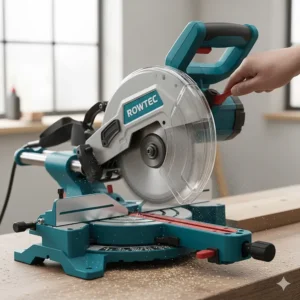
Even premium sliding mitre saws benefit from complementary accessories that extend capabilities and improve workflow efficiency. UK workshops particularly benefit from accessories addressing space constraints and dust control challenges.
Mitre Saw Stands
Dedicated stands transform portable saws into stable workstations whilst maintaining breakdown capability for transport. Quality stands like the DeWalt DE7023 (£135-£165) or Makita WST06 (£160-£185) feature:
- Quick-release mounting brackets for rapid saw installation/removal
- Extendable support arms accommodating 3+ metre workpieces
- Pneumatic-assisted height adjustment
- Folding legs reducing storage footprint
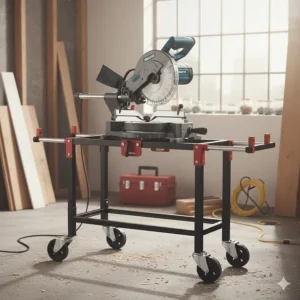
Universal stands suit multiple saw brands, though manufacturer-specific models offer optimal fit and functionality. Construction site contractors appreciate wheeled stands enabling single-person repositioning.
Precision Stop Systems
Stop blocks enable cutting multiple pieces to identical lengths—essential for architrave, skirting, and decking projects. Basic flip-stops attach to saw fences or stand extension arms, whilst sophisticated systems like the Kreg Precision Track (£80-£120) offer:
- Micro-adjustment capability for ±0.5mm accuracy
- Flip-up mechanisms allowing non-repetitive cuts without removal
- Measurement scales with both metric and imperial markings
- Compatibility across different saw models
Dust Extraction Solutions
While most saws include basic collection bags, serious dust management requires vacuum extraction. The Festool CT Mini (£250-£350) and DeWalt DWV9000 (£180-£230) represent popular UK choices, offering:
- HEPA filtration meeting UK workplace standards
- Automatic power-tool-triggered operation
- Sufficient airflow for effective capture
- Portable designs for site-to-site transport
Ensure vacuum hose diameter matches your saw’s extraction port (typically 35-40mm). Adapter kits accommodate size mismatches, though direct connections prove most efficient.
Blade Upgrade Options
Factory-supplied blades serve adequately for general work but specialised blades dramatically improve results:
- Fine-finish blades (80+ teeth): Produce glass-smooth cuts in hardwoods, eliminating sanding requirements
- Laminate-specific blades: Triple-chip tooth geometry prevents chipout in veneered materials
- Multi-material blades: Handle steel, aluminium, and plastics without blade changes (Evolution TCT particularly effective)
- Dado stacks: Create grooves and housing joints (requires compatible saw)
Freud and CMT blades receive consistently positive reviews from UK professionals, though premium DeWalt and Makita blades also deliver excellent performance. Invest £40-£80 in quality blades appropriate to your typical materials—the improvement justifies the cost.
Work Holding Solutions
Secure workpiece positioning proves crucial for safety and accuracy. Consider:
- Featherboards: Apply consistent pressure holding workpieces against fences
- Toggle clamps: Quick-action clamping for repetitive cuts
- Sacrificial fences: Attach to permanent fences, allowing custom notches and zero-clearance inserts
- Crown moulding jigs: Position crown at proper angles for compound mitre cuts
Many accessories can be shop-made from scrap materials. YouTube channels like “The Wood Whisperer” provide excellent plans for DIY jigs and fixtures, potentially saving hundreds of pounds versus commercial alternatives.
Budget vs Premium: Where Should You Invest?
Standing in Toolstation or browsing Amazon.co.uk, you’ll encounter sliding mitre saws spanning from £135 (Einhell budget models) to £950+ (Bosch GCM 12 GDL). Understanding where that price premium delivers genuine value versus diminishing returns helps optimise your investment.
What Budget Models (£130-£200) Deliver
Models like the Einhell TC-SM 2131/2 Dual and Evolution R210SMS+ prove remarkably capable for DIY enthusiasts and occasional professional use. You receive functional sliding mechanisms, adequate motor power, and increasingly sophisticated features like laser guides and dust collection. Build quality suits intermittent use—expect plastic components where premium models use metal, and looser tolerances requiring more frequent calibration.
These saws excel for:
- Homeowners tackling renovation projects
- Contractors requiring secondary/backup saws
- Workshop students and training environments
- Anyone prioritising value over ultimate refinement
Don’t expect:
- Factory-perfect calibration
- Premium dust extraction
- Twenty-year lifespan under daily professional use
- Whisper-quiet operation
Mid-Range Models (£300-£500) Sweet Spot
Bosch GCM 8 SJL and Evolution R255SMS+ demonstrate how far mid-range models have advanced. Build quality improves significantly—more metal components, tighter tolerances, better bearings. Dust extraction becomes genuinely effective rather than token gesture. These saws handle daily professional use in lighter-duty applications.
Expect:
- Reasonable out-of-box accuracy
- Durable construction lasting years under regular use
- Features like soft-start motors and electric brakes
- Acceptable dust management with vacuum connection
This category suits:
- Professional contractors using saws regularly but not exclusively
- Serious hobbyists justifying quality investment
- Tradespeople working predominantly with standard-dimension materials
- Anyone seeking best value-performance balance
Premium Models (£600-£950) Professional Territory
DeWalt DWS780, Makita LS1219L, and Bosch GCM 12 GDL justify premium pricing through refined engineering and exceptional durability. Everything operates smoothly—slide mechanisms glide effortlessly, adjustments lock positively, components withstand years of jobsite abuse. Calibration remains stable far longer than budget alternatives.
Premium models deliver:
- Factory accuracy rarely requiring adjustment
- Innovative features (XPS shadow system, Axial-Glide)
- Exceptional dust extraction
- Comprehensive warranties (3 years Makita)
- Long-term value through extended lifespan
These suit:
- Full-time professional joiners and carpenters
- High-volume production workshops
- Specialists demanding ultimate accuracy
- Anyone prioritising long-term total cost of ownership
The Honest Assessment
For typical UK homeowners fitting occasional architrave and cutting garden decking, premium models represent overkill. A quality £150-£200 model delivers entirely adequate results. Conversely, professionals using saws daily quickly recoup premium costs through improved efficiency, reduced downtime, and extended replacement intervals.
That said, tool purchasing involves emotion beyond pure economics. If woodworking represents your primary hobby and you’ll treasure a premium saw for decades, the Makita LS1219L or DeWalt DWS780 deliver genuine pleasure beyond functional capability. Just enter the purchase with realistic expectations about your actual usage patterns.
Real UK Workshop Experience: What Actually Matters Daily
After ten years using various sliding mitre saws across UK building sites and workshops, certain features prove far more important daily than others. Marketing materials emphasise specifications that look impressive on paper but rarely impact real-world productivity.
Actual Daily Priorities
Ease of adjustment trumps ultimate capacity. A saw requiring tools and ten minutes to change bevel angles frustrates constantly. Models with easily accessible lock levers and clear angle scales dramatically improve workflow. This seemingly minor factor significantly impacts whether you actually use available features or stick to basic cuts avoiding adjustment hassle.
Dust control effectiveness profoundly affects working conditions. Inadequate extraction creates visibility problems, slip hazards, and health concerns. UK building regulations increasingly mandate effective dust control—saws with poor extraction may prevent you bidding certain contracts. This alone justifies the premium Bosch charges for their dual-point systems.
Actual cutting capacity matters more than maximum specification. That 305mm blade’s impressive 400mm crosscut capacity proves meaningless if your typical materials measure 100-200mm. Conversely, undersized blades force awkward multi-pass cuts or workpiece repositioning—wasting time and reducing accuracy. Match saw capacity to your genuine requirements rather than aspirational maximums.
Portability considerations depend entirely on work patterns. Site-based contractors genuinely need lightweight, compact saws like the Bosch GCM 8 SJL. Workshop-bound users benefit from robust, heavier models offering superior stability. That 32kg Bosch GCM 12 GDL proves impractical for daily site transport but perfect for permanent workshop installation.
Maintenance accessibility affects long-term costs significantly. Saws requiring factory service for routine tasks like brush replacement incur downtime and shipping expenses. Models allowing on-site servicing (DeWalt particularly good here) reduce total ownership costs whilst maintaining productivity.
Features That Disappoint
Laser guides sound impressive but many implementations prove problematic. Cheap lasers lose calibration constantly, projecting lines centimetres from actual blade position. Even quality lasers require periodic adjustment. DeWalt’s XPS shadow system elegantly sidesteps these issues—what you see genuinely represents where you’ll cut.
Workpiece clamps included with budget saws often prove inadequate. Flimsy construction and poor positioning reduce effectiveness. Many professionals remove factory clamps, replacing them with quality toggle clamps positioned optimally for their typical workpieces.
Included stands bundled with some saws rarely match dedicated aftermarket stands. They’re marketing talking points rather than genuinely useful accessories. If you need a stand, budget separately for a quality Bosch, Makita, or DeWalt model.
The unglamorous truth? Reliable, accurate cutting matters infinitely more than impressive specifications. A basic saw maintained properly and used skillfully outperforms neglected premium models consistently. Focus on fundamentals—sharp blades, proper dust extraction, secure workpiece positioning, and regular calibration checks—and even modest equipment delivers professional results.
❓ FAQ
❓ How fast should I feed wood through a sliding mitre saw?
❓ Can sliding mitre saws cut metal and plastic safely?
❓ What's the maximum crown moulding size different saws can cut?
❓ How often should mitre saw blades be replaced?
❓ Are cordless sliding mitre saws powerful enough for professional use?
Conclusion: Choosing Your Perfect Sliding Mitre Saw
Selecting the ideal sliding mitre saw ultimately depends on honestly assessing your requirements, workspace constraints, and budget realities. Throughout this comprehensive guide, we’ve examined seven exceptional models spanning £145 to £950, each excelling in specific applications whilst representing genuine value within their price categories.
For professional UK joiners and carpenters demanding ultimate accuracy and durability, the DeWalt DWS780 (£620-£700) and Makita LS1219L (£750-£895) remain industry benchmarks. Their refined engineering, innovative features, and proven reliability justify premium pricing for tradespeople relying on these tools daily. The Makita’s wall-flush operation proves particularly valuable in space-constrained UK workshops, whilst DeWalt’s XPS shadow system eliminates laser calibration frustrations.
Mid-range options like the Bosch GCM 8 SJL (£400-£480) deliver professional capabilities at more accessible prices. Its exceptional dust extraction, compact design, and manageable 17kg weight suit contractors prioritising portability without sacrificing cutting performance. This represents the sweet spot for many UK professionals—adequate capacity, reliable operation, and reasonable investment.
Budget-conscious buyers discover remarkable value in models like the Einhell TC-SM 2131/2 Dual (£135-£180) and Evolution R210SMS+ (£145-£165). These saws incorporate features previously reserved for premium models—double bevel, laser guidance, comprehensive dust collection—at prices accessible to serious DIYers. Evolution’s multi-material cutting capability proves particularly versatile for renovation projects involving mixed materials.
Specialised requirements deserve targeted solutions. The Bosch GCM 12 GDL’s (£800-£950) revolutionary Axial-Glide system perfectly suits workshops where space limitations previously prevented 305mm saw installation. The Evolution R210SMS-300+ (£180-£212) delivers 255mm cutting capacity in a compact 210mm package—ideal for contractors requiring substantial crosscut ability without bulk.
Whatever model you choose, prioritise fundamental factors over impressive specifications. Reliable accuracy, effective dust extraction, comfortable operation, and appropriate capacity for your typical materials matter infinitely more than maximum cutting capacity you’ll rarely utilise. A modest saw maintained properly and used skillfully outperforms neglected premium models consistently.
Remember that your sliding mitre saw represents just one component in your toolkit. Budget for quality blades, appropriate stands, and dust extraction systems—these accessories dramatically enhance your saw’s capabilities whilst improving safety and working conditions. The Health and Safety Executive’s guidelines aren’t merely regulatory requirements; they represent decades of learning from workplace accidents. Treat powered saws with appropriate respect, maintain them conscientiously, and they’ll deliver decades of reliable service.
UK workshops deserve tools matching our demanding conditions and exacting standards. Whether you’re fitting period mouldings in Georgian townhouses, constructing contemporary extensions, or crafting bespoke furniture, your sliding mitre saw enables precision that transforms good work into exceptional craftsmanship. Choose wisely, maintain thoroughly, and let your saw become the reliable partner that elevates every project.
Recommended for You
- Best Mitre Saw for Beginners UK 2026
- 7 Best Table Saws UK 2026
- 7 Best Top Handle Chainsaw for Arborists UK 2026
Disclaimer: This article contains affiliate links. If you purchase products through these links, we may earn a small commission at no additional cost to you. Prices shown are approximate and may vary.
✨ Found this helpful? Share it with your mates! 💬🤗
