

In This Article
Finding the perfect table saw can feel like navigating a woodwork labyrinth, especially with dozens of options flooding the UK market in 2026. Whether you’re a seasoned carpenter crafting bespoke furniture or a weekend DIY enthusiast tackling home improvements, the right table saw transforms your workshop from frustrating to fantastic.
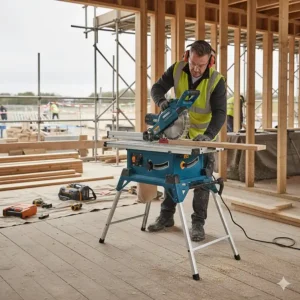
I’ve spent years working with various table saws, and let me tell you—investing in quality machinery makes all the difference. A proper table saw isn’t just about cutting wood; it’s about precision, safety, and efficiency. You need a machine that delivers clean, accurate cuts whilst keeping your fingers firmly attached to your hands (rather important, that).
The UK market offers brilliant options across all price points, from budget-friendly models under £150 to professional-grade machines exceeding £700. Modern table saws have evolved tremendously, incorporating safety features like riving knives, blade guards, and emergency stops that meet stringent UK HSE regulations. Multi-material cutting technology now allows you to slice through wood, metal, and plastics with a single blade—something that would’ve seemed like wizardry a decade ago.
This comprehensive guide examines seven exceptional table saws available on Amazon.co.uk, covering everything from compact benchtop models perfect for small workshops to powerful contractor saws built for demanding jobsites. We’ll explore critical factors like motor power, rip capacity, safety features, and value for money, ensuring you make an informed decision that suits your specific needs and budget.
Quick Comparison Table
| Table Saw Model | Motor Power | Blade Size | Max Cut Depth (90°) | Rip Capacity | Price Range (£) | Best For |
|---|---|---|---|---|---|---|
| Evolution R255TBL+ | 1800W | 255mm | 87mm | 750mm | £329-£380 | Professionals & serious hobbyists |
| Bosch GTS 10 XC | 2100W | 254mm | 79mm | 635mm | £525-£775 | Workshop permanence & heavy-duty |
| DeWalt DWE7485 | 1850W | 210mm | 65mm | 622mm | £376-£450 | Portability & precision |
| Makita MLT100 | 1500W | 260mm | 93mm | 622mm | £549-£650 | Expandable workspace needs |
| Evolution Fury 5-S | 1500W | 255mm | 85mm | 600mm | £189-£230 | Budget-conscious buyers |
| Einhell TC-TS 2025/2 U | 1800W | 250mm | 78mm | 640mm | £139-£190 | Entry-level & occasional use |
| Scheppach HS80 | 1200W | 210mm | 48mm | 400mm | £115-£170 | Compact workshops & light work |
💬 Just one click – help others make better buying decisions too! 😊
Top 7 Table Saws: Expert Analysis
1. Evolution R255TBL+ Portable Jobsite Table Saw ⭐
The Evolution R255TBL+ represents the pinnacle of Evolution’s table saw engineering, and it’s become my go-to recommendation for serious woodworkers in 2026. This beast combines professional-grade features with remarkable portability.
Key Specifications:
- Powerful 1800W motor with soft-start and E-brake
- Multi-material cutting capability (wood, metal, plastic)
- Dual rack and pinion fence system for superior accuracy
Priced between £329-£380, this saw delivers exceptional value. The 87mm cutting depth at 90° handles most timber sections effortlessly, whilst the extended outfeed support prevents workpieces from tipping. UK buyers particularly appreciate the 3-metre power cable—genuinely useful when working in larger workshops or garages.
Customer feedback consistently praises the accuracy of cuts and the robust fence system. One recent purchaser mentioned “perfectly square cuts every time once properly calibrated”, whilst another noted the multi-material blade’s versatility for mixed projects.
✅ Pros: Multi-material cutting, soft-start technology, excellent fence accuracy
❌ Cons: Requires initial setup time, mitre gauge could be improved

2. Bosch GTS 10 XC Professional Table Saw 🏆
For those seeking workshop-grade permanence, the Bosch GTS 10 XC stands as the professional’s choice. This German-engineered powerhouse features a monstrous 2100W motor that handles hardwoods without breaking a sweat.
Key Specifications:
- 2100W motor with constant electronic speed control
- Integrated sliding carriage for precision crosscuts
- 79mm cutting depth with 254mm blade
At £525-£775, it’s certainly an investment, but one that pays dividends in performance and longevity. The constant speed feature maintains blade velocity under load—brilliant for consistent results across varying timber densities. The machine weighs 35kg, providing stability but limiting portability (you’ll want this permanently installed).
UK reviews highlight its exceptional build quality and accuracy. According to independent testing sources, it’s particularly favoured by professional joiners for furniture-making where precision is paramount.
✅ Pros: Industrial-grade motor, extendable table, superior accuracy
❌ Cons: Heavy (35kg), requires powerful dust extraction, premium price
3. DeWalt DWE7485 Compact Table Saw ⚡
The DeWalt DWE7485 proves that good things come in compact packages. Weighing just 20.5kg, this portable powerhouse delivers professional results without the workshop-hogging footprint.
Key Specifications:
- 1850W motor with 5,800 RPM no-load speed
- Rack and pinion fence with 622mm rip capacity
- 65mm cutting depth at 90°
Priced £376-£450, it occupies the sweet spot between portability and performance. The dual front and rear fence locks ensure rigidity during cuts—something cheaper saws often compromise. The cast aluminium table top remains flat and true, essential for accuracy.
Customer testimonials frequently mention its exceptional portability for jobsite work. The quick-stop motor brake enhances safety, particularly in busy workshop environments where distractions occur.
✅ Pros: Highly portable, excellent fence system, professional build quality
❌ Cons: Smaller blade limits cut depth, can be loud under load
4. Makita MLT100 Table Saw with Extensions 📏
The Makita MLT100 excels when workspace expansion matters. Its telescopic table extensions (right, left, and rear) provide remarkable flexibility for handling larger sheet materials.
Key Specifications:
- 1500W motor with soft-start and motor brake
- 260mm blade with 93mm maximum cut depth
- Expandable table accommodates various workpiece sizes
At £549-£650, it’s positioned in the premium mid-range. The 93mm cutting depth—deepest in this roundup—handles thick timbers and multiple laminated boards. The die-cast aluminium base provides excellent vibration damping.
However, reviews are mixed. Whilst some UK woodworkers praise its versatility, others report issues with fence accuracy requiring aftermarket upgrades. The 35kg weight suits workshop permanence rather than jobsite mobility.
✅ Pros: Exceptional cut depth, expandable workspace, solid construction
❌ Cons: Fence accuracy variable, heavy, mixed customer reviews
5. Evolution Fury 5-S Multi-Purpose Table Saw 💰
The Evolution Fury 5-S delivers remarkable value for budget-conscious buyers. At £189-£230, it’s Evolution’s most affordable multi-material table saw, perfect for DIY enthusiasts and hobbyists.
Key Specifications:
- 1500W motor with multi-material cutting blade
- 255mm blade with 85mm cutting depth
- Rack and pinion fence system
Don’t let the price fool you—this saw punches well above its weight class. The included TCT blade cuts wood, metal, and plastic without blade changes. Customer feedback emphasises its reliability for home workshop use, with one reviewer noting “ideal for weekend projects and home improvements”.
The bench-mounted design keeps the price down whilst maintaining functionality. It’s not built for daily professional abuse, but for occasional use and home improvements, it’s absolutely brilliant.
✅ Pros: Excellent value, multi-material cutting, surprisingly accurate
❌ Cons: Bench-mount only (no stand included), less durable than premium models

6. Einhell TC-TS 2025/2 U with Underframe 🔧
The Einhell TC-TS 2025/2 U represents German engineering at an accessible price point. At £139-£190, it’s one of the UK’s best-selling budget table saws for good reason.
Key Specifications:
- 1800W motor with 5,000 RPM
- 250mm carbide blade with 78mm cut depth
- Includes underframe stand for stability
This saw features height and angle adjustment facilities with parallel and angle stops (+/- 60°). The foldable extension tables enable workspace adjustment based on project requirements. UK buyers appreciate the included stand—many budget saws require separate purchase.
Customer reviews consistently mention its value proposition. Whilst build quality uses more plastic than premium models, it performs reliably for DIY projects. The fence system, once properly calibrated, delivers acceptable accuracy for home use.
✅ Pros: Includes stand, adjustable extensions, excellent price-to-performance
❌ Cons: Plastic components, loud startup, requires careful calibration
7. Scheppach HS80 Compact Table Saw 🏠
The Scheppach HS80 targets small workshop owners and occasional users. Priced £115-£170, it’s the most affordable option in this roundup, designed for maximum mobility and minimum storage requirements.
Key Specifications:
- 1200W motor with 4,800 RPM
- 210mm blade with 48mm maximum cut depth
- Compact table size: 525mm x 400mm
Weighing just 17.7kg with foldable extension tables, this compact saw suits hobbyists with limited space. The 48mm cutting depth restricts it to smaller timber sections, but for model-making, trim work, and light DIY, it’s perfectly adequate.
UK customer feedback emphasises its portability and storage convenience. One reviewer mentioned “perfect for my garden shed workshop where space is premium”. The included TCT blade, safety guard, mitre gauge, and rip fence provide everything needed to get started immediately.
✅ Pros: Extremely compact, lightweight, affordable, fold-out extensions
❌ Cons: Limited cutting depth, small table, underpowered for hardwoods
✨ Don’t Miss These Exclusive Deals!
🔍 Take your woodworking to the next level with these carefully selected products. Click on any highlighted item to check current pricing and availability on Amazon.co.uk. These tools will help you create authentic projects your family will love!
Understanding Table Saw Types and Applications
Selecting the appropriate table saw begins with understanding the three primary categories available in the UK market. Each type serves distinct purposes, and choosing correctly impacts your workshop efficiency and project outcomes significantly.
Benchtop Table Saws
Compact and portable, benchtop models like the Scheppach HS80 and Evolution Fury 5-S mount onto existing workbenches or sturdy tables. They’re brilliant for small workshops, garages, or mobile work situations. These saws typically weigh under 25kg, making transportation manageable for one person.
UK hobbyists favour benchtop saws for weekend projects and home improvements. They excel at cutting smaller timber sections, sheet materials, and trim work. However, their lighter weight can introduce vibration during heavy-duty operations, potentially affecting cut quality on demanding materials.
Contractor Table Saws
Mid-range options like the DeWalt DWE7485 and Einhell TC-TS 2025/2 U bridge the gap between benchtop and cabinet saws. They typically include fold-out stands or wheeled bases, offering portability without sacrificing too much stability.
These saws suit professional tradespeople working across multiple sites and serious DIY enthusiasts requiring flexibility. The integrated stands provide working height convenience whilst remaining transportable. Motor power generally ranges from 1500W to 2000W, handling most construction timber and sheet materials competently.
Cabinet Table Saws
The Bosch GTS 10 XC approaches cabinet saw territory with its 35kg weight and 2100W motor. True cabinet saws (though not all in this roundup qualify) feature enclosed bases, cast iron tables, and superior vibration damping. They’re designed for workshop permanence and daily professional use.
Professional joiners, furniture makers, and production workshops depend on cabinet-style saws for consistent, high-precision cuts. According to HSE guidelines on woodworking machinery, proper installation and dust extraction systems are essential for these powerful machines.

Essential Features Every Table Saw Must Have
Motor Power and Performance
Motor wattage directly influences cutting capability and material versatility. Budget saws typically feature 1200-1500W motors suitable for softwoods and thin sheet materials. Mid-range models (1500-1850W) handle mixed hardwoods and construction timber confidently. Professional-grade machines (2000W+) slice through dense hardwoods, thick stock, and challenging materials without bogging down.
However, wattage alone doesn’t tell the complete story. Motor quality, bearing design, and electronic controls significantly impact performance. Features like soft-start reduce initial power draw and mechanical stress, whilst constant electronic speed control maintains blade velocity under varying loads.
Rip Capacity Considerations
Rip capacity—the maximum distance between blade and fence—determines the largest panel width you can cut. Standard rip capacities range from 400mm on compact saws to 750mm on professional models. For cutting full sheet materials (2440mm x 1220mm), you’ll need adequate rip capacity plus outfeed support.
The Evolution R255TBL+ offers 750mm rip capacity, enabling half-sheet ripping without repositioning material. This proves invaluable for kitchen cabinet work, built-in furniture, and sheet goods processing. Smaller workshops might prioritise compact footprint over maximum rip capacity—choose based on your typical project requirements.
Fence System Accuracy
The fence system fundamentally determines cut quality and repeatability. Rack and pinion fences, featured on the DeWalt DWE7485 and Evolution R255TBL+, offer superior accuracy compared to basic rail systems. They maintain perpendicularity to the blade throughout adjustment, preventing the frustrating drift that plagues cheaper mechanisms.
Professional woodworkers often upgrade factory fences with aftermarket systems. Brands like Incra produce micro-adjustable fences with 0.25mm precision—overkill for construction work but essential for fine furniture making. For most UK users, quality factory fences suffice when properly calibrated.
Safety Features You Cannot Compromise On
Table saws rank amongst the UK’s most dangerous workshop tools, causing thousands of injuries annually. The Health and Safety Executive mandates specific safety requirements for commercial woodworking operations, standards that sensible home users should adopt voluntarily.
Riving Knife Requirements
A riving knife—that curved metal plate behind the blade—prevents timber from pinching the rear blade teeth, eliminating kickback risk. UK regulations require riving knives on all table saws sold commercially. The knife must be thicker than the blade plate but thinner than the cutting kerf, positioned within 8mm of the blade.
Quality saws like the Bosch GTS 10 XC feature quick-release riving knives with lateral and offset adjustment. This allows proper positioning for various blade diameters and cutting operations. Never remove the riving knife except when absolutely necessary for specific cuts—it’s your primary kickback protection.
Blade Guards and Dust Extraction
Top-mounted blade guards shield operators from accidental blade contact whilst providing some dust containment. Modern designs like Evolution’s improved guard offer excellent cut visibility without compromising protection. The guard should move smoothly without binding, automatically returning to rest position after cuts.
Effective dust extraction isn’t just housekeeping—wood dust poses serious health risks. The Health and Safety Executive identifies wood dust as a respiratory hazard and potential carcinogen. All saws in this roundup feature dust extraction ports, though extraction effectiveness varies considerably. Budget at least £100-£150 for a proper workshop vacuum with adequate airflow (minimum 1000 m³/h).
Emergency Stop Systems
Professional saws incorporate paddle-style emergency stops—large, accessible switches easily hit with your knee or hip if things go sideways. The Evolution R255TBL+ features both emergency stop and electronic brake, halting blade rotation within seconds rather than the typical 30-45 second coast-down.
Motor brakes dramatically improve safety during blade changes, adjustments, and emergency situations. They’re mandatory in commercial settings and highly recommended for home workshops, particularly where children might access the area.
Comparing Benefits vs Traditional Cutting Methods
| Feature | Table Saw | Circular Saw | Hand Saw | Mitre Saw |
|---|---|---|---|---|
| Rip cutting accuracy | Excellent | Good | Poor | N/A |
| Crosscut precision | Good | Fair | Good | Excellent |
| Sheet material handling | Excellent | Good | Poor | Limited |
| Portability | Fair-Good | Excellent | Excellent | Fair |
| Learning curve | Moderate | Low | Low | Low |
| Safety requirements | High | Moderate | Low | Moderate |
| Price range (£) | £115-£775 | £50-£400 | £10-£100 | £80-£600 |
Blade Selection and Maintenance Tips
Choosing the Right Blade
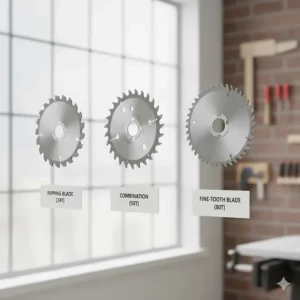
Table saw blades aren’t one-size-fits-all. Tooth count, blade diameter, and kerf width dramatically influence cutting performance and finish quality. For general woodworking, 24-40 tooth blades balance speed and finish. Fine crosscutting requires 60-80 teeth, whilst ripping hardwoods benefits from aggressive 24-tooth designs.
Multi-material blades, included with Evolution saws, feature specially designed teeth that cut wood, plastics, and non-ferrous metals. They’re tremendously convenient but don’t achieve the finish quality of dedicated wood blades. Serious woodworkers typically maintain multiple blades, swapping based on material and cut requirements.
UK suppliers like Saxton, Freud, and CMT offer quality replacement blades. Ensure proper bore diameter (typically 30mm in the UK) and maximum RPM rating matching your saw’s specifications. Blade wobble or vibration indicates bent blades, damaged bearings, or improper mounting—address immediately before further use.
Maintenance and Care
Regular maintenance extends saw life and maintains cutting accuracy. After each use, brush away sawdust from table surfaces, fence rails, and adjustment mechanisms. Monthly, apply dry lubricant to fence rails and height/angle adjustment gears. Avoid oil-based lubricants that attract sawdust accumulation.
Blade cleaning significantly impacts performance. Pitch and resin buildup reduces cutting efficiency and increases heat generation. Soak blades in specialised cleaners or diluted degreaser, scrubbing with brass brushes. Clean blades cut cleaner, require less feed pressure, and last considerably longer between sharpenings.
Professional sharpening services cost £15-£25 per blade and restore cutting performance effectively. However, carbide-tipped blades typically withstand 3-5 sharpenings before tooth geometry degrades beyond economical repair. Maintain sharp blades—dull blades increase kickback risk, generate excessive heat, and produce poor-quality cuts.

Setting Up Your Table Saw for Optimal Performance
Initial Assembly and Calibration
Table saw setup critically influences performance and safety. Begin by ensuring the saw sits level and stable—shim legs if necessary. Check blade perpendicularity to the table using a quality engineer’s square; adjust the blade angle mechanism until achieving perfect 90° alignment.
Fence parallelism requires meticulous adjustment. Measure distances from blade to fence at front and rear positions—they should be identical. Most quality saws include blade-to-fence parallelism adjustment; the Evolution R255TBL+ features Evolution’s patented adjustment system specifically for this purpose.
Test cuts reveal setup accuracy. Cut a wide board, flip one piece, and rejoin the edges. Gaps indicate blade angles or fence parallelism issues. Invest time in proper setup—it’s far easier than compensating for poor configuration through woodworking techniques.
Workspace Organisation
Table saw placement significantly impacts workflow efficiency and safety. Position your saw centrally with adequate clearance on all sides—minimum 1200mm behind for safe take-off. Outfeed tables or roller stands prevent workpieces from tipping, reducing injury risk and improving cut quality.
Adequate lighting proves essential. Position lights to eliminate shadows across cutting lines without creating glare on measuring scales. Many UK woodworkers install overhead LED strips providing consistent, shadow-free illumination across the entire table surface.
Keep push sticks, featherboards, and measuring tools within arm’s reach. Wall-mounted tool boards keep accessories organised whilst preventing trip hazards from scattered equipment. According to woodworking safety experts, organised workspaces reduce accidents by creating predictable, clutter-free environments.
Advanced Techniques for Better Results
Mastering Rip Cuts
Rip cutting—cutting along wood grain—forms the table saw’s primary function. Feed material steadily using consistent pressure against the fence. Avoid forcing timber through; let blade sharpness do the work. Excessive feed pressure increases kickback risk and produces rough-cut surfaces.
For narrow rip cuts (under 100mm), use push sticks rather than feeding by hand. Position yourself slightly left of the cutting line, never directly behind the blade. This stance keeps your body clear of kickback trajectory whilst maintaining control. UK woodworkers often craft custom push sticks from scrap timber—free and infinitely replaceable.
Ripping thick hardwoods generates substantial sawdust and heat. Make multiple shallow passes rather than full-depth cuts when working with dense materials. This approach reduces motor strain, produces cleaner cuts, and minimises burning caused by excessive friction.
Crosscutting Accuracy
Crosscutting—cutting across wood grain—requires the mitre gauge rather than the rip fence. Never use fence and mitre gauge simultaneously; this creates binding situations causing dangerous kickback. For repetitive crosscuts at identical lengths, clamp a stop block to the fence well ahead of the blade.
Backing boards prevent tearout on crosscut exits. Place sacrificial timber behind your workpiece; blade teeth exit into backing material rather than splintering your project piece. This simple technique dramatically improves finish quality, particularly on plywood and veneered materials.
Consider building a crosscut sled for ultimate precision. Sleds ride in mitre slots, supporting workpieces on both sides whilst guiding them perpendicular to the blade. Many UK woodworkers consider a well-made sled essential for serious furniture making and cabinetry.
Budget Considerations and Value Analysis
| Price Tier | Typical Features | Suitable For | Representative Models |
|---|---|---|---|
| Budget (£100-£200) | Basic fence, modest power, limited capacity | Occasional DIY, small projects | Scheppach HS80, Einhell TC-TS 2025/2 U |
| Mid-Range (£200-£400) | Better fences, adequate power, decent capacity | Serious hobbyists, light professional | Evolution Fury 5-S, DeWalt DWE7485 |
| Premium (£400-£800) | Excellent fences, powerful motors, large capacity | Professional use, demanding applications | Evolution R255TBL+, Bosch GTS 10 XC, Makita MLT100 |
✨ Transform Your Workshop Today!
🛠️ Ready to elevate your woodworking game? These meticulously selected table saws deliver professional results without breaking the bank. Click any product name above to explore current deals on Amazon.co.uk. Your next masterpiece awaits!
Common Mistakes to Avoid When Buying
Prioritising Price Over Safety
The cheapest saw isn’t necessarily the best value, particularly regarding safety features. Inferior blade guards, missing riving knives, or poorly designed emergency stops dramatically increase injury risk. UK accident statistics consistently show operator error exacerbated by inadequate safety equipment causes most table saw injuries.
Quality safety features cost money to engineer and manufacture. Saws from established brands like Evolution, Bosch, and DeWalt undergo rigorous testing ensuring compliance with UK and European safety standards. Unbranded imported saws might save £50 initially but potentially cost far more in medical bills.
Ignoring Workshop Space Limitations
Many buyers purchase saws too large for available workspace, creating frustrating operational constraints. Measure your workshop carefully, accounting for material handling clearances. A compact Scheppach HS80 might suit small workshops better than a larger saw requiring constant repositioning for adequate clearance.
Consider material storage and workflow patterns. Table saws work best with clear infeed and outfeed areas. If space limitations prevent proper material support, you’ll struggle with accuracy and safety regardless of saw quality. Sometimes, other cutting tools better suit confined workshops.
Overlooking Future Needs
Beginners often purchase based solely on immediate requirements, outgrowing equipment quickly as skills develop. Consider your likely progression—if you’re passionate about woodworking, you’ll probably attempt increasingly complex projects. The Evolution Fury 5-S might suffice initially but could prove limiting as ambitions grow.
Conversely, professionals sometimes over-specify for actual requirements. Unless you’re running a production workshop or furniture making business, the Bosch GTS 10 XC might represent overkill. Honest assessment of your actual usage patterns ensures appropriate investment levels.
Frequently Asked Questions
❓ What size table saw do I need for cutting sheet materials in the UK?
❓ Are table saws safe for home workshop use?
❓ How much should I budget for a decent table saw in 2026?
❓ What's the difference between multi-material and wood-only blades?
❓ Do I need dust extraction for a table saw?
Conclusion: Choosing Your Perfect Table Saw
Selecting the ideal table saw balances budget constraints, workspace limitations, and project requirements. The seven saws reviewed represent excellent options across price points and use cases, each excelling in specific scenarios.
For budget-conscious beginners, the Scheppach HS80 (£115-£170) or Einhell TC-TS 2025/2 U (£139-£190) provide solid entry points into table saw woodworking without breaking the bank. They handle most DIY projects competently whilst helping you determine if table saw work suits your interests before substantial investment.
Serious hobbyists and semi-professional woodworkers should consider the Evolution R255TBL+ (£329-£380) or DeWalt DWE7485 (£376-£450). These mid-premium saws deliver professional-grade performance, safety features, and durability justifying their higher price tags. They’re genuine workshop workhorses that’ll serve you reliably for years.
Professional tradespeople and dedicated furniture makers might justify the Bosch GTS 10 XC (£525-£775) investment. Its industrial-grade construction, powerful 2100W motor, and exceptional accuracy suit demanding daily use and precision applications where accuracy directly impacts income and reputation.
Remember that the table saw itself represents just one component of an effective workshop setup. Budget for quality blades, proper dust extraction, safety equipment, and essential jigs. A £300 saw with £100 worth of accessories outperforms a £400 saw with inadequate supporting equipment.
Whatever saw you choose, commit to proper training and safety practices. Attend courses, watch reputable UK woodworking channels, and never compromise safety for convenience. Your fingers and lungs will thank you decades hence.
Recommended for You
- 7 Best Top Handle Chainsaw for Arborists UK 2026
- Stihl vs Husqvarna Chainsaw: 7 Powerful Differences Revealed (2026)
- Best Electric Chainsaw UK 2026: Expert Reviews & Buying Guide
Disclaimer: This article contains affiliate links. If you purchase products through these links, we may earn a small commission at no additional cost to you. Prices shown are approximate and may vary.
✨ Found this helpful? Share it with your mates! 💬🤗
