
In This Article
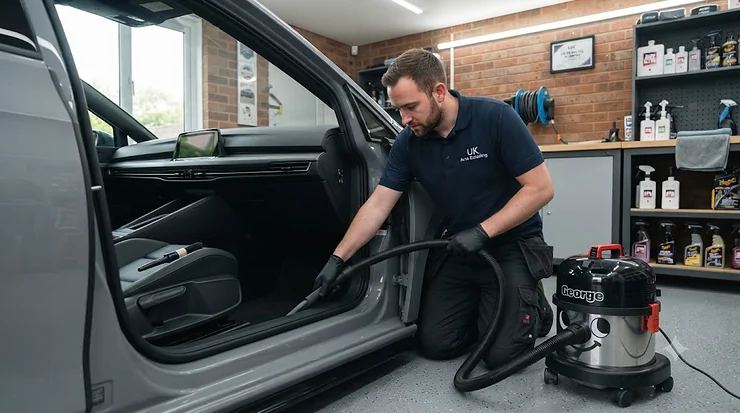
There’s a specific kind of despair that hits when you’re halfway through detailing your car, hose in hand, and your poor little handheld vacuum starts wheezing like it’s given up on life. Crisp packets under the seats, a genuinely alarming amount of gravel in the boot, sawdust tracked in from the last DIY project — a domestic vacuum simply wasn’t built for this, and pretending otherwise just wastes your Saturday.
A shop vac for car detailing is a powerful wet/dry vacuum built around a larger motor and tank than a typical household hoover, designed to handle heavy debris, spilled liquids and fine dust without clogging or overheating. Unlike a cordless handheld, it’s meant to live in your garage and double as general workshop kit — sawdust today, car interior tomorrow, flooded utility room the day after that.
This guide isn’t a copy-paste of Amazon listings. We’ve pulled together real UK-available models, checked their genuine specs against each other, and layered in honest analysis on tank capacity, filter types, and what actually makes a workshop vacuum “multi-purpose” rather than just marketed as such. Seven real shop vacs follow, spanning budget, mid-range and large-capacity options, alongside practical guidance on choosing, using and maintaining one properly. If you’re weighing up a shop vacuum for detailing garage use against something bought purely for the car, this should settle it either way.
Quick Comparison Table: Shop Vacs for Car Detailing at a Glance
| Product | Best For | Tank Capacity | Price Range |
|---|---|---|---|
| Karcher WD2 Plus | Budget entry point | 12L | £55-£70 |
| Draper 90107 | Cheapest large hose reach | 15L | £45-£60 |
| Karcher WD3 | Mid-range all-rounder | 17L | £75-£90 |
| Einhell TC-VC 1540 S | Stainless build on a budget | 15L | £70-£85 |
| Numatic Charles CVC370 | Most reliable long-term | 15L dry / 9L wet | £140-£160 |
| Karcher WD6 P | Large-capacity premium pick | 30L | £160-£180 |
| Einhell TE-VC 1930 SA | Lesser-known large-capacity value | 30L | £110-£130 |
The pattern here is fairly predictable once you line the specs up: tank capacity climbs sharply once you move past the sub-£90 bracket, and that’s where the Karcher WD6 P and Einhell TE-VC 1930 SA earn their keep as proper multi-purpose workshop vacuums rather than car-specific add-ons. If your priority is strictly interior detailing on one or two cars, the smaller 12-17L tanks on the Karcher WD2 Plus and Karcher WD3 are more than adequate and considerably easier to store.
💬 Just one click — help others make better buying decisions too!😊
Top 7 Shop Vacs for Car Detailing: Expert Analysis
1. Karcher WD2 Plus — best budget entry point with genuine brand backing
The Karcher WD2 Plus earns its spot as the sensible first purchase, and its standout feature is squeezing a genuinely usable 1000W motor and blowing function into a compact 12-litre tank. That blower function is more useful than it sounds for car detailing specifically — it doubles as a way to chase dust out of air vents and door pockets before you switch back to suction. Based on the spec sheet, the cartridge filter system is the real headline here: it lets you switch between wet and dry pickup without swapping filters manually, which matters when you’re going from vacuuming dry crumbs to sucking up a spilled drink in the same session. Reviewers consistently rate this model highly, with an aggregated rating around 4.6 stars across thousands of verified purchases, and recurring themes in that feedback point to reliable suction for the price rather than any standout weakness. What most buyers overlook is that 12 litres empties faster than it sounds once you’re clearing gravel or wet leaves rather than light dust, so plan on emptying it mid-session for genuinely messy jobs. It’s aimed squarely at anyone detailing one or two family cars a month who doesn’t want to commit serious money before knowing if they’ll use it regularly.
Pros:
- ✅ Genuinely capable 1000W motor for the price
- ✅ Cartridge filter switches wet/dry without swapping parts
- ✅ Large, well-established review base backing reliability
Cons:
- ❌ 12L tank empties quickly on heavier debris jobs
- ❌ Shorter 1.8m hose limits reach around larger vehicles
At around £55-£70 at the time of research, this is the pick for anyone testing the waters before committing to a bigger workshop setup.
2. Draper 90107 — best value for hose reach on a tight budget
The Draper 90107 leans into being a proper British workshop brand staple, and its standout feature is genuinely generous flexibility for the price — a 1.5m flexible hose paired with a 1250W motor that outpaces its Karcher WD2 Plus rival on paper despite a similar price point. On paper, the higher wattage translates into slightly stronger raw suction, which matters more for heavier debris like garage floor grit than for delicate interior detailing work. Its 15-litre tank gives a bit more headroom before you need to stop and empty it, and the accessory set is aimed squarely at dual-purpose use — home, car and light workshop tasks rather than one narrow job. What the spec sheet won’t tell you, but user reports on similar Draper wet/dry models suggest, is that the plastic tank construction feels noticeably lighter-duty than the stainless steel options further up this list, so it’s better suited to careful home use than daily commercial abuse. This is a strong fit for anyone who wants one vacuum that handles both the garden shed and the car without stretching to premium pricing.
Pros:
- ✅ Strong 1250W motor for the price bracket
- ✅ Flexible hose with decent reach around vehicles
- ✅ 15L tank offers more headroom than entry Karcher models
Cons:
- ❌ Plastic build feels less durable than stainless rivals
- ❌ Fewer specialist car-detailing accessories included
Typically priced around £45-£60, this is the pick for genuinely budget-conscious buyers who still want a bit more power than the absolute entry-level models offer.
3. Karcher WD3 — best mid-range all-rounder
The Karcher WD3 sits deliberately between the entry-level and premium tiers, and its standout feature is the “push and pull” locking system that makes emptying the 17-litre tank noticeably faster than fiddling with clips or catches. Here’s what to weigh: stepping up from the WD2 Plus’s 12 litres to 17 litres on paper means roughly 40% more capacity before a mid-job empty is needed, which genuinely matters if you’re doing a full valet rather than a quick tidy-up. It keeps the same cartridge filter approach as the smaller model, allowing wet and dry pickup without a filter swap, and adds a longer 2m hose that makes reaching into footwells and boot corners noticeably less awkward. Reviewers consistently note the robust, impact-resistant housing as a genuine strength, since a shop vac that lives in a garage inevitably takes the occasional knock. Based on the spec comparison with the budget tier, this is the natural upgrade pick for anyone who found a smaller unit’s tank filling up faster than they’d like.
Pros:
- ✅ Push-and-pull emptying system saves genuine hassle
- ✅ 17L tank handles a full valet without mid-job stops
- ✅ Longer 2m hose improves reach around vehicles
Cons:
- ❌ Noticeably pricier than the entry-level WD2 Plus
- ❌ Still plastic construction rather than stainless steel
Expect to pay somewhere in the £75-£90 range, positioning this as the sensible mid-range choice for regular detailers rather than occasional users.
4. Einhell TC-VC 1540 S — best stainless steel build on a budget
The Einhell TC-VC 1540 S stands out specifically for putting a stainless steel 15-litre tank within reach of buyers who’d normally have to spend considerably more for that build quality. Stainless steel matters more than marketing copy usually admits: it resists the scratches, dents and general wear that a plastic tank picks up over years of garage life, and it won’t discolour the way plastic can after repeated contact with cleaning chemicals or fuel residue. Powered by a 900W motor generating 180 mbar of suction, it’s genuinely on the milder side of this list on paper, but the trade-off is a notably quieter operating volume — a real consideration if you’re detailing in a garage attached to the house on a weekend morning. What most buyers overlook about this model is that it ships with a genuinely varied accessory bracket and multiple filter types included, which on paper means less separate spending on filter replacements compared with single-filter-type rivals. This suits someone who values a vacuum that’ll physically outlast plastic-tank competitors over prioritising outright suction power.
Pros:
- ✅ Stainless steel tank resists wear far better than plastic
- ✅ Quieter operation than higher-wattage rivals
- ✅ Multiple filter types included in the box
Cons:
- ❌ 900W motor is milder than similarly priced plastic rivals
- ❌ Less raw suction for genuinely heavy debris jobs
Priced around £70-£85, this is the pick for anyone who wants their shop vac to still look and function properly in five years’ time.
5. Numatic Charles CVC370 — best for long-term reliability
The Numatic Charles CVC370 is the vacuum equivalent of a trusted family car — built in the UK, sharing its DNA with the famously indestructible Henry upright, and its standout feature is exactly that reputation for longevity. It runs a 1060-1200W TwinFlo motor and uses a genuine TriTex/HEPA filtration combination capable of trapping roughly 98% of particles down to half a micron, which on paper means noticeably cleaner exhaust air than basic cartridge-only systems — worth knowing if you’re working in an enclosed garage. The wet and dry capacities are listed separately (around 15 litres dry, 9 litres wet), and a safety float valve automatically cuts suction before liquid can reach the motor, a genuinely reassuring feature for anyone nervous about wet-vacuuming near expensive electronics. Reviewers consistently cite the exceptionally long 10-metre power cord and near-unkillable build quality as reasons they’d buy Numatic again, and this brand’s reputation among UK trade users is built on decades of actual field use rather than recent marketing. Based on the spec comparison with everything else on this list, the trade-off is a genuinely higher price point that only makes sense if you’ll use it regularly and want it to outlast several cheaper alternatives.
Pros:
- ✅ HEPA/TriTex filtration traps roughly 98% of fine particles
- ✅ Safety float valve protects the motor during wet use
- ✅ Decades-long reputation for genuine durability
Cons:
- ❌ Highest price point among the pillow-format-equivalent options here
- ❌ Wet capacity (9L) is smaller than its dry capacity suggests
At around £140-£160, this is the splurge pick specifically for anyone who details cars regularly enough that reliability outweighs upfront cost.
6. Karcher WD6 P — best large-capacity premium pick
The Karcher WD6 P is where this list moves properly into large-capacity shop vac for cars territory, and its standout feature is a genuinely substantial 30-litre stainless steel tank paired with a built-in power socket for plugging in a power tool directly into the vacuum. That power socket is a specifically workshop-minded feature — it lets the vacuum automatically activate when you switch on a connected sander or saw, which has nothing to do with detailing a car but everything to do with justifying this as a genuine multi-purpose workshop vacuum rather than a one-trick purchase. On paper, 30 litres means you could realistically clear out an entire garage floor, then do a full multi-car detailing session, without emptying the tank once. The stainless steel construction matches the premium positioning, and the stronger 1300W motor delivers noticeably more raw suction than the smaller Karcher models on this list. What the spec sheet won’t tell you, but user reports on similar large-tank vacs suggest, is that the extra size and weight make this considerably less convenient to lug around a driveway compared with the smaller 12-17L options — this one is built to stay in one spot.
Pros:
- ✅ 30L stainless tank handles multiple heavy jobs per fill
- ✅ Integrated power socket for connected power tools
- ✅ Strongest motor across the entire line-up
Cons:
- ❌ Bulky and heavy compared with smaller pillow-format units
- ❌ Overkill for someone detailing only their own car occasionally
Sitting around £160-£180, this is the pick specifically for genuine workshop or small detailing-business use rather than occasional home detailing.
7. Einhell TE-VC 1930 SA — best lesser-known large-capacity alternative
The Einhell TE-VC 1930 SA is the outlier on this list in name recognition rather than capability, and its standout feature is delivering genuine 30-litre large-capacity performance at a noticeably lower price than the equivalent Karcher offering. Einhell has built a solid reputation in the wider German power tool market without quite the same household-name status as Karcher in the UK, and that gap in brand recognition is arguably where the value sits — on paper, you’re getting comparable tank capacity and motor performance for meaningfully less outlay. Because this is a lesser-known name for many UK buyers, the aggregated review pool is genuinely smaller and harder to verify at scale than for Karcher or Numatic, and we’d flag that honestly rather than oversell the brand’s track record. What most buyers overlook about mid-tier German brands like Einhell is that build quality on the motor and switchgear is frequently comparable to bigger names, even where the plastics or included accessories feel a step down. This suits a workshop or garage user who wants large-capacity performance without paying the full premium-brand price, and who’s comfortable doing a bit more of their own research before buying.
Pros:
- ✅ 30L capacity at a meaningfully lower price than rivals
- ✅ Solid German engineering reputation in power tools
- ✅ Strong value-to-capacity ratio for workshop use
Cons:
- ❌ Smaller, harder-to-verify UK review pool than big names
- ❌ Less recognised brand may affect resale value
Priced around £110-£130, this is worth serious consideration if large-capacity performance matters more to you than brand prestige.
Top 7 Products: Specs and Value Comparison
| Product | Tank Capacity | Motor Power | Filter Type | Price Range |
|---|---|---|---|---|
| Karcher WD2 Plus | 12L | 1000W | Cartridge | £55-£70 |
| Draper 90107 | 15L | 1250W | Foam/Cartridge | £45-£60 |
| Karcher WD3 | 17L | 1000W | Cartridge | £75-£90 |
| Einhell TC-VC 1540 S | 15L (stainless) | 900W | Multiple included | £70-£85 |
| Numatic Charles CVC370 | 15L dry / 9L wet | 1060-1200W | HEPA/TriTex | £140-£160 |
| Karcher WD6 P | 30L (stainless) | 1300W | Cartridge | £160-£180 |
| Einhell TE-VC 1930 SA | 30L | 1500W | Cartridge/Foam | £110-£130 |
Lined up side by side, the trade-off pattern is obvious: tank capacity and motor power both climb steadily with price, but filter sophistication doesn’t track price quite as neatly — the Numatic Charles CVC370 offers genuinely superior HEPA-grade filtration at a mid-to-high price point rather than only appearing on the very top-end models. For anyone specifically prioritising cleaner exhaust air over raw tank size, that’s worth weighing against the larger-but-simpler filtration on the Karcher WD6 P.
Workshop Clean-Up: Practical Usage Guide
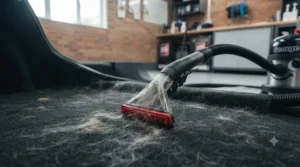
Getting genuine long-term value from a shop vac starts with treating workshop clean-up as routine rather than reactive. Empty the tank before it’s completely full rather than after — most manufacturers recommend stopping well before the maximum fill line, particularly in wet mode, since an overfilled tank strains the motor and risks tripping the safety float valve prematurely. A common mistake in the first month of ownership is switching between wet and dry pickup without checking the filter is actually rated for both; cartridge filters designed for dual use handle this fine, but paper dust bags used for dry debris should always be removed before wet vacuuming, or they’ll disintegrate.
For genuine workshop clean-up rather than just car interiors, build a simple routine: a quick daily pass on the floor for loose debris, a weekly filter check and tap-out, and a full filter wash or replacement roughly every one to three months depending on how dusty your work is. One optimisation trick rarely mentioned on product listings: keep a second, cheaper filter on hand specifically for messy dry jobs like sanding, and switch to your good filter only for detailing work — this meaningfully extends the life of your primary filter. If your workshop use regularly involves wood dust from sanding or cutting, it’s worth reading HSE’s guidance on controlling wood dust exposure, since standard shop vac filtration isn’t always rated for fine, hazardous dust at the volumes a dedicated woodworking setup produces.
Real-World Scenarios: Who Actually Benefits Most
The weekend detailer with a single family car, budget around £60: Interior detailing once or twice a month doesn’t justify a large-capacity investment. The Karcher WD2 Plus covers this comfortably, and its compact 12L tank is easy to store in a cupboard rather than dominating garage floor space.
The home mechanic running a proper shop vacuum for detailing garage use alongside general DIY: This profile needs something that handles sawdust, oil spills and car interiors without missing a beat. The Einhell TC-VC 1540 S‘s stainless tank and multiple included filter types suit genuinely mixed-use garage work well.
The small detailing business or serious enthusiast with multiple cars per week: Volume and reliability both matter here more than price. The Numatic Charles CVC370 or Karcher WD6 P make more sense at this scale — the extra outlay is recovered quickly through fewer emptying breaks and a vacuum that won’t need replacing after a single busy season.
Problem → Solution Guide for Common Shop Vac Issues
Problem: Losing suction partway through a detailing session. This is almost always a full or clogged filter rather than a motor fault — check and tap out the filter before assuming the vacuum itself has failed.
Problem: Struggling to reach into footwells and boot corners. Hose length and flexibility matter more here than raw power — the Karcher WD3‘s longer 2m hose specifically addresses this compared with shorter entry-level hoses.
Problem: Needing one vacuum for both workshop dust and car interiors. A single-filter-type budget model will underperform on one job or the other — the Einhell TC-VC 1540 S‘s multiple included filter types are built specifically for this dual-purpose use case.
Problem: Constantly emptying the tank mid-job on bigger cars or multiple vehicles. This is a tank capacity problem, not a technique problem — stepping up to the Karcher WD6 P or Einhell TE-VC 1930 SA‘s 30-litre tanks solves it directly.
Problem: Water getting dangerously close to the motor during wet pickup. Stop immediately if you don’t have a safety float valve — the Numatic Charles CVC370 includes one specifically to prevent this, and it’s worth prioritising on any wet-use-heavy workflow.
How to Choose a Shop Vac for Car Detailing
Choosing the right shop vac for car detailing comes down to matching tank size, motor power and filter type to how you’ll actually use it, rather than simply buying the biggest model available. Here’s a practical, step-by-step approach:
- Estimate your realistic usage frequency. Occasional single-car detailing suits a smaller 12-15L tank; regular or multi-vehicle use justifies stepping up to 17L or beyond.
- Decide whether workshop dust matters as much as car interiors. If you’re regularly sanding or cutting, prioritise filter versatility over pure tank size.
- Check hose length against your typical vehicle size. Larger vehicles or multiple cars benefit from at least a 2m hose to avoid repositioning the whole unit constantly.
- Weigh tank material against your garage environment. Stainless steel resists long-term wear better than plastic, particularly with chemical exposure from detailing products.
- Factor in noise if you’re working near living spaces. Lower-wattage models like the Einhell TC-VC 1540 S run noticeably quieter, which matters for weekend garage sessions.
- Set a genuine price ceiling before browsing. Deciding on a £70-£90 limit before you start prevents premium large-capacity models from talking you into overspending.
- Read aggregated review themes around filter clogging and motor longevity. Star ratings alone tell you little; recurring complaints about specific failure points tell you far more.
Tank Capacity Explained: How Many Litres Do You Actually Need?
Tank capacity is the single most misunderstood spec on a shop vac listing, largely because manufacturers list total tank volume rather than usable capacity, which shrinks considerably once you’re doing wet pickup. On paper, a 15-litre tank sounds generous, but many models cap wet capacity at roughly half that figure to leave headroom before the safety float valve triggers — the Numatic Charles CVC370‘s listed 9-litre wet capacity against its 15-litre dry figure illustrates this clearly. For pure car interior detailing, where you’re mostly dealing with dry debris and the occasional damp wipe-down rather than standing water, a 12-17 litre tank is genuinely sufficient for most single-vehicle users. What most buyers overlook is that tank capacity interacts directly with how often you’ll need to stop and empty mid-job — a 12L tank filled with gravel or wet leaves empties far faster than the same tank filled with fine interior dust, so match your expectations to your actual debris type rather than the headline litre figure alone.
| Tank Size Range | Typical Use Case | Represented By |
|---|---|---|
| 12-15L | Single car, occasional interior detailing | Karcher WD2 Plus, Einhell TC-VC 1540 S |
| 17-20L | Regular detailing, mixed dry/wet jobs | Karcher WD3 |
| 25-30L+ | Multi-vehicle or combined workshop/car use | Karcher WD6 P, Einhell TE-VC 1930 SA |
This breakdown reinforces a point worth repeating: buying beyond your genuine tank capacity need mostly just costs you storage space and upfront budget, without a meaningful improvement in day-to-day detailing results for lighter, occasional users.
Large-Capacity Shop Vac for Cars: When Size Matters
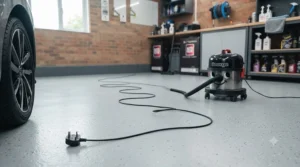
A large-capacity shop vac for cars earns its place specifically when you’re dealing with volume rather than just mess — multiple vehicles in a week, a genuinely filthy car after off-road use, or combined workshop and detailing duties under one roof. On paper, stepping from a 15L to a 30L tank roughly doubles the time between empties, which sounds like a modest convenience until you’re mid-detail on the third car of the day and don’t want to break flow to tip out debris. The trade-off, based on the spec comparison across this list, is size and weight: both the Karcher WD6 P and Einhell TE-VC 1930 SA are meaningfully bulkier and heavier than their smaller siblings, making them better suited to staying fixed in a garage corner than being wheeled out to a driveway repeatedly. Reviewers consistently note that large-capacity models also tend to ship with stronger motors as standard, since manufacturers generally pair bigger tanks with the power needed to actually fill and empty them efficiently — so the capacity upgrade often comes with a genuine suction upgrade too, not just extra storage room.
Filter Types Explained: Cartridge vs HEPA vs Foam vs Bag
Filter type matters more for long-term satisfaction than almost any other spec on this list, and it’s routinely glossed over in product listings in favour of headline wattage figures. Cartridge filters, used on most of the Karcher models here, are the most practical all-rounder — they handle both wet and dry pickup without swapping parts, though they don’t filter particularly fine dust as effectively as dedicated systems. HEPA-grade filtration, as found on the Numatic Charles CVC370, traps a meaningfully higher percentage of fine particles — genuinely relevant if you’re working in an attached garage and care about air quality during and after a session. Foam filters, often included alongside cartridge systems on models like the Einhell TC-VC 1540 S, are specifically suited to wet pickup and tend to be cheaper and easier to rinse clean than cartridge equivalents. Paper dust bags, less common on this list but still found on budget models, offer clean, mess-free emptying for dry debris but must be removed entirely before any wet vacuuming, since they’ll disintegrate on contact with liquid. The practical takeaway: if you’re doing genuinely mixed workshop and detailing work, a model offering multiple filter types, or at minimum a versatile cartridge system, will serve you better long-term than chasing the single highest suction figure.
Multi-Purpose Workshop Vacuum: Beyond Car Detailing
Treating your shop vac as a genuine multi-purpose workshop vacuum rather than a single-use car accessory is where the real value case gets stronger, particularly for the mid-to-premium models on this list. Beyond car interiors, the same machine handles garage floor sweep-ups, light building debris after DIY projects, blocked drain assistance in wet mode, and — on models like the Karcher WD6 P with an integrated power socket — direct dust extraction from a connected power tool. What most buyers overlook when comparing a shop vac against a dedicated car vacuum or a domestic hoover is just how much broader the use case actually is once you own one; the table below makes the comparison concrete.
| Feature | Dedicated Car Vacuum | Domestic Hoover | Shop Vac |
|---|---|---|---|
| Wet pickup | Rarely | No | Yes |
| Heavy debris (gravel, sawdust) | Limited | No | Yes |
| Typical tank/bag capacity | 0.5-2L | 1-3L | 12-30L+ |
| Workshop dust extraction | No | No | Yes (model dependent) |
| Best For | Quick car-only jobs | Indoor carpets and floors | Multi-purpose home, garage and car use |
The comparison makes the case plainly: a dedicated car vacuum wins on portability for a quick five-minute tidy, but a proper shop vac covers dramatically more ground across the rest of your home and workshop life, which is exactly why it tends to justify a higher upfront price than either alternative on its own.
Common Mistakes When Buying a Shop Vac for Car Detailing
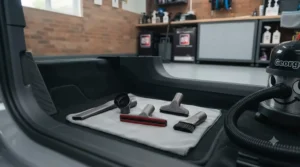
The most common mistake is buying based on tank capacity alone, without checking hose length and flexibility — a large tank attached to a short, stiff hose still means constantly repositioning the whole unit around a car. A second frequent mistake is ignoring filter type until after purchase, then discovering a cartridge-only model struggles with genuinely fine interior dust that a HEPA-equipped model would handle more cleanly. Buyers also regularly underestimate noise output; a shop vac that sounds fine tested briefly in a shop can be genuinely unpleasant during a 40-minute detailing session in an enclosed garage. Finally, plenty of people skip checking whether accessories are actually included versus sold separately — car-specific nozzles and brushes vary significantly between listings, and a “detailing” branded vacuum without the right narrow crevice tools included isn’t necessarily better equipped than a generic model with a good accessory kit.
Safety & Electrical Compliance Guide
Any shop vac used in the UK should carry UKCA or CE marking confirming compliance with recognised electrical safety standards, and this is worth checking directly on the packaging or listing before buying, particularly from less familiar brands. If you’re using your shop vac in any commercial or work capacity — a detailing side business, for instance — it’s worth understanding how portable appliance testing fits into broader UK workplace electrical safety practice, since regularly used power equipment in a work setting is generally expected to be checked and maintained under existing health and safety duties. Always fully unwind the power cord before use to prevent overheating, and never use a shop vac to collect genuinely hazardous fine dust, such as from sanding certain treated woods, unless the filter is specifically rated for that level of fine particulate. Water and electricity remain a serious combination — always check a model’s wet-pickup rating before vacuuming standing liquid, and never open or empty the tank while the unit is still plugged in.
Frequently Asked Questions
❓ What size shop vac do I need for car detailing?
❓ Can I use a shop vac for both my car and workshop dust?
❓ What's the difference between filter types on a shop vac?
❓ Is a bigger tank capacity always better for car detailing?
❓ How much does a good shop vac for car detailing cost in the UK?
Conclusion
There’s no single best shop vac for car detailing that suits everyone — only the right match for how often you’ll use it and what else you need it to handle. If you’re detailing one family car occasionally, the Karcher WD2 Plus or Draper 90107 deliver solid results without overspending. If your garage genuinely doubles as a workshop, the Einhell TC-VC 1540 S‘s stainless build and varied filters, or the Numatic Charles CVC370‘s long-term reliability, are worth the step up. And if volume is the real challenge — multiple vehicles, combined workshop debris, or a small detailing business — the large-capacity Karcher WD6 P or the better-value Einhell TE-VC 1930 SA are built specifically for that scale.
Whichever you choose, matching tank capacity and filter type to your actual workshop clean-up habits will serve you far better long-term than chasing the highest wattage figure on the listing.
Recommended for You
- Wet And Dry Vacuum For Car Valeting: 7 Best Picks (2026)
- Cordless vs Corded Car Vacuum Comparison: 7 Best Picks Compared (2026)
- 7 Best Handheld Vacuum for Car Interior (UK 2026)
Disclaimer: This article contains affiliate links. As an Amazon Associate, I earn from qualifying purchases. If you purchase products through these links, we may earn a small commission at no additional cost to you.
✨ Found this helpful? Share it with your friends! 💬🤗
