
In This Article
Picture this: it’s a crisp Saturday morning, the birds are chirping, and you’re about to tackle your overgrown lawn. But instead of wrestling with a petrol mower that sounds like a jet engine and fills your garden with fumes, you simply press a button. Your electric lawn mower hums to life—quietly, cleanly, and efficiently. No pull cord frustration, no petrol spillage, no angry neighbours peering over the fence.
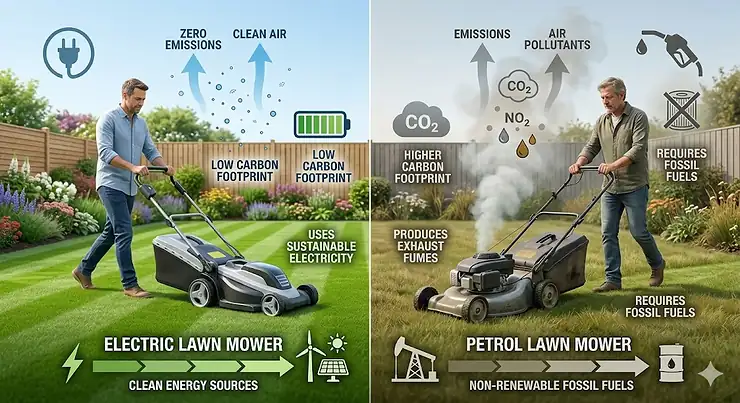
The electric lawn mower revolution has transformed British gardening. These machines have evolved from underpowered curiosities into genuine petrol replacements that deliver superior cutting performance whilst producing zero emissions during operation. According to research from the Environmental Protection Agency, petrol-powered lawn equipment accounts for approximately 5% of total air pollution in developed nations, with a single petrol mower emitting as much pollution in one hour as driving a car for 45 miles.
Whether you’re maintaining a compact urban garden in London or tending to a sprawling suburban lawn in the Cotswolds, understanding the nuances between corded and cordless models, battery capacity, and cutting specifications will help you make an informed decision. This comprehensive guide examines seven outstanding electric lawn mower options available on Amazon.co.uk, covering everything from budget-friendly corded models to premium battery-powered machines with impressive runtime capabilities.
Quick Comparison Table
| Model | Type | Cutting Width | Price Range (£) | Runtime/Cable | Best For |
|---|---|---|---|---|---|
| Flymo EasiGlide 360 | Corded Hover | 36cm | £100-£130 | 10m cable | Sloped gardens |
| Bosch Rotak 34 R | Corded Rotary | 34cm | £99-£139 | Mains powered | Medium lawns |
| LawnMaster 1400W | Corded Rotary | 34cm | £80-£110 | Mains powered | Budget option |
| Greenworks 40V | Cordless | 35cm | £180-£250 | 40-60 mins | Freedom seekers |
| Flymo Hover Vac 250 | Corded Hover | 25cm | £70-£95 | 10m cable | Small gardens |
| Hyundai HYM3800E | Corded Rotary | 38cm | £109-£125 | 10m cable | Value seekers |
| Bosch AdvancedRotak 650 | Corded Rotary | 40cm | £159-£189 | 10m cable | Premium performance |
💬 Just one click – help others make better buying decisions too! 😊
Top 7 Electric Lawn Mowers: Expert Analysis
1. Flymo EasiGlide 360 Hover Collect Lawn Mower
The Flymo EasiGlide 360 is Britain’s answer to challenging terrain. This hover mower floats on a cushion of air, making it exceptionally manoeuvrable around awkward garden layouts, slopes, and uneven surfaces that would bog down traditional wheeled mowers.
Key Specifications:
- 1800W-2000W powerful motor
- 36cm cutting width with 4 height positions (10-30mm)
- 26-litre grass collection box
Priced between £100-£130, this corded electric mower delivers excellent value. UK buyers consistently praise its lightweight design (approximately 8kg) and effortless gliding action. The 10-metre cable provides decent reach, though you’ll likely need an extension for larger gardens.
Customer feedback reveals this mower handles longer grass surprisingly well, with one reviewer noting it “tackled everything I asked it to, even when grass had got quite long.” The flat-folding handles enable wall-mounting, perfect for space-constrained garden sheds.
✅ Pros:
- Exceptional manoeuvrability on slopes
- Lightweight and easy to push
- Compact storage with wall-mounting capability
❌ Cons:
- Cable management required
- Collection box needs frequent emptying on larger lawns
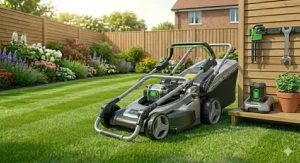
2. Bosch Rotak 34 R Electric Lawnmower
The Bosch Rotak 34 R represents German engineering excellence applied to British gardening needs. This compact rotary mower suits medium-sized lawns up to 300m² with its reliable 1300W PowerDrive motor.
Key Specifications:
- 1300W motor with grass combs for edge cutting
- 34cm cutting width, 20-70mm adjustable height
- 40-litre grass collection box
Available for £99-£139, the Rotak 34 R delivers consistent performance across varied grass conditions. The innovative grass combs allow close-edge cutting against walls, flower beds, and paths, reducing the need for separate trimming afterwards.
British customers appreciate its tool-free assembly and lightweight construction (approximately 11kg). One long-time Flymo user who switched noted it was “much quieter than the old one and does not scalp the lawn.” The ErgoFlex handles reduce arm strain during extended mowing sessions.
✅ Pros:
- Excellent edge-cutting capability
- Quiet operation (significantly quieter than petrol)
- Tool-free assembly and height adjustment
❌ Cons:
- Assembly instructions could be clearer
- Handle bolts require careful alignment
3. LawnMaster 1400W Electric Lawn Mower
For budget-conscious gardeners seeking reliable performance, the LawnMaster 1400W delivers remarkable value. This corded rotary mower suits small to medium gardens whilst keeping initial investment low.
Key Specifications:
- 1400W motor with rear roller for striped finish
- 34cm cutting width, 6 adjustable heights
- Compact 30-litre grass box
Priced attractively at £80-£110, the LawnMaster offers excellent cost-per-feature ratio. The rear roller creates those quintessentially British striped lawns that many homeowners desire, a feature typically reserved for more expensive models.
UK buyers highlight its straightforward operation and surprising cutting power for the price point. The two-year manufacturer’s guarantee provides peace of mind. Whilst the grass box is smaller than premium competitors, it keeps the overall weight manageable at around 12kg.
✅ Pros:
- Outstanding value for money
- Rear roller for lawn stripes
- Two-year guarantee included
❌ Cons:
- Smaller grass collection capacity
- Basic cable storage
4. Greenworks 40V Cordless Lawnmower
The Greenworks 40V represents the cordless electric mower sweet spot—balancing power, runtime, and price for British gardens. This battery-powered machine eliminates cable hassles whilst delivering petrol-rivalling performance.
Key Specifications:
- 40V brushless motor (2 x 20V batteries)
- 35cm cutting width, 40-litre grass box
- 40-60 minute runtime per charge
Expect to invest £180-£250 for the complete kit including two 2Ah batteries and charger. The dual-battery system provides flexibility—swap batteries mid-mow on larger lawns, or share them across other Greenworks 24V tools in your arsenal.
Reviews from UK customers emphasise the liberating cordless experience. One noted, “the decent runtime of 46 minutes made up for occasional battery cut-outs.” The brushless motor adjusts power delivery intelligently, conserving battery in lighter conditions whilst ramping up for thicker grass.
✅ Pros:
- Complete freedom of movement (no cables!)
- Battery compatibility across Greenworks range
- Quiet operation (approximately 96dB)
❌ Cons:
- Struggles with very long, neglected grass
- Battery replacement costs (£50-£100 after 3-5 years)
5. Flymo Hover Vac 250 Electric Hover Lawn Mower
Perfect for compact British gardens, the Flymo Hover Vac 250 combines hover manoeuvrability with genuine budget-friendliness. This little workhorse suits urban gardens, courtyards, and awkwardly-shaped plots.
Key Specifications:
- 1400W motor
- 25cm cutting width ideal for tight spaces
- 15-litre grass collection box
At just £70-£95, this represents exceptional entry-level value. The compact 25cm width navigates between flower beds, garden furniture, and tight corners with ease. Ambidextrous handles accommodate both left and right-handed operators.
UK buyers appreciate how it folds completely flat for storage—crucial in space-limited garden sheds. One reviewer mentioned using it successfully on their “larger than average lawn with steep slopes,” noting it “glides over the steep slopes with ease.”
✅ Pros:
- Incredibly affordable
- Perfect for small, awkward spaces
- Folds flat for minimal storage footprint
❌ Cons:
- Limited cutting width (takes longer on larger lawns)
- Small grass box requires frequent emptying

6. Hyundai HYM3800E Corded Electric Lawnmower
The Hyundai HYM3800E delivers Korean manufacturing quality at an accessible price point. This eco-friendly electric mower suits medium-sized British gardens with its 1600W motor and rear roller design.
Key Specifications:
- 1600W power output
- 38cm cutting width with rear roller
- 40-litre collection bag, 5 cutting heights
Priced at £109-£125, the HYM3800E offers excellent specifications for the investment. The lightweight plastic chassis keeps manoeuvrability high whilst the rear roller produces attractive lawn stripes. The 10-metre power cable provides reasonable reach.
Customer feedback highlights its versatility and efficient cutting. The mulching feature allows you to return finely-chopped clippings to the lawn, providing natural fertilisation whilst eliminating collection box emptying. UK buyers note it handles medium-sized gardens efficiently.
✅ Pros:
- Rear roller for striped finish
- Mulching capability included
- Three-year warranty
❌ Cons:
- Plastic chassis less durable than metal alternatives
- Handle height may feel short for taller users
7. Bosch AdvancedRotak 650 Corded Lawnmower
For those seeking premium performance, the Bosch AdvancedRotak 650 represents the pinnacle of corded electric mower technology. This sophisticated machine incorporates ProSilence technology, delivering professional results with minimal disturbance.
Key Specifications:
- 1700W motor with ProSilence tech (75% quieter)
- 40cm cutting width, 7 height positions (20-80mm)
- Massive 50-litre LeafCollect grass box
Commanding £159-£189, this premium mower justifies its price through advanced features. The ProSilence technology operates at merely 89dB—remarkably quiet for such a powerful machine. The ErgoSlide control system allows effortless height and angle adjustments.
UK reviewers rave about the super-smooth action and generous 50-litre collection capacity, which dramatically reduces emptying frequency. The LeafCollect system excels at autumn cleanup, making this a true year-round garden tool.
✅ Pros:
- Exceptionally quiet operation (89dB)
- Huge 50-litre grass box capacity
- One-touch height adjustment system
❌ Cons:
- Premium pricing
- Heavier than budget alternatives (approximately 15kg)
✨ Don’t Miss These Exclusive Deals!
🔍 Take your lawn care to the next level with these carefully selected products. Click on any highlighted item to check current pricing and availability on Amazon.co.uk. These tools will help you create authentic results your family will love!
Understanding Corded vs Cordless Mower Technology
The fundamental choice facing British gardeners centres on power delivery: corded electric mowers plugging directly into mains electricity, or cordless models running on rechargeable lithium-ion batteries.
Corded Electric Mowers: Unlimited Runtime
Corded models connect to your outdoor socket via an extension lead, providing unlimited operating time. There’s no battery anxiety—you can mow for hours without interruption, perfect for larger properties or when tackling neglected grass.
According to research comparing electric mower types, corded mowers typically weigh 4-6kg less than cordless equivalents (no heavy battery pack), making them easier to manoeuvre. They’re also more affordable upfront, with quality models starting around £70-£100.
The primary limitation? Cable management. You’ll need to work methodically away from your power source, being mindful not to run over the cable. For gardens under 300m², this rarely proves problematic. Extension leads rated for outdoor use (typically 30-50 metres) provide ample reach.
Cordless Electric Mowers: Ultimate Freedom
Battery-powered lawn mowers liberate you from cable constraints. Navigate around trees, flower beds, and garden furniture without constantly repositioning extension leads. This freedom particularly benefits awkwardly-shaped plots or gardens with numerous obstacles.
Modern lithium-ion batteries deliver 30-60 minutes runtime per charge, covering 250-500m² depending on grass thickness and terrain. A 40V battery with 4-6Ah capacity represents the sweet spot for medium British gardens. Premium 60V systems can handle up to 1000m² on a single charge.
The trade-offs? Higher initial investment (£180-£400+ including batteries), and eventual battery replacement costs (£50-£150 after 3-5 years). However, the convenience factor often justifies the premium for many homeowners.
The Zero Emissions Advantage: Why Electric Matters
Switching to an electric lawn mower delivers measurable environmental benefits beyond simply reducing noise pollution. The emissions story is compelling and increasingly relevant as Britain pursues its net-zero targets.
Eliminating Direct Emissions
Electric lawn mowers produce zero exhaust emissions during operation. Contrast this with petrol mowers: according to the EPA’s National Emissions Inventory, a single petrol lawn mower running for one hour emits pollutants equivalent to driving a modern car 45 miles. These small engines, particularly older two-stroke designs, operate far less efficiently than vehicle engines.
Gasoline-powered lawn equipment contributes approximately 5% of total air pollution in developed nations. In the UK, where millions of lawns require regular maintenance, the cumulative impact is substantial. Electric alternatives eliminate volatile organic compounds (VOCs), nitrogen oxides (NOx), carbon monoxide (CO), and particulate matter at the point of use.
Health Benefits for Operators and Neighbours
Beyond environmental considerations, electric mowers protect human health. Petrol engine exhaust contains numerous harmful substances linked to cardiovascular disease, respiratory problems, and various cancers. Commercial landscapers face particular risks through prolonged exposure.
Noise pollution deserves equal attention. Petrol mowers typically operate at 95-100dB or higher—levels that can cause hearing damage after extended exposure. Electric models run significantly quieter (75-95dB), with premium models like the Bosch AdvancedRotak 650 achieving remarkably peaceful 89dB operation. Your neighbours will certainly appreciate Sunday morning mowing sessions becoming far less intrusive.
The Battery Production Consideration
Objectivity requires acknowledging that cordless electric mowers aren’t completely emissions-free when considering their full lifecycle. Lithium-ion battery production involves mining operations with environmental impacts, including substantial freshwater consumption and habitat disruption.
However, the overall lifecycle emissions remain dramatically lower than petrol mowers when accounting for fuel extraction, refining, transportation, and combustion. If you charge batteries using renewable electricity (solar panels or green energy tariffs increasingly common across Britain), the operational carbon footprint approaches zero.
Battery Lawn Mower UK Performance: Runtime Reality
Understanding battery runtime helps set realistic expectations and prevent frustration. Manufacturer claims typically reflect optimal conditions—perfectly flat, regularly maintained lawns in ideal weather. Reality often differs.
Factors Affecting Runtime
Grass condition: Tackling thick, overgrown grass drains batteries significantly faster than maintaining regularly-cut lawns. If you’ve let your lawn grow wild during a rainy spell, expect 20-30 minutes runtime rather than the advertised 60 minutes.
Terrain: Self-propelled features and hilly gardens increase power consumption. Flat lawns maximise runtime, whilst sloped properties reduce it by 10-30%.
Battery capacity: Amp-hour (Ah) ratings indicate battery size. A 2.0Ah battery is a “small fuel tank”—lightweight but limited range. A 5.0Ah battery provides extended runtime, though at increased weight and cost.
Voltage: Higher voltage systems (48V, 60V, 80V) deliver more consistent power throughout the discharge cycle, maintaining cutting performance as the battery depletes.
Realistic Runtime Expectations
For typical British gardens (100-400m²) with regular maintenance schedules:
- 24V 2Ah battery: 20-30 minutes (covers 100-200m²)
- 40V 4Ah battery: 40-50 minutes (covers 300-400m²)
- 60V 5Ah battery: 60-75 minutes (covers 500-700m²)
The smart approach? Purchase a second battery. Whilst one charges, the other powers your mower. This eliminates runtime anxiety entirely and future-proofs your investment as gardens grow or mowing frequency increases.
Quiet Lawn Mowing: Decibel Comparison Guide
Noise pollution significantly impacts quality of life in British neighbourhoods. Electric lawn mowers deliver dramatic improvements compared to their petrol-powered predecessors.
| Mower Type | Typical Noise Level | Comparable To |
|---|---|---|
| Petrol rotary | 95-105dB | Motorcycle, chainsaw |
| Petrol hover | 90-100dB | Heavy traffic |
| Electric corded | 85-95dB | Food blender |
| Electric cordless | 75-92dB | Vacuum cleaner |
| Premium electric (ProSilence) | 75-89dB | Normal conversation |
The decibel scale is logarithmic—each 10dB increase represents a doubling of perceived loudness. An 85dB electric mower sounds dramatically quieter than a 95dB petrol model, despite the seemingly small numerical difference.
Hearing damage begins around 85-90dB with prolonged exposure. Most electric mowers operate below this threshold, particularly premium models incorporating noise-reduction technology. You can mow comfortably without ear protection, and won’t alienate neighbours during weekend gardening sessions.
Comparing Electric Mowers to Traditional Alternatives
| Feature | Corded Electric | Cordless Electric | Petrol | Manual Reel |
|---|---|---|---|---|
| Emissions | Zero | Zero | High VOCs/NOx/CO | Zero |
| Noise | 85-95dB | 75-92dB | 95-105dB | Near silent |
| Maintenance | Minimal | Low (battery care) | High | Very low |
| Runtime | Unlimited | 30-60 mins | 1-2 hours | Unlimited |
| Weight | 8-15kg | 12-20kg | 20-35kg | 8-12kg |
| Upfront cost | £70-£190 | £180-£400 | £200-£600 | £50-£150 |
| Running costs | 10-20p/hour | Battery replacement | £5-£10/hour | None |
| Convenience | Cable management | Battery charging | Fuel handling | Physical effort |
Choosing the Right Electric Mower for Your Garden
Garden Size Considerations
Under 100m² (small urban gardens): Compact corded models like the Flymo Hover Vac 250 (25-30cm cutting width) provide adequate coverage. Cable reach rarely poses problems in confined spaces.
100-300m² (typical suburban plots): Mid-range options with 32-38cm cutting widths suit these properties. Both corded and cordless work well, depending on your cable management tolerance. The Bosch Rotak 34 R or Hyundai HYM3800E represent ideal choices.
300-600m² (larger gardens): Cordless models with 40V+ batteries and 36-40cm cutting widths deliver efficient coverage. Consider the Greenworks 40V or invest in premium corded options like the Bosch AdvancedRotak 650 with its 40cm width and 50-litre collection box.
Over 600m² (extensive properties): High-voltage cordless systems (60V-80V) with dual-battery capability, or stick with corded models for unlimited runtime. Alternatively, consider robotic mowers for hands-free maintenance.
Terrain and Grass Type
Flat, even lawns: Traditional wheeled rotary mowers excel here. They’re easier to push and create attractive stripes with rear rollers.
Sloped or uneven terrain: Hover mowers float over bumps and navigate slopes effortlessly. The Flymo EasiGlide 360 specifically addresses this need.
Fine ornamental lawns: Higher cutting positions and sharp blades maintain appearance. Premium models with 7+ height adjustments provide finer control.
Rough, mixed grass: Higher-powered motors (1600W+) and wider cutting widths reduce passes required. The Hyundai HYM3800E’s 1600W motor handles varied conditions well.
Electric Mower Runtime Optimisation Tips
Maximising battery life and operational efficiency ensures your cordless electric mower delivers optimal performance season after season.
Battery Care Essentials
Charging protocol: Follow manufacturer guidelines religiously. Most lithium-ion batteries prefer partial discharge cycles (25-75% charge range) rather than complete depletion. Charge after each use rather than running batteries completely flat.
Storage conditions: Store batteries in cool, dry locations (10-25°C). Extreme temperatures—both hot and cold—accelerate degradation. Never leave batteries in the mower during winter storage.
Maintenance schedule: Fully charge batteries monthly during off-season. This prevents deep discharge, which permanently reduces capacity. Most quality batteries should deliver 500-1,000 charge cycles (3-5 years) with proper care.
Temperature awareness: Cold weather reduces runtime by 10-20%. Batteries perform optimally between 15-25°C. On chilly spring mornings, expect slightly shorter sessions.
Mowing Strategy
Regular cutting: Maintaining consistent mowing schedules (weekly during growing season) prevents grass from becoming overgrown, dramatically reducing power consumption. Your battery will last significantly longer cutting 2cm off weekly versus tackling 8cm growth fortnightly.
Optimal cutting height: Raising cutting height slightly (adding 5-10mm) reduces motor load whilst promoting healthier, deeper-rooted lawns that require less watering.
Dry conditions: Mow when grass is dry. Wet grass clumps, clogs collection boxes, and requires more power to cut cleanly—reducing runtime by 20-30%.
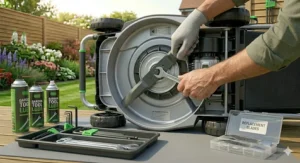
Maintenance and Care Guide
Electric lawn mowers require minimal maintenance compared to petrol alternatives, but regular attention ensures longevity and consistent performance.
After Every Use
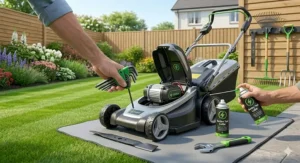
Cleaning: Remove the battery (cordless models) or unplug from mains (corded). Use a stiff brush or wooden scraper to remove grass clippings from the blade housing, cutting deck, and collection box. Never hose down electrical components.
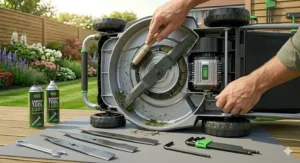
Blade inspection: Check for damage or excessive dulling. Grass should be cut cleanly, not torn (which appears as brown, ragged edges). Sharp blades promote healthy lawns and reduce motor strain.
Collection box: Empty and rinse the grass collection box, allowing it to dry completely before storage. This prevents mould and unpleasant odours.
Monthly Maintenance
Blade sharpening: Every 4-6 weeks during peak growing season, sharpen the blade using a file or rotary tool. Maintain the original angle (typically 30-45 degrees). Balanced, sharp blades cut efficiently and reduce vibration.
Cable inspection (corded models): Check the power cable for fraying, cuts, or exposed wires. Replace damaged cables immediately—electrical safety is paramount.
Battery terminals (cordless models): Wipe battery contacts and mower terminals with a dry cloth to ensure proper electrical connection.
Seasonal Care
Spring preparation: After winter storage, fully charge batteries, inspect all moving parts, and test operation before the first cut.
Autumn cleanup: Before winter storage, thoroughly clean the mower, sharpen blades, and apply light machine oil to prevent rust. Store in a dry, frost-free location. Remove batteries and store separately.
Blade replacement: Replace blades annually, or when damage/excessive wear becomes apparent. Replacement blades cost £10-£25 and dramatically improve cutting performance.
Price Range and Value Analysis
Understanding pricing structures helps identify genuine value versus marketing hype. Electric lawn mowers span budget, mid-range, and premium categories, each with distinct characteristics.
| Price Band | Cost Range (£) | Typical Features | Best For |
|---|---|---|---|
| Budget | £70-£110 | Corded, 1200-1400W, basic features | Small gardens, occasional use |
| Mid-Range | £110-£180 | Corded 1500-1700W or entry cordless | Regular use, medium gardens |
| Premium Corded | £180-£250 | Advanced features, quiet operation | Demanding users, larger properties |
| Premium Cordless | £250-£400+ | High-voltage batteries, professional performance | Maximum convenience, extensive gardens |
Cost of Ownership Analysis
Corded electric mowers: Minimal running costs (10-20p per hour in electricity). Primary expense is eventual blade replacement (£10-£25 annually).
Cordless electric mowers: Electricity costs remain negligible (5-10p per charge). Battery replacement represents the significant long-term expense—expect £50-£150 every 3-5 years. However, spreading this across hundreds of mowing sessions makes the per-use cost reasonable.
Comparison with petrol: Petrol mowers consume £5-£10 of fuel hourly, plus annual maintenance (oil changes, spark plugs, air filters) totalling £50-£100. Over five years, a seemingly affordable £300 petrol mower actually costs £500-£800 more to operate than a £250 cordless electric equivalent.
Frequently Asked Questions
❓ How long do electric lawn mower batteries last on a single charge?
❓ Can electric lawn mowers handle long, overgrown grass?
❓ Are corded electric mowers safe to use in wet conditions?
❓ How much quieter are electric mowers compared to petrol models?
❓ Do electric mowers require special maintenance compared to petrol mowers?
Conclusion: Making Your Electric Mower Decision
The electric lawn mower market in 2026 offers British gardeners unprecedented choice, combining environmental responsibility with genuine performance advantages. Whether you prioritise the unlimited runtime of corded models, the liberating freedom of cordless battery power, or the whisper-quiet operation of premium machines, there’s an option perfectly suited to your needs.
For most suburban UK gardens (100-400m²), the sweet spot lies with either premium corded models like the Bosch AdvancedRotak 650 for those comfortable with cable management, or mid-range cordless options like the Greenworks 40V for those valuing complete mobility. Budget-conscious gardeners will find excellent value in the LawnMaster 1400W or Flymo Hover Vac 250, whilst those with challenging terrain should seriously consider the Flymo EasiGlide 360 hover mower.
The environmental case remains compelling: zero emissions during operation, dramatically reduced noise pollution, and minimal maintenance requirements. As Britain pursues ambitious net-zero targets, electrifying garden maintenance represents one small step each household can take. And unlike many environmental choices requiring sacrifice, electric mowers often provide superior user experience—instant starts, effortless operation, and neighbour-friendly noise levels.
Your lawn deserves equipment that delivers reliable performance without compromise. By choosing an electric lawn mower suited to your garden’s specific characteristics—size, terrain, grass type—you’re investing in years of efficient, environmentally-conscious lawn care. The petrol era is definitively ending; electric represents the present and future of British gardening.
✨ Ready to Transform Your Lawn Care Routine?
🔍 These carefully selected electric lawn mowers deliver the perfect combination of performance, efficiency, and environmental responsibility. Check current pricing and availability on Amazon.co.uk by clicking any highlighted product name. Your neighbours will thank you for the quiet operation, and your wallet will appreciate the minimal running costs!
Recommended for You
- 7 Best Lawn Mower UK 2026: Expert Reviews & Top Picks
- 7 Best EV Charger for Dual Parking UK 2026
- 7 Best Smart EV Chargers UK 2026: Save £600/Year Guide
Disclaimer: This article contains affiliate links. If you purchase products through these links, we may earn a small commission at no additional cost to you. Prices shown are approximate and may vary.
✨ Found this helpful? Share it with your mates! 💬🤗
