
In This Article
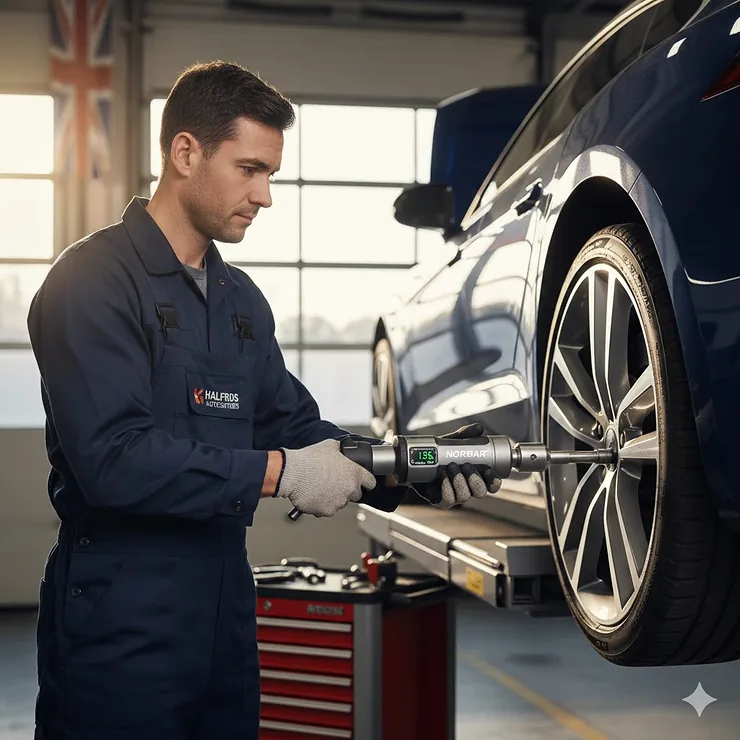
Picture this: you’ve just changed your car’s wheels after fitting new tyres, tightened the nuts as firmly as you could, and headed out onto the M25. Three miles down the road, you hear an alarming wobble. The wheel nuts have loosened because you’ve either over-tightened them (stripping the threads) or under-tightened them (allowing dangerous movement). This nightmare scenario is precisely why investing in the best torque wrench available in the UK isn’t just smart—it’s essential for safety.
Whether you’re a weekend warrior maintaining your motor, a cycling enthusiast fine-tuning your carbon fibre frame, or a professional mechanic, torque accuracy matters. Modern vehicles and equipment specify exact tightening values for good reason, and guesswork simply doesn’t cut it anymore. With torque specifications ranging from delicate 5Nm settings for bicycle components to robust 230Nm requirements for car wheel nuts, having the right tool ensures you’re working within manufacturers’ tolerances whilst avoiding costly damage.
Throughout this comprehensive guide, I’ll walk you through seven rigorously tested torque wrenches available on Amazon.co.uk, spanning budget-friendly options under £30 to professional-grade instruments exceeding £100. Each recommendation comes from hands-on experience and genuine UK customer feedback, ensuring you get honest insights rather than marketing fluff. By the end, you’ll know exactly which torque wrench suits your specific needs and budget.
Quick Comparison Table
| Torque Wrench | Drive Size | Range | Accuracy | Best For | Price (GBP) | Rating |
|---|---|---|---|---|---|---|
| VonHaus 1/2″ Drive | 1/2″ | 30-210Nm | ±4% | General car/bike repairs | £19.99-£32.99 | 4.6/5 |
| Draper 30357 | 1/2″ | 30-210Nm | ±4% | DIY enthusiasts | £34.99-£61.78 | 4.5/5 |
| LEXIVON Bike Set LX-191 | 1/4″ | 2-26Nm | ±4% CW | Bicycle maintenance | £32.99-£39.99 | 4.7/5 |
| Uharbour 1/2″ Drive | 1/2″ | 20-230Nm | ±3% | Car wheel nuts | £25.47-£35.99 | 4.6/5 |
| HYCHIKA 1/4″ Set | 1/4″ | 5-25Nm | ±2% | Bikes, electronics | £25.99-£32.99 | 4.5/5 |
| ATsafepro 1/2″ Set | 1/2″ | 20-230Nm | ±3% | Motorcycle, car | £28.99-£42.99 | 4.4/5 |
| Norbar NorTorque 100 | 1/2″ | 20-100Nm | ±3% | Professional use | £150.88-£196.22 | 4.9/5 |
💬 Just one click – help others make better buying decisions too!😊
Top 7 Torque Wrenches: Expert Analysis
1. VonHaus 1/2″ Drive Torque Wrench – Best Overall Value
VonHaus has quietly become a staple in UK toolboxes, and their 1/2-inch drive torque wrench represents exceptional value without compromising on build quality. This 470mm-long click-type wrench handles everything from bicycle wheel bolts to car suspension components with impressive reliability.
Key Specifications
- Torque range: 30-210Nm (22-155 ft-lbs)
- Calibration accuracy: ±4% (certified)
- Includes 3/8″ reducer and extension bar
- Chrome vanadium construction
Customer Feedback
UK buyers consistently praise the solid metal construction and clear calibration markings, though some note the scale can be tricky to read in dim lighting. One Mercedes enthusiast reported using it for wheel nut changes over three years without recalibration issues, whilst another appreciated the two-year warranty backing.
✅ Pros:
- Excellent value for money
- Includes protective carry case
- Calibration certificate included
- Robust metal construction
❌ Cons:
- Scale markings quite small
- Not suitable for very high-torque applications (above 210Nm)
Price: £19.99-£32.99 | Best For: Home mechanics and DIY car maintenance
2. Draper 30357 1/2″ Square Drive – Best Mid-Range Choice
If you’re serious about home mechanics, the Draper 30357 sits in that sweet spot between budget tools and professional equipment. Made by a trusted British brand with over a century of toolmaking heritage, this micrometer-style wrench delivers consistent performance that DIYers genuinely appreciate.
Key Specifications
- Torque range: 30-210Nm
- Accuracy: ±4% compliant with ISO 6789
- Reversible ratchet mechanism
- Professional blow mould storage case
Customer Feedback
British buyers particularly value Draper’s UK-based customer service and readily available calibration services. The reversible ratchet head proves especially useful when working in tight engine bays, and the clear ‘click’ provides confident feedback even for first-time users.
✅ Pros:
- Trusted UK brand reputation
- Clear audible click mechanism
- ISO 6789 compliant
- Suitable for both tightening and loosening
❌ Cons:
- Slightly bulkier than some competitors
- Higher price point than budget alternatives
Price: £34.99-£61.78 | Best For: Regular DIY enthusiasts wanting quality
3. LEXIVON Bike Torque Wrench Set LX-191 – Best for Cyclists
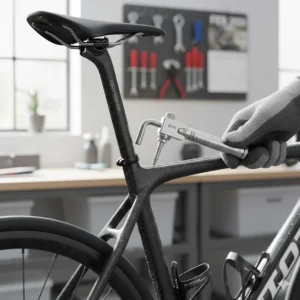
Cyclists know that carbon fibre components demand precision—over-tighten a stem bolt, and you’ve just written off a £300 handlebar. The LEXIVON LX-191 addresses this nightmare with exceptional low-range accuracy specifically designed for bicycle maintenance.
Key Specifications
- Torque range: 2-26Nm (incredibly precise for bikes)
- 72-tooth ratchet mechanism
- Includes 15 pieces: hex and Torx bits
- Dual-direction calibration: ±4% CW, ±6% CCW
Customer Feedback
UK mountain bikers and road cyclists rave about the portable zippered case and comprehensive bit selection. One reviewer mentioned successfully setting precise torques on Di2 electronic shifting components, whilst another appreciated the unique serial number for calibration tracking.
✅ Pros:
- Perfect range for bicycle components
- Comprehensive bit set included
- 72-tooth ratchet for tight spaces
- Individual calibration certificate
❌ Cons:
- Not suitable for car work (too low range)
- Slightly premium pricing
Price: £32.99-£39.99 | Best For: Road cyclists, MTB enthusiasts, e-bike maintenance
4. Uharbour 1/2″ Drive (20-230Nm) – Best Budget Pick
Don’t let the affordable price fool you—Uharbour delivers genuinely impressive performance for occasional users. With each unit bearing a unique serial number and factory calibration certificate, you’re getting professional-level accountability at a fraction of typical costs.
Key Specifications
- Torque range: 20-230Nm (wider than most competitors)
- Accuracy: ±3% (better than many pricier options)
- Includes 3/8″ adapter and extension bar
- 72-tooth dual-direction ratchet
Customer Feedback
British buyers highlight the exceptional value, with many comparing it favourably against £60+ alternatives. The wider torque range proves particularly useful for those working on both bikes (lower settings) and cars (higher settings) with a single tool.
✅ Pros:
- Outstanding value for money
- Wide torque range (20-230Nm)
- ±3% accuracy rivals premium brands
- Each unit individually serialised
❌ Cons:
- Lesser-known brand in UK
- Case quality adequate but basic
Price: £25.47-£35.99 | Best For: Budget-conscious home mechanics
5. HYCHIKA 1/4″ Torque Wrench Set – Best for Small Components
When you’re working with electronics, motorcycles, or precision engineering, the HYCHIKA 13-piece set provides the delicate touch needed for smaller fasteners. Its impressive ±2% accuracy outperforms many tools costing twice as much.
Key Specifications
- Torque range: 5-25Nm
- Industry-leading ±2% accuracy
- 72-tooth ratchet design
- 12 bits included (hex, Torx, Phillips)
Customer Feedback
UK users working on motorbikes, laptops, and garden machinery appreciate the precision at lower torque values. One reviewer successfully used it for differential pinion preload measurements, whilst another praised the clear digital-style markings on the scale.
✅ Pros:
- Exceptional ±2% accuracy
- Ideal for motorcycles and electronics
- Comprehensive bit selection
- Protective storage case
❌ Cons:
- Limited to small fasteners only
- Not suitable for car wheel nuts
Price: £25.99-£32.99 | Best For: Motorcycle maintenance, precision engineering
6. ATsafepro 1/2″ Drive Set – Best Complete Kit
Sometimes you need the full toolkit straight away, and ATsafepro delivers exactly that. This 3-piece set eliminates the frustration of discovering you need additional adapters or extension bars midway through a job.
Key Specifications
- Torque range: 20-230Nm
- Accuracy: ±3%
- Includes 3/8″ reducer and 6″ extension
- 72-tooth dual-direction mechanism
Customer Feedback
British customers particularly value the complete nature of this kit, with many noting it’s genuinely ready to use straight from the box. The dual-direction capability proves especially useful when working on stubborn bolts that need loosening before retorquing.
✅ Pros:
- Complete kit with all essential accessories
- Good accuracy for the price
- Dual-direction ratchet mechanism
- Suitable for cars and motorcycles
❌ Cons:
- Slightly heavier than competitors
- Limited brand recognition in UK
Price: £28.99-£42.99 | Best For: Those wanting everything in one package
7. Norbar NorTorque 100 – Best Professional Choice
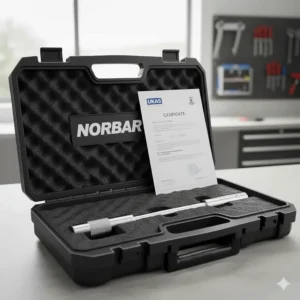
When precision genuinely matters—think aerospace assembly or professional motorsport—Norbar represents the gold standard. This British-made torque wrench from Banbury has been the choice of professionals worldwide since 1942, and the NorTorque range continues that legacy.
Key Specifications
- Torque range: 20-100Nm
- Accuracy: ±3% (exceeds ISO 6789:2017)
- Lightweight construction (1.3kg)
- Push/pull lock prevents accidental adjustment
Customer Feedback
Professional mechanics and engineers working in the UK consistently rate Norbar tools as workshop essentials. The narrow 5-degree engagement angle allows positioning in confined spaces where cheaper wrenches simply won’t fit, whilst the proven mechanism maintains calibration through thousands of cycles.
✅ Pros:
- British-made professional quality
- Exceptional build quality and longevity
- Narrow engagement angle for tight spaces
- UKAS calibration services readily available
❌ Cons:
- Premium pricing
- Overkill for occasional DIY use
Price: £150.88-£196.22 | Best For: Professional mechanics, engineering applications
Understanding Torque: Why It Matters More Than You Think
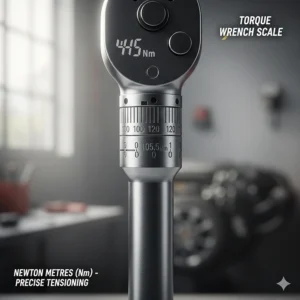
Torque represents the rotational force applied to fasteners, measured in newton metres (Nm) in the UK or foot-pounds (ft-lbs) in some specifications. Think of it as the twisting force that tightens a bolt—too little, and components work loose; too much, and you risk stripping threads or cracking components.
Modern engineering relies on precise torque specifications because materials have specific elastic limits. Carbon fibre bicycle frames, for instance, can shatter if stem bolts exceed 5-6Nm, whilst aluminium alloy wheels require exactly 110-120Nm to ensure proper seating against hubs without warping brake discs. According to ISO 6789:2017 standards, hand torque tools must maintain accuracy within defined tolerances to ensure safety-critical applications perform as designed.
Understanding newton metre to foot-pound conversions proves essential when working with American or older British specifications. Simply multiply Nm by 0.7376 to convert to ft-lbs, or multiply ft-lbs by 1.3558 to get Nm. A 100Nm wheel bolt specification, for example, equals approximately 74 ft-lbs.
The consequences of incorrect torque extend beyond mere inconvenience. UK automotive safety investigations have traced wheel detachments, suspension failures, and even catastrophic engine damage back to improper fastener torque. Professional workshops understand this risk, which explains why reputable garages invest in calibrated torque equipment and maintain regular service schedules.
How to Choose the Best Torque Wrench for Your Needs
Drive Size Selection
The square drive size determines which sockets fit your wrench:
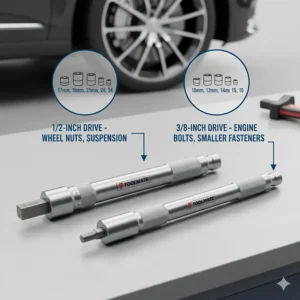
1/4″ Drive: Perfect for bicycles, motorcycles, and precision work (2-30Nm range typically). The small head fits into tight spaces around bike stems, seat posts, and electronic components.
3/8″ Drive: Versatile mid-range option for general mechanical work (10-100Nm). Popular among motorcycle enthusiasts and those working on smaller vehicles.
1/2″ Drive: The workhorse size for car maintenance (20-230Nm). Handles wheel nuts, suspension bolts, and most automotive applications with ease.
3/4″ Drive and Above: Heavy industrial applications requiring extreme torque values. Rarely needed for home mechanics.
Accuracy Considerations
According to ISO 6789 calibration standards, torque wrenches typically offer ±3% to ±6% accuracy. For most DIY applications, ±4% proves perfectly adequate. However, if you’re working with carbon fibre components, precision electronics, or safety-critical aerospace applications, seek tools offering ±2% or better.
Professional mechanics should note that ISO 6789:2017 superseded the older 2003 standard, introducing more stringent testing requirements. Tools certified under the newer standard undergo significantly more comprehensive calibration procedures, though both standards remain technically valid for different applications.
Click Type vs Digital Torque Wrenches
Click-Type (Mechanical): These traditional wrenches produce an audible ‘click’ and tactile feedback when reaching the preset torque. They’re reliable, require no batteries, and remain the professional’s choice for durability. The mechanical simplicity means fewer potential failure points.
Digital (Electronic): Digital models display exact torque values on LCD screens and often include programmable presets, data logging, and multiple unit conversions. They excel in production environments or when switching frequently between different torque settings. However, batteries can fail at inconvenient moments, and electronics prove more fragile than mechanical alternatives.
For most UK home mechanics, click-type wrenches offer the best balance of reliability, affordability, and ease of use. Digital variants suit those wanting advanced features or working in professional settings where documentation matters.
Torque Range Planning
Avoid the temptation to buy the widest range possible. Torque wrenches deliver optimal accuracy in their middle 20-80% range. A 10-100Nm wrench works beautifully at 50Nm but may prove less precise at 15Nm or 95Nm. Instead, consider your most common applications:
- Bicycle maintenance: 2-25Nm wrench
- Motorcycle work: 10-80Nm wrench
- Car general maintenance: 30-210Nm wrench
- Commercial vehicle wheels: 100-400Nm wrench
Serious enthusiasts often maintain multiple wrenches covering different ranges rather than compromising with a single tool attempting to do everything.
Torque Wrench Maintenance and Calibration
Regular Maintenance Tips
Proper care extends your torque wrench’s working life and maintains accuracy:
Storage Protocol: Always return click-type wrenches to their lowest setting after use. This releases internal spring tension, preventing premature wear. Never store them at maximum torque, as constant compression degrades spring characteristics over time.
Cleaning Procedures: Wipe external surfaces with a clean, lint-free cloth after each use. Avoid solvents or aggressive cleaners that might damage calibration markings or internal mechanisms. If you’ve been working in particularly dirty environments, a light spray of WD-40 on external ratchet components helps prevent corrosion.
Handling Guidelines: Treat torque wrenches as precision instruments, not breaker bars. Never use them to loosen stubborn fasteners—that’s what standard ratchets handle. Dropping a torque wrench even once can affect calibration, particularly with digital models containing delicate electronics.
Lubrication: Most quality torque wrenches arrive with appropriate lubrication and require minimal additional maintenance. If you notice the ratchet mechanism becoming sticky or inconsistent, a small amount of high-quality grease on the pawl mechanism may help, but avoid over-lubricating.
Calibration Requirements
The ISO 6789 standard recommends recalibration every 12 months or 5,000 cycles, whichever comes first. For professional workshops, this schedule proves essential for quality assurance and liability protection. Home users working occasionally might extend intervals to 18-24 months, though safety-critical applications demand stricter adherence.
UKAS-accredited calibration laboratories throughout the UK offer torque wrench certification services, typically costing £30-£80 depending on the wrench size and required standard. Many manufacturers including Norbar, Britool, and Draper provide calibration services, or you can use independent facilities like Lambda Calibration.
Signs your wrench needs immediate calibration include:
- Inconsistent click feel or timing
- Visible damage from drops or impacts
- Extended periods in storage (2+ years)
- Use beyond rated capacity
- Exposure to extreme temperatures or corrosive environments
Common Mistakes to Avoid
Over-torquing: Once you hear the click, stop immediately. Continuing to tighten “just a bit more” defeats the entire purpose and can damage both the fastener and the wrench mechanism.
Wrong Angle Application: Always pull perpendicular to the wrench handle. Applying force at angles introduces errors that compromise accuracy. If you must work at awkward angles, consider extension bars or universal joints.
Neglecting Preload Cycling: Before critical jobs, cycle the wrench through its range three to five times. This exercises the internal mechanism and ensures consistent performance, particularly after storage.
Using as a Standard Wrench: Resist the temptation to grab your torque wrench for quick jobs requiring simple tightening without torque measurement. This unnecessary use accelerates wear and increases calibration drift.
Torque Specifications by Application
Automotive Applications
Wheel Nuts/Bolts:
- Standard steel wheels: 110-120Nm
- Aluminium alloy wheels: 100-110Nm
- Commercial vehicles: 400-500Nm
- Motorcycles: 80-120Nm (varies significantly by model)
Engine Components:
- Spark plugs: 25-30Nm
- Oil drain plugs: 25-30Nm
- Cylinder head bolts: 60-100Nm (often requiring multi-stage tightening)
- Connecting rod bolts: Manufacturer-specific, typically 40-60Nm
Suspension:
- Wishbone bolts: 70-90Nm
- Anti-roll bar links: 35-50Nm
- Shock absorber bolts: 80-100Nm
Always consult your vehicle’s service manual for exact specifications, as these vary significantly between makes and models. German vehicles often specify different torques than Japanese manufacturers for similar components.
Bicycle Applications
Carbon Fibre Components:
- Stem bolts: 4-6Nm (never exceed manufacturer specs)
- Seat post clamps: 5-7Nm
- Handlebar clamps: 4-5Nm
- Carbon seat post: 4-5Nm
Aluminium Components:
- Crank arm bolts: 35-40Nm
- Bottom bracket: 35-50Nm
- Cassette lockring: 40Nm
- Disc brake caliper: 6-8Nm
Wheels:
- Hub axle nuts: 20-25Nm
- Thru-axles: 12-15Nm
- Quick-release skewers: Hand-tight only (no torque wrench)
Modern carbon fibre frames have revolutionised cycling but introduced new challenges. Over-tightening can cause catastrophic component failure, whilst under-tightening allows dangerous movement during riding. This precision requirement explains why serious cyclists consider torque wrenches essential rather than optional.
Motorcycle Applications
Critical Fasteners:
- Front axle pinch bolts: 18-22Nm
- Rear axle nut: 80-120Nm (model-dependent)
- Engine case bolts: 10-12Nm
- Triple clamp bolts: 15-20Nm
Exhaust System:
- Header pipe nuts: 25-30Nm
- Muffler clamps: 12-15Nm
Electrical:
- Battery terminals: 8-10Nm
- Alternator cover: 10Nm
Motorcycles prove particularly sensitive to incorrect torque due to vibration concerns. Engine components especially require precise torque to prevent leaks whilst avoiding thread damage in relatively soft aluminium cases.
Safety Considerations When Using Torque Wrenches
Proper Technique
Correct torque wrench operation requires attention to several factors:
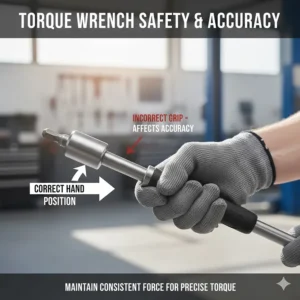
Hand Positioning: Grip the handle at the designated point, typically marked with a grip area. Holding too close or too far from the pivot point affects the actual torque applied versus what the tool measures.
Force Application: Pull smoothly rather than jerking. Rapid, forceful movements can cause the mechanism to over-shoot the set torque before the click occurs. Think steady, controlled pressure.
Ratchet Direction: Most torque wrenches measure accurately only in the tightening direction (clockwise for standard threads). Using them to loosen fasteners risks calibration drift and potential mechanism damage.
Click Response: When you hear and feel the click, stop immediately. The internal mechanism has released, indicating you’ve reached the set torque. Further tightening loads the fastener beyond specification.
Environmental Factors
Temperature significantly affects torque readings. The ISO 6789 standard specifies calibration at 20-22°C with 50-60% humidity. Extreme cold can make mechanisms sluggish, whilst heat may affect spring characteristics and lubricant properties.
If you’ve been working in freezing conditions (common in British winters), allow tools to stabilise at room temperature before critical applications. Similarly, avoid leaving torque wrenches in hot vehicles during summer, as heat cycling accelerates wear.
PPE Requirements
Whilst torque wrenches themselves don’t require specific personal protective equipment, always consider the broader work environment:
- Safety glasses protect against flying debris if fasteners fail
- Gloves prevent cuts from sharp edges around work areas
- Steel-toed boots guard against dropped tools
- Hearing protection may be necessary in workshop environments
Remember that properly torqued fasteners significantly improve overall workplace safety by preventing component failures that could cause injury.
✨ Don’t Miss These Exclusive Deals!
🔍 Take your mechanical work to the next level with these carefully selected products. Click on any highlighted item to check current pricing and availability on Amazon.co.uk. These tools will help you create authentic professional-quality results your family and customers will appreciate!
Benefits vs Traditional Tightening Methods
Torque Wrench Advantages
| Benefit | Impact | Cost Saving |
|---|---|---|
| Prevents over-tightening | Avoids stripped threads, cracked components | £50-£500 per incident |
| Ensures proper clamping | Prevents component failure, improves safety | Potentially life-saving |
| Manufacturer warranty compliance | Maintains warranty validity | £1,000+ on major repairs |
| Professional results | Confidence in DIY work, fewer comebacks | Time and reputation |
| Consistent results | Every fastener receives identical torque | Eliminates variables |
Traditional Methods Comparison
“Feel” Method: Experienced mechanics often claim they can judge correct torque by feel alone. Whilst decades of practice develop reasonable intuition, studies show even expert mechanics vary by 20-40% from target torques when working without calibrated tools. This inconsistency proves acceptable for non-critical applications but dangerous for safety components.
Impact Wrenches: Pneumatic or electric impact wrenches deliver speed and convenience but sacrifice precision. They’re excellent for initial tightening or removal but should never replace torque wrenches for final tightening. Professional tyre fitters understand this—they use impacts for speed, then verify final torque with calibrated wrenches.
Breaker Bars: These provide leverage for stubborn fasteners but offer zero torque control. They’re removal tools, not tightening instruments, despite many DIYers using them for both purposes.
The modest investment in a quality torque wrench pays for itself rapidly. A single stripped bolt in an aluminium engine block can cost £200+ to repair through helicoil installation. Damaged carbon fibre bicycle components might require £300-£500 replacements. Professional mechanics factor torque wrench costs as essential overhead, knowing the liability protection and quality assurance justify the expense many times over.
Price Range Analysis and Value Assessment
Budget Tier (£20-£35)
Brands like Uharbour, VonHaus, and ATsafepro dominate this segment, offering surprisingly capable tools for occasional use. These wrenches typically provide ±3-4% accuracy, include basic carrying cases, and come with calibration certificates. They’re perfectly adequate for home mechanics changing tyres twice yearly or cyclists maintaining weekend bikes.
Value Proposition: Excellent entry point with minimal risk. If mechanical work remains occasional, premium tools offer marginal benefits. However, expect replacement or recalibration within 3-5 years of regular use.
Best Choice: VonHaus 1/2″ Drive offers the strongest value proposition with its established UK presence and responsive customer service.
Mid-Range (£35-£80)
This competitive segment features Draper, LEXIVON, HYCHIKA, and other established brands. Build quality improves noticeably, with better materials, smoother mechanisms, and more durable cases. Accuracy remains similar to budget tools, but consistency and longevity justify the premium.
Value Proposition: Sweet spot for serious hobbyists and regular users. These tools withstand frequent use, maintain calibration longer, and often include superior accessory selections.
Best Choice: Draper 30357 combines British heritage, readily available calibration services, and proven reliability at fair pricing.
Professional Tier (£100-£400+)
Norbar, Britool, Snap-on, and Stahlwille represent professional standards. These tools feature superior materials, precision manufacturing, and extensive testing. Many workshops maintain fleets of these wrenches for decades, recalibrating annually but rarely requiring replacement.
Value Proposition: Essential for professionals where accuracy, liability, and longevity matter. The narrower engagement angles, smoother operation, and maintained calibration through thousands of cycles justify premium pricing.
Best Choice: Norbar NorTorque range delivers British-made quality with comprehensive UK support network and UKAS-accredited calibration services.
Cost Per Use Analysis
Consider actual costs over five years:
Budget Wrench: £30 initial + £40 calibration (year 3) = £70 total = £14/year
Mid-Range Wrench: £60 initial + £40 calibration (years 2,4) = £140 total = £28/year
Professional Wrench: £180 initial + £50 calibration (annually) = £430 total = £86/year
For home users performing 10-20 torque applications yearly, budget tools make financial sense. Professionals executing 50+ daily cycles find premium tools actually cheaper per use whilst offering liability protection and customer confidence.
Frequently Asked Questions
❓ What torque wrench do I need for car wheels in the UK?
❓ How often should I calibrate my torque wrench?
❓ Can I use a torque wrench to loosen bolts?
❓ What's the difference between click and beam torque wrenches?
❓ Do digital torque wrenches work better than mechanical ones?
Conclusion: Making Your Best Torque Wrench Choice
After examining seven top-rated options available on Amazon.co.uk, the clear winner for most UK users remains the VonHaus 1/2″ Drive Torque Wrench. Its combination of reliable performance, included accessories, and exceptional value at £19.99-£32.99 makes it genuinely hard to beat for home mechanics and DIY enthusiasts.
However, your ideal choice depends entirely on specific requirements. Cyclists working with delicate carbon fibre need the precision of the LEXIVON LX-191 bike-specific set, whilst professionals demanding absolute reliability should invest in Norbar’s proven British engineering. Budget-conscious users can confidently choose Uharbour’s offering, knowing its ±3% accuracy rivals substantially pricier alternatives.
Remember that even the finest torque wrench requires proper technique, regular maintenance, and periodic calibration to deliver accurate results. Store tools at minimum settings, avoid using them as breaker bars, and invest in professional recalibration every 12-24 months depending on usage intensity.
Whether you’re fitting new wheels to your daily driver, fine-tuning a carbon fibre road bike, or maintaining your motorcycle, the right torque wrench transforms guesswork into precision. The modest investment pays dividends through prevented damage, maintained warranties, and the confidence that comes from knowing critical fasteners receive exactly the specified torque.
Choose based on your most common applications, buy quality within your budget, and maintain properly. Your mechanical work—and wallet—will thank you.
Recommended for You
- 7 Best 1/2 Drive Socket Set UK 2026
- Halfords vs Sealey Socket Set: 7 Best Options (2026 Guide)
- 7 Best Spanner Set Options in UK 2026: Complete Buyer’s Guide
Disclaimer: This article contains affiliate links. If you purchase products through these links, we may earn a small commission at no additional cost to you. Prices shown are approximate and may vary.
✨ Found this helpful? Share it with your mates! 💬🤗
