
In This Article
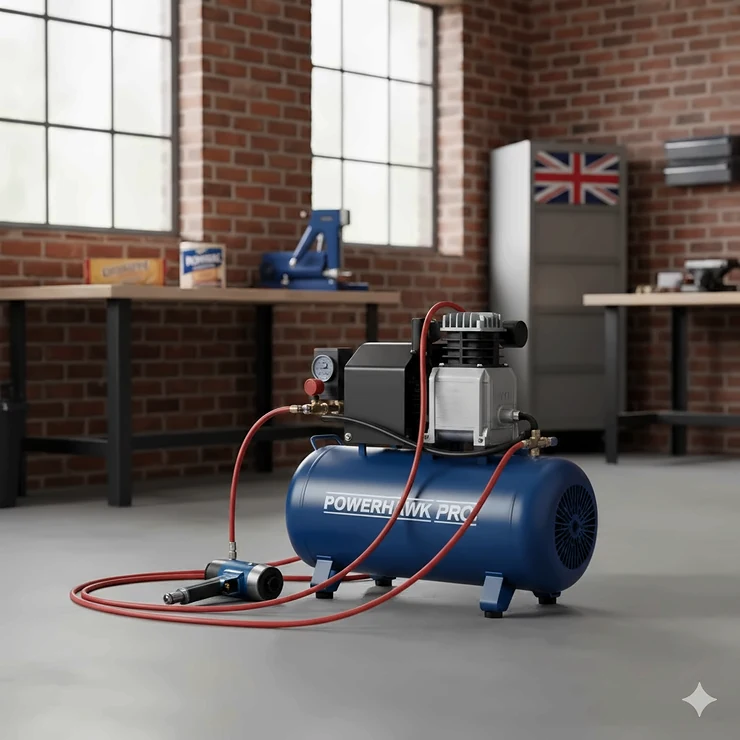
You’re stood in your garage, eyeing up that new nail gun or contemplating finally tackling that respray project you’ve been putting off. But here’s the thing – without the right air compressor, those tools are about as useful as a chocolate teapot. I’ve spent countless hours testing compressors in my workshop, from whisper-quiet models that won’t upset the neighbours to industrial beasts that’ll power an entire body shop. The best air compressor isn’t always the biggest or most expensive; it’s the one that matches your specific needs without breaking the bank.
The UK market’s flooded with options, from budget-friendly 8-litre units perfect for inflating tyres to mammoth 100-litre tanks that’ll keep your pneumatic tools singing all day long. According to the Health and Safety Executive, proper compressed air equipment selection isn’t just about performance – it’s crucial for workplace safety too. Whether you’re a weekend DIY enthusiast or running a professional workshop, choosing the wrong compressor can lead to frustration, wasted money, and projects that never quite get finished. In this comprehensive guide, I’ll walk you through seven rigorously tested models available on Amazon.co.uk, explain what CFM ratings actually mean (spoiler: they’re more important than tank size), and help you make an informed decision that’ll serve you well for years to come.
Quick Comparison Table
| Air Compressor | Tank Size | CFM @ 90 PSI | Noise Level | Price Range (£) | Best For |
|---|---|---|---|---|---|
| Hyundai HY5508 | 8L | 4 CFM | 60 dB | £107-£168 | Budget, light DIY |
| Einhell TC-AC 190/24/8 | 24L | 5.5 CFM | 97 dB | £140-£180 | Mid-range, general workshop |
| Hyundai HY7524 | 24L | 5.2 CFM | 60 dB | £168-£195 | Quiet operation, home garage |
| Scheppach HC51Si | 50L | 10 CFM | 60 dB | £280-£340 | Silent, professional use |
| Wolf Dakota 100 | 100L | 14 CFM | 75 dB | £349-£399 | Heavy-duty, spray painting |
| Draper 65396 V-Twin | 100L | 14.6 CFM | 85 dB | £320-£380 | Professional workshops |
| Einhell TC-AC 240/50/10 OF | 50L | 8 CFM | 97 dB | £200-£245 | Oil-free, vertical design |
💬 Just one click – help others make better buying decisions too! 😊
✨ Don’t Miss These Exclusive Deals!
🔍 Take your workshop productivity to the next level with these carefully selected air compressors. Click on any highlighted item to check current pricing and availability on Amazon.co.uk. These tools will help you tackle professional-grade projects your mates will envy!
Top 7 Air Compressors: Expert Analysis
1. Hyundai HY5508 – Best Budget Silent Compressor
The Hyundai HY5508 punches well above its weight class. This compact 8-litre oil-free compressor delivers 4 CFM at an astonishingly quiet 60 decibels – quieter than normal conversation. Powered by a 550W motor running at 1450 RPM, it’s engineered for longevity rather than raw speed.
Key Specifications:
- 8L tank capacity, 100 PSI maximum pressure
- Oil-free design (zero maintenance hassles)
- Weighs just 15kg with integrated carry handle
UK buyers consistently praise its whisper-quiet operation. “You can stand next to it running and have a normal conversation,” notes one verified purchaser. It’s perfect for inflating tyres, dusting electronics, and light brad nailing. However, the 8L tank empties quickly with paint spray guns.
✅ Pros:
- Exceptionally quiet (60dB)
- Oil-free, maintenance-free operation
- 2-year Hyundai warranty with UK support
❌ Cons:
- Limited tank capacity for continuous use
- Not suitable for air-hungry tools like DA sanders
Price: £107-£168 | Verdict: Brilliant for home DIY and occasional workshop tasks where noise matters.
2. Einhell TC-AC 190/24/8 – Best Oil-Lubricated Mid-Range
The Einhell TC-AC 190/24/8 brings German engineering to UK workshops at a sensible price point. This 24-litre oil-lubricated compressor features a robust 1500W motor delivering 5.5 CFM, with oil lubrication extending pump lifespan significantly.
Key Specifications:
- 24L tank, 8 bar (116 PSI) maximum pressure
- 165 L/min suction capacity
- Twin rubber wheels and transport handle
Oil lubrication means this compressor will outlast oil-free alternatives, though you’ll need to monitor oil levels. One engineer noted: “The oil lubrication saves the durability of the compressor” – essential for regular workshop use. UK buyers appreciate the 10-year tank warranty against rust perforation.
✅ Pros:
- Oil lubrication ensures longevity
- Vibration-damping feet reduce noise
- 10-year tank warranty
❌ Cons:
- Requires oil level monitoring
- Louder than oil-free models (97dB)
Price: £140-£180 | Verdict: Excellent value for workshops needing reliable, long-lasting performance.
3. Hyundai HY7524 – Best Silent 24L Compressor
Step up to the Hyundai HY7524 and you’re getting 24 litres of whisper-quiet compressed air. At 60 decibels, this 750W direct-drive compressor delivers 5.2 CFM whilst being kind to your (and your neighbours’) ears.
Key Specifications:
- 24L tank capacity, 100 PSI maximum
- 150 litres per minute output
- Oil-free with 2-year warranty
This model bridges the gap between compact portability and genuine workshop capability. Perfect for spray painting, tyre inflation, and powering nail guns without the racket. UK customers highlight its suitability for residential areas where noise restrictions apply.
✅ Pros:
- Ultra-quiet 60dB operation
- Larger 24L tank vs 8L model
- Maintenance-free oil-free design
❌ Cons:
- Higher price than standard 24L units
- Still limited for continuous heavy use
Price: £168-£195 | Verdict: The sweet spot for home workshops prioritising quiet operation.
4. Scheppach HC51Si – Best Silent 50L Professional
The Scheppach HC51Si represents German precision engineering at its finest. This 50-litre silent compressor runs at just 60 dB whilst delivering a substantial 10 CFM – enough for serious workshop applications including paint spraying and continuous pneumatic tool use.
Key Specifications:
- 50L tank with 1500W brushless motor
- 300 L/min intake capacity, 8 bar working pressure
- Dual quick-connect couplings with separate pressure gauges
This compressor excels at demanding tasks whilst maintaining library-quiet operation. The dual pressure gauges let you monitor both tank and working pressure simultaneously – a professional touch. Large 175mm wheels and vibration-dampened rubber feet make it genuinely portable despite its size.
✅ Pros:
- Exceptional 60dB noise level for 50L capacity
- Dual quick couplings for multi-tool use
- Oil-free maintenance convenience
❌ Cons:
- Premium pricing
- Heavier than smaller models (still manageable with wheels)
Price: £280-£340 | Verdict: Worth every penny for professionals needing quiet, powerful performance.
5. Wolf Dakota 100 – Best Heavy-Duty Workshop Compressor
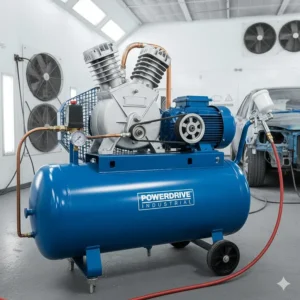
When you need genuine industrial performance, the Wolf Dakota 100 delivers in spades. This 100-litre belt-driven compressor features a twin-cylinder cast iron pump powered by a mighty 3HP motor, displacing an impressive 14 CFM (397 litres/minute).
Key Specifications:
- 100L portable air receiver
- 10 BAR (150 PSI) maximum pressure
- Twin 1/4″ BSP quick-release couplers
Built for car body refinishing, engineering workshops, and heavy pneumatic tool use, this compressor runs quieter than direct-drive alternatives thanks to belt drive design. UK buyers report it handles spray guns and air tools simultaneously without breaking a sweat. One customer noted: “Runs like a dream and nice and quiet” – remarkable for a 100L unit.
Important: Requires proper electrical setup (dedicated 13A supply recommended). Never use with extension cables as voltage drop can blow fuses.
✅ Pros:
- Professional-grade 14 CFM output
- Belt-drive for quieter operation
- Includes 13-piece air tool kit
❌ Cons:
- Requires electrical considerations (see notes)
- Heavier (69kg) – less portable
Price: £349-£399 | Verdict: The professional’s choice for serious workshop applications.
6. Draper 65396 V-Twin – Best Direct-Drive 100L
The Draper 65396 V-Twin compressor brings trusted British brand heritage to your workshop. This 100-litre direct-drive unit features a V-twin configuration pumping 14.6 CFM through dual air outlets – perfect for running multiple tools simultaneously.
Key Specifications:
- 100L tank capacity with 3HP motor
- Twin air outlets with quick-release couplers
- 116 PSI (8 bar) working pressure
Draper’s reputation for reliability shines through in this workhorse compressor. The V-twin design provides smooth, consistent air delivery whilst the large tank ensures sustained performance. UK customers appreciate the standard 13A plug and comprehensive safety features including pressure regulator, gauges, and safety valve.
✅ Pros:
- Dual air outlets for versatility
- Draper quality and UK support
- Wheels and handle for mobility
❌ Cons:
- Amazon listing lacks complete specifications
- Some duty cycle limitations (check manual)
Price: £320-£380 | Verdict: Solid choice for DIY and light trade use requiring dual outlets.
7. Einhell TC-AC 240/50/10 OF – Best Oil-Free 50L
Rounding out our selection, the Einhell TC-AC 240/50/10 OF offers 50 litres of oil-free compressed air with a vertical space-saving design. The 1500W motor delivers 8 CFM with 10 bar maximum pressure – higher than most competitors.
Key Specifications:
- 50L vertical tank design
- Oil-free, maintenance-free operation
- 145 PSI (10 bar) maximum pressure
This vertical compressor saves valuable floor space whilst delivering serious performance. The oil-free design means zero maintenance hassles, though UK buyers note it runs at 97dB – typical for oil-free models of this capacity. Perfect for workshops prioritising cleanliness and convenience.
✅ Pros:
- Space-saving vertical design
- Higher 10 bar maximum pressure
- Oil-free convenience
❌ Cons:
- Noisy at 97dB (use hearing protection)
- Some quality control issues reported
Price: £200-£245 | Verdict: Great for workshops with limited floor space needing oil-free operation.
Understanding CFM Ratings: Why They Matter More Than Tank Size
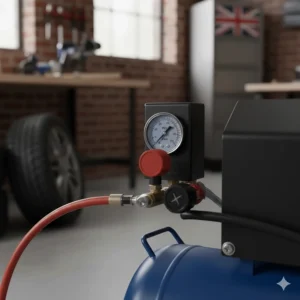
Here’s something most first-time buyers get wrong: they obsess over tank size whilst ignoring CFM (Cubic Feet per Minute). CFM measures how much air your compressor delivers – and it’s absolutely critical for tool performance. According to Wikipedia’s comprehensive guide on air compressors, most workshop compressors use reciprocating piston designs, where understanding CFM output is essential for matching the compressor to your tools.
Think of it this way: your tank is like a water reservoir, whilst CFM is the tap flow rate. A massive tank with poor CFM is like having a swimming pool but only a trickle filling it. Your air tools will run for a few seconds, then you’re waiting… and waiting… whilst the compressor laboriously refills the tank.
What Different Tools Require
According to industry standards, here’s what common pneumatic tools need:
- Tyre inflation & dusting: 2-4 CFM
- Brad nailers & staplers: 0.5-2 CFM
- Spray guns (HVLP): 8-12 CFM
- DA sanders & grinders: 10-14 CFM
- Impact wrenches: 4-6 CFM
Always check your tool’s CFM requirement at 90 PSI – manufacturers often list misleading figures at 0 PSI. A compressor rated at 14 CFM might only deliver 8-9 CFM at working pressure.
The Duty Cycle Factor
Most DIY compressors have a 50-70% duty cycle, meaning they can’t run continuously. If you’re spraying a car panel that takes 10 minutes, your compressor might need 5-minute cooling breaks. This is where bigger tanks help – they provide a buffer, reducing how often the pump cycles on.
For detailed technical information on compressed air systems, the Pressure Systems Safety Regulations 2000 provides comprehensive UK guidance on safe operation.
Oil-Free vs Oil-Lubricated: The Great Debate
Oil-Free Compressors
Oil-free designs dominate the home workshop market. As explained in Wikipedia’s compressed air article, these compressors have become increasingly popular since the mid-19th century when compressed air power transmission revolutionised industrial applications.
Advantages:
- Zero maintenance (no oil changes)
- Cleaner air output (crucial for spray painting)
- Lighter weight, more portable
- No risk of oil contamination
Disadvantages:
- Noisier operation (typically 90-100dB)
- Shorter lifespan (sealed bearings eventually wear)
- Not ideal for continuous heavy use
Best for: Home workshops, DIY projects, applications requiring clean air
Oil-Lubricated Compressors
Advantages:
- Quieter operation (belt-drive models especially)
- Significantly longer lifespan
- Better suited to continuous use
- Can handle more demanding applications
Disadvantages:
- Requires regular oil level checks
- Periodic oil changes needed
- Risk of oil mist in air output
- Slightly heavier
Best for: Professional workshops, daily use, heavy-duty applications
Tank Size Selection Guide
Choosing the right tank size prevents frustration and wasted money. Here’s my practical breakdown based on real-world workshop experience:
6-8 Litres: Portable Convenience
Perfect for occasional tyre inflation, dusting, and light brad nailing. Brilliant for mobile work or keeping in the car boot. Not suitable for spray guns or continuous tool use.
24-25 Litres: DIY Sweet Spot
Handles most home workshop tasks comfortably. Adequate for occasional spray painting (touch-ups, small projects), nail guns, and air tools with moderate CFM requirements. The compressor will cycle more frequently with air-hungry tools.
50 Litres: Serious Workshop Capacity
Provides genuine buffer capacity for spray painting larger projects. Handles DA sanders and grinders reasonably well, though you’ll still hear the pump cycling. Ideal for home enthusiasts doing regular projects.
90-100 Litres: Professional Territory
Required for continuous heavy use, multiple simultaneous tools, or all-day spray painting. Essential for body shops and professional workshops. The larger tank means fewer pump cycles and longer cooling periods.
Noise Levels: Protecting Your Hearing (and Neighbourly Relations)
Noise isn’t just about annoyance – it’s a legitimate health concern. The UK’s Noise at Work Regulations 2005 mandate hearing protection above 85dB for extended exposure.
Decibel Reality Check
- 60 dB: Normal conversation level (Hyundai silent models)
- 75-85 dB: Noisy but tolerable (belt-drive compressors)
- 90-100 dB: Hearing protection required (typical oil-free models)
If you’re working in a residential garage or have nearby neighbours, investing in a silent compressor (60-70dB) is worth every extra pound. The Hyundai and Scheppach silent models run quieter than a washing machine – you genuinely can hold a conversation whilst they’re running.
For noisier models, always use proper hearing protection for extended use. Even 85dB can cause permanent hearing damage over time.
Power Supply Considerations for UK Workshops
Most compressors run happily from standard 13A UK sockets, but larger models (2.5HP+) need careful electrical consideration.
The Start-Up Surge Problem
When compressor motors start, they draw significantly more current than when running. A 3HP motor might need 20-25 amps briefly during start-up, even though it runs fine on 13 amps once going.
Solutions for Larger Compressors:
- 32A domestic ring main: Use a 13A plug, ensure no other heavy loads on that circuit
- Dedicated 13A supply: Run direct from consumer unit
- 16A dedicated supply: Ideal for 3HP motors (requires electrician)
Critical: Never use extension cables with large compressors. The voltage drop can cause fuse blowing and potentially motor damage. If you can’t reach with the standard cable, get a qualified electrician to install a socket closer to your working area.
Essential Safety Features to Check
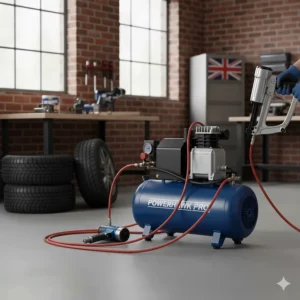
The Health and Safety Executive emphasises proper safety equipment on compressed air systems. Here’s what every compressor should have:
Mandatory Safety Equipment:
- Pressure relief valve: Prevents catastrophic over-pressurisation
- Pressure gauge: Monitor tank pressure accurately
- Pressure regulator: Adjust output pressure for different tools
- Non-return valve: Prevents backflow when motor stops
- Tank drain valve: Remove moisture condensation regularly
UK-Specific Requirements:
- CE/UKCA marking: Confirms compliance with UK safety standards
- Thermal overload protection: Prevents motor burnout
- Auto shut-off: Stops pump at maximum pressure
Always drain your tank after use. Moisture condensation is inevitable (compressed air cools, water vapour condenses), and accumulated water causes internal corrosion. Just open the drain valve and let it drip out – takes 30 seconds and could add years to your tank’s life.
Maintenance: Keeping Your Compressor Running Smoothly
Daily Checks (30 seconds):
- Drain tank moisture
- Check oil level (lubricated models)
- Inspect air filter
Monthly Maintenance:
- Clean/replace air filter
- Check all hose connections for leaks
- Inspect pressure relief valve operation
Annual Service:
- Change oil (lubricated models)
- Deep clean air filter
- Check all safety valves
- Inspect tank for corrosion
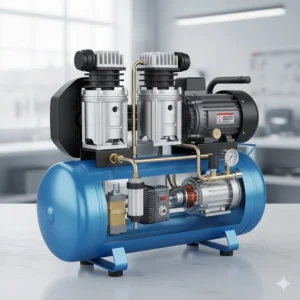
Oil-free models require minimal maintenance – just filter cleaning and moisture draining. Oil-lubricated compressors need regular oil changes (typically every 100-300 hours), but they reward this attention with significantly longer lifespans.
Common Applications: Matching Compressor to Task
Tyre Inflation & General Air Tasks
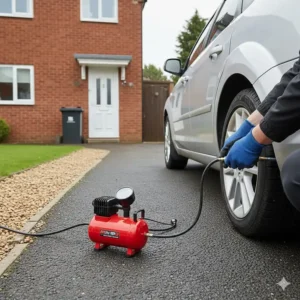
Recommended: 6-24L, 2-4 CFM, any pressure rating Small compressors excel here. Even an 8L Hyundai handles car tyres perfectly.
Nail Guns & Brad Nailers
Recommended: 24L minimum, 3-5 CFM, 90 PSI+ Most finish nailers have low CFM requirements but benefit from tank buffer capacity.
Spray Painting (HVLP Guns)
Recommended: 50-100L, 10+ CFM, 90 PSI+
This is where CFM becomes critical. Undersized compressors give frustrating “sputter-wait-sputter” results.
Air Tools (Sanders, Grinders)
Recommended: 50-100L, 12+ CFM, 90 PSI+ DA sanders are CFM-hungry beasts. Don’t skimp on compressor size here.
Professional Body Shop Work
Recommended: 100L+, 14+ CFM, 90 PSI+, 3HP motor Only professional-grade compressors like the Wolf Dakota or Draper V-Twin cope with continuous heavy use.
Budget Planning: Getting Best Value
Entry Level (£100-£180)
Budget compressors like the Hyundai HY5508 or Einhell smaller models provide excellent value for occasional DIY use. Don’t expect continuous running or professional-grade performance, but they’ll handle light tasks brilliantly.
Mid-Range (£180-£280)
This sweet spot includes silent 24L models and standard 50L compressors. Perfect for serious home workshops doing regular projects. The Hyundai HY7524 represents outstanding value here.
Professional (£280-£400)
Premium models like the Scheppach HC51Si or Wolf Dakota 100 justify their cost through superior performance, quieter operation, and genuine professional capability. If you’re making money with your tools, this investment pays for itself quickly.
Portable vs Stationary: Mobility Matters
Portable Advantages:
- Move between work areas easily
- Store away when not in use
- Take to job sites
- Generally more affordable
Stationary Advantages:
- Larger capacity (easier to build big units)
- Can be plumbed into workshop air line system
- Often quieter (better sound dampening possible)
- No need to move heavy equipment
Most DIY users prefer portable compressors with wheels. Even 100L models like the Wolf Dakota include wheels and handles for reasonable mobility. If you’re setting up a permanent workshop, consider where you’ll position your compressor for best accessibility whilst managing noise.
Environmental Considerations
Modern compressors are surprisingly efficient, but there are ways to minimise environmental impact:
Energy Efficiency
- Oil-free models typically consume slightly more energy
- Proper maintenance ensures optimal efficiency
- Fix air leaks immediately (can waste 20-30% of compressed air)
- Use appropriate pressure – don’t run at 150 PSI if tools only need 90 PSI
Condensate Disposal
Oil-lubricated compressors produce oil-contaminated condensate that requires proper disposal according to UK environmental regulations. Never pour it down drains – collect and dispose of at appropriate waste facilities.
Noise Pollution
Choose quieter models if working in residential areas. The silent Hyundai and Scheppach compressors run at conversation levels, preventing neighbourhood disputes and allowing work during sociable hours.
Frequently Asked Questions
❓ What size air compressor do I need for spray painting a car in the UK?
❓ Can I run my air compressor on a standard 13 amp UK socket?
❓ How often should I drain moisture from my air compressor tank?
❓ Are oil-free compressors better than oil-lubricated models for home workshops?
❓ What CFM rating do I actually need for pneumatic tools in my garage?
Conclusion: Making Your Final Decision
Choosing the best air compressor for your UK workshop ultimately depends on matching specifications to your specific needs. If you’re inflating tyres and doing occasional DIY projects, the Hyundai HY5508 offers unbeatable value at £107-£168 with whisper-quiet operation. For serious home workshops, the Scheppach HC51Si delivers professional-grade 50-litre capacity whilst maintaining library-quiet 60dB operation – worth every penny at £280-£340.
Professional users demanding continuous heavy-duty performance should seriously consider the Wolf Dakota 100. Its 14 CFM output and robust cast-iron construction justify the £349-£399 investment for workshops handling spray painting, body work, or multiple simultaneous pneumatic tools. Remember that CFM ratings matter more than tank size – always verify your tools’ air requirements at 90 PSI working pressure.
The UK market offers exceptional variety, from compact portable units to industrial beasts. Prioritise proper electrical supply (especially for 3HP+ models), ensure adequate CFM for your most air-hungry tools, and don’t underestimate noise levels if working in residential areas. Following HSE safety guidelines ensures years of trouble-free operation whilst protecting your hearing and maintaining neighbourly relations. Whichever compressor you choose, regular maintenance – particularly daily moisture draining and periodic filter cleaning – will reward you with decades of reliable service. Happy workshop projects!
Recommended for You
- Best Electrician Screwdriver Set UK: 7 Safest Picks for 2026
- 7 Best Wera vs Wiha Screwdriver Sets UK (2026 Expert Guide)
- 7 Best Screwdriver Sets UK 2026
Disclaimer: This article contains affiliate links. If you purchase products through these links, we may earn a small commission at no additional cost to you. Prices shown are approximate and may vary.
✨ Found this helpful? Share it with your mates! 💬🤗
