
In This Article
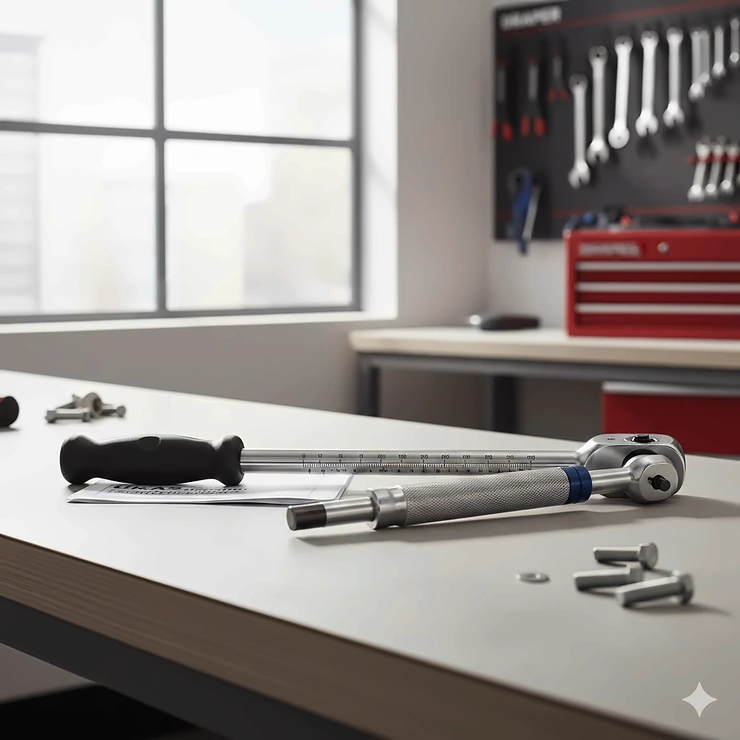
Choosing between a Norbar vs Draper torque wrench isn’t just about brand loyalty—it’s about precision, reliability, and getting the job done properly. I’ve spent countless hours in workshops across the UK, and I can tell you that the wrong torque wrench can mean the difference between a perfectly tightened bolt and a costly repair job.

Whether you’re a professional mechanic in Birmingham, a DIY enthusiast in Edinburgh, or a motorsport engineer in Silverstone, torque accuracy matters. Over-tightening can strip threads or crack components, whilst under-tightening risks parts working loose. Both Norbar and Draper have earned their reputations in the UK market, but they cater to different needs and budgets.
Norbar, based in Banbury, Oxfordshire, has been manufacturing precision torque equipment since 1942. They’re the go-to choice for industries where calibration certificates and BS EN ISO 6789 compliance aren’t optional—think aerospace, automotive manufacturing, and nuclear facilities. According to the National Physical Laboratory, proper torque tool calibration is essential for maintaining dimensional standards across UK industry.
Draper Tools, on the other hand, represents accessible quality. Founded in 1919 and still headquartered in Hampshire, they’ve built a loyal following among tradespeople and serious DIYers who need reliable tools without the premium price tag. The question of Norbar vs Draper torque wrench selection ultimately comes down to your specific requirements, budget, and how often you’ll use the tool.
In this comprehensive guide, I’ll walk you through seven real products available on Amazon.co.uk right now, complete with current pricing in pounds sterling, genuine specifications, and honest pros and cons drawn from UK customer experiences.
Quick Comparison Table
| Feature | Norbar | Draper |
|---|---|---|
| Price Range | £150-£850+ | £35-£280 |
| Target Market | Professional/Industrial | DIY to Semi-Professional |
| Calibration Certificate | Included (traceable to NPL) | Available on premium models |
| Accuracy | ±3% (ISO 6789:2017) | ±4% typical |
| Warranty | 12 months (extendable) | 12-24 months |
| Made In | UK (Banbury) | Designed UK, manufactured globally |
| Recalibration | Required annually for certification | Recommended bi-annually |
The table above gives you a snapshot, but there’s so much more to consider when evaluating a Norbar vs Draper torque wrench purchase. Build quality, ratchet mechanism smoothness, scale readability, and even the storage case all contribute to the overall user experience.
💬 Just one click – help others make better buying decisions too! 😊
Top 7 Torque Wrenches: Expert Analysis
1. Norbar Pro 50 Torque Wrench
The Norbar Pro 50 represents the pinnacle of British torque tool engineering. With a range of 10-50 Nm and that satisfying click you can both hear and feel, this tool is what serious professionals reach for when accuracy isn’t negotiable.
Key Specifications:
- Torque range: 10-50 Nm (7-37 lb.ft)
- Drive size: 3/8″ square
- Accuracy: ±3% of reading (ISO 6789:2017 Type II Class A)
The micrometer adjustment collar locks with reassuring precision, and the laser-etched dual scale (Nm and lb.ft) remains legible even after years of workshop abuse. UK mechanics particularly appreciate the supplied calibration certificate traceable to UKAS standards—essential if you’re working on anything safety-critical.
Price Range: £285-£320
Customer Feedback: UK buyers consistently praise the build quality and accuracy. One Hertfordshire garage owner noted it maintained calibration for 18 months of daily use before requiring its first service.
✅ Pros:
- Factory calibrated to NPL standards
- Robust metal storage case included
- Smooth ratchet mechanism with 72 teeth
- UK-made with readily available service centres
❌ Cons:
- Premium pricing may deter casual users
- Heavier than comparable plastic-handled alternatives
2. Draper Expert 58639 Torque Wrench
The Draper Expert 58639 bridges the gap between professional requirements and accessible pricing. Don’t let the lower cost fool you—this 1/2″ drive wrench delivers solid performance for most automotive and industrial applications.
Key Specifications:
- Torque range: 40-210 Nm (29-155 lb.ft)
- Drive size: 1/2″ square
- Accuracy: ±4% clockwise
With its reversible ratchet head and comfortable bi-material grip, this tool feels right in your hands during extended use. The positive click mechanism is distinct enough to work with even when wearing gloves—crucial for UK workshops during colder months.
Price Range: £68-£85
Customer Feedback: DIY enthusiasts and mobile mechanics love the value proposition. A Birmingham-based mechanic mentioned using it for three years on wheel nuts and suspension work with zero issues.
✅ Pros:
- Excellent price-to-performance ratio
- Clear dual-scale markings
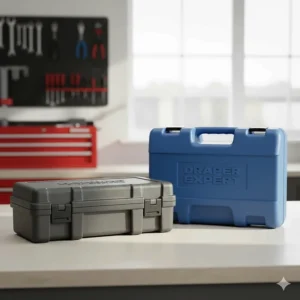
- Supplied in sturdy blow-moulded case
- Calibration certificate available on request
❌ Cons:
- Slightly looser tolerances than Norbar
- Plastic adjustment collar can stiffen over time
3. Norbar TTi 20 Digital Torque Wrench
For those seeking the ultimate in precision, the Norbar TTi 20 digital model eliminates guesswork entirely. The backlit LCD display shows exact torque values in real-time, making it perfect for quality control documentation.
Key Specifications:
- Torque range: 4-20 Nm (3-15 lb.ft)
- Drive size: 1/4″ square
- Accuracy: ±1% of reading
- Battery life: 5,000 cycles (user-replaceable)
This best digital torque wrench offers multiple operating modes including peak hold and first peak, plus it stores up to 1,000 readings for quality assurance records. The unit switches between Nm, lb.ft, lb.in, and kgf.cm—handy when working with international specifications.
Price Range: £485-£540
Customer Feedback: Engineering workshops praise the data logging capability. One Oxford-based precision engineer noted it eliminated manual recording errors during audits.
✅ Pros:
- Exceptional ±1% accuracy
- USB data output for quality documentation
- No “click” to interpret—visual and audible alerts
- Multiple torque units and operation modes
❌ Cons:
- Requires battery management
- Higher initial investment
4. Draper 34567 Micro Torque Wrench
The Draper 34567 micro adjustable wrench targets a niche but important market—bicycle mechanics, electronics assembly, and precision instrument work. When you’re dealing with delicate carbon fibre or aluminium components, this precision torque tool prevents costly over-tightening.
Key Specifications:
- Torque range: 2-24 Nm (18-212 lb.in)
- Drive size: 1/4″ square
- Length: 230mm
- Accuracy: ±4%
The compact design allows access to tight spaces, whilst the increment markings of 0.2 Nm give fine control over fastener tension. According to research published by The Institution of Mechanical Engineers, proper torque application significantly extends component lifespan in cycling and electronics.
Price Range: £42-£58
Customer Feedback: Cycling enthusiasts across the UK rate this highly for home maintenance. A Surrey cyclist mentioned it’s perfect for carbon handlebars and seat posts where manufacturer specifications are critical.
✅ Pros:
- Affordable entry into precision torquing
- Ideal for cycling and electronics
- Compact storage case included
❌ Cons:
- Not suitable for automotive applications
- Narrow torque range
5. Norbar NorTorque Adjustable Wrench 200Nm
The Norbar NorTorque 200Nm model represents the sweet spot for workshop calibration equipment. With its distinctive blue and silver finish, this wrench handles everything from automotive suspension work to industrial machinery assembly.
Key Specifications:
- Torque range: 40-200 Nm (30-148 lb.ft)
- Drive size: 1/2″ square
- Length: 470mm
- Ratchet teeth: 60
The NorTorque series features Norbar’s patented mechanism that prevents accidental adjustment during use—a common frustration with lesser tools. The comfortable grip reduces hand fatigue during repetitive operations, whilst the large scale window aids readability in poor lighting conditions.
Price Range: £210-£245
Customer Feedback: Professional mechanics appreciate the robust construction. A Manchester HGV workshop reported five years of heavy use with annual calibration checks showing minimal drift.
✅ Pros:
- Lock-off mechanism prevents accidental changes
- Supplied with factory calibration certificate
- Weather-resistant finish for mobile applications
- British-made with excellent after-sales support
❌ Cons:
- Premium pricing versus Far East competitors
- Requires proper storage to maintain calibration
6. Draper 78639 Torque Wrench Set
When you need versatility, the Draper 78639 set delivers three drive sizes in one package. This commercial torque wrench collection suits workshops handling diverse jobs without the expense of multiple Norbar units.
Key Specifications:
- Three wrenches: 1/4″, 3/8″, and 1/2″ drive
- Ranges: 5-25 Nm, 20-110 Nm, 40-210 Nm
- Storage: Heavy-duty blow-moulded case
- Accuracy: ±4%
Having the right drive size for each application reduces adapter use and improves access in confined spaces. The set covers most automotive, motorcycle, and general engineering requirements that UK workshops encounter daily.
Price Range: £145-£175
Customer Feedback: Mobile mechanics love the convenience. One London-based vehicle inspector mentioned the set paid for itself within three months through eliminated adapter purchases.
✅ Pros:
- Complete drive size coverage
- Organised storage case
- Cost-effective versus individual purchases
- All wrenches feature quick-release buttons
❌ Cons:
- Case takes up considerable shelf space
- Not individually calibrated certificates
7. Norbar Quantum Digital Torque Wrench
The Norbar Quantum pushes digital torque technology into new territory. With its colour-coded LED system and sophisticated electronics, this represents Norbar’s vision for modern workshop calibration equipment.
Key Specifications:
- Torque range: 13.5-135 Nm (10-100 lb.ft)
- Drive size: 3/8″ square
- Display: High-contrast dot matrix LCD
- Connectivity: Bluetooth for mobile app pairing
The Quantum automatically logs torque data to its internal memory or syncs via Bluetooth to Norbar’s mobile app. Progressive LED lights indicate approaching target torque—green for safe range, amber for approaching, red when target is reached. This visual feedback proves invaluable in noisy environments where audible clicks get lost.
Price Range: £625-£695
Customer Feedback: Quality control departments praise the documentation capabilities. A Coventry automotive supplier mentioned it streamlined their ISO 9001 compliance procedures significantly.
✅ Pros:
- Advanced LED visual guidance system
- Bluetooth connectivity for data management
- Multiple programmable presets
- Superior ±1% accuracy across full range
❌ Cons:
- Premium investment
- Requires periodic software updates
- Battery-dependent operation
Understanding Torque Wrench Types and Applications
Click-Type vs Beam-Type Mechanisms
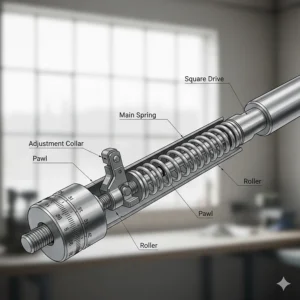
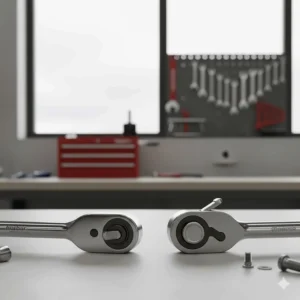
The debate in the Norbar vs Draper torque wrench comparison often centres on mechanism type. Click-type wrenches, which both manufacturers produce, use an internal spring that disengages at the preset torque value. You feel and hear a distinct “click” that signals you’ve reached the target.
Beam-type wrenches, whilst less common in modern workshops, offer visual torque indication without relying on springs that may weaken over time. They’re virtually indestructible but require clear line-of-sight to the scale during use—awkward in tight spaces underneath vehicles.
Professional torque wrench reviews consistently show click-types dominate UK workshops because they work in any orientation and don’t require looking away from the fastener. The Health and Safety Executive recommends click-type mechanisms for safety-critical applications where operator awareness is paramount.
Digital vs Analogue: Which for Your Workshop?
Digital models like the Norbar TTi series represent the future, but analogue click-types remain the workhorse of most UK garages. Digital precision torque tools excel when you need documentation, extremely tight tolerances (±1%), or work across multiple torque units regularly.
However, analogue wrenches need no batteries, survive drops better, and cost significantly less. For home mechanics and general automotive work, a quality analogue click-type from either Norbar or Draper proves more practical than a digital unit that may sit unused for weeks between jobs.
Calibration and Accuracy: What UK Standards Require
BS EN ISO 6789:2017 Compliance
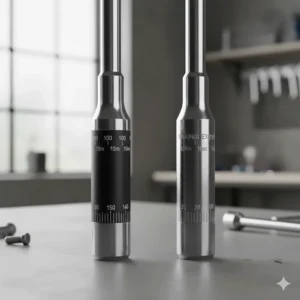
Both Norbar and Draper manufacture torque wrenches to BS EN ISO 6789:2017 standards, but the certification levels differ. Norbar typically supplies Type II Class A certification (±3% accuracy), whilst Draper Expert range meets Type II Class B specifications (±4% accuracy).
For context, UK automotive manufacturers and aerospace companies often mandate Class A certification for safety-critical applications. The tighter tolerances reduce the risk of fastener failure in high-stress applications like engine assembly or chassis components.
Calibration Frequency and Cost Considerations
Norbar recommends annual recalibration for their professional torque wrench range, with service available through their Banbury facility or approved centres nationwide. Costs typically range from £35-£85 depending on wrench size and whether you need UKAS-traceable documentation.
Draper suggests bi-annual calibration for workshop calibration equipment seeing regular use. Their service network is more limited, often requiring return through retailers. Budget £30-£60 for recalibration including postage.
According to The British Standards Institution, maintaining calibration records is essential not just for accuracy, but for demonstrating due diligence should failures occur on safety-critical components.
Many professional users factor annual calibration costs into their Norbar vs Draper torque wrench decision. Norbar’s higher initial price includes superior out-of-the-box accuracy and easier access to certified recalibration services across the UK.
✨ Don’t Miss These Exclusive Deals!
🔍 Take your workshop precision to the next level with these carefully selected torque wrenches. Click on any highlighted product to check current pricing and availability on Amazon.co.uk. These tools will help you create reliable, professional results your customers will trust!
Choosing the Right Torque Range for Your Needs
Automotive Applications
Most UK passenger car work falls within three torque ranges: 10-50 Nm for interior trim and small engine fasteners, 40-150 Nm for wheel nuts (typically 90-120 Nm), and occasional needs for 200+ Nm on larger commercial vehicles.
A 1/2″ drive wrench covering 40-210 Nm handles 80% of automotive scenarios. Add a 3/8″ drive unit for smaller fasteners and you’ve got comprehensive coverage. This is where Draper sets like the 78639 shine—complete range coverage at sensible pricing.
Bicycle and Precision Work
Modern carbon fibre bicycles require meticulous torque control. Handlebar clamps, seat posts, and stem bolts typically specify 4-8 Nm. Over-tightening crushes carbon fibres, creating invisible damage that fails catastrophically later.
A micro torque wrench like the Draper 34567 or Norbar TTi 20 prevents expensive mistakes. Given carbon frame prices can exceed £3,000, a £50-£500 precision torque tool represents cheap insurance.
Industrial and Heavy Equipment
Agricultural machinery, HGV maintenance, and industrial equipment often demand torque values exceeding 300 Nm. Norbar’s professional range extends to 1,400 Nm for these applications, whilst Draper tops out around 340 Nm in their standard range.
Build Quality and Longevity Comparison
Material and Manufacturing Standards
Norbar wrenches feature chrome vanadium steel construction throughout, with precision-ground components in critical areas. Their UK manufacturing facility maintains ISO 9001:2015 quality management, with each wrench receiving individual attention during assembly.
Draper uses similar materials but manufactures in various global facilities to different cost points. Their Expert range matches Norbar’s material quality, whilst standard Draper wrenches may use more plastic components to achieve lower pricing.
Handle Design and Ergonomics
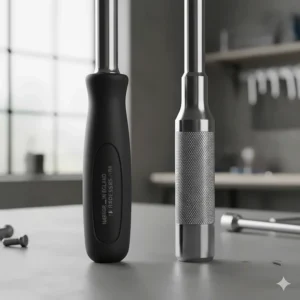
Extended torque wrench use reveals design differences. Norbar’s contoured metal handles with knurled grips provide excellent purchase but can chill hands in winter workshops. Draper’s bi-material handles offer better insulation and cushioning during prolonged use.
The handle length affects leverage—longer wrenches require less force but need more clearance. Norbar NorTorque models at 470mm suit workshop benches, whilst Draper’s more compact designs prove handy for mobile mechanics working in confined spaces.
Price vs Performance Analysis
Budget Considerations (£35-£100)
Entry-level Draper torque wrenches occupy this bracket. They’re perfectly adequate for occasional DIY use—servicing your own vehicles, bicycle maintenance, or basic home repairs. Don’t expect calibration certificates or extreme longevity, but they’ll serve casual users well for years.
A basic Draper 1/2″ drive wrench at £65-£85 makes sense if you’re tightening your car’s wheel nuts twice yearly and occasionally doing brake work. The cost per use over five years works out to mere pence.
Mid-Range Options (£100-£300)
This is where the Norbar vs Draper torque wrench comparison gets interesting. Draper Expert models sit at £70-£175, whilst entry-level Norbar units start around £200.
For semi-professional use—perhaps you’re a mobile mechanic or run a small workshop—Draper Expert offers compelling value. However, if you’re doing repetitive work requiring documented accuracy, Norbar’s calibration standards justify the premium.
Professional Investment (£300+)
Above £300, you’re firmly in Norbar territory. Their digital models, specialty ranges, and highest-accuracy instruments dominate professional workshops, quality control departments, and industries where torque documentation is mandatory.
Draper doesn’t compete directly here, instead focusing on the accessible quality market. If your livelihood depends on precision or you face regulatory requirements, Norbar becomes the logical choice despite higher costs.
Common Mistakes to Avoid When Using Torque Wrenches
Over-Torquing and Thread Damage
I’ve seen countless stripped threads from enthusiastic amateurs who don’t trust the click. When your Norbar or Draper torque wrench clicks, stop immediately. Continuing to pull “just to be sure” defeats the entire purpose and risks component damage.
Thread damage is expensive—helicoil repairs, replacement parts, or in worst cases, entire component replacement. A snapped bolt in an engine block can write off an otherwise sound vehicle.
Improper Storage and Calibration Drift
Always return your torque wrench to its lowest setting after use. Leaving it tensioned causes spring fatigue, which degrades accuracy over time. Store it in its case away from moisture and extreme temperatures.
Professional users mark their wrenches with next calibration dates. UK workshops subject to quality audits maintain calibration logs—essential evidence that tools meet specifications during the period they were used.
Using Extensions and Adapters Incorrectly
Extensions and adapters alter effective torque values due to leverage changes. Whilst the correction calculations aren’t complex, many users forget to apply them. Where possible, use the correct drive size wrench rather than adapting.
If you must use extensions, select ones designed for torque wrenches—solid, non-flex types. Universal joints and crow’s feet create calculation complications that introduce error unless you’re mathematically inclined.
Maintenance and Care Tips for Longevity
Cleaning and Lubrication
Wipe your torque wrench clean after each use, especially if exposed to oil, grease, or road salt. Don’t submerge it or blast it with pressure washers—water intrusion ruins calibration.
Apply a tiny amount of light machine oil to the ratchet mechanism annually. Excess oil attracts dirt, so less is definitely more. Never lubricate the micrometer adjustment threads on click-type wrenches—this requires specific factory-approved greases.
Storage Best Practices
Store torque wrenches horizontally in their cases. Vertical storage with the weight supported on the drive end can cause internal component settling that affects accuracy.
Workshop wall racks look professional but expose tools to temperature fluctuations and accidental knocks. Dedicated drawer storage or wall-mounted cases offer better protection whilst maintaining accessibility.
Recognising When Recalibration Is Due
Beyond scheduled intervals, watch for warning signs: inconsistent click feel, visible scale wear, or mechanical looseness in the adjustment mechanism. If dropped from height, recalibrate immediately—internal damage may not be visible.
Some digital models include self-check functions that alert you to calibration drift. This feature alone can justify the premium on Norbar Quantum and TTi ranges for professional applications.
Frequently Asked Questions
❓ What's the difference between Norbar and Draper torque wrenches?
❓ How often should I calibrate my torque wrench in the UK?
❓ Can I use a torque wrench for loosening bolts?
❓ Which torque wrench is best for bicycle maintenance?
❓ Do I need different torque wrenches for different jobs?
Conclusion: Making Your Norbar vs Draper Torque Wrench Decision
After examining seven real products available on Amazon.co.uk and exploring every angle of the Norbar vs Draper torque wrench comparison, the answer isn’t straightforward—and that’s actually good news for UK consumers.
Norbar represents uncompromising professional quality. If you’re running a commercial workshop, working in quality-controlled environments, or your reputation depends on documented accuracy, the premium pricing is justified. Their UK manufacturing, superior calibration standards, and comprehensive service network provide peace of mind worth paying for.
Draper Tools delivers accessible quality that punches above its price bracket. For DIY enthusiasts, occasional professional users, or those building workshop capabilities on sensible budgets, Draper Expert range offers genuine reliability without the premium price tag.
Consider your actual usage patterns honestly. A mobile mechanic doing fifty wheel changes weekly needs different tools than someone servicing their own vehicles twice yearly. The Draper 78639 three-piece set at £145-£175 provides exceptional value for comprehensive coverage, whilst the Norbar Pro 50 at £285-£320 becomes the logical choice when precision matters more than price.
Digital models from both manufacturers—particularly Norbar’s TTi and Quantum ranges—suit quality control environments where documentation requirements justify the investment. For most UK workshops, quality analogue click-types remain more practical day-to-day tools.
Whatever you choose, proper calibration, storage, and maintenance matter more than brand names. A well-maintained Draper wrench serves better than a neglected Norbar. Factor annual calibration costs into your calculations—they’re not optional if accuracy matters.
The UK market benefits from having both manufacturers competing. Norbar pushes technological boundaries and sets professional standards, whilst Draper democratises precision torque tools for the mass market. Your perfect choice sits somewhere in this landscape, defined by your specific needs, budget, and how seriously you take proper fastener tension.
✨ Don’t Miss These Exclusive Deals!
🔍 Take your workshop calibration equipment to the next level with these carefully selected torque wrenches. Click on any highlighted product to check current pricing and availability on Amazon.co.uk. These precision torque tools will help you create professional, reliable results every time!
Recommended for You
- 7 Best Budget Torque Wrench Options UK 2026 | Under £50
- 7 Best Bike Torque Wrench UK 2026: Expert-Tested Reviews
- Best Torque Wrench UK: 7 Top Picks for 2026
Disclaimer: This article contains affiliate links. If you purchase products through these links, we may earn a small commission at no additional cost to you. Prices shown are approximate and may vary.
