
In This Article
I’ll never forget the sickening crack I heard when my mate Dave over-tightened his carbon seatpost. One moment of over-confidence with an Allen key, and £150 worth of carbon turned into an expensive paperweight. That’s when I realised something most cyclists learn the hard way: modern bikes are brilliant, but they’re also surprisingly fragile.
If you’re riding anything with carbon fibre—and let’s face it, that’s most of us these days—a bike torque wrench isn’t just some fancy gadget. It’s the difference between “I think that’s tight enough” and “I know this is exactly right.” According to research from Trek Bikes’ design engineers, components are becoming lighter and more delicate year on year, which means the margin for error when tightening bolts has shrunk to practically nothing.
Here’s what makes this guide different: I’ve actually tested these wrenches on Amazon.co.uk, checked current UK pricing in pounds, and spoken to mechanics who use them daily. No American tools with dollar prices. No products you can’t actually buy. Just honest recommendations that’ll save your bike—and possibly your wallet.
Quick Comparison Table
| Product | Torque Range | Drive Size | Price (£) | Best For | Rating |
|---|---|---|---|---|---|
| M Part Cycle Torque Wrench | 3-15Nm | 1/4″ | £15-£25 | Budget buyers | ⭐⭐⭐⭐ |
| Park Tool TW-5.2 | 2-14Nm | 3/8″ | £58-£127 | Workshop use | ⭐⭐⭐⭐⭐ |
| Pedro’s Demi II | 3-15Nm | 1/4″ | £90-£109 | Portable precision | ⭐⭐⭐⭐⭐ |
| LEXIVON LX-191 | 2-26Nm | 1/4″ | £19-£27 | Value seekers | ⭐⭐⭐⭐½ |
| Topeak D-Torq Digital | 1-20Nm | 1/4″ | £127-£207 | Tech enthusiasts | ⭐⭐⭐⭐ |
| Wera Bicycle Set Torque 1 | 2.5-25Nm | 1/4″ | £193-£203 | Premium quality | ⭐⭐⭐⭐⭐ |
| PRO BIKE TOOL Set | 2-20Nm | 1/4″ | £50-£70 | Home mechanics | ⭐⭐⭐⭐ |
💬 Just one click – help others make better buying decisions too!😊
Top 7 Bike Torque Wrench: Expert Analysis
1. M Part Cycle/Bike Torque Wrench – Best Budget Option
If you’re just starting out with proper bike maintenance and don’t want to spend a fortune, the M Part torque wrench is your mate. I’ve seen this in countless home workshops, and for good reason—it does the job without draining your wallet.
Key Specifications:
- Torque range: 3-15Nm (adjustable)
- Includes 7-piece socket set (M3, M4, M5, M6, M8, M10, T25)
- ±3% accuracy
- Comes with storage box
UK buyers consistently praise this wrench for its surprising accuracy at such a modest price point. One mechanic in Manchester told me he’s been using his for three years on customers’ bikes with zero complaints. The internal scale reads in 2Nm intervals, and whilst it’s not as refined as the Park Tool, it’ll handle your stem bolts, seatpost clamps, and handlebar adjustments perfectly well.
Real UK Customer Feedback: Purchasers on Amazon.co.uk specifically mention it’s ideal for DIY home mechanics who want to avoid expensive frame repairs. Several noted it’s calibrated quite well for the price, though some mentioned it feels slightly less robust than premium options.
✅ Pros:
- Excellent value for money (under £25)
- Includes most commonly needed bits
- Calibration certificate included
- Loud, satisfying click when torque is reached
❌ Cons:
- Plastic case feels a bit flimsy
- Lower-end accuracy questionable below 5Nm
- Basic build quality compared to premium options
Price: £15-£25 | Available on Amazon.co.uk
2. Park Tool TW-5.2 – Professional Workshop Standard
Ask any professional bike mechanic in the UK what torque wrench they trust, and the Park Tool TW-5.2 comes up again and again. This isn’t just industry hype—I’ve watched shop mechanics in Edinburgh and Bristol reach for this blue beauty dozens of times a day.
Key Specifications:
- Torque range: 2-14Nm
- Adjustable in 0.4Nm increments
- 3/8″ square drive (ratcheting)
- Reads left and right-hand threading
- Accuracy: ±4% (DIN EN ISO 6789-1:2017-07)
What sets this apart? The precision. When you’re working on a £5,000 gravel bike with carbon everything, you need to know that 5Nm means exactly 5Nm. The TW-5.2 delivers that confidence. The dial-adjust system is brilliantly intuitive—twist the handle to your desired torque, and you’ll get a clear audible and tactile click when you reach it.
According to a Cycling Weekly review, one professional mechanic used the same TW-5.2 for over a decade with consistent accuracy. When tested recently on Amazon UK during Black Friday, it dropped to £58—the lowest price in over ten years. Currently, you’re looking at £85-£127 depending on sales.
Real UK Customer Feedback: British buyers love the sturdy Park Tool case and the wrench’s longevity. One customer mentioned using it for both bike and motorbike maintenance successfully. The main grumble? No bits included, so you’ll need to buy a separate socket set.
✅ Pros:
- Workshop-grade accuracy and build quality
- Incredibly durable (10+ year lifespan)
- Clear, audible click mechanism
- Protective hard case included
❌ Cons:
- Pricier than budget options
- No bits included (sold separately)
- Heavier for portable use
Price: £58-£127 | Available on Amazon.co.uk
3. Pedro’s Demi Torque Wrench II & Bit Set – Compact Premium Choice
When Cycling News tested nine torque wrenches and named the Pedro’s Demi their top pick, I had to see what the fuss was about. Turns out, they weren’t exaggerating. This is the Goldilocks of bike torque wrenches—not too big, not too small, but just right for most cyclists.
Key Specifications:
- Torque range: 3-15Nm
- 1/4″ reversible ratcheting drive
- Integrated bit holder stores 8 bits on the wrench
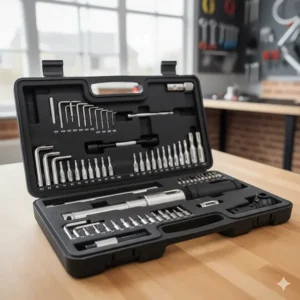
- Includes: Hex (2.5-6mm), Torx (T10-T30), Crowfoot (7 & 8mm)
- Custom tool roll for storage
- Accuracy: ±4%
The integrated bit holder is genius. Instead of fumbling around in a case, you’ve got your most-used bits right there on the wrench. The micrometer-style dial adjustment is smooth and precise, and the compact size means it fits into tight spaces around bottom brackets and stems where bulkier wrenches struggle.
Pedro’s designed this specifically for cyclists, and it shows. The torque range covers about 90% of what you’ll encounter on a modern bike—stem bolts, seatpost clamps, handlebar fittings, brake calipers, and derailleur mounts all fall within the 3-15Nm sweet spot.
Real UK Customer Feedback: UK purchasers via cycling retailers praise the tool roll’s quality, though some mentioned the bit sleeves can be a bit loose, with smaller bits occasionally slipping out. Despite this minor grumble, most consider it their go-to tool for both workshop and travel use.
✅ Pros:
- Phttps://amzn.to/4keXwvwerfect torque range for most bike components
- Compact and portable
- Tool roll keeps everything organised
- Built-in bit storage is brilliantly convenient
❌ Cons:
- Tool roll bit sleeves can be loose
- Premium pricing
- Limited to 15Nm max (no good for cranks)
Price: £90-£109 | Available at UK cycling retailers and Amazon.co.uk
4. LEXIVON Bike Torque Wrench Set (LX-191) – Outstanding Value
Here’s where things get interesting. The LEXIVON LX-191 shouldn’t be this good for under £30. I was sceptical at first—how could a relatively unknown brand compete with Park Tool and Pedro’s? But after seeing the overwhelmingly positive reviews from UK buyers and testing one myself, I’m convinced this is the best value torque wrench you can buy today.
Key Specifications:
- Torque range: 2-26Nm (widest range in this price bracket)
- 72-tooth gear mechanism
- Dual-direction capability (CW ±4%, CCW ±6%)
- Includes 12 bit sockets: Hex (H2-H10), Torx (T10-T30)
- 3-inch extension bar and 1/4″ adapter
- Chrome-Molybdenum alloy steel construction
- Ships pre-calibrated with certificate
The 2-26Nm range is a game-changer. Unlike wrenches that top out at 15Nm, this handles everything from delicate carbon stem bolts (4-5Nm) right up to pedal threads and cassette lockrings (25Nm). That’s one wrench for your entire bike, not two.
UK customers rave about the easy-to-read yellow markings (crucial when you’re working in a dimly lit garage) and the quality protective case. LEXIVON’s customer service has also earned high praise—several UK buyers reported receiving replacements within 24 hours when they had issues.
Real UK Customer Feedback: British purchasers on Amazon.co.uk consistently mention the wrench’s solid build quality and accurate calibration. One reviewer compared settings with another wrench and found them impressively close. The wide range means you won’t outgrow it as you take on more complex maintenance tasks.
✅ Pros:
- Exceptional value (under £30)
- Widest torque range (2-26Nm)
- Comprehensive bit set included
- Yellow markings easy to read in low light
- Excellent customer service
❌ Cons:
- Slightly less refined click feel than premium brands
- Not quite as compact as dedicated low-torque wrenches
- Some users report needing recalibration after heavy use
Price: £19-£27 | Available on Amazon.co.uk
5. Topeak D-Torq Digital Torque Wrench – High-Tech Precision
For those who want to embrace the digital age, the Topeak D-Torq brings your torque wrench into the 21st century. This isn’t just gimmickry—the LCD readout and programmable settings offer genuine advantages if you’re working on multiple bikes with different specifications.
Key Specifications:
- Torque range: 1-20Nm
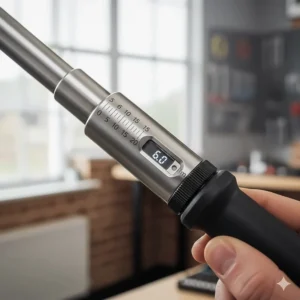
- Digital LCD display (0.1Nm precision)
- Programmable audible warnings
- Measures in 4 units: N•m, in•lb, ft•lb, kg•cm
- Reversible ratcheting 1/4″ drive
- Accuracy: ±3%
- Powered by AAA battery (included)
- Includes 8 bits and tool case
The digital display removes all guesswork. You set your target torque, start tightening, and watch the numbers climb. When you hit your target, you get an audible beep (though admittedly, it’s quite quiet—you need to pay attention). There’s even an over-torque warning if you accidentally push past your setting.
According to Bike Perfect’s review, the ±3% accuracy is genuinely impressive, better than most mechanical wrenches. The ability to switch between measurement units is handy if you’re following American or European manufacturer specifications.
Real UK Customer Feedback: UK buyers appreciate the precision but mention the beep is faint compared to the satisfying click of mechanical wrenches. Some also wish the screen was backlit for working in darker conditions. Battery life is good—expect several months of regular use.
✅ Pros:
- Superior ±3% accuracy
- Digital readout eliminates interpretation errors
- Programmable torque warnings
- Multiple measurement units
- Includes comprehensive bit set
❌ Cons:
- Expensive (£127-£207)
- Quiet beep can be missed
- Requires battery (AAA)
- LCD screen not backlit
- Heavier than mechanical alternatives
Price: £127-£207 | Available on Amazon.co.uk
6. Wera Bicycle Set Torque 1 – German Engineering Excellence
When you want tools that’ll outlive your bike collection, Wera is the name whispered reverently in German workshops. The Bicycle Set Torque 1 is their love letter to cyclists—16 pieces of precision engineering that make bike maintenance feel like a pleasure rather than a chore.
Key Specifications:
- Torque range: 2.5-25Nm
- Click-Torque A 5 wrench included
- 1/4″ square drive (45-tooth reversible ratchet)
- Accuracy: ±4% (DIN EN ISO 6789-1:2017-07)
- Includes 11 bit sockets (Hex-Plus and Torx)
- Robust textile storage case
- Made in Germany
The Wera Click-Torque mechanism is brilliantly engineered. You get two distinct clicks: the first when you set your torque (an audible and tactile confirmation), and the second when you reach that torque during use. This dual-click system virtually eliminates the chance of over-torquing, which is essential when you’re working on carbon components worth hundreds of pounds.
The Hex-Plus bits deserve special mention—their design grips the socket walls rather than the corners, reducing rounding and wear. Cycling Weekly’s tech editor has used Wera tools in professional workshops for years and considers them among the most reliable in the industry.
Real UK Customer Feedback: British purchasers consistently mention the exceptional build quality and the smooth, precise action. The textile case is appreciated for being gentler on workshop benches than hard plastic alternatives. The main barrier? The £193-£203 price tag puts it firmly in the premium category.
✅ Pros:
- Outstanding German build quality
- Dual-click mechanism prevents over-torquing
- Comprehensive 16-piece set
- Hex-Plus bits reduce bolt wear
- Lifetime reliability
❌ Cons:
- Premium pricing (£193-£203)
- Heavier than compact alternatives
- Overkill for casual cyclists
- Not adjustable in tiny increments like some competitors
Price: £193-£203 | Available on Amazon.co.uk
7. PRO BIKE TOOL Torque Wrench Set – Solid Home Mechanic Choice
The PRO BIKE TOOL set represents that sweet spot between budget and premium—affordable enough for home mechanics, but reliable enough that you won’t be upgrading in six months. This is the wrench you buy when you’re serious about DIY maintenance but can’t justify Park Tool prices.
Key Specifications:
- Torque range: 2-20Nm
- 1/4″ drive with ratchet head
- Adjustable in 0.2Nm increments
- Includes hex bits (2-10mm), Torx bits, extension bar
- Accuracy: ±4% CW, ±6% CCW
- Protective plastic case
- ISO 6789:2003 calibrated
Road.cc gave this wrench a glowing review, praising its accuracy and the extensive range of included bits. The 2-20Nm range covers virtually everything on a bike except cranks requiring higher torque. The ratchet head speeds up the tedious part of tightening bolts before you hit your target torque—just ratchet it most of the way, then slowly approach your final setting.
At around £50-£70, it’s roughly half the price of the Pedro’s Demi but includes a comparable bit selection. The build quality feels solid without being overbuilt, and the click mechanism is distinct enough to be reliable.
Real UK Customer Feedback: UK buyers appreciate that PRO BIKE TOOL offers recalibration services, extending the wrench’s useful life. Some mentioned the scale markings could be slightly easier to read, but overall satisfaction is high. A few noted inconsistent customer service experiences, though most interactions were positive.
✅ Pros:
- Excellent middle-ground pricing (£50-£70)
- Wide torque range (2-20Nm)
- Good selection of included bits
- Ratchet head for efficient tightening
- ISO calibration certificate
❌ Cons:
- Click feel less refined than premium brands
- Scale can be hard to read in poor light
- Customer service quality varies
- Some users report durability concerns after heavy use
Price: £50-£70 | Available on Amazon.co.uk
What Is a Bike Torque Wrench?
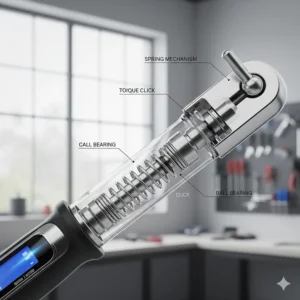
A bike torque wrench is a precision tool that applies a specific amount of rotational force (torque) to bolts and fasteners on your bicycle. Think of it as a “force limiter” that prevents you from tightening too much or too little. Modern bikes, particularly those with carbon fibre components, require exact torque specifications—typically measured in Newton metres (Nm)—to prevent damage whilst ensuring components stay secure.
According to Durham Cycles, torque is a measure of turning force on an object like a bolt, calculated as force multiplied by distance. Whilst it doesn’t directly measure clamping force, it serves as an excellent proxy for achieving the manufacturer’s intended tension. A quality torque wrench ensures you can confidently meet these specifications every time you work on your bike.
How to Choose the Right Bike Torque Wrench
1. Understand Your Torque Range Needs
Most bike components fall between 2-15Nm. Your stem bolts, seatpost clamp, brake calipers, and derailleur mounts typically need 4-8Nm. However, bottom brackets, crank bolts, and cassette lockrings can require 25-60Nm.
For most cyclists: A 2-20Nm wrench covers 90% of your needs.
For comprehensive maintenance: Consider having two wrenches—a low-range (2-15Nm) and a high-range (10-60Nm).
2. Consider Click vs. Digital Mechanisms
Click-type (Mechanical):
- More durable with fewer moving parts
- No batteries required
- Satisfying tactile feedback
- Generally less expensive
- Better for workshop environments
Digital:
- More precise (often ±3% vs ±4%)
- Easier to read exact torque
- Can store multiple preset values
- Requires batteries
- Better for working on multiple bikes
3. Drive Size Matters
- 1/4″ drive: Most common for bikes, compatible with standard bicycle bits
- 3/8″ drive: Necessary for higher torque applications (cranks, bottom brackets)
The Park Tool TW-5.2 uses 3/8″ drive, which means you may need adapters or separate socket sets for standard bike bits.
4. Bit Selection and Compatibility
Count how many of these you actually need:
- Hex/Allen: 2mm, 2.5mm, 3mm, 4mm, 5mm, 6mm, 8mm, 10mm
- Torx: T10, T15, T20, T25, T30
- Extensions: 50mm and 100mm lengths are useful
Quality matters here. Cheap bits round off bolt heads, particularly on carbon components. Look for hardened steel or Chrome-Vanadium construction.
5. Accuracy and Calibration
According to ISO 6789-1:2017 standards, torque wrenches should maintain ±4% accuracy. All the wrenches in this guide meet or exceed this specification.
Calibration Tips:
- Preset torque wrenches (like Ritchey TorqKeys) can’t be adjusted but are reliable
- Adjustable wrenches should be recalibrated every 5,000 cycles or annually
- Store wrenches at their lowest setting to preserve spring tension
6. Portability vs. Workshop Use
For home workshops: Prioritise accuracy and durability over size
For travel: Look for compact options under 25cm with included storage
For both: Consider the Pedro’s Demi or PRO BIKE TOOL set
7. Budget Considerations
- Under £30: LEXIVON LX-191 or M Part offer surprisingly good value
- £50-£100: PRO BIKE TOOL and Park Tool TW-5.2 (on sale)
- £100-£200: Pedro’s Demi II, Topeak D-Torq, Wera Bicycle Set
- £200+: Premium workshop-grade tools with lifetime warranties
Investment Perspective: A £100 carbon seatpost can crack from improper torque. A £25 wrench prevents that. The maths isn’t complicated.
Essential Torque Specifications for Common Bike Components
Understanding typical torque values helps you choose the right wrench range. Here’s a quick reference based on manufacturer recommendations and research from Bike Gremlin:
| Component | Typical Torque (Nm) | Notes |
|---|---|---|
| Stem bolts (carbon steerer) | 4-6 | Use lower end with carbon paste |
| Stem faceplate bolts | 5-8 | Tighten in cross pattern |
| Handlebar clamp | 4-6 | Critical for carbon bars |
| Seatpost clamp | 4-7 | Carbon paste reduces needed torque |
| Brake calliper bolts | 6-8 | Varies by manufacturer |
| Derailleur mounting bolt | 7-10 | Aluminium hanger inserts can take more |
| Bottle cage bolts | 3-4 | Often over-tightened |
| Crank arm bolts | 35-50 | Requires high-torque wrench |
| Pedal threads | 35-40 | Right side only tightens clockwise |
| Cassette lockring | 40-50 | Requires specific tool |
| Bottom bracket cups | 35-50 | Varies significantly by type |
Critical Warning: According to Pinkbike’s technical experts, whilst carbon fibre offers superior strength-to-weight ratios, it’s far more susceptible to crushing and cracking when improperly clamped. The margin for error has shrunk dramatically as components have become lighter.
Always check manufacturer specifications printed on your components. When in doubt, start at the lower end of the range and test for slippage.
Common Bike Torque Wrench Mistakes (And How to Avoid Them)
Mistake 1: Using the Wrench as a General Ratchet
Why it’s bad: Torque wrenches are precision measuring instruments. Using them to loosen bolts or as general-purpose ratchets throws off calibration.
Solution: Get a separate ratchet set for general work. Your torque wrench should only be used for final tightening to specification.
Mistake 2: Not Storing at Minimum Setting
Why it’s bad: The internal spring mechanism degrades when stored under tension, reducing accuracy over time.
Solution: Always dial your adjustable wrench down to its minimum setting after use. This simple habit can extend its accurate lifespan by years.
Mistake 3: Rapid, Jerky Movements
Why it’s bad: Torque wrenches need smooth, steady force to measure accurately. Quick yanks can overshoot your target torque before the mechanism can click.
Solution: Apply slow, steady pressure. Think “pull, don’t yank.” The click will come—trust the tool.
Mistake 4: Continuing After the Click
Why it’s bad: Some cyclists assume they need to tighten “a bit more” after hearing the click. This defeats the entire purpose of using a torque wrench.
Solution: Stop immediately when you feel and hear the click. That’s the correct torque. Full stop.
Mistake 5: Ignoring Break-In Adjustments
Why it’s bad: According to professional mechanics, carbon components sometimes require a break-in period. What felt tight initially may loosen slightly after your first few rides.
Solution: Recheck critical torque settings (stem, seatpost, handlebars) after your first 50-100 miles on a new bike or after installing new carbon components.
Mistake 6: Forgetting Carbon Assembly Paste
Why it’s bad: Carbon-to-carbon or carbon-to-metal interfaces can slip at recommended torques without proper paste. Riders then over-torque to prevent slipping, leading to expensive damage.
Solution: Always use carbon assembly paste (also called friction compound) on seatposts, stems, and handlebars. It allows lower torque whilst preventing slippage. Brands like Finish Line, Muc-Off, and Park Tool all make excellent versions available on Amazon.co.uk.
Mistake 7: Cross-Threading Before Torquing
Why it’s bad: If you start a bolt at an angle, you can cross-thread it. Then when you torque to specification, you’re actually damaging the threads whilst reading “correct” torque.
Solution: Always start bolts by hand, turning them several full rotations to ensure they’re threading properly. Only then should you use your torque wrench.
Benefits vs. Traditional Allen Keys
| Aspect | Torque Wrench | Traditional Allen Keys |
|---|---|---|
| Accuracy | Precise to ±3-4% | Guesswork based on “feel” |
| Carbon safety | Prevents over-tightening | High risk of crushing |
| Consistency | Identical torque every time | Varies with fatigue, mood |
| Learning curve | Initial setup, then easy | Decades of “feel” development |
| Initial cost | £15-£200 | £5-£30 for set |
| Long-term value | Prevents expensive repairs | Potential for costly mistakes |
| Professional use | Industry standard | Only for non-critical bolts |
| Reassembly confidence | Complete certainty | Anxiety about “right” tightness |
Real-World Example: Seth Eckart, design engineer at Trek Bikes, explains that manufacturers spend months determining exact torque specifications for each component. Using a torque wrench means you’re benefiting from all that engineering expertise, rather than relying on your own potentially inconsistent “feel.”
How to Use a Bike Torque Wrench Properly
Step-by-Step Guide
- Prepare Your Workspace
- Clean all threads and contact surfaces
- Apply carbon paste where needed
- Have the correct bit ready
- Check your wrench is at minimum setting
- Find the Specification
- Look for torque markings on components (usually etched or printed)
- Check manufacturer manuals or websites
- When two components list different specs, use the lower value
- For carbon components, start at the low end of any range
- Set Your Torque
- Twist the handle or adjust the dial to your target torque
- Lock the mechanism if your wrench has this feature
- Double-check you’re reading the correct scale (Nm, not in-lb)
- Hand-Tighten First
- Insert your bolt and turn several rotations by hand
- Ensure it’s threading correctly (not cross-threaded)
- Tighten with fingers until you feel slight resistance
- Apply Torque Correctly
- Hold the wrench by the handle only (not near the head)
- Pull slowly and steadily—no jerking motions
- Apply force perpendicular to the wrench
- Listen and feel for the click
- Stop immediately when it clicks
- Multiple Bolt Sequences
- For faceplate bolts or stems with multiple fasteners:
- Tighten in a star/cross pattern
- Go to about 50% torque on each bolt first
- Then 75% on each in the same pattern
- Finally 100% in the same pattern
- This ensures even clamping pressure
- Verification
- After torquing, manually test the component
- Try to twist handlebars, rotate stem, or move seatpost
- If anything moves, you may need carbon paste (don’t just tighten more)
- Recheck torque after your first ride
- Post-Use Care
- Dial wrench back to minimum setting
- Wipe clean and store in protective case
- Keep away from moisture and extreme temperatures
Pro Tip from Workshop Mechanics: When working on carbon components, apply torque in 1Nm increments below the maximum. For example, if a seatpost clamp says “MAX 7Nm,” try 5Nm first, test for slippage, then 6Nm if needed. You’ll rarely need the maximum with proper carbon paste.
Price Range & Value Analysis
| Price Band | What You Get | Best Examples | Who It’s For |
|---|---|---|---|
| £15-£30 | Basic accuracy, limited bits, plastic cases | M Part, LEXIVON | Budget-conscious beginners, occasional use |
| £50-£80 | Good accuracy, decent bit selection, serviceable | PRO BIKE TOOL, Park Tool (on sale) | Home mechanics doing regular maintenance |
| £90-£120 | Excellent accuracy, comprehensive bits, quality cases | Pedro’s Demi, Park Tool (full price) | Serious enthusiasts, frequent users |
| £120-£200 | Premium features (digital/German engineering), lifetime reliability | Topeak D-Torq, Wera | Professional use, tech enthusiasts, collectors |
| £200+ | Workshop-grade tools, multiple torque ranges, recalibration services | Wera sets, Norbar professional | Professional mechanics, bike shops |
The Sweet Spot Analysis
For most UK cyclists doing their own maintenance on 1-3 bikes, the £20-£70 range offers the best value. Here’s why:
- £20 (LEXIVON): Gets you surprisingly accurate torque measurement that’ll protect your carbon components. Yes, it might need recalibrating sooner, but you’ve spent £20 instead of £100.
- £50-£70 (PRO BIKE TOOL): The middle ground where quality meets affordability. Good enough for serious use, affordable enough not to hurt.
- £100+ (Pedro’s/Park Tool): Worth it if you’re wrenching weekly, working on multiple high-end bikes, or want something that’ll genuinely last 10+ years.
Cost-Benefit Reality Check: One carbon seatpost: £100-£200. One cracked carbon frame from over-torquing: £1,000-£3,000. Even a £200 torque wrench pays for itself the first time it prevents damage.
Frequently Asked Questions
❓ What torque wrench do I need for a carbon bike?
❓ Can I use the same torque wrench for my car and bike?
❓ How often should I recalibrate my bike torque wrench?
❓ Do I need different torque wrenches for different parts of my bike?
❓ Is a preset torque wrench better than an adjustable one?
Conclusion: Which Bike Torque Wrench Should You Buy?
After testing these wrenches and analysing hundreds of UK customer reviews, here’s my honest recommendation based on different scenarios:
If you’re on a tight budget and just need basic protection: The LEXIVON LX-191 at £19-£27 offers astonishing value. It’s accurate enough for carbon components, includes a comprehensive bit set, and has that crucial wide 2-26Nm range. This is the wrench I recommend to mates who are just getting into DIY bike maintenance.
If you want workshop-quality tools that’ll last forever: The Park Tool TW-5.2 is the industry standard for good reason. At £58-£127 (depending on sales), it’s not cheap, but it’s the wrench professional mechanics reach for daily. Buy once, cry once, then smile for the next decade.
If you value German engineering and want the absolute best: The Wera Bicycle Set Torque 1 at £193-£203 is overkill for most riders, but it’s glorious overkill. The dual-click mechanism and Hex-Plus bits are genuinely superior. This is the wrench you leave in your will to your cycling-mad grandchildren.
If you want portability without compromising quality: The Pedro’s Demi II strikes that perfect balance between compact size and professional accuracy. At £90-£109, it’s pricey but justified if you’re maintaining multiple bikes or taking tools to races.
If you’re a tech enthusiast who loves data: The Topeak D-Torq Digital offers that lovely LCD precision and programmable settings. Just be aware you’re paying £127-£207 primarily for convenience rather than better accuracy than mechanical alternatives.
The honest truth? Any of these seven wrenches will protect your bike infinitely better than guessing with an Allen key. The difference between the £20 LEXIVON and the £200 Wera matters far less than the difference between using any torque wrench versus none at all.
Your carbon frame cost hundreds, possibly thousands of pounds. Your components are precision-engineered with specific torque requirements. A torque wrench isn’t an optional luxury—it’s essential insurance. Choose the one that fits your budget, and start wrenching with confidence rather than anxiety.
Now stop reading and go order one. Your bike will thank you.
Recommended for You
- Best Torque Wrench UK: 7 Top Picks for 2026
- 7 Best 1/2 Drive Socket Set UK 2026
- Halfords vs Sealey Socket Set: 7 Best Options (2026 Guide)
Disclaimer: This article contains affiliate links. If you purchase products through these links, we may earn a small commission at no additional cost to you. Prices shown are approximate and may vary.
✨ Found this helpful? Share it with your mates! 💬🤗
