
In This Article
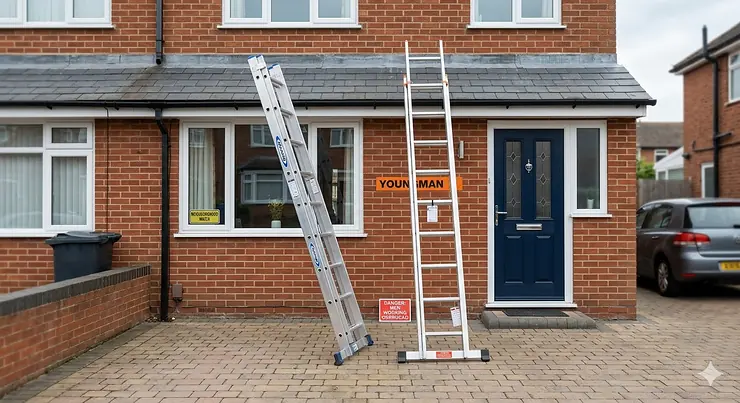
When you’re searching for Werner vs Youngman ladder comparisons, there’s something crucial you need to know straightaway — these two legendary British ladder manufacturers are now part of the same family. In 2014, Werner Access Products acquired Youngman Group, merging nearly two centuries of combined ladder-making expertise under one roof.
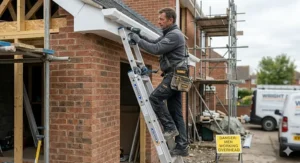
This doesn’t make your search any less relevant, though. Both brands brought distinct philosophies to ladder design, and understanding their heritage helps you choose the right access equipment for your needs. Werner, founded in 1922 in the United States, built its reputation on innovation and fibreglass technology. Meanwhile, Youngman, established during the 1926 General Strike by Charles Youngman in the UK, became synonymous with robust aluminium construction and tower systems.
Today, whilst many Youngman product lines have been integrated into Werner’s portfolio, the legacy of both brands influences current designs. Whether you’re a tradesperson seeking professional-grade equipment or a homeowner tackling DIY projects, this guide examines seven outstanding ladder options from this merged powerhouse, all available on Amazon.co.uk.
The UK ladder market has evolved significantly since the introduction of the EN 131 standard in January 2019, which improved ladder safety by making ladders wider and stronger. Both Werner and Youngman products now meet these rigorous standards, ensuring you’re investing in equipment that prioritises your safety above all else.
Quick Comparison Table
| Feature | Werner Fibreglass Stepladder | Werner Telescopic Ladder | Werner 5-in-1 Combination | Budget Option |
|---|---|---|---|---|
| Material | Fibreglass | Aluminium | Aluminium | Aluminium |
| Price Range | £69.98-£79.98 | £129.53-£159.97 | £159.97-£189.99 | £49.99-£69.99 |
| Max Load | 150kg (EN131) | 150kg (EN131) | 150kg (EN131) | 150kg (EN131) |
| Best For | Electricians | Compact storage | Versatile tasks | Light DIY |
| UK Rating | 4.7/5 stars | 4.6/5 stars | 4.2/5 stars | 4.5/5 stars |
| Key Benefit | Non-conductive | Space-saving | Multiple configurations | Value for money |
💬 Just one click – help others make better buying decisions too! 😊
Top 7 Werner vs Youngman Ladder Options: Expert Analysis
1. Werner Fibreglass Stepladder — Best for Electrical Work
The Werner Fibreglass Stepladder represents the pinnacle of non-conductive ladder design, making it the safest choice for anyone working near electricity. Priced between £69.98-£79.98 on Amazon.co.uk, this ladder has earned an impressive 4.7-star rating from over 60 UK buyers.
Key Specifications:
- Seven-layer fibreglass construction
- 150kg maximum load capacity (EN131 Professional)
- Various heights available (up to 8 treads)
UK customers consistently praise its stability and weather resistance. One electrician from Manchester noted that it “doesn’t wobble even on uneven surfaces,” whilst a Brighton-based contractor appreciated how it “stays put in all weather conditions.”
Pros:
✅ Non-conductive fibreglass rails for electrical safety
✅ Superior weather resistance compared to aluminium
✅ Extra-wide base for enhanced stability
Cons:
❌ Heavier than aluminium alternatives
❌ Higher price point than basic stepladders
2. Werner Telescopic Ladder 3.8m — Best for Compact Storage
For those with limited storage space, the Werner Telescopic Ladder offers an ingenious solution. Retailing at £129.53-£144.99, this ladder collapses to just 74cm when closed, yet extends to 3.8 metres (12.5 feet) for serious reaching power.
Key Specifications:
- Soft-close retraction mechanism
- Automatic locking system per rung
- Compact 74cm closed height
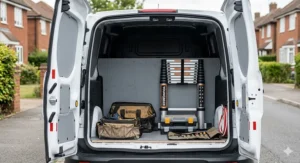
British buyers appreciate its “boot-friendly” design — it fits easily in car boots for mobile tradespeople. One London decorator mentioned storing it “behind the bedroom door” when not in use.
Pros:
✅ Telescopic design retracts to compact size for easy transportation and storage
✅ Soft close design for smooth retraction to prevent finger trapping
✅ Individual rung locks for safety
Cons:
❌ Requires careful maintenance of locking mechanisms
❌ Not suitable for extended working sessions
3. Werner 5-in-1 Combination Ladder — Best Multi-Purpose Option
The Werner 5-in-1 Combination Ladder with Platform is the Swiss Army knife of access equipment. At £159.97-£189.99, it transforms into stepladder, extension ladder, stairwell ladder, scaffold base, and work platform configurations.
Key Specifications:
- Aluminium construction for lightweight handling
- Integrated work platform included
- Multiple locking positions
Customer reviews reveal it’s particularly brilliant for stairwell painting. One Surrey homeowner shared: “Bought this ladder for painting on a stairwell. Brilliant!” The platform receives consistent praise for being “rock solid” and eliminating wobble during use.
Pros:
✅ Five configurations in one investment
✅ Integrated platform for comfortable working
✅ Ideal for uneven surfaces and staircases
Cons:
❌ Assembly instructions could be clearer
❌ Heavier to transport than single-purpose ladders
According to the Health and Safety Executive, combination ladders offer excellent versatility whilst maintaining safety standards when properly configured.
4. Werner Extension Ladder 2-Section — Best for Outdoor Tasks
The Werner 2-Section Extension Ladder delivers reliable height access for guttering, roofing, and exterior painting. Priced at £119.98-£159.97, it’s become a favourite amongst UK building professionals.
Key Specifications:
- Extends to various heights (up to 7.44m)
- Aluminium construction with stabiliser bar
- D-shaped rungs for comfortable standing
UK tradespeople note its durability through years of site work. Rungs maintain their anti-slip properties even after extensive use, and the stabiliser bar (required for ladders over 3m under EN131 standards) provides crucial additional stability when working at height.
Pros:
✅ Extends to significant heights for exterior work
✅ Lightweight aluminium for easy repositioning
✅ EN131-compliant stabiliser bar included
Cons:
❌ Requires space for storage when extended
❌ Two-person setup recommended for longer models
5. Werner Aluminium Stepladder — Best Budget Professional Option
For professionals seeking quality without premium pricing, the Werner Aluminium Stepladder delivers exceptional value at £49.99-£69.99. Despite its affordable price point, it maintains full EN131 Professional certification.
Key Specifications:
- Lightweight aluminium frame
- Wide platform for tool placement
- Available in 3-8 tread configurations
Reviews from UK buyers highlight its “surprising sturdiness for the weight” and appreciate how easy it is to move around job sites. One Cardiff builder uses his daily and reports “no loosening after two years of heavy use.”
Pros:
✅ Excellent value for money
✅ Lightweight for easy transport
✅ Professional-grade construction
Cons:
❌ Not suitable for electrical work
❌ Basic features compared to premium models
6. Werner Fibreglass Extension Ladder — Best for Height + Safety
When you need both exceptional height and electrical safety, the Werner Fibreglass Extension Ladder justifies its £173.99-£199.99 price tag. This premium ladder combines non-conductive properties with serious reaching capability.
Key Specifications:
- Fibreglass construction throughout
- Extends up to 4.9m (16 feet)
- Industrial-strength duty rating
Professional electricians working on commercial installations particularly value this ladder. The fibreglass construction provides peace of mind when working near power lines or electrical installations, whilst the extension mechanism remains smooth even after months of use.
Pros:
✅ Non-conductive for electrical safety
✅ Extended height capability
✅ Weather-resistant fibreglass construction
Cons:
❌ Significantly heavier than aluminium
❌ Premium pricing
7. Werner Loft Ladder — Best for Attic Access
The Werner Loft Ladder (formerly Youngman design) provides safe, permanent loft access starting from £84.99-£114.99. This concertina-style ladder has served British homes reliably for decades.
Key Specifications:
- Spring-assisted Easy Stow mechanism
- In-loft handrail for safety
- Suitable for ceiling heights up to 3m
With a 4.2-star rating from nearly 300 UK customers, this loft ladder earns praise for its smooth operation and space efficiency. One homeowner noted it “takes seconds to deploy and feels completely secure even when carrying boxes.”
Pros:
✅ Spring assisted Easy Stow system gives total control when lowering or stowing
✅ In-loft handrail for added safety when entering or leaving
✅ Compact storage within loft hatch
Cons:
❌ Professional fitting recommended
❌ Limited height adjustment range
Understanding EN131 Standards: What UK Buyers Need to Know
Before diving deeper into specific models, let’s address the elephant on the ladder — safety standards. The EN 131 standard came into force in January 2019, revolutionising ladder safety across Europe and the UK.
What Makes EN131 Different?
The standard introduced several critical improvements:
Enhanced Load Capacity: All ladders must support a maximum total load of 150kg including the user, tools, equipment and materials. This represents a significant upgrade from older standards that often specified lighter duty ratings.
Professional vs Non-Professional Classifications: EN131 Professional ladders are subject to tougher durability requirements because they are expected to be subjected to more onerous use. When buying for trade purposes, always specify Professional-grade equipment.
Improved Stability Features: Modern ladders include wider bases, anti-slip feet, and stabiliser bars for extension ladders over 3 metres. These aren’t optional extras — they’re mandatory design elements.
Rigorous Testing: Every certified ladder undergoes slip resistance testing on float glass surfaces with a static load of 150kg placed on the 4th rung down from the top. This ensures real-world performance matches manufacturer claims.
For comprehensive safety guidance, the Ladder Association provides free downloadable resources specifically for UK users.
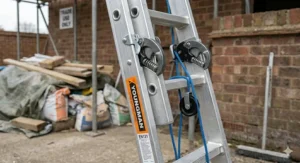
How to Choose Between Werner vs Youngman Ladder Options
Since Werner now manufactures products from both brand lineages, choosing the right ladder becomes less about brand loyalty and more about matching equipment to your specific needs.
Consider Your Primary Use Case
Electrical Work: Fibreglass construction is non-negotiable. The Werner Fibreglass Stepladder or Extension Ladder variants provide essential protection against electrical hazards. Fibreglass ladders are safer than aluminium ladders when working near electricity.
Frequent Transport: Telescopic designs excel here. They store in minimal space and deploy quickly. Tradespeople who move between multiple job sites daily particularly appreciate this feature.
Multi-Purpose Applications: Combination ladders represent the best value when you need various configurations. A single 5-in-1 ladder potentially replaces three separate purchases.
Budget Constraints: Basic aluminium stepladders deliver EN131 Professional certification at accessible price points. Don’t sacrifice safety standards to save money, but recognise that entry-level professional equipment exists.
Material Considerations
Aluminium Advantages:
- Lightweight for easy handling
- Corrosion-resistant for outdoor storage
- Competitive pricing
- Excellent strength-to-weight ratio
Fibreglass Benefits:
- Non-conductive for electrical safety
- Superior weather resistance
- Doesn’t dent as easily as aluminium
- Longer lifespan in harsh environments
Timber (Loft Ladders):
- Traditional aesthetic appeal
- FSC/PEFC certified sustainable materials
- Quieter operation than aluminium
- Better insulation properties
Werner vs Youngman Ladder: Historical Comparison
Werner’s Innovation Legacy
Founded in 1922 by Richard D. Werner, the company specialized in metal moldings and became a leader in plastics extrusion during World War II restrictions on civilian metal usage. This innovative spirit continued post-war when Werner started working with aluminum and developed an emphasis on producing aluminum ladders.
The company’s commitment to pushing boundaries led to production of fiberglass ladders beginning in 1963, making Werner one of the pioneering manufacturers to offer non-conductive options to the climbing industry.
Today, Werner operates with manufacturing, warehousing, sales, and distribution facilities in the United States, Australia, Canada, China, Mexico, Vietnam and the United Kingdom, serving professionals across more than 100 countries.
Youngman’s British Heritage
WC Youngman Ltd was founded by Charles Youngman on the first day of the National Strike in 1926, establishing itself during one of Britain’s most turbulent periods. The company quickly became synonymous with quality aluminium access equipment, particularly excelling in scaffold tower and platform ladder design.
For nearly 90 years, Youngman maintained its independence through various ownership changes before joining the Werner family. The Maldon, Essex facility continues producing access equipment to this day, now as part of the ProDriven Global Brands portfolio.
The 2014 Merger
Werner reached an agreement in 2014 to acquire all shares of UK access equipment manufacturer Youngman, creating a powerhouse combining American innovation with British engineering heritage. The acquisition combined Youngman’s tower and trade access products business with Werner’s existing UK ladder business, Abru.
By 2024, product lines had been fully integrated, with Youngman and Werner officially merging to reduce their product range offerings. Today’s Werner catalogue incorporates the best design elements from both brands’ histories.
Price Range & Value Analysis
Understanding where different ladder types sit in the UK market helps you budget appropriately:
| Ladder Type | Entry Level | Mid-Range | Professional Premium |
|---|---|---|---|
| Stepladders (Aluminium) | £49.99-£69.99 | £89.99-£129.99 | £149.99-£199.99 |
| Stepladders (Fibreglass) | £79.98-£99.99 | £129.99-£179.99 | £199.99-£279.99 |
| Extension Ladders | £119.98-£159.97 | £179.99-£249.99 | £299.99-£399.99 |
| Combination Ladders | £159.97-£199.99 | £229.99-£299.99 | £349.99-£449.99 |
| Telescopic Ladders | £129.53-£159.99 | £189.99-£249.99 | £299.99-£399.99 |
| Loft Ladders | £84.99-£129.99 | £179.95-£239.99 | £274.99-£349.99 |
Value Considerations:
Professional-grade equipment typically costs 20-30% more than domestic equivalents but offers significantly enhanced durability. For tradespeople using ladders daily, this represents excellent long-term value.
Fibreglass construction commands a 30-50% premium over aluminium due to manufacturing complexity and material costs. However, for electrical contractors, this isn’t optional — it’s a safety necessity.
Combination and telescopic designs appear expensive initially but potentially replace multiple single-purpose ladders, representing genuine savings for those needing versatility.
✨ Don’t Miss These Exclusive Deals!
🔍 Take your working at height to the next level with these carefully selected products. Click on any highlighted item to check current pricing and availability on Amazon.co.uk. These tools will help you create authentic professional results your clients will love!
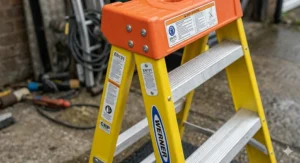
Ladder Safety: Essential UK Regulations
Working at height remains one of the most hazardous activities in UK construction and maintenance work. Understanding your legal obligations ensures compliance and, more importantly, keeps you safe.
Work at Height Regulations 2005
The Health and Safety Executive enforces strict requirements for anyone working at height in the UK. Key principles include:
Hierarchy of Controls: Whenever possible, avoid working at height entirely. If unavoidable, use the most appropriate equipment for the specific task.
Competent Persons: Only trained individuals should select, inspect, and use ladders for work purposes. The Ladder Association offers LadderCard training recognised throughout the industry.
Regular Inspections: Employers are legally required to provide safe equipment for use at work. This includes implementing regular inspection schedules and removing damaged equipment from service immediately.
Three-Point Contact Rule
Always maintain three points of contact when climbing — either two hands and one foot, or two feet and one hand. This fundamental principle prevents most ladder falls.
Correct Positioning
For leaning ladders, follow the 1-in-4 rule: position the ladder base one unit out for every four units of vertical height. Modern Werner ladders include angle indicators to help achieve this optimal positioning.
Weather Considerations
Avoid ladder use in high winds (typically above 20mph). Rain makes rungs slippery regardless of anti-slip features. If working outdoors, postpone tasks during adverse weather rather than compromising safety.
Common Mistakes When Buying Ladders
Mistake 1: Choosing Based on Price Alone
The cheapest ladder rarely represents the best value. Non-EN131 compliant ladders still circulate through some online marketplaces at tempting prices. If you see any portable ladder with a CE mark then avoid it and buy elsewhere — it is illegal to CE mark portable ladders.
Mistake 2: Incorrect Height Selection
Many buyers underestimate required working height. Remember: safe working height differs from maximum ladder height. For stepladders, you can comfortably work approximately 1 metre below the top platform.
Mistake 3: Ignoring Material Requirements
Aluminium conducts electricity. If there’s any possibility of working near electrical installations, specify fibreglass construction. One safety compromise isn’t worth any price saving.
Mistake 4: Overlooking Storage Constraints
A 6-metre extension ladder requires 6 metres of storage space. Measure your van, garage, or shed before committing to purchase. Telescopic alternatives might better suit space-constrained situations.
Mistake 5: Neglecting Weight Capacity
The 150kg maximum includes the user, their tools, equipment and any materials. If you’re a 90kg person carrying 20kg of tools and materials, you’re well within limits. A 80kg person with 40kg of tiles and adhesive plus a 35kg mixing station exceeds capacity dangerously.
Maintenance Tips for Longevity
Proper maintenance extends ladder lifespan significantly and maintains safety standards.
Regular Inspection Schedule
Before Each Use:
- Check all rungs and treads for wear or damage
- Verify locking mechanisms function smoothly
- Inspect feet for wear and secure attachment
- Examine side rails for dents, cracks, or excessive wear
Monthly (Heavy Use):
- Clean thoroughly to remove dirt and debris
- Lubricate moving parts with appropriate products
- Tighten any loose connections
- Check for developing issues before they become serious
Annually:
- Comprehensive professional inspection for trade equipment
- Replace worn parts even if ladder still functions
- Document inspection results for compliance records
Storage Best Practices
Aluminium Ladders:
- Store horizontally on wall-mounted brackets
- Keep under cover to prevent weather deterioration
- Avoid contact with acidic or alkaline substances
- Ensure adequate ventilation to prevent condensation
Fibreglass Ladders:
- Protect from prolonged UV exposure
- Store away from heat sources
- Horizontal storage prevents warping
- Keep away from chemicals that might degrade resin
Telescopic Ladders:
- Store fully retracted
- Keep locking mechanisms clean and dry
- Regular testing of smooth operation
- Protect from dust ingestion into mechanisms
Frequently Asked Questions
❓ Are Werner and Youngman ladders still made separately?
❓ What's the maximum weight limit for EN131 ladders in the UK?
❓ Can I use an aluminium ladder for electrical work in the UK?
❓ How do I know if my ladder meets current UK safety standards?
❓ What's the difference between EN131 Professional and Non-Professional ladders?
Conclusion: Making Your Werner vs Youngman Ladder Decision
The Werner vs Youngman ladder comparison ultimately reveals a success story of British and American engineering excellence combining under one roof. Whether you’re examining products bearing the Werner name or seeking equivalents to classic Youngman designs, you’re accessing over 200 years of combined ladder-making heritage.
For electrical contractors, the Werner Fibreglass Stepladder (£69.98-£79.98) provides non-negotiable safety through non-conductive construction. Its 4.7-star rating from UK electricians speaks to its reliability in demanding environments.
Tradespeople requiring versatility should seriously consider the Werner 5-in-1 Combination Ladder (£159.97-£189.99). Five configurations in one investment represents excellent value, particularly when storage space comes at a premium.
Budget-conscious DIY enthusiasts will find the Werner Aluminium Stepladder (£49.99-£69.99) delivers professional-grade certification without premium pricing. It’s proof that safety standards needn’t break the bank.
Space-constrained users benefit enormously from the Werner Telescopic Ladder (£129.53-£144.99), which collapses to just 74cm whilst extending to 3.8 metres when needed.
Whatever your requirements, prioritise EN131 Professional certification, appropriate material selection for your tasks, and realistic assessment of working heights needed. The right ladder isn’t the cheapest or the most expensive — it’s the one that matches your specific applications whilst maintaining uncompromising safety standards.
Remember: Employers are legally required to provide safe equipment for use at work, and even for domestic use, cutting corners on access equipment risks both safety and potential insurance issues.
All products reviewed are available with free delivery on Amazon.co.uk, often arriving within 24-48 hours for Prime members. Check current pricing and availability through the highlighted product links throughout this article.
Recommended for You
- 7 Best Step Ladder Options for UK Homes 2026
- Clarke vs SIP Welder: 7 Best Models Compared UK 2026
- 7 Best TIG Welder for Beginners UK 2026
Disclaimer: This article contains affiliate links. If you purchase products through these links, we may earn a small commission at no additional cost to you. Prices shown are approximate and may vary.
✨ Found this helpful? Share it with your mates! 💬🤗
