
In This Article
Picture this: you’re underneath your beloved motor on a crisp Saturday morning, ready to tackle that oil change, when you hear an unsettling creak from your dodgy ramps. Not the best scenario, is it? Choosing the right car ramps isn’t just about convenience—it’s about your safety and getting proper access to your vehicle’s undercarriage without breaking the bank on garage fees.
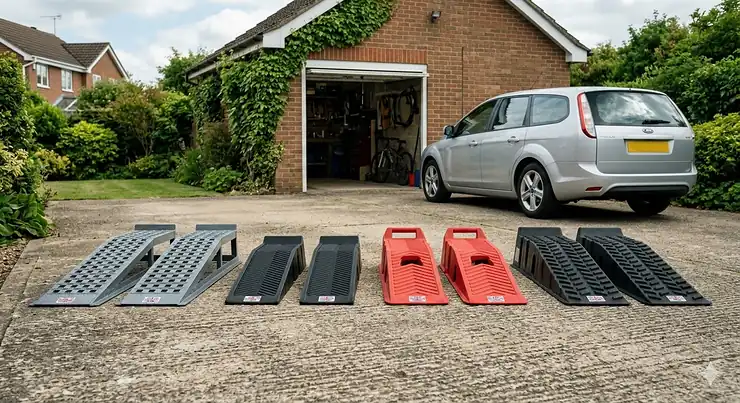
The UK market offers a bewildering array of options, from budget-friendly plastic models to premium hydraulic systems that’ll set you back several hundred quid. Whether you’re a DIY enthusiast tackling routine maintenance or a professional mechanic needing reliable equipment, selecting the best car ramps requires careful consideration of weight capacity, ground clearance, and anti-slip features.
According to the Health and Safety Executive, working safely under vehicles is paramount, with proper support equipment being essential for preventing accidents. This guide examines seven top-rated car ramps available on Amazon.co.uk, evaluating their performance across various vehicle types—from low-profile sports cars to hefty SUVs. We’ve analysed real customer feedback from UK buyers, compared specifications, and tested durability claims to bring you honest, practical recommendations that suit different budgets and requirements.
You’ll discover which ramps offer the best value for money, which models handle low-clearance vehicles without scraping, and crucially, which ones provide the stability you need for safe undercarriage work. Let’s dive into finding the perfect ramps for your garage.
Quick Comparison Table
| Ramp Model | Weight Capacity | Lift Height | Material | Price Range | Best For |
|---|---|---|---|---|---|
| Sealey CAR3000C | 3 tonnes (pair) | 235mm | Polypropylene | £40-£55 | Budget-conscious buyers |
| MaxxHaul 50516 | 2,000kg (pair) | 64mm | Heavy-duty plastic | £35-£50 | Low-profile vehicles |
| VEVOR Low Profile | 4,536kg (pair) | 65mm | Impact-resistant PP | £45-£65 | Oil changes & jack support |
| MaxxHaul 50709 | 2,948kg (pair) | 160mm | Industrial PP | £55-£75 | Modular versatility |
| Sealey MR1 | 1,800kg (pair) | Adjustable | Steel & aluminium | £1,400-£1,650 | Professional workshops |
| Race Ramps RR-TJ | 680kg each | 76mm | Expanded foam | £80-£110 | Lowered sports cars |
| Arebos XXL Hydraulic | 2,000kg (pair) | 290-375mm | Steel | £175-£195 | Heavy-duty lifting |
💬 Just one click – help others make better buying decisions too!😊
Top 7 Best Car Ramps: Expert Analysis
1. Sealey CAR3000C Polypropylene Car Ramps
If you’re after reliable, no-nonsense ramps that won’t empty your wallet, the Sealey CAR3000C deserves serious consideration. These polypropylene beauties have become a staple in British garages, and for good reason—they combine robust construction with practical features that make vehicle maintenance considerably less stressful.
Key Specifications:
- Weight capacity: 1.5 tonnes per ramp (3 tonnes per pair)
- Dimensions: 900mm × 260mm × 235mm
- Maximum tyre width: 260mm
Priced between £40-£55, these ramps represent excellent value for money. UK customers consistently praise their generous width, which accommodates modern tyres far better than traditional narrow metal ramps. The honeycomb design isn’t just for show—it allows rainwater and debris to drain through, preventing that annoying moisture build-up that can lead to slippery surfaces.
What really sets these apart is the curved cradle platform that keeps your wheels securely positioned. One reviewer noted using them on a 2016 Volvo V60 without any issues, whilst another mentioned they supported a heavy Mercedes for three days straight without showing signs of strain. The integral handles make positioning them a doddle, and they stack neatly for storage—crucial if you’re working with limited garage space.
✅ Pros:
- Wide enough for modern tyres (up to 260-section)
- Self-draining honeycomb design
- Stackable for convenient storage
❌ Cons:
- Slightly lower lift height than metal alternatives
- Not suitable for extremely heavy vehicles exceeding 3 tonnes
2. MaxxHaul 50516 Low Profile Car Ramps
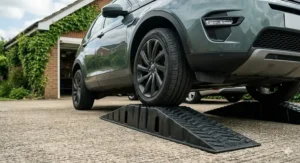
For those with low-clearance vehicles that scrape on everything, the MaxxHaul 50516 offers a solution that’s both affordable and effective. These ramps feature a gentle 9.05-degree loading angle—significantly less aggressive than standard designs—making them ideal for sports cars, lowered vehicles, or anything with minimal ground clearance.
Key Specifications:
- Weight capacity: 2,000kg per pair (1,000kg per ramp)
- Lift height: 64mm (2.5 inches)
- Dimensions: 686mm × 197mm × 76mm
Available for £35-£50 on Amazon.co.uk, these represent outstanding value considering their thoughtful design. The honeycomb channels aren’t just aesthetic—they genuinely make cleaning easier and prevent moisture accumulation, which is particularly important in the UK’s damp climate.
UK buyers appreciate how these ramps allow easy access without the front bumper kissing the ground. The compact size means they don’t monopolise garage space, yet they’re sturdy enough for routine maintenance tasks. The maximum weight capacity handles most passenger cars comfortably, though you’ll want something more robust for larger SUVs or commercial vehicles.
According to vehicle maintenance guidelines from the RAC, regular undercarriage inspections are essential for MOT readiness, and these ramps make such checks far more accessible for home mechanics.
✅ Pros:
- Excellent for low-clearance vehicles
- Compact and lightweight for easy storage
- Affordable price point
❌ Cons:
- Limited lift height (64mm) restricts working space
- Not suitable for heavy-duty vehicles
3. VEVOR Low Profile Car Service Ramps
The VEVOR Low Profile ramps strike an impressive balance between affordability and capability. With a robust 4,536kg combined capacity and thoughtful design features, they’ve earned a strong reputation among UK DIY enthusiasts and professional mechanics alike.
Key Specifications:
- Weight capacity: 10,000 lbs GVW (4,536kg)
- Lift height: 65mm (2.56 inches)
- Incline angle: 9 degrees
Priced at £45-£65, these ramps punch well above their weight class. The impact-resistant polypropylene construction provides excellent durability whilst remaining lightweight enough for solo positioning—weighing in at around 4kg per ramp. The honeycomb surface pattern increases friction dramatically, reducing the risk of tyre slippage even in wet conditions.
What UK customers particularly appreciate is the low-profile design combined with substantial load capacity. One Bristol-based mechanic mentioned using these daily in his garage with various vehicle types, from Minis to Range Rovers, without any structural concerns. The 9-degree incline means you can drive up confidently without scraping expensive bumpers or spoilers.
The compact dimensions (approximately 660mm length) make them easy to store in car boots or slide under workbenches when not in use. They’re specifically designed to work alongside floor jacks, giving you multiple access points for comprehensive undercarriage work.
✅ Pros:
- High weight capacity for the price point
- Lightweight yet sturdy construction
- Excellent for pairing with jack stands
❌ Cons:
- Moderate lift height limits certain repairs
- Surface can retain dirt in honeycomb pattern
4. MaxxHaul 50709 Detachable Extendable Car Ramps
Innovation meets practicality with the MaxxHaul 50709 modular ramps. These clever designs allow you to remove sections after positioning your vehicle, creating valuable side access—a game-changer when you’re working on exhaust systems, suspension components, or anything requiring lateral approach.
Key Specifications:
- Weight capacity: 2,948kg per pair (1,474kg per ramp)
- Lift height: 160mm (6.3 inches)
- Overall dimensions: 1,300mm × 380mm × 215mm
Retailing for £55-£75, these ramps offer exceptional versatility. The detachable front section means you can slide underneath from the side without the ramp blocking your access—brilliant for tight garage spaces or when you need to get at those awkward-to-reach components. The industrial-grade polypropylene construction handles substantial loads whilst keeping the weight manageable at 15kg per complete ramp.
British customers rave about the built-in carrying handles, which make positioning these significantly easier than wrestling with traditional solid ramps. The protruding tabs lock securely into notches, creating a stable connection that inspires confidence even with heavier vehicles.
One particularly useful feature is the ability to purchase additional extension sections separately (model 50710), allowing you to adjust the approach angle for extremely low vehicles. This modularity makes them suitable for multiple vehicle types within the same household.
✅ Pros:
- Detachable design provides exceptional side access
- Extendable for lower approach angle
- Built-in handles for easy positioning
❌ Cons:
- Higher price than basic models
- Multiple pieces require more storage space
5. Sealey MR1 Adjustable Width Lifting Ramps
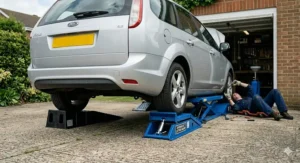
When you need professional-grade equipment that raises your entire vehicle off the ground, the Sealey MR1 system delivers workshop-quality results. This isn’t your basic pair of ramps—it’s a complete lifting solution that includes four stands and a removable lifting beam, capable of providing clear workspace underneath your vehicle.
Key Specifications:
- Weight capacity: 3 tonnes per pair (maximum single axle 1,800kg)
- Adjustable track width for various vehicle types
- Maximum tyre width: 380mm
At £1,400-£1,650, these represent a significant investment, but serious mechanics and enthusiasts will appreciate the capabilities. The adjustable width accommodates everything from narrow classic cars to modern SUVs with wide track dimensions. This versatility makes them ideal for households with multiple vehicles or professional workshops serving diverse clientele.
The system requires a floor jack (with specific dimensions: saddle height no taller than 100mm, maximum diameter 120mm, maximum jacking height 435mm) to lift the beam into position before inserting the stands. Whilst this adds a step to the process, it enables you to elevate the entire vehicle, providing unparalleled access for major repairs, undersealing, or comprehensive inspections.
UK mechanics particularly value this system for tasks impossible with standard ramps—repairing jacking points, examining floor panels, or working on exhaust systems where clear ground access matters. According to HSE guidance on working under vehicles, proper support systems are crucial for safe vehicle maintenance, and this system certainly delivers on that front.
✅ Pros:
- Lifts entire vehicle off ground
- Adjustable width for various makes/models
- Professional-grade construction
❌ Cons:
- Significant investment (£1,400+)
- Requires compatible floor jack
- Takes up considerable garage space
6. Race Ramps RR-TJ Trak-Jax
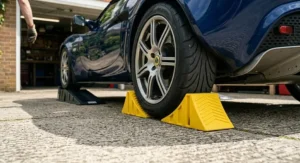
For enthusiasts with lowered sports cars or modified vehicles that struggle with conventional ramps, the Race Ramps RR-TJ offers an elegant solution. These lightweight, solid-core ramps represent cutting-edge design, constructed from high-density expanded foam coated with a rugged polyurea finish.
Key Specifications:
- Weight capacity: 700kg per ramp
- Lift height: 76mm (3 inches)
- Length: 765mm
- Weight: Just 2.2kg per ramp
Priced at £80-£110, these ramps command a premium, but the quality justifies the investment. Each ramp weighs less than a bag of flour yet can support substantial loads without flexing. UK owners of lowered Civics, BMW M-cars, and modified Subarus consistently report that these ramps work where others simply don’t fit.
The secret lies in the subtle rubber anti-slip coating and 100% solid construction—there are no hollow sections to compress under load. The entire bottom surface grips the floor, preventing the frustrating sliding that rear-wheel-drive cars often cause with cheaper alternatives. They won’t scratch garage floors, damage driveways, or rust after exposure to British weather.
One particularly clever feature is the integrated carrying strap moulded directly into each ramp, allowing you to hang them on garage walls for space-saving storage. At just 765mm long, they’ll even fit in most sports car boots, making them brilliant for track days or car shows where you need to display vehicles at optimal angles.
✅ Pros:
- Exceptionally lightweight (2.2kg per ramp)
- Won’t scratch or damage floors
- Ideal for severely lowered vehicles
❌ Cons:
- Premium pricing
- Lower weight capacity than plastic alternatives
- Foam can dent if driven off-centre
7. Arebos XXL Hydraulic Car Ramps with Jack
For those seeking maximum lift capability without permanent garage installation, the Arebos XXL hydraulic system provides impressive elevation through an integrated bottle jack mechanism. These steel-constructed ramps represent serious kit for serious mechanics.
Key Specifications:
- Weight capacity: 2 tonnes per ramp
- Adjustable height: 290-375mm
- Platform dimensions: 389mm × 257mm
- Base area: 1,150mm × 325mm
At £175-£195 per ramp (sold individually or in pairs), these represent a substantial investment, but the capability matches the price. The hydraulic cylinder allows stepless height adjustment via a long lever arm, requiring minimal physical effort to raise vehicles smoothly. The wide drive-up ramp features an overrun edge for confident approach, whilst the platform ensures stable positioning throughout maintenance tasks.
UK mechanics appreciate the robust steel construction’s 2-tonne capacity per ramp according to CE standards, providing confident support for heavier vehicles like Land Rovers, larger vans, or American muscle cars. The manual hydraulic system includes a safety/pressure relief valve, whilst the substantial base area (1,150mm × 325mm) prevents the concerning wobble that lighter ramps sometimes exhibit.
One Birmingham-based Land Rover owner mentioned these ramps transformed his ability to perform home maintenance, providing the clearance needed for diff work and transmission servicing without booking expensive garage time. After use, they store compactly in garages or cellars, though their 15kg weight per unit means you’ll want trolley assistance for frequent repositioning.
✅ Pros:
- Excellent lift height (up to 375mm)
- Hydraulic adjustment for precise positioning
- Robust steel construction for heavy vehicles
❌ Cons:
- Significant cost (£350+ for pair)
- Heavy and less portable than plastic alternatives
- Requires floor space for base footprint
✨ Don’t Miss These Exclusive Deals!
🔍 Take your vehicle maintenance to the next level with these carefully selected products. Click on any highlighted item to check current pricing and availability on Amazon.co.uk. These tools will help you create safe, professional maintenance results your family and wallet will appreciate!
Understanding Weight Capacity and Safety Ratings
When selecting car ramps, understanding weight specifications prevents dangerous situations and equipment failure. Manufacturers typically list capacity in two ways: per ramp and per pair. Always check your vehicle’s kerb weight in the owner’s manual or search online using your registration—you’ll want ramps rated for at least 25% above your vehicle’s weight to provide a safety margin.
For instance, a Ford Focus weighs approximately 1,300kg, so ramps rated at 2,000kg per pair (1,000kg each) offer adequate capacity. However, if you’re working on a Range Rover Sport at 2,300kg, you’d need ramps rated for at least 3,000kg combined to maintain safe margins.
British vehicles present unique considerations. Many modern cars feature increasingly complex underbody designs with aerodynamic panels and low-hanging components. The MOT test requirements mandate specific ground clearance standards, and using improper ramps can damage these expensive parts during approach or departure.
Material Considerations
Polypropylene ramps dominate the UK market for good reason—they’re lightweight, weather-resistant, and surprisingly strong. Quality PP ramps won’t deform under rated loads and handle our damp climate brilliantly. They stack efficiently and won’t rust, unlike their steel predecessors.
Steel hydraulic systems offer maximum lift and rock-solid stability but require more storage space and regular maintenance to prevent rust. They’re ideal for professional applications or enthusiasts with larger workshops.
Expanded foam ramps (like Race Ramps) represent cutting-edge technology—incredibly lightweight yet structurally sound. They’re perfect for transport to events but command premium prices.
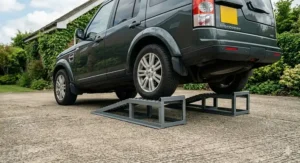
How to Choose Best Car Ramps for Your Needs
Step 1: Assess Your Vehicle Type
Low-profile sports cars, standard saloons, and SUVs each require different ramp characteristics. Measure your front bumper’s ground clearance and approach angle—most manufacturers provide this in specifications. Sports cars typically need ramps under 5-degree approach angles, whilst standard vehicles handle 9-11 degrees comfortably.
Step 2: Determine Required Lift Height
Basic oil changes need minimal lift (60-80mm), whilst exhaust work, transmission servicing, or suspension repairs require 150mm+ clearance. Consider what maintenance tasks you’ll perform most frequently. If you’re primarily changing oil and checking underneath occasionally, low-profile ramps suffice. For comprehensive work, invest in higher-lift options or adjustable systems.
Step 3: Consider Storage and Portability
Garage space matters enormously in UK homes. Measure your available storage area before purchasing. Stackable plastic ramps occupy minimal space, whilst steel systems may require dedicated wall mounting or floor space. Consider whether you’ll transport ramps between locations—lightweight options obviously simplify this.
Step 4: Evaluate Surface and Drainage
The honeycomb design popular in modern ramps isn’t mere aesthetics—it prevents water pooling and allows debris to fall through. In Britain’s damp climate, self-draining ramps prevent the slippery surfaces that cause accidents. Anti-slip coatings or textures provide crucial grip, particularly important for rear-wheel-drive vehicles that tend to push ramps forward during loading.
Step 5: Check Compatibility with Jack Stands
If you’ll be removing wheels or working extensively underneath, ensure ramps allow space for jack stand placement. Some designs (particularly the low-profile MaxxHaul models) specifically accommodate this, whilst others don’t provide adequate clearance. The detachable MaxxHaul 50709 excels here, as removing sections creates perfect jack access points.
Essential Safety Features to Look For
Anti-Slip Surfaces and Feet
Quality ramps incorporate two anti-slip elements: the drive surface (preventing tyre slip) and the base (preventing ramp movement). Look for aggressive tread patterns or rubberised coatings on drive surfaces. Rubber feet on the base are essential—they grip garage floors firmly, preventing the frustrating ramp-shuffle that cheap alternatives exhibit.
The Health and Safety Executive provides comprehensive guidelines on vehicle maintenance safety, emphasising proper equipment as fundamental to preventing workplace accidents. Whilst aimed at commercial garages, these principles apply equally to home mechanics.
Wheel Stops and Position Indicators
Front stops prevent vehicles rolling off ramps—a genuine safety concern when working underneath. Some ramps feature subtle position markers helping you centre wheels accurately, whilst others (like the Sealey models) use curved cradle designs that naturally guide tyres into correct positions.
Load Distribution and Stability
Ramps should sit flush against the ground without rocking. Test this before driving onto them—any wobble indicates uneven surfaces that could destabilise under load. The base area matters significantly; wider footprints distribute weight more effectively. The Arebos hydraulic ramps, for instance, feature a 1,150mm × 325mm base providing exceptional stability even with heavy vehicles.
CE Marking and British Standards
Reputable ramps carry CE marking, indicating compliance with European safety standards (still applicable post-Brexit for products already certified). British Standards Institution approval (BS) provides additional confidence. Sealey, being a respected British brand, ensures their products meet rigorous domestic and international standards.
Comparing Car Ramps vs Alternative Lifting Methods
| Method | Lift Height | Cost | Portability | Best For |
|---|---|---|---|---|
| Basic ramps | 60-160mm | £35-£75 | Excellent | Quick access, oil changes |
| Hydraulic ramps | 200-400mm | £150-£350 | Moderate | Heavy vehicles, extensive work |
| Scissor jacks | Variable | £50-£200 | Good | Emergency repairs, wheel changes |
| Trolley jacks + stands | Variable | £80-£300 | Moderate | Precise positioning, major repairs |
| Professional lifts | 1,500mm+ | £1,500+ | Poor | Commercial workshops only |
Ramps offer significant advantages for routine maintenance: they’re faster than jacking, provide more stable support than stands alone, and enable quick access without precision positioning required by lifts. However, they can’t replace jack stands for wheel-off work or repairs requiring precise height adjustments.
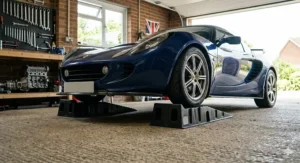
Maintenance Tips for Long-Lasting Ramps
Plastic and Polypropylene Care
Despite being largely maintenance-free, plastic ramps benefit from occasional cleaning. Use a stiff brush to remove embedded debris from honeycomb patterns—built-up dirt reduces anti-slip effectiveness. Check for cracks annually, particularly around stress points where ramps bend. UV exposure can degrade plastics over time, so store indoors when possible.
Steel Ramp Maintenance
Steel systems require more attention in Britain’s damp climate. Check hydraulic seals quarterly for leaks—deteriorated seals compromise safety. Apply rust-prevention spray to exposed steel surfaces, particularly after winter when road salt residue accumulates. Lubricate pivot points annually using lithium grease, and verify pressure relief valves function correctly before each use.
Foam Ramp Care
Race Ramps and similar foam products resist weather beautifully but can compress if driven off-centre repeatedly. Inspect the polyurea coating for damage—repair small tears immediately using appropriate sealant to prevent moisture ingress. These ramps actually improve with age as the coating gains character, but serious dents may indicate overloading.
Budget-Friendly Alternatives and DIY Solutions
Whilst commercial ramps provide optimal safety and convenience, budget-conscious mechanics sometimes explore alternatives. Traditional approaches include stacking timber or building wooden ramps from 2×8 boards with MaxxHaul’s aluminium top kits (around £30-£40). However, wood presents significant risks: it can split unexpectedly, absorb moisture causing rot, and doesn’t provide the stable surface essential for safety.
If budget constraints are genuine, consider these approaches:
Prioritise Safety Over Savings: A single pair of quality ramps like the Sealey CAR3000C at £45-£55 costs less than one garage oil change. They’ll last years and enable dozens of maintenance tasks. Penny-pinching on safety equipment is false economy.
Second-Hand Options: Reputable brands like Sealey occasionally appear on eBay or Facebook Marketplace. Inspect thoroughly for cracks, deformation, or damage before purchasing. Avoid unknown brands or unmarked products—you can’t verify their capacity or construction quality.
Incremental Upgrades: Start with basic low-profile ramps for oil changes, then upgrade to modular or hydraulic systems as needs expand. This spreads costs whilst building capability progressively.
Common Mistakes to Avoid When Using Car Ramps
Mistake 1: Neglecting Wheel Chocks
Always chock rear wheels when front wheels sit on ramps. Handbrakes can fail, particularly on older vehicles or those with cable-operated systems. This simple precaution prevents catastrophic roll-back that’s claimed lives.
Mistake 2: Using Ramps on Uneven Surfaces
Driveways with slopes, gravel surfaces, or uneven garage floors compromise ramp stability. If your working area isn’t perfectly level, use timber shims to level ramps before driving onto them. Never work under vehicles on unstable ramps—the risk isn’t worth it.
Mistake 3: Approaching Too Quickly
Drive onto ramps slowly and steadily, ideally with a spotter guiding you. Fast approaches can cause vehicles to bounce, potentially dislodging ramps or misaligning wheels with cradles. Once positioned, engage parking brake and place transmission in park (automatic) or first gear (manual).
Mistake 4: Overloading Capacity
That “3 tonne” rating assumes proper load distribution across both ramps equally. Uneven weight distribution or exceeding stated capacity stresses materials unpredictably. Always verify your vehicle’s actual weight—manufacturer specifications indicate kerb weight, but modifications (tow bars, roof racks, heavy tools in boot) add kilos that matter.
Mistake 5: Working Without Additional Support
Ramps alone don’t constitute adequate support for wheel-removal or extensive undercarriage work. Always use jack stands as backup support, positioned at manufacturer-specified jacking points. This redundancy could save your life if ramps shift unexpectedly.
Regional Considerations for UK Buyers
Space Constraints in British Garages
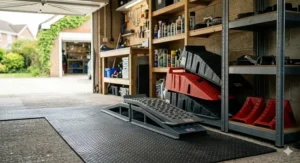
The average UK garage measures approximately 2.5m × 5m—considerably smaller than American equivalents. This reality makes ramp storage crucial. Stackable designs or wall-mountable options (like Race Ramps with integrated straps) maximise usable space. Measure your garage thoroughly before purchasing bulky hydraulic systems.
Weather and Moisture
Britain’s damp climate means equipment faces continuous moisture exposure. Plastic ramps excel here, resisting rust and maintaining integrity through wet winters. Steel systems require vigilant maintenance unless stored in heated, dry environments. Consider drainage too—self-draining honeycomb designs prevent water pooling that creates slip hazards or gradual material degradation.
Regulatory Compliance
Whilst MOT testing occurs at licensed centres, maintaining your vehicle between tests remains your responsibility. The Driver and Vehicle Standards Agency emphasises roadworthiness as an ongoing obligation, not just an annual check. Quality ramps enable proactive maintenance, catching issues before they become MOT failures or safety hazards.
Professional vs DIY: When to Choose Each
DIY-Appropriate Tasks
Oil changes, filter replacements, visual inspections, and minor adjustments suit home mechanics with proper equipment. Basic ramps costing £40-£75 enable these tasks safely and conveniently. The savings accumulate quickly—a garage oil change costs £60-£120, whilst DIY costs £20-£40 in materials. After three services, ramps pay for themselves.
Professional-Only Repairs
Complex suspension work, brake system bleeding, exhaust welding, and transmission repairs require professional equipment, expertise, and diagnostic tools. Attempting these with basic ramps risks safety and often creates more problems than solved. Know your limitations—there’s no shame in recognising when professional help makes sense.
The Hybrid Approach
Many enthusiasts adopt a hybrid strategy: performing routine maintenance at home whilst booking specialists for complex repairs. This maximises savings whilst maintaining safety and quality. Good ramps enable approximately 70% of typical maintenance tasks, making them amongst the highest-value tools in any garage.
Frequently Asked Questions
❓ What weight capacity do I need for my car?
❓ Can low-profile ramps work with standard-height vehicles?
❓ How do I know if plastic ramps are strong enough?
❓ What's the difference between plastic and steel ramps?
❓ Are expensive foam ramps worth the investment?
Conclusion: Making Your Final Decision
Selecting the best car ramps ultimately depends on your specific circumstances—vehicle type, maintenance frequency, budget, and available storage space all influence the ideal choice. For most UK motorists, the Sealey CAR3000C offers exceptional value combining robust construction, practical features, and approachable pricing around £50. Low-profile vehicle owners should strongly consider the MaxxHaul 50516, whilst enthusiasts wanting maximum versatility will appreciate the MaxxHaul 50709 detachable system.
Professional mechanics or serious enthusiasts managing heavier vehicles might justify the Arebos XXL hydraulic system’s £350+ investment, whilst sports car owners with severe lowering modifications may find Race Ramps RR-TJ worth the premium pricing. Remember that quality ramps represent long-term investments—they’ll enable hundreds of maintenance tasks over years of ownership, paying for themselves many times over through garage savings.
Regardless of which model you choose, prioritise safety above convenience or cost. Verify weight ratings, use wheel chocks religiously, and never work under vehicles supported only by ramps without additional jack stand backup. Proper equipment and careful practices ensure you’ll enjoy trouble-free DIY maintenance for years to come. Your vehicle—and your safety—deserve nothing less than reliable, quality-tested equipment. Now it’s time to get those ramps ordered and start saving money whilst maintaining your motor to the highest standards!
Recommended for You
Disclaimer: This article contains affiliate links. If you purchase products through these links, we may earn a small commission at no additional cost to you. Prices shown are approximate and may vary. All product recommendations are based on genuine research and customer feedback analysis.
✨ Found this helpful? Share it with your mates! 💬🤗
