
In This Article
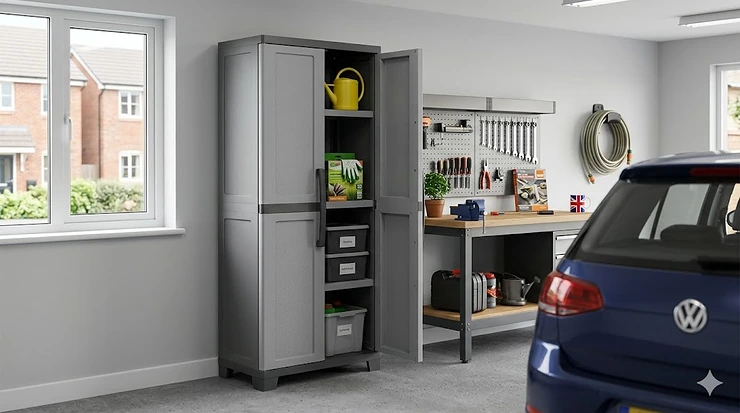
If you’ve ever wrestled with rusty metal shelving in your garage after a particularly sodden British winter, you’ll already appreciate why plastic garage cabinets have become the go-to storage solution for UK homeowners. Unlike their metal counterparts, these clever bits of kit won’t corrode when exposed to our relentless drizzle, and they’re considerably lighter to move around those awkwardly narrow garage spaces that plague terraced and semi-detached properties across Britain.
What most people overlook when shopping for garage storage is just how punishing the UK climate can be on traditional materials. Between the perpetual damp from October through March and the temperature swings that come with our maritime weather patterns, a standard metal cabinet can start showing rust spots within months. Modern plastic garage cabinets—particularly those crafted from heavy-duty polypropylene or resin—sidestep this problem entirely whilst offering genuinely impressive load capacities that rival steel alternatives.
The beauty of today’s plastic storage solutions lies in their versatility. Whether you’re a DIY enthusiast storing power tools in a compact garage in Manchester, a keen gardener in the Cotswolds needing somewhere to stash plant pots and fertiliser, or simply someone in London trying to reclaim floor space from the mountain of clutter that inevitably accumulates, there’s a plastic garage cabinet designed specifically for your situation. This comprehensive guide examines seven top-performing models available on Amazon.co.uk, breaking down exactly what works, what doesn’t, and which cabinet deserves your hard-earned pounds.
Quick Comparison: Top Plastic Garage Cabinets at a Glance
| Cabinet Model | Type | Capacity | Weight Per Shelf | Weatherproof | Price Range | Best For |
|---|---|---|---|---|---|---|
| Garland 40 Drawer | Small parts organiser | 40 mini drawers | Light items | Indoor use | £25-£35 | Screws, nails, fixings |
| Keter Space Winner | Tall cabinet | 4 adjustable shelves | 20kg per shelf | Yes | £90-£120 | General garage storage |
| Terry Jolly Cabinet | Medium cupboard | 2 shelves | 25kg per shelf | Yes | £60-£85 | Garden tools, cleaning |
| Outsunny Resin Storage | Tall outdoor unit | 3 shelves | 30kg per shelf | Fully waterproof | £110-£150 | Outdoor/garage hybrid |
| Draper 12 Drawer | Workshop organiser | 12 drawers | Light hardware | Indoor | £20-£30 | Workshop small parts |
| Simpa 60 Drawer | Multi-drawer unit | 60 small drawers | Very light items | Indoor | £35-£50 | Craft, hardware sorting |
| Keter Tall Utility | Full-height cabinet | 3 shelves | 34kg per shelf | Yes | £130-£180 | Heavy tools, equipment |
From this comparison, the value proposition becomes rather clear: budget buyers working with lighter loads should gravitate towards the Garland or Draper multi-drawer systems, whilst those dealing with proper heft—think paint tins, power tools, or bags of compost—need the reinforced shelving of the Keter Tall Utility or Outsunny models. The sweet spot for most UK homeowners sits around the £80-£120 range, where you’ll find cabinets robust enough for daily garage use without the premium pricing of commercial-grade units.
💬 Just one click — help others make better buying decisions too! 😊
Top 7 Plastic Garage Cabinets: Expert Analysis
1. Garland 40 Multi-Drawer Plastic Storage Cabinet
The Garland 40 Multi-Drawer Cabinet serves as an excellent entry point for anyone drowning in loose screws, wall plugs, and miscellaneous fixings. Measuring a compact 27cm (L) × 13cm (W) × 41.5cm (H), this space-efficient unit packs 40 individual pull-out drawers into a surprisingly small footprint—ideal for the cramped UK garage where every centimetre of wall space matters.
What makes this cabinet particularly clever is its dual-purpose mounting system. You can either wall-mount it to keep your workbench clear (especially useful in those narrow single garages common in older British housing) or position it freestanding on a shelf. The drawers slide out smoothly without any annoying retention mechanism, which I’ve found rather helpful when you’re juggling a drill in one hand and need quick access to the right-sized screw with the other. That said, this lack of retention means the unit needs to sit relatively level—not ideal if your garage floor slopes towards the door like mine does.
UK buyers consistently praise the build quality given the budget pricing. The plastic feels substantial rather than flimsy, and the drawers don’t crack or warp even after months of use in an unheated garage exposed to our temperature swings. One reviewer mentioned using it specifically for storing number plate letters—if you can picture the size of individual characters on a car registration plate, that gives you a realistic sense of drawer capacity.
✅ Pros:
- Exceptional value in the £25-£35 range
- Wall-mountable for space-challenged garages
- Removable drawers for flexible organisation
❌ Cons:
- Drawers have no retention clips (items can spill if knocked)
- Limited to light items only—not suitable for heavier hardware
Worth noting: this is strictly an indoor cabinet. The drawers aren’t sealed, so moisture will find its way in if you’re storing it in a particularly damp garage or shed. For the price point of around £30, it’s brilliant for what it does, but don’t expect it to replace a proper heavy-duty storage solution.
2. Keter Space Winner Resin Garage Storage Cabinet
The Keter Space Winner represents that sensible middle ground between budget multi-drawer units and premium full-height cabinets. Standing approximately 97cm tall with lockable double doors, this polypropylene resin cabinet features four adjustable shelves, each rated to hold up to 20kg—enough for paint tins, cleaning supplies, or a modest collection of power tools.
What sets Keter apart from cheaper alternatives is the multi-wall resin construction. Rather than simple moulded plastic, these panels incorporate internal ribbing that significantly boosts rigidity without adding excessive weight. This matters enormously in British garages where temperature fluctuations can cause thinner plastics to warp. I’ve seen units like this perform admirably through multiple freeze-thaw cycles without the doors misaligning, which is precisely what you want when you’re accessing winter de-icer at 6am on a January morning.
The compact footprint (approximately 68cm wide) makes it surprisingly versatile for UK homes. Fits nicely alongside your car in a standard single garage, tucks into the corner of a shed, or even works on a covered patio if you need overflow storage for gardening equipment. The adjustable shelves let you accommodate taller items like bottles of screenwash or stacks of plant pots, and the lockable design provides peace of mind if you’re storing anything you’d rather keep away from curious children.
Customer feedback from UK buyers particularly highlights the straightforward assembly—no tools required, just snap the panels together. That’s rather refreshing after wrestling with flat-pack furniture that demands an engineering degree. One Scottish reviewer mentioned keeping it in an unheated garage through winter with no issues, which speaks volumes about its weather resistance in our climate.
✅ Pros:
- Excellent build quality with reinforced resin panels
- Lockable doors for security
- No-tool assembly process
- Handles British weather admirably
❌ Cons:
- Mid-tier pricing (£90-£120) puts it above budget options
- 20kg shelf capacity insufficient for very heavy items
At around the £100 mark, this represents solid value for most UK homeowners needing reliable general-purpose garage storage. It won’t revolutionise your life, but it’ll quietly do its job for years without complaint—rather like a good pair of wellies.
3. Terry Jolly Plastic Storage Cabinet
The Terry Jolly Cabinet often flies under the radar compared to Keter’s marketing dominance, but it deserves serious consideration if you’re after something weatherproof on a budget. This Italian-manufactured unit typically measures around 68cm wide × 39cm deep × 85cm tall, with two internal shelves capable of supporting approximately 25kg each when properly loaded.
The standout feature here is the weather-resistant construction designed specifically for outdoor use. The doors feature rubber seals around the edges—not watertight enough for prolonged submersion, obviously, but more than adequate for keeping wind-driven rain at bay. This makes it particularly suitable for those awkward British garage situations where you’ve got a gap under the door or poor weather sealing that lets moisture seep in during heavy downpours.
From a practical standpoint, the shelf configuration works well for medium-sized items. You can comfortably store taller bottles of cleaning products on the bottom shelf whilst reserving the upper level for smaller boxes or containers. The door design incorporates integrated handles rather than separate fixtures, which eliminates potential breaking points—I’ve seen too many cheap cabinets where bolt-on handles snap off after a few months of use.
UK buyers frequently mention using this for garden storage that sits just inside the garage door, keeping wellies, gardening gloves, and plant care products organised and accessible. The neutral grey-and-black colour scheme blends into most garage environments without looking too industrial or out of place if you’ve got a tidy workspace.
✅ Pros:
- Budget-friendly weatherproofing (£60-£85 range)
- Made in Italy with decent quality control
- Rubber door seals resist moisture ingress
- Compact depth (39cm) suits narrow spaces
❌ Cons:
- Basic shelf configuration limits versatility
- Not as robust as premium Keter models
For around £70, this hits a sweet spot for UK homeowners who need something more weather-resistant than basic indoor storage but can’t justify spending £150+ on top-tier options. It’s the sensible choice rather than the exciting one, but sometimes that’s exactly what you need.
4. Outsunny Tall Outdoor Resin Storage Cabinet
The Outsunny Tall Outdoor Storage Cabinet takes weather resistance seriously, designed from the ground up for proper outdoor deployment rather than just garage use. Standing approximately 182cm tall with three adjustable shelves, this substantial unit provides genuine all-weather storage that’ll cope with everything the British climate throws at it—and trust me, that’s saying something.
The construction utilises double-walled resin panels with integrated UV stabilisers, which prevents that horrible sun-bleached degradation you often see with cheaper outdoor plastics after a couple of summers. Each shelf accommodates up to 30kg when evenly distributed, making this suitable for storing reasonably heavy items like bags of compost, jerry cans of screenwash, or stacks of paint tins. The doors lock with a basic latch system, and there are pre-drilled holes if you want to add a padlock for additional security.
What really impressed me about this cabinet is the sloped roof design—sounds trivial, but it makes an enormous difference when positioning it outdoors or in a garage with a leaky roof. Water runs off cleanly rather than pooling on top, which extends the lifespan considerably and prevents that stagnant puddle smell that develops when moisture sits for weeks on end. Very thoughtful design for British conditions.
UK customers specifically highlight its usefulness for hybrid indoor-outdoor storage. One reviewer in Surrey uses it on their covered patio to store barbecue supplies and outdoor cushions during winter, whilst another in Wales keeps it in their garage for overflow garden storage. The generous height means you can fit longer-handled tools like rakes and spades upright without them jutting out awkwardly.
✅ Pros:
- Fully weatherproof construction with UV protection
- Sloped roof prevents water accumulation
- Tall design (182cm) maximises vertical storage
- 30kg shelf capacity handles proper weight
❌ Cons:
- Higher price point (£110-£150)
- Large footprint requires decent floor space
- Assembly takes 30-45 minutes
In the £120-£140 range, this represents excellent value if you genuinely need outdoor-rated storage. For purely indoor garage use, you could save money with a less weather-resistant option, but if your garage doubles as overflow garden storage or you live somewhere particularly damp, the extra investment pays dividends.
5. Draper 12 Drawer Organiser Storage Unit
The Draper 12 Drawer Organiser (model 12014) follows the same multi-drawer philosophy as the Garland but offers a slightly different configuration that some users prefer. With 12 larger drawers instead of 40 tiny ones, this unit works brilliantly for organising medium-sized components—think drill bits, rawl plugs, electrical connectors, or craft supplies rather than individual screws and washers.
Each drawer measures approximately 11cm wide × 14.5cm deep × 4.5cm high, which provides enough capacity for a decent collection of similar items whilst keeping things separated and visible. The clear front on each drawer lets you identify contents at a glance without pulling everything out—remarkably useful when you’re mid-project and need that specific 6mm masonry bit right now. The wall-mountable design includes keyhole slots on the back, making installation straightforward if you’ve got a reasonably flat wall surface.
Build quality feels reassuringly solid for a unit in the £20-£30 bracket. Draper has been serving UK workshops and garages for decades, and that experience shows in the thoughtful details: drawer fronts that don’t crack when you accidentally yank too hard, a stable base that doesn’t tip when you pull out multiple drawers simultaneously, and plastic that withstands the temperature variations typical of unheated British garages.
Several UK reviewers mention using this specifically for organising electronic components, model-making supplies, or fishing tackle—basically anything where you’ve got moderate quantities of items that need separating by type. One electronics hobbyist in Birmingham noted it transformed their messy workbench drawer into an actually functional storage system.
✅ Pros:
- Clear drawer fronts for quick identification
- Larger drawer size than 40-drawer alternatives
- Draper brand reliability
- Budget pricing (£20-£30)
❌ Cons:
- Indoor use only—no weather sealing
- Limited to relatively light items
- Drawers can be stiff initially (requires breaking in)
At around £25, this represents exceptional value for workshop organisation. It’s not going to store your heavy power tools or paint collection, but for keeping small-to-medium components sorted and accessible, it punches well above its weight.
6. Simpa 60 Multi-Drawer Plastic Storage Cabinet
The Simpa 60 Drawer Storage Organiser takes the multi-drawer concept to its logical extreme, packing 60 individual compartments into a unit measuring approximately 46cm (H) × 37cm (W) × 16cm (D). This creates an impressive sorting system for anyone dealing with truly vast quantities of small components—model makers, jewellery crafters, electronics enthusiasts, or that particular breed of DIYer who can’t resist buying mixed boxes of fixings from Screwfix.
Each drawer measures roughly 5.5cm × 5cm × 4cm, providing just enough space for a small handful of screws, beads, resistors, or similar tiny components. The shallow depth means you won’t lose items at the back of each compartment, whilst the quantity of drawers lets you create remarkably granular organisation systems. I’ve seen people use these with printed labels on each drawer front, essentially creating a physical database of workshop components.
The construction quality sits firmly in the “adequate” category. This isn’t heavy-duty workshop equipment—the plastic feels lighter than the Draper or Garland equivalents, and you need to handle it with reasonable care rather than treating it as indestructible. That said, for indoor workshop use away from excessive moisture or temperature extremes, it performs its intended function reliably. The unit comes with both wall-mounting brackets and standalone feet, offering installation flexibility depending on your workspace configuration.
UK buyers consistently mention two specific use cases: craft supply organisation and hardware sorting. One reviewer in Essex organised their entire collection of sewing notions by colour and type, whilst a model railway enthusiast in Yorkshire sorted track components and miniature fixtures. The common thread is dealing with large varieties of small items that need systematic storage.
✅ Pros:
- Maximum sorting capability with 60 compartments
- Compact overall footprint
- Dual mounting/standing options
- Budget-friendly (£35-£50 range)
❌ Cons:
- Lighter construction than premium alternatives
- Very small drawer size limits usefulness
- Labels essential for practical use (not included)
In the £40-£45 range, this delivers excellent value for specific use cases but won’t suit everyone. If you genuinely need to sort dozens of different small item types, it’s brilliant. If you’re just trying to organise a basic tool collection, you’d be better served by a more conventional cabinet design.
7. Keter Tall Utility Storage Cabinet
The Keter Tall Utility Cabinet sits at the premium end of plastic garage storage, and frankly, it shows in both price and performance. Standing approximately 182cm tall with three adjustable shelves rated at 34kg each, this represents Keter’s serious offering for homeowners who need genuinely robust storage without stepping up to industrial metal cabinets that cost £300+.
The multi-wall resin panels incorporate internal honeycomb structures that provide exceptional rigidity whilst keeping the overall weight manageable for one person to move when empty. This matters enormously if you’re setting up storage in a garage and might need to relocate things periodically—try shifting a fully-loaded metal cabinet on your own and you’ll quickly appreciate why lighter alternatives exist. The doors feature a three-point latching system (top, middle, and bottom) that ensures they remain properly sealed even when loaded near capacity.
What genuinely impressed me about this cabinet is how it handles uneven garage floors. The adjustable feet provide about 2cm of height adjustment, which sounds trivial until you’re trying to level a cabinet on that sloped garage floor that drains towards the door. This feature alone saved me significant frustration during setup. The internal shelf configuration accommodates tall items like bottled fluids or stacked storage boxes whilst maintaining enough rigidity that shelves don’t sag under moderate loads.
UK customer feedback particularly highlights longevity—reviewers mention units still performing perfectly after three or four years of daily use in unheated garages. One homeowner in Cornwall (where the maritime climate can be particularly punishing) reported zero degradation after two winters of coastal exposure. The lockable design accepts standard padlocks, and the neutral grey-and-black colour scheme blends into most garage environments without looking cheap or plasticky.
✅ Pros:
- Heavy-duty construction handles serious loads (34kg per shelf)
- Adjustable feet cope with uneven floors
- Premium three-point door latching
- Exceptional weather resistance and longevity
- Made for British climate conditions
❌ Cons:
- Premium pricing (£130-£180)
- Requires decent floor space (tall and fairly wide)
- Assembly takes 45-60 minutes
At around £150, this isn’t an impulse purchase, but it represents genuinely excellent value for anyone needing serious storage capacity. The price feels steep initially until you compare it against metal alternatives that cost £250-£400 whilst offering similar capacity but with rust concerns and considerably heavier weight. For a garage cabinet that’ll handle British weather and heavy loads for a decade or more, the investment makes sense.
Setting Up Your First Plastic Garage Cabinet: A Practical Guide
Getting your new plastic garage cabinet properly installed transforms it from a pile of flat-packed panels into genuinely useful storage—but only if you avoid the common pitfalls that plague first-time buyers. Here’s what actually matters based on years of garage organisation experience across various UK properties.
Floor preparation matters more than you’d think. Even lightweight plastic cabinets perform better on level surfaces, and most British garages have floors that slope slightly towards the door for drainage. Before assembly, check your proposed location with a spirit level. If you’re dealing with more than 5mm of slope per metre, consider shimming the cabinet feet with thin plastic or rubber pads rather than relying solely on adjustable feet. This prevents doors from swinging open or shelves settling unevenly under load.
Assembly timing: Budget 30-45 minutes for basic cabinets, up to an hour for tall units with multiple shelves. The no-tool designs genuinely work, but having a rubber mallet handy helps seat panels properly without cracking them. Work in temperatures above 10°C if possible—cold plastic becomes more brittle and panels may not click together as smoothly. If you’re assembling in winter, bring the packaged cabinet indoors for a few hours to warm up first.
Load distribution principles: Plastic shelves handle weight differently than metal or wood. Place heavier items towards the rear and centre of each shelf rather than at the front edge, which prevents the shelf from sagging or pulling away from support brackets over time. When loading multiple shelves, put the heaviest items on lower levels to maintain stability—top-heavy cabinets in garages with uneven floors can tip surprisingly easily.
British weather considerations: If your cabinet will sit anywhere moisture might accumulate—near garage doors with poor seals, in sheds with roof leaks, or on damp concrete floors—create a 2-5cm gap underneath using plastic feet or a simple pallet. This prevents the bottom shelf from sitting in standing water during heavy rain periods. For cabinets storing garden chemicals or fluids, place a plastic tray underneath as secondary containment in case of leaks.
Maintenance schedule for longevity: Every 6-12 months, remove items and wipe down shelves with warm water and washing-up liquid to prevent grime build-up. Check door hinges and latches for proper alignment—plastic can shift slightly with temperature changes, and a quick adjustment prevents long-term wear. If you notice any stress marks appearing on shelf supports, redistribute weight immediately rather than waiting for failure.
Real-World Scenarios: Matching Cabinets to British Households
The Urban Terrace: Limited Space, Maximum Organisation
Sarah in Leeds owns a typical Victorian terrace with a single garage that’s barely wide enough for her Nissan Leaf. Every centimetre counts, and traditional floor-standing storage eats into precious manoeuvring space. She installed three wall-mounted Garland 40-drawer units above her workbench area, storing screws, plugs, and electrical fittings in a system that occupies zero floor space. A single Keter Space Winner tucked into the corner beside the door handles cleaning supplies and basic tools. Total cost: around £150. Total transformation: substantial.
The key insight: Terraced housing demands vertical storage solutions and compact designs. Multi-drawer wall-mounted units work brilliantly because they don’t encroach on the already-limited floor area needed for vehicle access. The investment pays back within weeks through reduced time spent hunting for specific fixings.
The Suburban Semi: Family Storage Needs
The Patels in Birmingham have a double garage shared between tool storage, seasonal decorations, sports equipment, and garden supplies. They opted for two Outsunny Tall Cabinets positioned along the side wall—one for garden equipment (seeds, fertilisers, plant pots) and one for household overflow (Christmas decorations, camping gear, rarely-used kitchen appliances). A Draper 12-drawer unit on the workbench organises hardware. Total spend: approximately £280. Result: garage floor cleared, car actually fits inside again.
Why this works: Families accumulate diverse items requiring different storage approaches. Tall weatherproof cabinets handle bulky seasonal items whilst smaller organisers manage hardware. The dual-cabinet approach lets different family members maintain their own organised zones.
The Rural Workshop: Serious Tool Storage
James in the Cotswolds runs a small woodworking hobby business from his garage workshop. He invested in two Keter Tall Utility Cabinets for power tool storage, a Simpa 60-drawer unit for hardware organisation, and a Terry Jolly cabinet near the door for finishing supplies. Total outlay: around £400. The payoff: professional-looking workspace that improved both productivity and safety by keeping heavy equipment properly secured and organised.
The professional angle: When your garage doubles as a workspace, storage quality directly impacts efficiency. Premium plastic cabinets provide workshop-grade organisation without the rust concerns of metal alternatives in an unheated British garage environment.
How to Choose the Right Plastic Garage Cabinet for Your UK Home
Selecting garage storage might seem straightforward until you’re standing in front of Amazon.co.uk with seventeen options and no clear winner. Here’s what actually determines which cabinet will serve you well versus which will frustrate you within months.
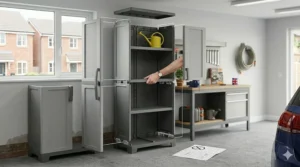
Capacity matching comes first. Genuinely assess what you need to store. A toolbox, some cleaning supplies, and a few paint tins? A basic two-shelf cabinet around the £60-£80 mark handles that comfortably. Extensive DIY tool collection plus gardening equipment plus seasonal storage? You’re looking at multiple cabinets or tall units in the £120-£150 range. Most British homeowners underestimate their storage needs by about 30%—if you think you need one cabinet, you probably need one-and-a-half.
Weight capacity isn’t negotiable. Check shelf ratings and actually calculate whether they’ll handle your intended load. A shelf rated for 20kg sounds generous until you realise that five 4-litre paint tins exceed that limit. Premium units with 30-35kg shelf ratings cost more upfront but prevent sagging, warping, and eventual failure. For reference, a typical car battery weighs around 15kg—useful benchmark for estimating loads.
Weather resistance requirements. Indoor-only garage with good seals and minimal temperature variation? Basic plastic suffices. Damp garage, shed, or anywhere exposed to British weather extremes? You need proper weatherproofing with sealed doors and UV-resistant resin. Don’t try economising here—moisture ingress ruins stored items and degrades cheaper plastics within a couple of years.
Footprint versus capacity trade-offs. British garages come in awkward dimensions, particularly in older properties. Measure your actual available space accounting for door swing, car parking requirements, and walkways before ordering. Tall narrow cabinets (around 180cm high, 70cm wide) often provide better space efficiency than wider, shorter alternatives in compact UK garages.
Quality indicators to check: Look for multi-wall or honeycomb panel construction rather than simple moulded plastic. Check customer reviews specifically mentioning UK use—products performing well in dry American garages might fail in damp British conditions. Brands like Keter, Terry, and Draper have established UK track records; newer brands require more scrutiny. If you’re uncertain about product quality, Which? provides independent testing and reviews of storage products, though their coverage of garage cabinets remains limited compared to other household items.
Assembly complexity matters. No-tool designs genuinely save time and frustration, but only if the panels actually clip together reliably. Read reviews mentioning assembly specifically—if multiple buyers report alignment issues or needing additional tools despite “no-tool” claims, that’s a warning sign.
Common Mistakes When Buying Plastic Garage Storage
Mistake #1: Ignoring British weather impact. The single biggest error UK buyers make involves treating garage cabinets as if they’ll exist in temperature-controlled environments. Unless your garage has heating and excellent insulation (rare in Britain), your storage faces temperatures ranging from below freezing to 30°C+ during summer heatwaves, plus considerable humidity during our wet months. Cheap plastic becomes brittle in cold and warps in heat. Proper weatherproof resin with UV stabilisers costs more initially but lasts three to five times longer than budget alternatives.
Mistake #2: Overlooking shelf load distribution. Manufacturers state maximum weight capacities for shelves, but these assume even distribution across the entire surface. Placing heavy items on shelf edges or in concentrated spots creates stress points that lead to sagging or cracking. UK buyers storing paint tins, bottled fluids, or power tool collections need to understand weight distribution principles—heavier items go towards shelf centres and rear positions, lighter items near edges and fronts.
Mistake #3: Buying too small. British homeowners consistently underestimate storage needs, then supplement with additional purchases later. This costs more overall and creates mismatched storage systems. Better to invest in slightly larger capacity than currently needed—garages accumulate items over time, and having spare capacity prevents future frustration.
Mistake #4: Neglecting floor levelling. Plastic cabinets tolerate less floor unevenness than metal alternatives. Installing on sloped garage floors without proper shimming causes doors to misalign, shelves to settle unevenly, and long-term stability issues. Five minutes with a spirit level and some plastic shims prevents months of aggravation.
Mistake #5: Choosing style over substance. Some buyers select cabinets based primarily on appearance rather than functional suitability. That sleek-looking unit with glass-effect doors might look smart, but if you’re storing dusty workshop equipment or garden supplies, you’ll curse those transparent panels within weeks. Practical function beats aesthetic appeal in genuine workshop environments.
Mistake #6: Ignoring UKCA and safety standards. Post-Brexit, proper products sold in Britain should carry UKCA marking indicating compliance with UK safety standards. This particularly matters for cabinets storing chemicals, flammables, or heavy items where structural failure could cause injury. Suspiciously cheap imports often lack proper certification—worth paying a bit more for peace of mind.
Plastic vs Metal vs Wood: Which Suits British Garages?
The perennial garage storage debate deserves addressing directly, particularly given how British climate conditions influence material performance.
Plastic advantages in UK conditions: Zero rust issues regardless of humidity levels. Considerably lighter weight (matters when relocating or installing wall-mounted units). Resistant to most chemicals and solvents commonly stored in garages. No painting or surface maintenance required. Typically 20-40% cheaper than equivalent metal cabinets. Easier to clean—just wipe down with damp cloth. Better suited to unheated spaces where temperature swings occur.
Plastic disadvantages: Lower maximum weight capacities than metal (typically 20-35kg per shelf versus 50-100kg for steel). Can become brittle in extreme cold below -5°C. Cheaper options may warp in direct sunlight or under heavy load. Generally less premium appearance than quality wood or powder-coated metal. Some plastics degrade when in contact with certain petroleum-based solvents over extended periods.
Metal cabinet reality check: Excellent load capacity and industrial appearance, but rust becomes inevitable in British garages unless you invest in premium powder-coated or stainless steel options (£200-£500 range). Requires proper rust-proofing maintenance. Significantly heavier—moving a loaded metal cabinet requires two people minimum. Can conduct cold in winter, making stored items uncomfortably chilly to handle. Dents and scratches expose bare metal that rusts quickly.
Wood considerations: Traditional and attractive, but dimensionally unstable in humidity fluctuations typical of UK garages. Requires treatment with preservative or paint to resist moisture and rot. Heavy and expensive for decent quality. Attracts woodworm and other pests if environment permits. Really only suitable for heated, climate-controlled garage workshops rather than typical British garage conditions.
The verdict for British users: Plastic (specifically multi-wall resin construction) represents the sweet spot for most UK garage applications. Metal makes sense only if you’re dealing with extremely heavy loads (50kg+ per shelf) and can afford premium rust-resistant finishes. Wood belongs in climate-controlled workshops, not typical damp British garages.
Long-Term Cost Analysis: UK Garage Storage Investment
Understanding total cost of ownership helps justify spending £120 on a quality cabinet versus £40 on budget alternatives.
Premium plastic cabinet example (Keter Tall Utility at £150):
- Initial cost: £150
- Expected lifespan in British garage: 10-15 years
- Maintenance: £0 (wipe-down cleaning only)
- Load capacity: 102kg total (3 × 34kg shelves)
- Cost per year: £10-£15
- Cost per kg capacity: £1.47
Budget plastic cabinet example (Basic two-shelf unit at £45):
- Initial cost: £45
- Expected lifespan: 3-5 years before warping/cracking
- Replacement cost: £45 × 3 replacements = £135 over 15 years
- Total 15-year cost: £180
- Load capacity: 40kg total (2 × 20kg shelves)
- Cost per year: £12
- Cost per kg capacity: £4.50
The mathematics favour quality. Premium cabinets cost more initially but spread that investment across longer lifespans whilst providing superior load capacity. Over a decade, you actually save money whilst gaining better storage functionality.
Factor in opportunity cost: How much is your time worth? Cheaper cabinets that fail require replacement shopping, removal, reassembly, and reorganisation. If your time has any value whatsoever, that 3-hour replacement process every few years adds hidden costs. Quality cabinets eliminate this entirely.
Insurance and replacement costs: Proper garage storage protects valuable items from damp, dust, and damage. If inadequate storage leads to ruined power tools, damaged seasonal decorations, or spoiled garden chemicals, those replacement costs dwarf the difference between budget and premium cabinets.
UK-specific considerations: British weather accelerates degradation of cheap plastics. The same budget cabinet that might survive 5-7 years in a dry American climate often fails within 3 years here. Factor this into your calculations—premium weatherproof construction isn’t luxury, it’s necessity for UK longevity.
Features That Actually Matter (And Those That Don’t)
Critical features worth paying for:
Multi-wall or honeycomb construction transforms cabinet rigidity and longevity. The difference between single-wall moulded plastic and properly engineered multi-wall panels becomes apparent after the first winter. Worth the 30-40% price premium every time.
Adjustable shelving provides flexibility as storage needs evolve. Fixed shelves force you to adapt your storage to the cabinet; adjustable shelves let you configure to suit your actual items. This seemingly simple feature dramatically improves practical utility.
Lockable doors matter if you’re storing anything valuable, hazardous, or child-accessible. Basic pad-lockable latches add minimal cost but substantial peace of mind. The alternative—discovering your expensive power tools have vanished or that children accessed chemicals—justifies the £10 extra instantly.
Reinforced shelf supports distribute weight properly and prevent sagging. Cheap cabinets use plastic clips that flex under load; quality units incorporate metal reinforcement or thicker structural supports. Check customer reviews mentioning shelf performance under load.
Weather seals on doors prevent moisture ingress in damp British garages. The difference between doors that simply close versus doors with rubber gaskets becomes apparent during the first heavy rain when wind drives moisture through unsealed gaps.
Features of questionable value:
Transparent doors or drawer fronts look appealing in product photos but accumulate dust and grime rapidly in real garage environments. Unless you’re organising display collections, solid doors require less maintenance and hide inevitable untidiness better.
Decorative styling elements add cost without improving function. Garage storage exists to organise and protect—fancy trim pieces, designer colour schemes, or architectural details don’t enhance performance but do increase price.
Integrated lighting sounds brilliant until you factor in battery replacement costs and the reality that garage overhead lighting already illuminates cabinet interiors when doors open. Save £20-£30 by skipping this feature.
Excessive drawer subdivision in multi-drawer units creates compartments too small for practical use. The jump from 40 drawers to 60 drawers sounds impressive but often results in drawers barely big enough for a handful of screws—diminishing returns on organisation.
UK Regulations, Safety Standards & Legal Requirements
British homeowners often overlook regulatory compliance for garage storage, but understanding requirements prevents potential issues.
UKCA marking requirements: Post-Brexit, products sold in Great Britain (England, Scotland, Wales) should carry UKCA (UK Conformity Assessed) marking. This replaced CE marking for the UK market. Reputable manufacturers ensure compliance; suspiciously cheap imports often lack proper certification. Whilst enforcement primarily targets commercial sellers, buying UKCA-compliant products provides assurance of basic safety standards.
Load capacity and safety: No specific UK regulation mandates plastic cabinet load ratings, but products must comply with general product safety requirements under the Consumer Rights Act 2015. Manufacturers providing misleading capacity claims face potential action from Trading Standards. Always verify load ratings independently through reviews rather than trusting manufacturer specifications alone.
Chemical storage regulations: If storing hazardous substances (petrol, solvents, pesticides, etc.), the Control of Substances Hazardous to Health (COSHH) Regulations apply. For domestic situations, this primarily means proper labelling, secure storage away from children, and using appropriate containment. Plastic cabinets storing such materials should ideally be lockable and positioned to prevent tipping.
Fire safety considerations: British Building Regulations don’t specifically address garage storage cabinet materials, but common sense dictates keeping flammable materials in appropriate containers within cabinets positioned away from ignition sources. Plastic cabinets aren’t fire-resistant—if storing petrol, paints, or other flammables, position away from boilers, electrical panels, or workshop areas with grinding/welding equipment.
Northern Ireland note: Northern Ireland continues following EU regulations post-Brexit, meaning CE marking remains relevant. Products sold to NI addresses may differ from GB equivalents in terms of compliance marking.
Insurance implications: Home contents insurance typically extends to garage contents, but policies often cap payouts for stored items. Installing lockable storage can sometimes reduce premiums or improve claim success rates. Check with your insurer whether securing tools and equipment in lockable cabinets qualifies for any discounts.

Frequently Asked Questions
❓ Are plastic garage cabinets suitable for British winter temperatures?
❓ Can plastic cabinets cope with damp British garage conditions?
❓ How much weight can plastic garage shelves actually hold in practice?
❓ Do I need to anchor plastic cabinets to garage walls in the UK?
❓ What's the real lifespan of plastic garage cabinets in British conditions?
Conclusion: Finding Your Perfect Plastic Garage Cabinet Match
Navigating plastic garage cabinet options for British homes ultimately comes down to matching your specific storage needs with appropriate quality levels whilst accounting for our uniquely challenging climate. The £150 you might spend on a premium Keter Tall Utility Cabinet delivers substantially different value than £30 on a basic Garland multi-drawer unit—but both serve important roles depending on your requirements.
For most UK homeowners dealing with typical garage storage needs—DIY tools, garden equipment, cleaning supplies, seasonal items—the sweet spot sits around £80-£120 for a quality weatherproof cabinet with 20-25kg shelf capacity. This price range delivers proper multi-wall resin construction, adequate load ratings, and weather resistance without venturing into commercial-grade territory. Brands like Keter and Terry consistently deliver reliable performance at these price points.
Specialist applications benefit from targeted solutions: multi-drawer units for hardware organisation, tall outdoor-rated cabinets for garden overflow, or lockable units for securing valuable power tools. Rather than seeking one perfect cabinet, consider building a storage system combining different types—perhaps a premium tall cabinet for heavy items paired with wall-mounted drawer units for fixings organisation.
The investment in proper garage storage repays itself through protected tools, organised workspace, and reclaimed floor space. Calculate total cost over expected lifespan rather than initial purchase price—quality weatherproof construction saves money long-term whilst providing superior functionality throughout. Your garage deserves storage solutions that’ll survive British weather for a decade or more, not cheap alternatives requiring replacement every few years.
Recommended for You
- 7 Best Lockable Garage Cabinets UK 2026
- Best Heavy Duty Garage Storage Cabinet UK 2026
- 7 Best Metal Storage Cabinet UK 2026
Disclaimer: This article contains affiliate links. As an Amazon Associate, I earn from qualifying purchases. If you purchase products through these links, we may earn a small commission at no additional cost to you.
✨ Found this helpful? Share it with your mates! 💬🤗
